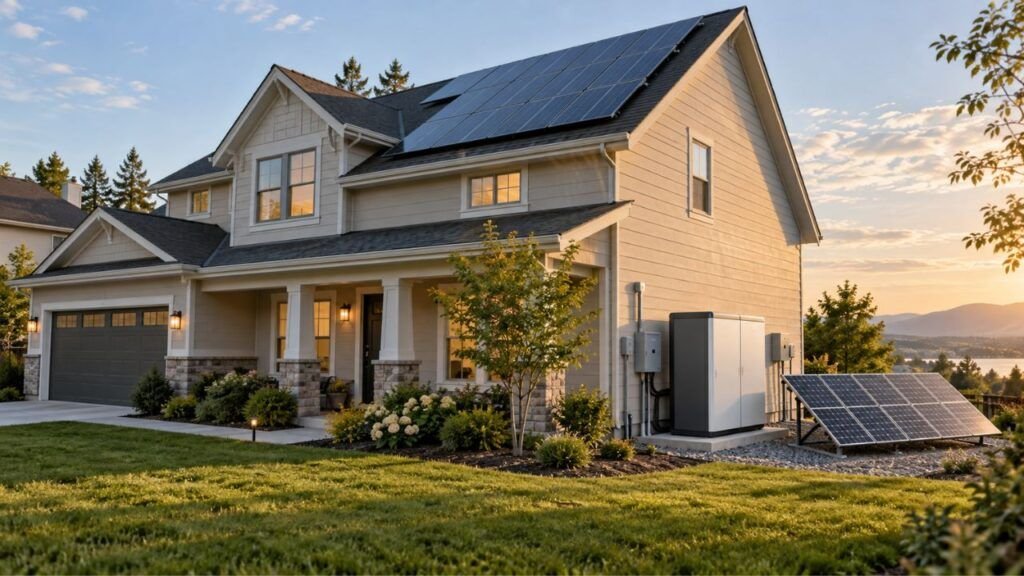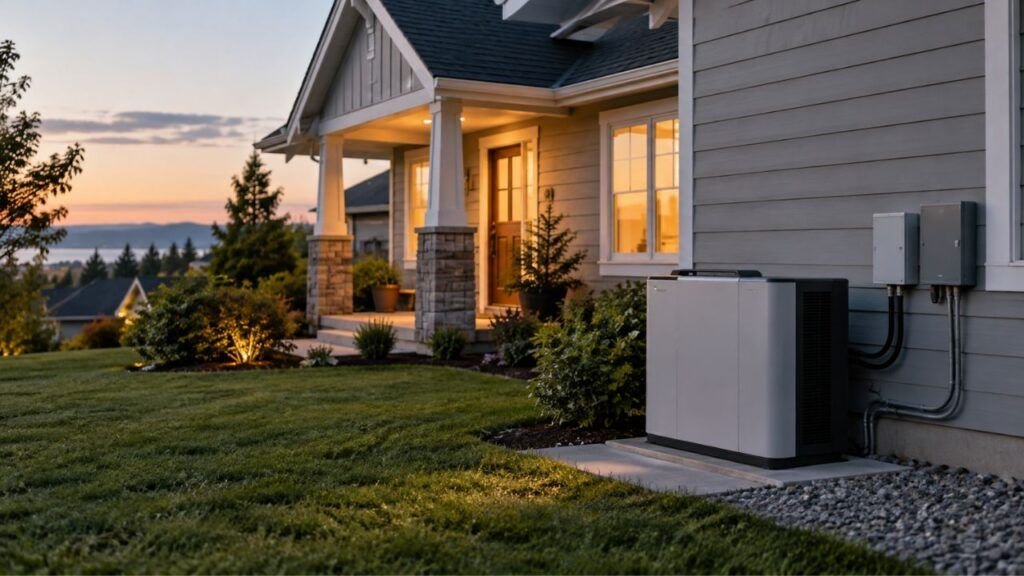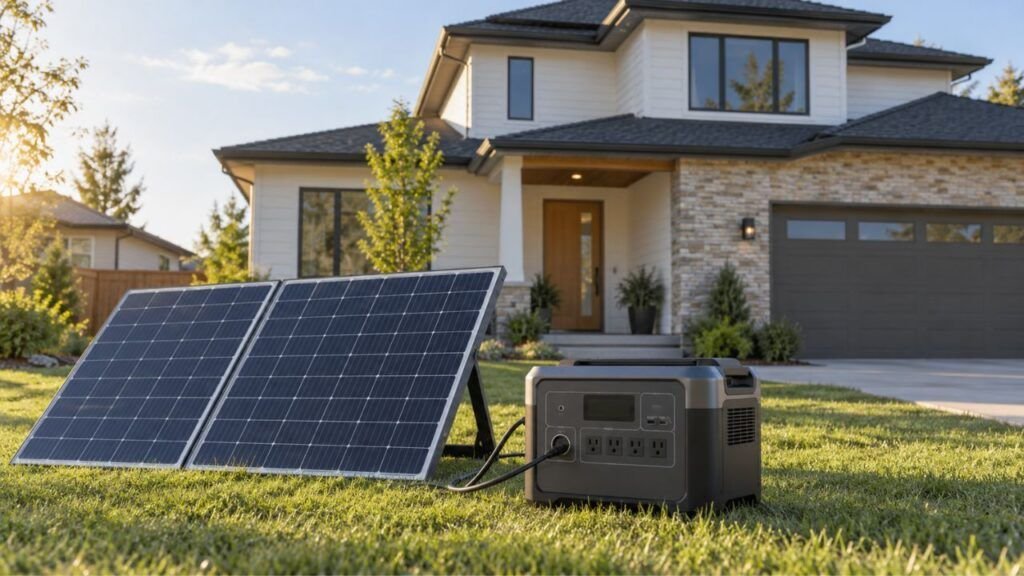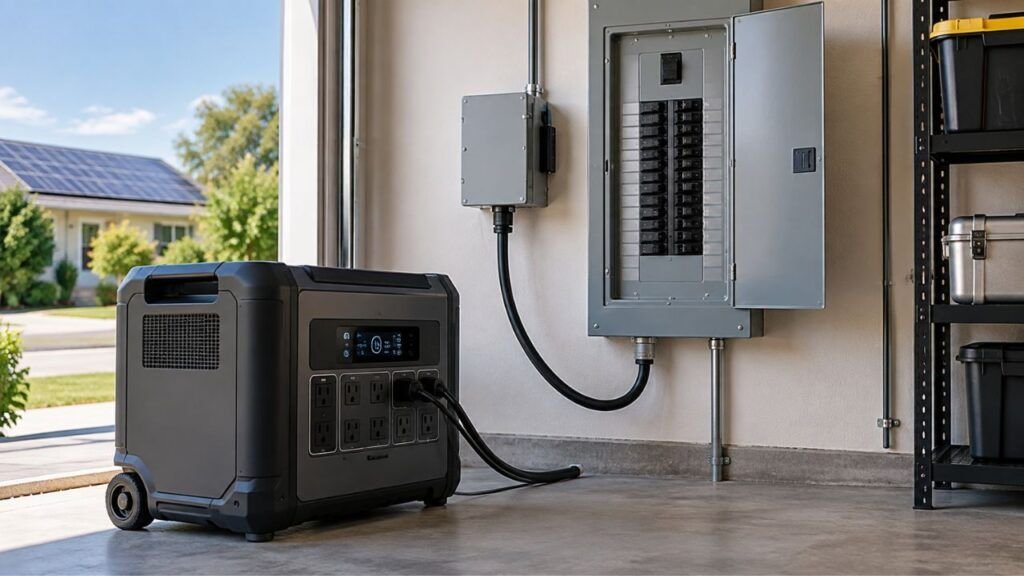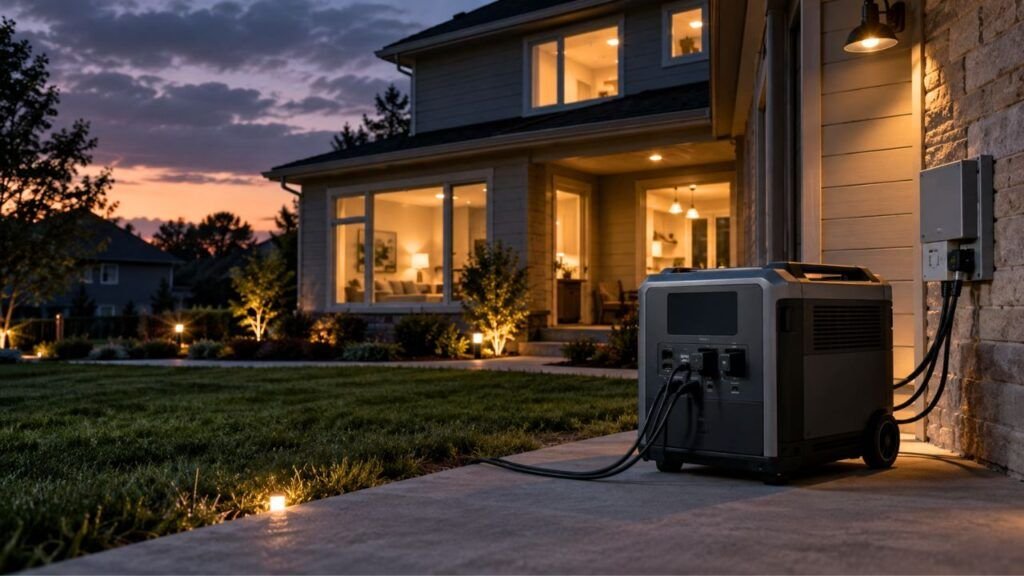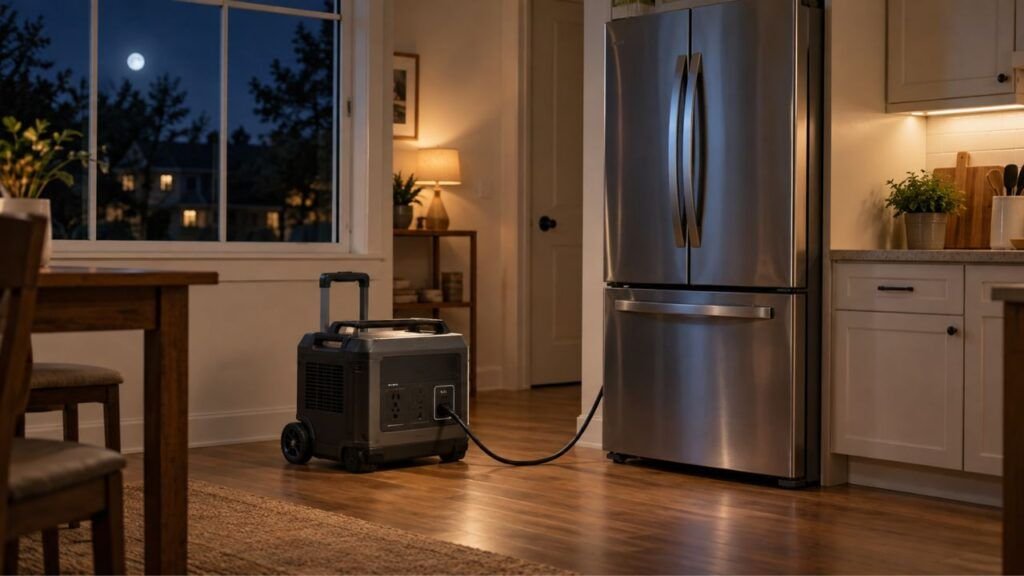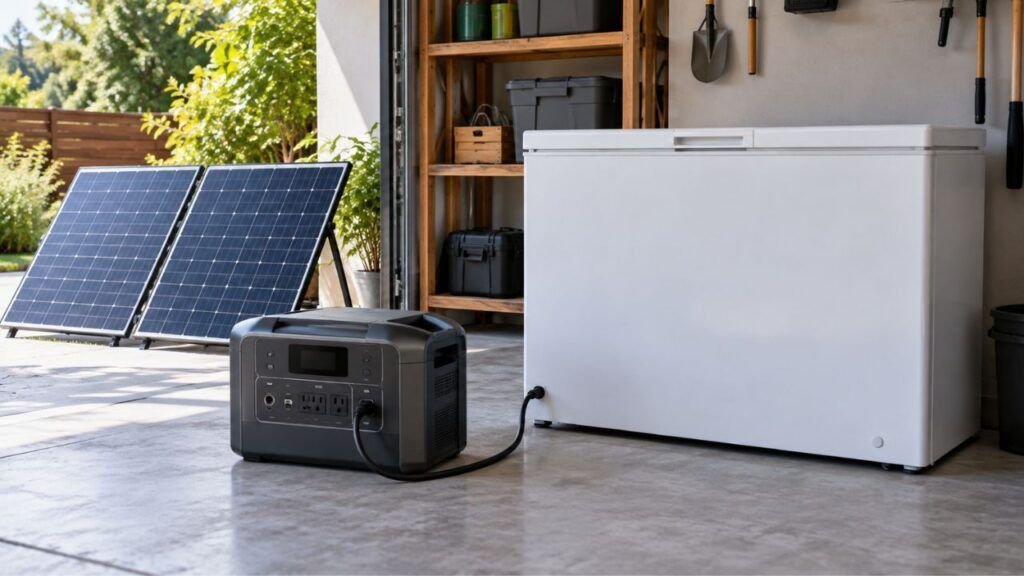
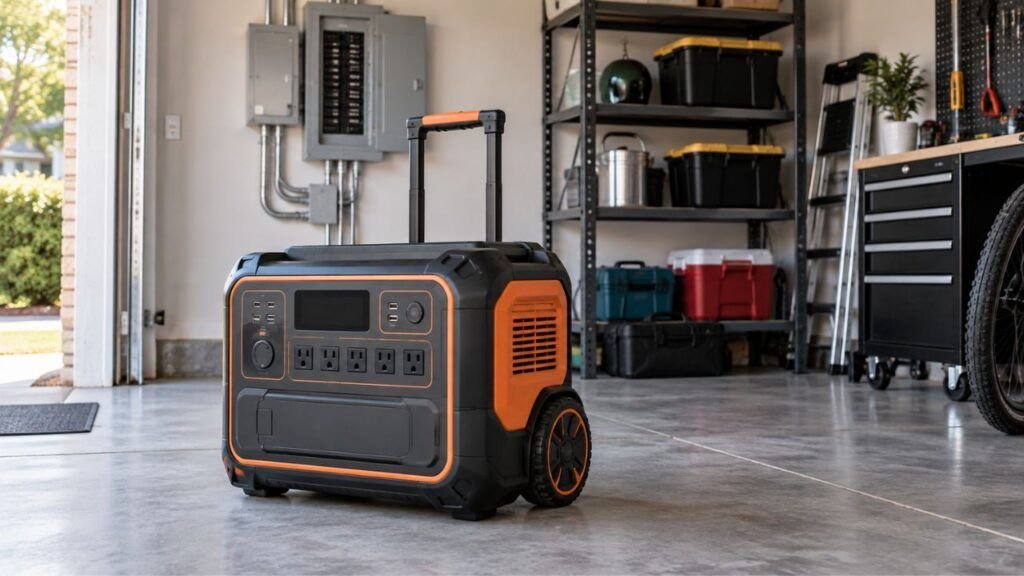
Yes, you can use an interlock kit with a compatible solar generator. For a typical U.S. whole-panel setup, the solar generator should provide true 120/240V split-phase output. You also need a compatible inlet, breaker, interlock, and proper grounding arrangement.
However, not every portable power station works with an interlock setup. Below, I’ll explain what your solar generator needs, how the connection works, and when another transfer method makes more sense.
Key Takeaways
- An interlock kit can work with many large solar generators.
- True 120/240V split-phase output is preferred for whole-panel connections.
- A 120V-only power station usually needs a different transfer method.
- The interlock must specifically match your electrical panel.
- Interlocks prevent utility and backup power from connecting together.
- Existing rooftop solar can make the installation more complicated.
- Neutral and ground configuration should be checked before installation.
- An interlock gives circuit access but does not increase generator capacity.
Can You Use an Interlock Kit With a Solar Generator?
You can use an interlock kit when the solar generator has suitable electrical output. The home panel does not really care whether backup AC power comes from gasoline, batteries, or solar-charged batteries.
What matters is the electricity entering the panel.
The power source needs the correct voltage, frequency, current capacity, and wiring configuration. Your panel also needs an approved way to keep utility power separated from backup power.
That is where the interlock kit comes in.
The interlock physically prevents the utility main breaker and generator breaker from operating together. This helps stop electricity from feeding backward onto utility lines.
However, the interlock does not change the solar generator’s electrical output.
A 120V power station does not become a 120/240V source because you install an interlock. Likewise, a 3,600-watt solar generator cannot suddenly run 10,000 watts of household loads.
Think of the interlock as a traffic controller, not a power converter.
How Does an Interlock Kit Work With a Solar Generator?
The basic concept is fairly simple. The solar generator supplies your panel through a dedicated backup-power connection while the interlock keeps utility power safely isolated.
A typical power path looks like this:
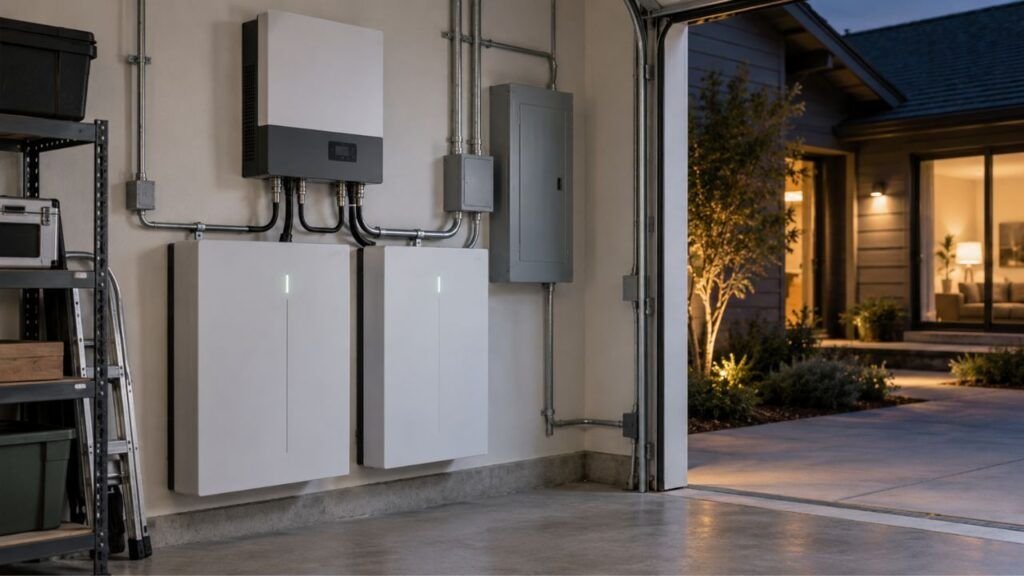
Solar generator → power cord → generator inlet → dedicated breaker → home electrical panel
During normal utility operation:
- The main breaker remains on.
- The backup breaker remains blocked.
- Utility power supplies your electrical panel.
During an outage:
- The utility main is switched off.
- The interlock moves into the backup position.
- The backup breaker can then be energized.
- The solar generator supplies available household circuits.
The important part is that both sources cannot intentionally energize the panel together.
Without proper source isolation, electricity could travel backward toward utility equipment. That situation can create serious shock hazards and equipment damage.
An approved interlock provides the mechanical separation needed for safe manual source switching.
What Does Your Solar Generator Need to Work With an Interlock Kit?
Not every solar generator is designed for breaker-panel integration. Before considering an interlock, you should check several important electrical specifications.
Suitable AC Output Voltage
Start by checking whether your solar generator provides 120V or 120/240V output.
Most U.S. homes use split-phase electrical service.
That system provides:
- 120V for standard household circuits.
- 240V for larger appliances and equipment.
A true 120/240V solar generator supplies two opposing 120V legs. Together, those legs can provide 240V when a circuit requires it.
That makes split-phase units much better suited for conventional whole-panel interlock installations.
A 120V-only power station is different.
It normally provides only one hot leg and cannot directly supply normal 240V household loads. A selected-circuit transfer switch may be more appropriate for those systems.
Enough Continuous and Surge Power
Next, check the inverter rating.
Solar generators usually list at least two important output numbers:
- Continuous output.
- Surge or starting output.
Continuous output tells you how much power the unit can provide steadily.
Surge output tells you how much short-term startup demand it can tolerate.
This matters because several household appliances draw extra power when starting.
Common examples include:
- Refrigerators.
- Freezers.
- Well pumps.
- Air conditioners.
- Sump pumps.
- Furnace blowers.
You should never assume panel access means unlimited power.
A 7,200-watt solar generator is still limited to approximately its rated output, even when connected to a large 200-amp service panel.
A Compatible High-Amperage Output
Large solar generators designed for home backup often include higher-current AC outputs.
Common connection types may include:
- L14-30 outlets.
- 14-50 outlets.
- Manufacturer-specific home-backup connectors.
The connector alone does not determine compatibility.
You still need to verify voltage, amperage, wiring configuration, grounding, and manufacturer approval.
Two connectors may look similar while supporting different electrical arrangements.
Always use the specifications rather than relying only on plug shape.
A Compatible Generator Inlet and Breaker
The panel normally receives backup power through a properly installed inlet.
That inlet must match the intended electrical system.
The following components should work together:
- Solar generator output.
- Generator cord.
- Inlet rating.
- Branch wiring.
- Backup breaker.
- Electrical panel.
- Interlock kit.
The lowest-rated component limits the usable capacity of the connection.
Permanent panel wiring should be installed by a qualified electrician.
A Compatible Electrical Panel
Interlock kits are not universal.
A kit designed for one panel may not safely fit another.
Compatibility can depend on:
- Panel manufacturer.
- Panel model.
- Main breaker location.
- Breaker spacing.
- Panel cover design.
- Backup breaker position.
The interlock must physically prevent both sources from being on together.
Using an incorrect kit can defeat that protection.
Check your exact panel model before purchasing anything.
Can a 120V Solar Generator Work With an Interlock Kit?
A 120V-only solar generator can power household circuits, but it is usually not the ideal source for a traditional whole-panel interlock. The main issue is that a typical residential panel uses two 120V legs.
| Solar Generator Output | Standard Whole-Panel Interlock | 120V Circuits | 240V Circuits | Usually Better Option |
| 120V only | Usually not preferred | Limited, depending on design | No | 120V transfer switch |
| 120/240V split phase | Usually suitable when compatible | Yes | Yes | Interlock or transfer switch |
| Two compatible 120V units creating split phase | Possibly | Yes | Possibly | Manufacturer-approved system |
| Dedicated home-backup output | Depends on design | Usually | Often | Manufacturer integration equipment |
The biggest mistake is assuming that an adapter can make 120V identical to true split-phase 120/240V power.
It cannot.
Some adapters may energize both panel legs from the same 120V source. That does not create proper 240V split-phase power.
It can also create concerns with certain multiwire branch circuits and shared neutrals.
For that reason, I would not improvise a panel connection around a 120V-only unit.
If your solar generator only provides 120V, a manual transfer switch serving selected circuits is often the cleaner option.
Can an Interlock Power Your Entire House From a Solar Generator?
An interlock can give you access to many panel circuits. That does not mean your solar generator can run them all simultaneously.
This distinction is important.
Think of it as:
Whole-panel access does not equal whole-house capacity.
Suppose your solar generator provides 7,200 watts continuously.
Your electrical panel might serve:
- Central air conditioning.
- Electric water heating.
- Range.
- Clothes dryer.
- Refrigerator.
- Microwave.
- Well pump.
- Lighting.
- Electronics.
Turning several large loads on together could easily exceed the inverter’s limit.
Instead, you would normally manage loads manually.
You might run your refrigerator, lights, internet equipment, and selected outlets while leaving large electric appliances off.
You could then temporarily run another load when capacity becomes available.
The interlock lets you choose circuits. The solar generator determines how many you can operate at once.
What Happens If Your House Already Has Solar Panels?
Existing rooftop solar makes backup-power integration more complicated. You may have utility power, a solar inverter, and a separate solar generator feeding the electrical system.
Grid-Tied Solar Without Battery Backup
Most ordinary grid-tied solar systems shut down during utility outages.
That happens because the inverter must avoid energizing utility lines when the grid is down.
This surprises many homeowners.
Having solar panels on the roof does not automatically mean your home remains powered during an outage.
Your existing solar system’s design determines whether it can operate independently.
Solar Panels, Solar Generator, and Utility Power
With rooftop solar and a separate solar generator, you may now have three possible power sources:
- Utility power.
- Rooftop solar inverter.
- Solar generator backup power.
A basic two-source interlock may not automatically coordinate all three.
That is why existing solar should be reviewed before adding generator-style panel backup.
You do not want the rooftop inverter unintentionally interacting with your portable backup source.
When a Solar-Specific Interlock May Be Needed
Some electrical systems use specialized interlocking arrangements.
These can coordinate multiple breakers so incompatible power sources cannot operate together.
For example, a properly designed setup may prevent the following from being active simultaneously:
- Utility main.
- Solar backfeed breaker.
- Backup generator breaker.
Whether you need this depends on your panel and solar design.
If rooftop solar is already connected to your main panel, tell your electrician before planning the interlock installation.
Does Neutral Bonding Matter With a Solar Generator and Interlock?
Yes. Neutral and ground configuration can affect how a solar generator should connect to building wiring. This is one area where portable power stations differ from each other.
Floating Neutral Solar Generator
Many portable power stations use a floating neutral.
In simple terms, neutral and ground are not permanently bonded together inside the unit.
The unit may rely on the building’s electrical system for the appropriate bonding arrangement when connected properly.
Bonded Neutral Solar Generator
Some backup power sources bond neutral and ground internally.
That changes how the source interacts with your home’s existing neutral-ground bond.
You generally do not want unintended duplicate bonding points.
The correct arrangement depends on the transfer equipment and source design.
Why the Transfer Method Matters
A standard breaker interlock switches the power source through breakers.
It normally does not switch the neutral conductor.
That can matter with certain bonded-neutral power sources.
In some systems, a transfer device that also switches neutral may be more appropriate.
This is not something I recommend changing by trial and error.
Do not remove bonding connections or modify your power station internally.
Instead, check the manufacturer’s documentation and have the connection reviewed by a licensed electrician.
Interlock Kit vs. Transfer Switch for a Solar Generator
Both devices can safely separate utility and backup power when properly installed. However, they manage household circuits in different ways.
| Feature | Interlock Kit | Manual Transfer Switch |
| Circuit access | Many or most panel circuits | Selected circuits |
| Load management | Manual | Easier to control |
| 120V-only compatibility | Often limited | Better options available |
| 120/240V compatibility | Very good | Very good |
| Automatic operation | No | Usually no |
| Panel compatibility | Kit must match panel | Less dependent on panel layout |
| Installation | Integrated with main panel | Separate transfer equipment |
| Best for | Large split-phase solar generators | Smaller or selected-load systems |
An interlock is attractive because it gives you flexibility.
You can choose which circuits to operate during the outage.
A transfer switch is more restrictive, but that can also be useful.
By limiting the available circuits, a transfer switch can make load management easier for smaller solar generators.
When Is an Interlock Kit Better Than a Transfer Switch?
An interlock often makes sense when you have a larger solar generator and want flexible access to your home’s circuits.
It may be a good fit when:
- Your solar generator provides true 120/240V split-phase power.
- You want access to several different household circuits.
- You are comfortable managing electrical loads manually.
- Your panel has a compatible approved interlock.
- You do not require automatic outage switchover.
- Your existing solar installation does not create source conflicts.
A large battery power station can work especially well this way.
You can selectively operate circuits without installing a separate transfer switch for each essential load.
When Should You Not Use an Interlock Kit With a Solar Generator?
An interlock is not automatically the best choice for every home or power station.
Consider another solution when:
- Your solar generator provides only 120V.
- You need 240V appliances but the unit cannot supply them.
- No approved interlock matches your electrical panel.
- Your local electrical authority does not accept the proposed installation.
- Your neutral and grounding arrangement requires different transfer equipment.
- Your existing solar system needs coordinated source switching.
- You want automatic switchover during outages.
- Your power station manufacturer requires proprietary home-integration equipment.
- Your solar generator is too small for the loads you want to operate.
The right backup setup starts with compatibility, not convenience.
What Size Solar Generator Do You Need for an Interlock Setup?
There is no single minimum size because every household uses electricity differently.
Instead, look at the loads you actually want to power.
Pay attention to:
- Continuous wattage.
- Starting surge wattage.
- 120V loads.
- 240V loads.
- Maximum AC output current.
- Battery capacity.
- Expected outage duration.
Remember the difference between power and energy.
Watts determine how much equipment you can run at once.
Watt-hours or kilowatt-hours determine how long it can run.
For example, a large inverter may start your well pump easily. However, a small battery could still run out quickly.
Likewise, a huge battery does not help if its inverter cannot supply the starting surge.
Choose both ratings carefully.
30-Amp vs. 50-Amp Interlock Connections for Solar Generators
The inlet rating should match the backup system’s intended capacity. However, the inlet size does not increase your solar generator’s output.
| Connection | Maximum Theoretical Power | Common Application |
| 30A at 120V | 3,600W | Smaller 120V backup |
| 30A at 120/240V | 7,200W | Medium home backup |
| 50A at 120/240V | 12,000W | Larger backup connections |
These numbers describe connection capacity, not guaranteed solar-generator output.
Suppose you connect a 7,200-watt solar generator to a 50-amp inlet.
The inlet may be capable of handling more current, but the solar generator still provides only 7,200 watts.
The power station remains the limiting source.
Your breaker, wiring, cord, inlet, and power source must all be rated appropriately.
Is Using a Solar Generator With an Interlock Kit Code-Compliant?
A properly selected and installed interlock can be an accepted backup-power method. However, code compliance depends on the complete installation.
Several things matter:
- The interlock should match the exact panel.
- The backup source must be properly isolated.
- Equipment should be used according to its instructions.
- The inlet and breaker must have appropriate ratings.
- Existing solar equipment must be considered.
- Local permit requirements may apply.
- Your local authority may have additional requirements.
Electrical codes can also vary because states and jurisdictions adopt different code editions.
That is why I would not assume an installation is approved simply because someone online has the same setup.
Your local authority having jurisdiction has the final say.
A licensed electrician familiar with standby power and solar equipment can help confirm the correct approach.
Safety Rules for Connecting a Solar Generator to a Home Panel
Panel-level backup power should always be treated seriously. Even battery-powered solar generators can supply enough current to create dangerous conditions.
Keep these safety rules in mind:
- Never use a male-to-male power cord.
- Never backfeed a panel through a normal household receptacle.
- Never defeat or remove the interlock mechanism.
- Never energize backup power while utility power remains connected.
- Never assume plug shape proves electrical compatibility.
- Never exceed the solar generator’s inverter rating.
- Do not modify neutral-ground bonding without approved instructions.
- Use properly rated cords, breakers, wiring, and inlets.
- Keep damaged connectors and cords out of service.
- Have permanent panel modifications handled by a qualified electrician.
A solar generator eliminates fuel and exhaust concerns inside the home.
It does not eliminate electrical hazards.
How to Tell Whether Your Solar Generator Can Use an Interlock Kit
You can quickly narrow down compatibility by checking the power station, electrical panel, and existing solar equipment.
Use this checklist:
- Check the AC voltage. Is it 120V or true 120/240V?
- Check continuous output. Confirm how many watts it can supply steadily.
- Check surge output. Make sure important motor loads can start.
- Check the high-current outlet. Identify its voltage and amperage rating.
- Read the manual. Confirm whether home-panel integration is supported.
- Check neutral configuration. Determine whether neutral is floating or bonded.
- Identify your electrical panel. Find the manufacturer and exact model.
- Check interlock compatibility. The kit must match your panel precisely.
- Look for existing solar connections. Rooftop PV can change the design.
- List your 240V loads. Decide whether you actually need them.
- Check local requirements. Permits or inspection may be required.
- Have the design reviewed. A licensed electrician can confirm compatibility.
If several items remain unclear, do not guess.
Those details determine whether an interlock is appropriate.
Interlock Kit or Transfer Switch: Which Is Better for a Solar Generator?
The better choice depends mostly on your solar generator’s output and how you want to use backup power.
A large 120/240V solar generator usually pairs well with an interlock.
You get flexible access to different panel circuits and can manage loads manually.
A smaller 120V power station often works better with a selected-circuit transfer switch.
That approach keeps the backup system simple and avoids trying to make a 120V source behave like true split-phase power.
If you want automatic outage backup, neither basic manual solution may be ideal.
You may be better served by manufacturer-designed home-backup equipment or an automatic transfer system.
Existing rooftop solar also deserves extra attention.
Your installation should coordinate every possible electrical source safely.
Final Verdict
Yes, you can use an interlock kit with a solar generator when the complete system is compatible.
For most conventional U.S. whole-panel installations, a true 120/240V split-phase solar generator provides the cleanest match. You still need a compatible panel interlock, properly rated inlet, appropriate breaker, and correct neutral-ground arrangement.
If your solar generator only provides 120V, do not force it into a standard split-phase setup. A selected-circuit transfer switch may be safer and simpler.
And if your home already has rooftop solar, have the entire power-source arrangement reviewed before adding another backup connection.
Related FAQs
Does a Solar Generator Need 240V to Use an Interlock Kit?
Not in every possible installation, but true 120/240V output is generally preferred for a standard U.S. whole-panel interlock. A 120V-only solar generator may work better through a transfer switch designed for selected 120V circuits.
Can I Use a 120V Solar Generator With a Home Electrical Panel?
Yes, but you need a transfer method designed for that electrical source. A 120V solar generator cannot directly provide normal 240V split-phase power, so selected-circuit transfer equipment is often the better choice.
Can an EcoFlow Power Station Work With an Interlock Kit?
Some larger EcoFlow systems can work with panel-level backup equipment when they provide suitable 120/240V output. Compatibility depends on the exact model, output connection, neutral configuration, panel, and installation method.
Can a Jackery Solar Generator Work With an Interlock Kit?
Certain larger Jackery models offer 120/240V output suitable for home-backup integration. Check your exact model’s specifications and approved connection methods before choosing an interlock, inlet, or transfer equipment.
Can an Anker SOLIX Power Station Connect Through an Interlock?
Some larger Anker SOLIX systems support 120/240V home backup applications. The exact connection method depends on the model, output ratings, panel design, and any manufacturer-specific home integration equipment.
Can a BLUETTI Solar Generator Connect to a Breaker Panel?
Many larger BLUETTI systems can support home backup, including some 120/240V configurations. However, the approved connection method varies by model, so check its output specifications and home-integration instructions first.
Can You Use a 30-Amp Solar Generator With a 50-Amp Inlet?
Possibly, if the entire connection is correctly designed and protected. A larger inlet does not increase solar-generator output, so the power station’s maximum current and wattage remain the actual limits.
Can an Interlock Kit Power 240V Appliances?
Yes, but only when the backup source provides true 120/240V split-phase output. A 120V-only solar generator cannot normally power standard 240V appliances through an interlock.
Can You Charge a Solar Generator From Panels While It Powers the House?
Many solar generators support simultaneous solar charging and AC output. However, charging limits and pass-through behavior vary, so check your specific model before relying on continuous solar input during backup operation.
Do You Need a Transfer Switch If You Already Have an Interlock Kit?
Usually not for the same backup source. A properly installed interlock already provides manual source isolation. However, additional transfer equipment may be required for more complex solar, battery, or automatic-backup systems.
Can Rooftop Solar Stay On While a Solar Generator Powers the Panel?
Not automatically. Grid-tied solar inverters and portable backup sources must be properly coordinated. Some systems require additional interlocking or manufacturer-designed controls to prevent the sources from interacting incorrectly.
Does an Interlock Kit Automatically Switch Power During an Outage?
No. A standard interlock kit is manually operated. You normally switch off the utility main, reposition the interlock, and enable the backup breaker according to the approved operating procedure.

Austin Parker writes practical generator how-to guides, troubleshooting advice, and buying guides for solar, portable, and fuel-powered generators. His focus is helping readers solve common power problems, understand their options, and choose dependable equipment for real-world use.