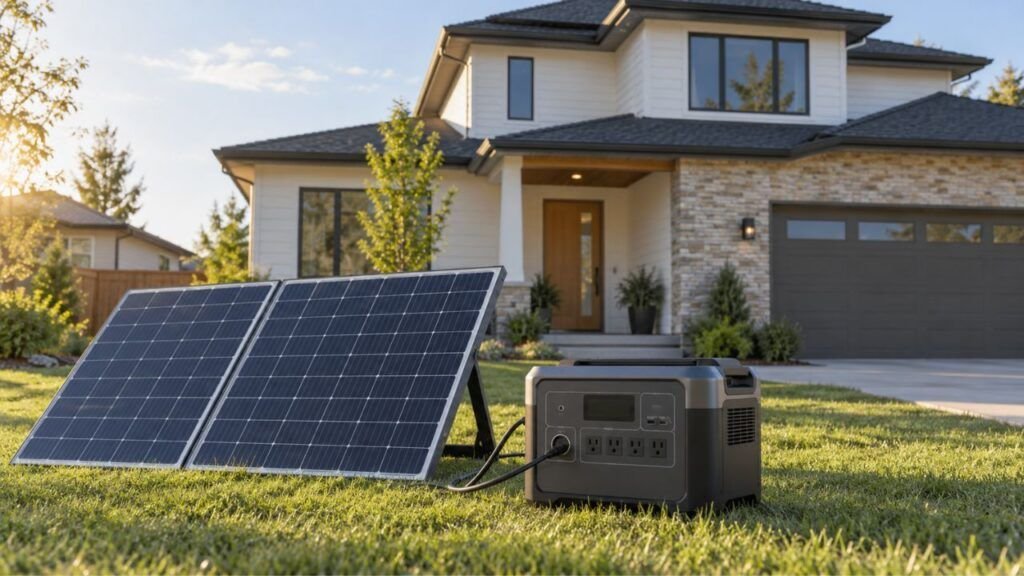
A solar generator can power household essentials for several hours to several days. The exact runtime depends on battery capacity, appliance energy use, inverter losses, and solar recharging. A 2–3kWh system may cover basic essentials overnight, while 5–10kWh or more can support carefully managed loads much longer.
The important part is knowing what you actually want to power. Below, I’ll help you estimate realistic runtimes, calculate your needs, and understand how solar charging changes the answer.
Key Takeaways
- Battery capacity in Wh or kWh mainly determines available runtime.
- Inverter watts determine what appliances the system can handle.
- Powering essentials requires far less energy than powering everything normally.
- Heating, air conditioning, and water heating can drain batteries quickly.
- Solar panels can extend runtime by replacing energy during daylight.
- Advertised battery capacity is higher than actual usable AC energy.
- Your own appliance usage gives the most accurate runtime estimate.
How Long Can a Solar Generator Power a House?
There is no single runtime that applies to every house. Battery size matters, but your average electrical load matters just as much.
Here is a practical starting point for home-outage planning.
| Solar Generator Capacity | Approx. Usable AC Energy | Typical Backup Goal | General Runtime |
| 500Wh–1kWh | 0.4–0.85kWh | Router, lights, phones, laptop | About 4–10 hours |
| 1–2kWh | 0.85–1.7kWh | Basic household essentials | About 6–16 hours |
| 2–3kWh | 1.7–2.55kWh | Fridge, router, lights, charging | About 10–24 hours |
| 3–5kWh | 2.55–4.25kWh | Broader essential backup | About 18–36 hours |
| 5–10kWh | 4.25–8.5kWh | Essential home circuits | Roughly 1–3 days |
| 10–20kWh+ | 8.5–17kWh+ | Extended home backup | Several days of essentials |
These figures assume controlled emergency use, not normal everyday electricity consumption.
A 5kWh battery might last several days with very light loads. The same battery could disappear within hours when powering electric heating.
That is why battery size alone never gives the complete answer.
What Does “Power a House” Actually Mean?
Before calculating runtime, decide what you mean by powering your house. There is a major difference between keeping food cold and living normally.
Powering Only Essential Appliances
This is the easiest and most efficient approach during an outage.
You might run:
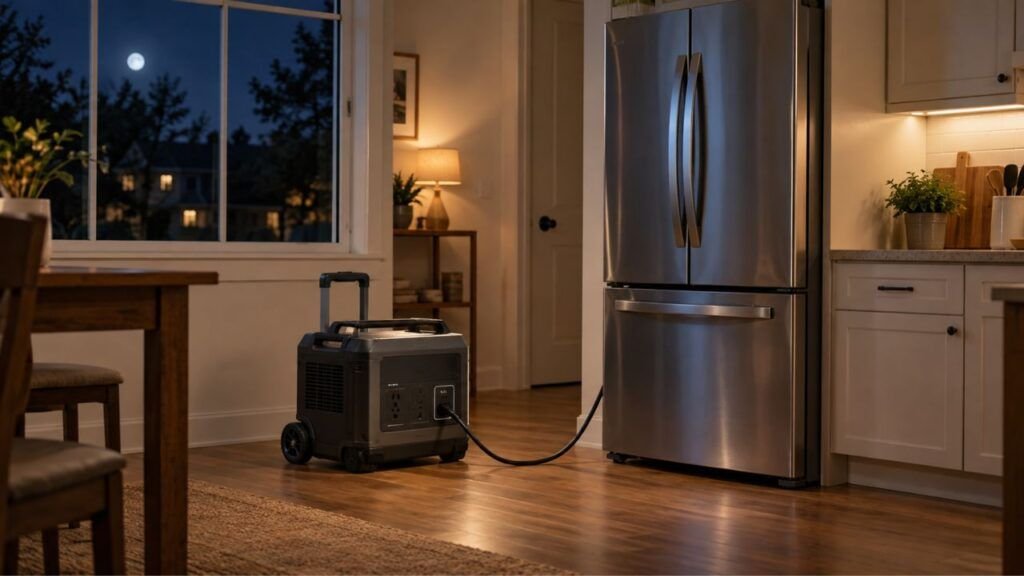
- Refrigerator
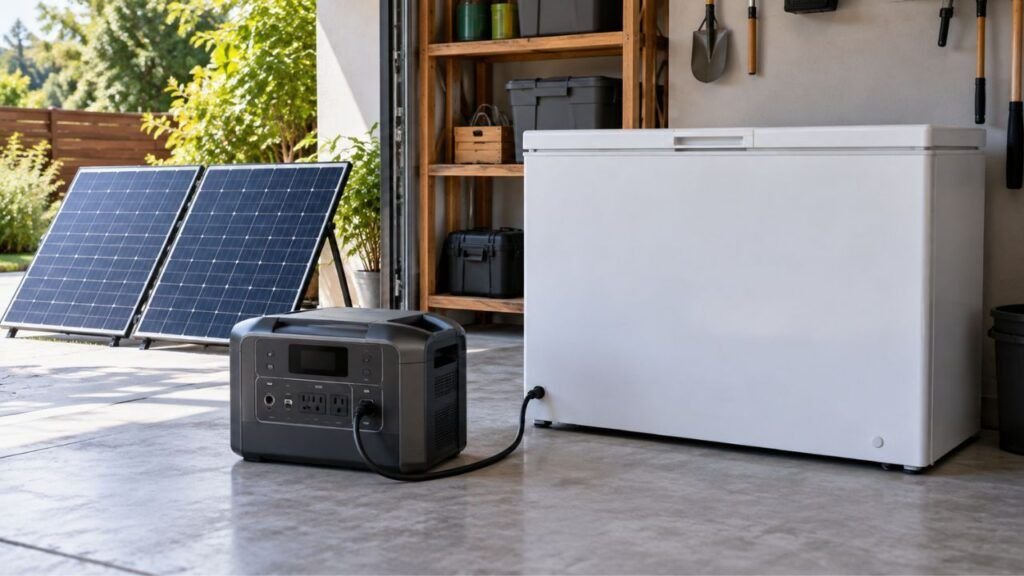
- Freezer
- Wi-Fi router
- Several LED lights
- Phones
- Laptop
- CPAP machine
- Small fan
- Television for limited periods
A household using electricity carefully might keep these loads relatively low.
This is where a 2–5kWh solar generator can become very useful.
You are not trying to recreate normal grid electricity. You are keeping important things running until utility power returns.
Powering Selected Home Circuits
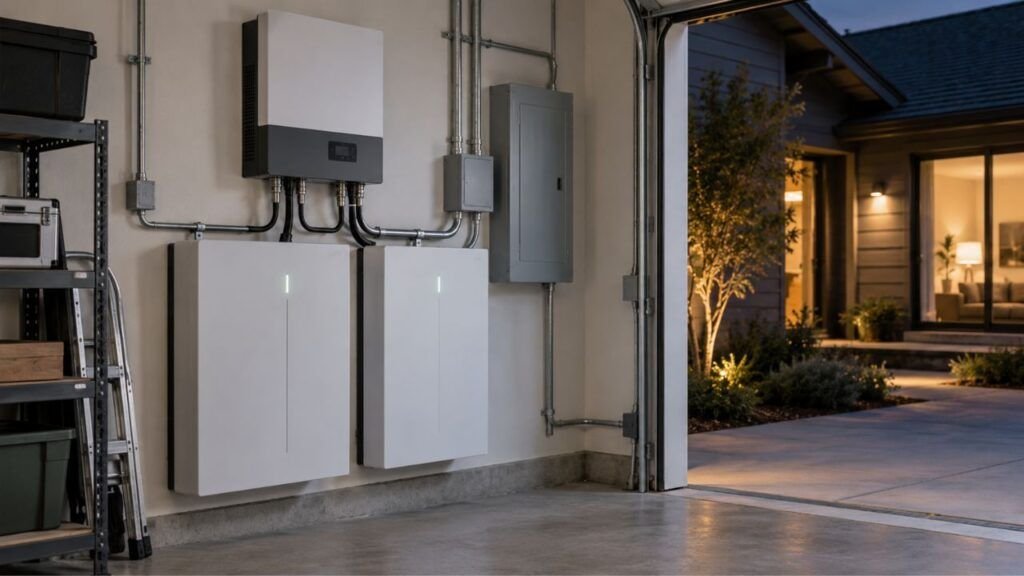
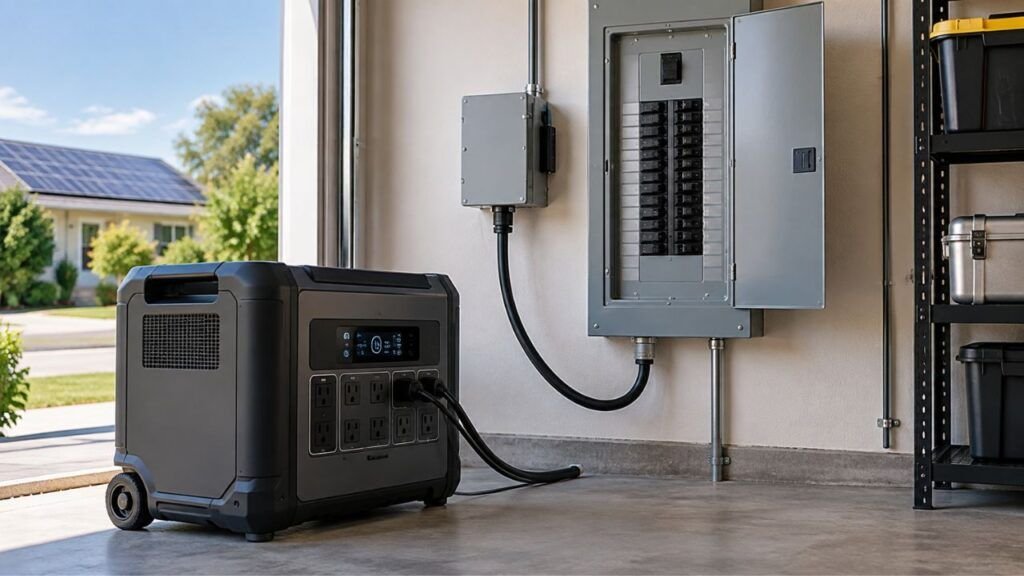
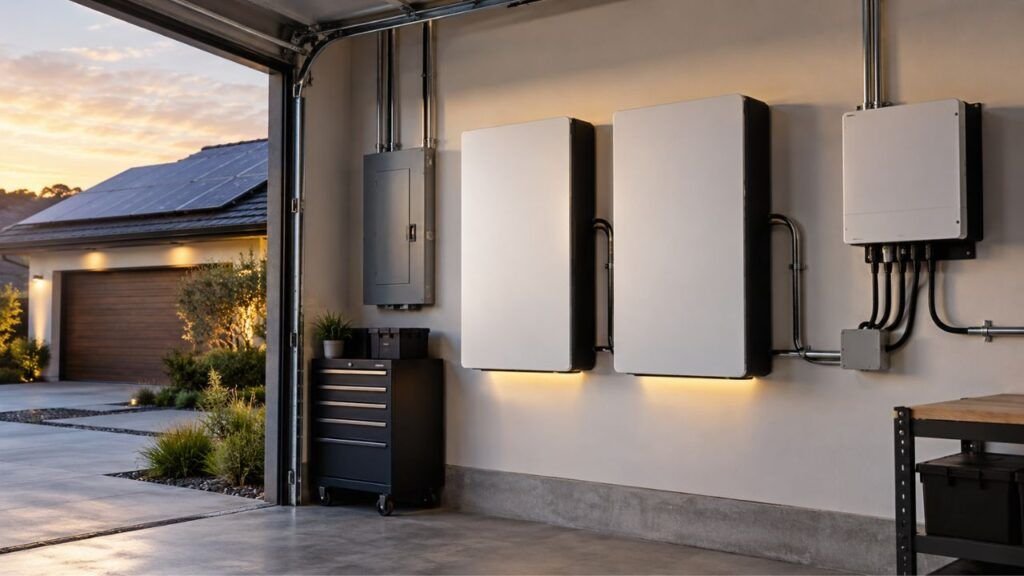
Larger solar generators can support selected circuits through compatible transfer equipment.
Those circuits might include:
- Refrigerator
- Kitchen outlets
- Bedroom outlets
- Lighting
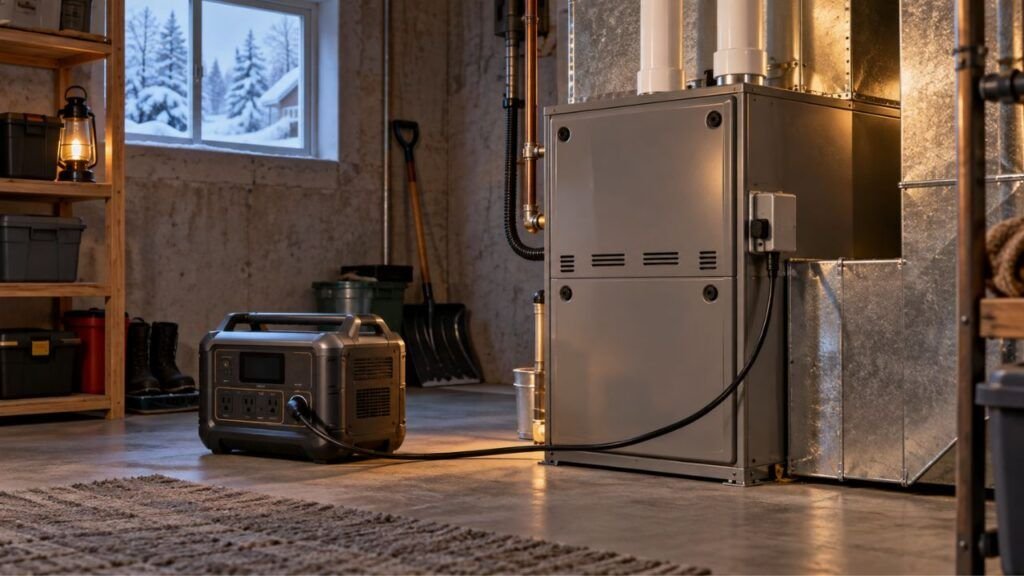
- Furnace blower
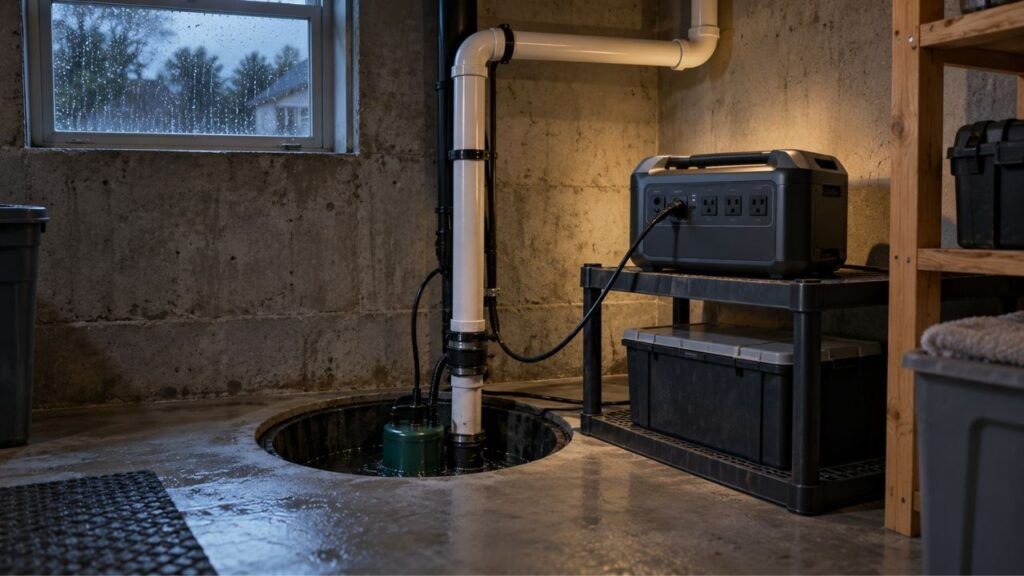
- Sump pump
- Garage door opener
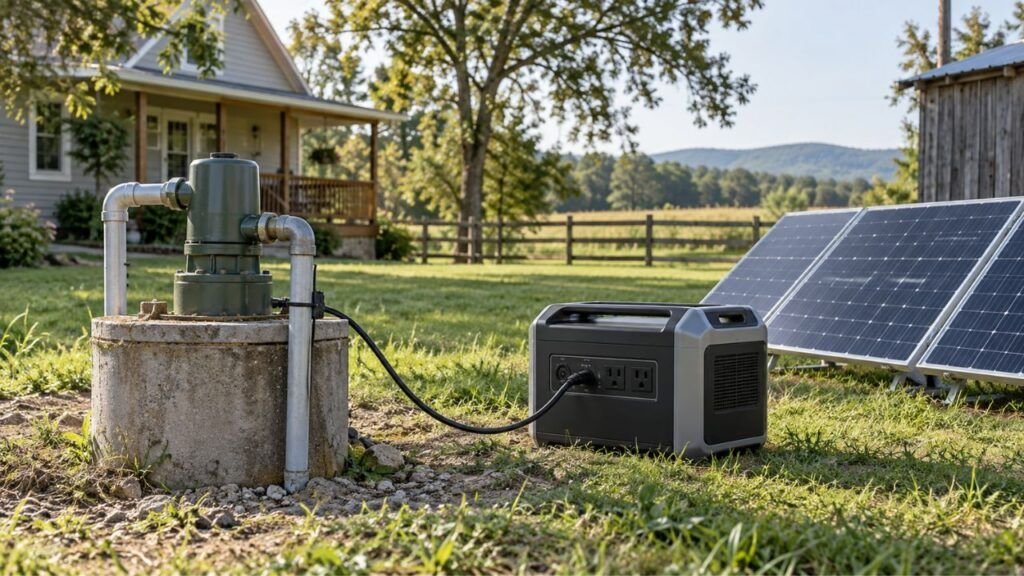
- Well pump where supported
This arrangement feels more like normal home backup.
However, total energy consumption usually becomes higher. People naturally use more electricity when outlets and circuits remain available.
You will therefore need more battery storage for longer outages.
Powering the House Almost Normally
This is completely different.
A normal home may use electricity for:
- Central air conditioning
- Heat pumps
- Water heaters
- Electric ranges
- Ovens
- Clothes dryers
- Dishwashers
- Well pumps
- Entertainment equipment
- Computers
- EV charging
Running most of these normally can require tens of kilowatt-hours daily.
Portable solar generators generally become much less practical at that level.
Expandable home-backup systems can handle larger loads, but substantial battery capacity becomes necessary.
So when someone says a solar generator powers a house for two days, always ask one question:
Which parts of the house?
That question changes everything.
Battery Capacity vs Output Watts: Know the Difference
One of the easiest mistakes is confusing battery capacity with inverter output. Both matter, but they answer completely different questions.
Battery Capacity Determines Runtime
Battery capacity is normally shown in watt-hours or kilowatt-hours.
For example:
- 1,000Wh = 1kWh
- 2,000Wh = 2kWh
- 5,000Wh = 5kWh
Think of capacity as the amount of electricity stored inside the battery.
More stored energy usually means longer runtime.
However, you normally cannot use every advertised watt-hour through AC outlets.
The inverter, electronics, battery management system, and other components consume some energy.
That means a 2,000Wh battery may deliver noticeably less than 2,000Wh to AC appliances.
Continuous and Surge Watts Determine What You Can Run
Inverter output tells you how much power the generator can supply at once.
Suppose your unit has:
- 2,400W continuous output
- 4,800W surge output
- 2,000Wh battery capacity
The 2,400W rating does not mean it contains 2,400Wh of energy.
It only tells you how much simultaneous load the inverter handles.
You could theoretically connect a 1,500W space heater.
But the heater could drain that battery surprisingly quickly.
Motor-driven appliances also create startup surges.
Refrigerators, pumps, and air conditioners may briefly require much more power when starting.
Your inverter must handle those peaks even when the battery has plenty of stored energy.
Solar Input Determines How Quickly Energy Returns
Solar input is another separate specification.
Imagine your generator accepts only 500W of solar input.
Connecting 1,500W worth of panels will not necessarily give you 1,500W of charging.
The power station’s solar controller limits how much electricity enters the battery.
When planning multi-day backup, check all three specifications:
Battery capacity, inverter output, and maximum solar input.
Each solves a different part of the problem.
How to Calculate Solar Generator Runtime
You can estimate runtime without complicated electrical calculations. A few simple numbers will get you surprisingly close.
Step 1: Find Your Usable Battery Capacity
Start with the advertised battery capacity.
Suppose you have a 3,000Wh battery.
For rough AC planning, you might assume around 85% usable energy.
That gives:
3,000Wh × 0.85 = 2,550Wh usable
This percentage is only a planning estimate.
Actual efficiency differs between power stations and load levels.
If the manufacturer provides usable-energy information, use that instead.
Step 2: Calculate Appliance Energy Consumption
Watts tell you how quickly an appliance consumes energy.
Watt-hours tell you how much energy it consumes over time.
Use:
Energy Used (Wh) = Watts × Hours Used
For example, a 50W device running six hours uses:
50W × 6 hours = 300Wh
Now repeat that process for everything you expect to use.
Cycling appliances require extra care.
A refrigerator compressor does not normally run continuously for 24 hours.
Its actual daily energy consumption can therefore be much lower than multiplying its maximum running wattage by 24.
Step 3: Calculate Runtime From Average Load
For a steady load, use:
Runtime = Usable Battery Capacity ÷ Average Load
Suppose your usable battery energy is 2,550Wh.
Your average load is 200W.
2,550Wh ÷ 200W = 12.75 hours
That gives you roughly 12 to 13 hours under those assumptions.
Step 4: Calculate a Real Household Backup Load
Let’s build a more realistic outage example.
Suppose you want to run:
| Appliance | Estimated Daily Energy |
| Refrigerator | 1,200Wh |
| Wi-Fi router | 300Wh |
| LED lighting | 200Wh |
| Laptop | 300Wh |
| Phones/tablets | 100Wh |
| Television | 300Wh |
| Microwave use | 150Wh |
| Total | 2,550Wh/day |
Your actual appliances may use more or less.
But this example makes the relationship easier to see.
A 3kWh battery with roughly 2.55kWh usable energy might cover about one day.
A 5kWh battery could provide roughly 4.25kWh usable energy.
That could last around:
4.25 ÷ 2.55 = 1.67 days
A 10kWh system providing around 8.5kWh could approach:
8.5 ÷ 2.55 = 3.3 days
Solar charging could extend each runtime considerably.
That is a much better way to plan than guessing from battery size.
How Much Electricity Does a House Really Use?
Normal household electricity consumption can be surprisingly high. Emergency consumption, however, can be dramatically lower when you deliberately reduce loads.
Normal Household Electricity Use
A typical American home can consume dozens of kilowatt-hours daily.
Actual consumption varies enormously based on:
- Climate
- House size
- Insulation
- Heating fuel
- Cooling requirements
- Number of occupants
- Appliance efficiency
- Lifestyle
A home with electric heating can use far more electricity during winter.
A large southern home running central AC may also consume considerably more during summer.
That is why a small portable solar generator cannot realistically replace normal grid power for most homes.
Emergency Electricity Use Can Be Much Lower
During an outage, you probably do not need everything.
You can temporarily stop using:
- Clothes dryer
- Dishwasher
- Electric oven
- EV charger
- Decorative lighting
- Gaming computers
- Extra televisions
- Electric water heater where possible
Reducing your normal 20–30kWh daily lifestyle to perhaps a few kilowatt-hours of critical energy changes the calculation dramatically.
Instead of powering your lifestyle, you are protecting necessities.
That is where battery backup becomes much more manageable.
Use Your Electricity Bill Instead of Guessing
Your utility bill is one of your best planning tools.
Look for monthly electricity use measured in kWh.
For example, suppose you use 900kWh monthly.
Divide it by 30:
900kWh ÷ 30 = 30kWh per day
That represents your approximate normal daily consumption.
You probably would not need all 30kWh during an outage.
Now create an emergency-load list and calculate that separately.
That gives you a much more realistic battery target.
Typical Appliance Energy Use During a Power Outage
Different appliances affect runtime very differently. Some draw little electricity continuously, while others use enormous amounts for short periods.
| Appliance | Typical Power Characteristic | Usage Pattern | Runtime Impact |
| Refrigerator | Moderate, with startup surge | Cycles | Moderate |
| Freezer | Moderate, with startup surge | Cycles | Moderate |
| Wi-Fi router | Low | Continuous | Low |
| LED lights | Very low | Several hours | Very low |
| Laptop | Low to moderate | Intermittent | Low |
| Television | Moderate | Several hours | Moderate |
| CPAP | Low to moderate | Overnight | Low to moderate |
| Microwave | High | Minutes | Usually manageable |
| Coffee maker | High | Minutes | Usually manageable |
| Sump pump | Moderate to high | Cycles | Highly variable |
| Window AC | High | Cycles | High |
| Space heater | Very high | Often continuous | Very high |
These are categories rather than exact wattages.
Two refrigerators can have completely different energy consumption.
The same applies to air conditioners, pumps, televisions, and medical equipment.
Check the appliance nameplate or manufacturer specifications.
For plug-in appliances, an electricity meter can provide even better information.
Measure the appliance over several hours or an entire day when possible.
That gives you real consumption instead of estimates.
Estimated Runtime by Solar Generator Capacity
Battery capacity becomes much easier to understand when you compare it against different emergency-load levels.
For the estimates below, assume:
- Light emergency use: about 1kWh daily
- Moderate essential use: about 3kWh daily
- Heavy backup use: about 6kWh daily
- Around 85% of rated capacity reaches AC loads
| Battery Capacity | Light Essentials | Moderate Essentials | Heavy Backup |
| 1kWh | ~20 hours | ~7 hours | ~3–4 hours |
| 2kWh | ~1.7 days | ~14 hours | ~7 hours |
| 3kWh | ~2.5 days | ~20 hours | ~10 hours |
| 5kWh | ~4.2 days | ~1.4 days | ~17 hours |
| 10kWh | ~8.5 days | ~2.8 days | ~1.4 days |
| 20kWh | ~17 days | ~5.7 days | ~2.8 days |
These numbers are mathematical planning estimates.
Real-world runtime will usually vary.
More importantly, your definition of “light essentials” may differ from mine.
Someone running a refrigerator, CPAP, router, and lighting may stay near a modest energy budget.
Add a space heater, and everything changes.
Use the table to understand scale rather than predict an exact shutdown time.
Realistic Solar Generator Runtime During Common Outages
Outage length matters because different backup strategies make sense for different situations. Here are four practical examples.
A 4–6 Hour Power Outage
A short outage is relatively easy to handle.
You might need:
- Refrigerator
- Internet
- Several lights
- Phone charging
- Television or laptop
A 1–2kWh system can often provide useful backup here.
You may not even need solar panels before utility power returns.
The biggest advantage is avoiding unnecessary heavy appliances.
Leave the space heater, oven, and large AC unit off.
An Overnight 8–12 Hour Outage
Overnight outages require more planning.
Your priority might include:
- Refrigerator
- Freezer
- Router
- Bedroom lighting
- CPAP
- Phone charging
- Fan
A 2–3kWh system can be much more comfortable for this situation.
Actual requirements depend heavily on refrigeration and medical equipment.
Winter heating creates another challenge.
If your home uses a gas furnace, powering its blower may require relatively manageable electrical energy.
Using portable electric resistance heaters can consume far more.
A Full 24-Hour Outage
Once an outage reaches a full day, energy management becomes important.
You may still want refrigeration, internet, lights, and charging.
However, you also need food preparation and comfort.
Rather than running an electric oven, use a microwave briefly.
Instead of leaving televisions running continuously, use them selectively.
A 3–5kWh system can provide meaningful essential backup.
A larger 5–10kWh setup provides much more breathing room.
Solar charging becomes increasingly valuable during outages this long.
A Two- to Three-Day Outage
Multi-day outages require an energy strategy.
Battery capacity alone may not be enough.
You need to think about:
- Daily household consumption
- Solar production
- Weather
- Battery reserve
- Nighttime loads
- Recharge limits
A 10kWh system can provide several days of low essential consumption.
But 10kWh will not necessarily provide several days of normal household living.
If you consume 8kWh daily during an outage, the battery disappears quickly.
If you consume 2–3kWh daily and recover similar energy through solar panels, the same system becomes much more sustainable.
How Solar Panels Change Solar Generator Runtime
Solar panels can completely change the runtime calculation. Instead of relying only on stored electricity, you start replacing energy every day.
Estimate Daily Solar Energy Production
A simple planning formula is:
Solar Energy = Panel Wattage × Peak Sun Hours × System Efficiency
Suppose you have 1,000W of solar panels.
Assume four useful peak-sun hours.
Theoretical production would be:
1,000W × 4 hours = 4,000Wh
Real systems experience losses.
So actual battery energy might be noticeably lower.
Panel angle, temperature, shading, clouds, and charging efficiency all matter.
Compare Energy Coming In With Energy Going Out
This is the most important solar-backup calculation.
Suppose your house consumes 3kWh daily during an outage.
Your solar array produces 2.5kWh daily.
You are still losing:
3kWh – 2.5kWh = 0.5kWh per day
The battery will eventually empty.
Now imagine your household consumes 2kWh daily.
Your panels produce 3kWh.
You may replace everything you used and recharge remaining capacity.
That can dramatically extend your outage runtime.
Location, Season, Clouds, and Shading Matter
Solar generation is never identical every day.
Summer production may be excellent.
Winter production can be much lower.
A heavily shaded property can perform differently from an open sunny property.
Storm-caused outages create another issue.
The weather responsible for the outage may also reduce solar production.
That is why I would never size emergency solar assuming perfect sunshine every day.
Leave yourself some battery reserve.
Check the Generator’s Maximum Solar Input
Your solar generator limits how much panel power it accepts.
Suppose the unit accepts 800W maximum.
Installing 1,600W of panels does not automatically give you 1,600W of charging.
Voltage and current limits matter as well.
Always follow the manufacturer’s solar-input specifications.
For extended outages, solar charging capability can be nearly as important as battery capacity.
Can Solar Panels Keep a Solar Generator Running Indefinitely?
Potentially, yes, but only when the energy balance works.
Your solar panels must replace enough energy to cover daytime consumption, nighttime consumption, system losses, and battery recovery.
Imagine you consume 2.5kWh daily.
If your panels reliably replace 3kWh, your system may continue operating for a long period under suitable conditions.
If those panels generate only 1kWh, the battery continues shrinking every day.
Cloudy weather makes the situation even harder.
You also need enough battery capacity to bridge nighttime hours and weak-sun periods.
So I would avoid thinking about solar generators as providing “unlimited power.”
Think of them as an energy budget.
When incoming electricity matches outgoing electricity, long-term operation becomes possible.
High-Power Appliances That Can Reduce Runtime From Days to Hours
Some household appliances consume so much electricity that they dominate your entire backup plan.
- Central air conditioner: Compressors require substantial running power and startup surge. Larger systems may also require 240V output.
- Electric space heater: Many portable heaters draw around 1,500W at full power. Continuous heating can drain several kilowatt-hours quickly.
- Electric water heater: Heating a large tank of water electrically requires substantial energy. Avoid unnecessary water heating during extended outages.
- Electric oven and range: Cooking elements create heavy loads. Short microwave use generally requires far less stored energy.
- Clothes dryer: Electric dryers are among the least practical appliances for limited battery backup.
- Heat pump: Consumption varies widely with weather and equipment. Auxiliary resistance heat can dramatically increase demand.
- Well pump: Pumps may have substantial startup requirements. Confirm voltage and surge capability before relying on a solar generator.
- Sump pump: Actual energy use depends on how frequently it operates. Heavy rain can dramatically increase cycling.
- EV charger: Charging an electric vehicle can consume more energy than your other emergency loads combined.
During a blackout, I would treat these loads carefully.
A battery can support high wattage and still have poor runtime.
How Much Battery Capacity Do You Need for 8, 12, 24, or 48 Hours?
You can work backward from your expected average load. The table below uses roughly 85% usable AC energy as a planning assumption.
| Average Backup Load | 8 Hours | 12 Hours | 24 Hours | 48 Hours |
| 150W | ~1.4kWh | ~2.1kWh | ~4.2kWh | ~8.5kWh |
| 300W | ~2.8kWh | ~4.2kWh | ~8.5kWh | ~16.9kWh |
| 500W | ~4.7kWh | ~7.1kWh | ~14.1kWh | ~28.2kWh |
| 1,000W | ~9.4kWh | ~14.1kWh | ~28.2kWh | ~56.5kWh |
This table reveals why average load matters so much.
A continuous 150W emergency load is relatively manageable.
Raise that average to 1,000W and battery requirements become enormous.
This is also why reducing unnecessary loads works so well.
Cutting your average consumption in half can roughly double runtime.
What Factors Can Make Your Actual Runtime Shorter?
Calculated runtime is useful, but the real world rarely matches perfect math. Several factors can reduce how long your system actually lasts.
- Inverter losses: Converting stored DC energy into household AC electricity consumes energy.
- Inverter idle consumption: Keeping the inverter active can use electricity even under small loads.
- Battery management reserve: Some systems keep capacity unavailable to protect battery cells.
- Cold temperatures: Low temperatures can temporarily reduce battery performance.
- Extreme heat: Excess heat can also hurt efficiency and long-term battery health.
- Battery aging: Older batteries may store less energy than when new.
- Unexpected appliance consumption: Real appliances do not always match nameplate estimates.
- Motor startup surges: Pumps, compressors, and motors create brief heavy loads.
- Standby power: Electronics can consume electricity while appearing inactive.
- Additional devices: People often plug in more equipment once power becomes available.
- Poor solar conditions: Clouds and storms reduce daily recharge.
- Panel shading: Even partial shading can reduce solar harvest.
Build some reserve into your calculations.
I would rather plan conservatively than discover the battery is empty at midnight.
How to Make a Solar Generator Last Longer During an Outage
Runtime is not completely determined when you buy the generator. How you use electricity can dramatically change the result.
- Prioritize refrigeration, medical equipment, communication, and essential lighting.
- Turn off equipment you do not currently need.
- Avoid electric resistance heating whenever practical.
- Minimize refrigerator and freezer door openings.
- Use LED lights instead of older inefficient bulbs.
- Use laptops instead of large desktop computers where practical.
- Cook using short microwave cycles instead of electric ovens.
- Run high-power appliances separately instead of simultaneously.
- Schedule optional heavy loads during strong daytime solar production.
- Turn off unused AC outputs when your equipment allows it.
- Monitor actual input and output wattage during the outage.
- Keep some battery capacity reserved for overnight use.
- Reduce entertainment use during uncertain multi-day outages.
- Recharge whenever good sunlight becomes available.
Small decisions add up quickly.
Saving 500Wh several times during the day can preserve hours of essential backup overnight.
Can a Solar Generator Power Central AC or Heating?
Heating and cooling often determine whether whole-house solar backup is practical. These appliances deserve separate consideration before sizing your system.
Central Air Conditioning
Some large solar generators can operate certain central air-conditioning systems.
However, three requirements matter.
First, the inverter must provide sufficient continuous wattage.
Second, it must handle compressor startup surge.
Third, it may need 240V output.
Battery capacity then determines how long the AC actually runs.
A system capable of starting central AC might still drain quickly while cooling.
That is the difference between power capability and energy capacity.
Electric Heating
Electric resistance heating is particularly demanding.
A single portable heater may consume around 1,500W continuously.
At that rate, even a large portable battery can lose energy quickly.
Whole-home electric resistance heating requires substantially more power.
During long outages, targeted heating and lower-energy alternatives can preserve far more battery capacity.
Furnace and Heat Pump Loads
A gas furnace still needs electricity.
The controls, igniter, and blower motor require power.
However, its electrical consumption can be much lower than fully electric resistance heating.
Heat pumps are more complicated.
Their consumption changes with outdoor temperature and equipment efficiency.
If auxiliary resistance heat activates, energy consumption can climb sharply.
Know which heating system your home actually uses before sizing backup power.
Does a Larger Solar Generator Always Run a House Longer?
Usually, a larger battery gives you more runtime when everything else stays equal.
But everything else rarely stays equal.
People often connect more appliances after upgrading.
A larger inverter may also have greater idle consumption.
Adding air conditioning can consume the extra battery capacity immediately.
Solar recovery also matters.
A 10kWh battery paired with weak solar charging may eventually empty during a multi-day outage.
A smaller system paired with efficient loads and strong solar recovery can sometimes operate much longer.
So do not size your system using battery capacity alone.
Match storage, inverter capability, solar input, and your actual emergency loads.
How to Safely Connect a Solar Generator to Your House
Portable solar generators are convenient, but connecting backup power to household wiring requires proper equipment and installation.
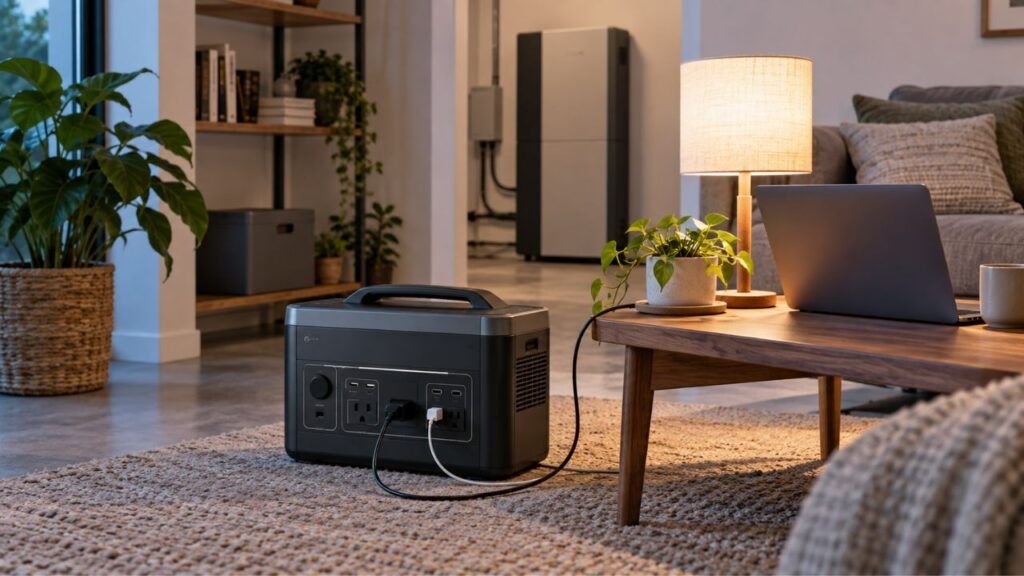
- Plug appliances directly into the generator when designed for that purpose.
- Never backfeed household wiring through a regular wall outlet.
- Use approved transfer or isolation equipment for home-circuit backup.
- Confirm whether your system supports 120V, 240V, or both.
- Make sure the inverter can handle connected circuit loads.
- Follow the solar generator manufacturer’s installation requirements.
- Use a qualified electrician for permanent panel connections.
- Follow applicable electrical codes and local requirements.
Backfeeding can create dangerous voltage on electrical lines.
It can endanger your home and utility workers repairing the grid.
Do not improvise a whole-house connection simply because a power station has enough wattage.
Final Verdict: How Long Can a Solar Generator Really Power Your House?
A solar generator can power a house for hours, days, or potentially much longer with sufficient solar recharging. The deciding factor is not simply the generator’s advertised wattage.
Battery kWh tells you how much energy is available. Appliance consumption tells you how quickly you spend it. Inverter wattage determines which loads can operate. Solar production determines how much electricity you can replace.
For most homeowners, I would focus on essential-load backup first. Refrigeration, communications, medical devices, lights, and several small appliances are much easier to support than normal whole-house living.
Once you know your daily emergency energy requirement, choosing the right battery size becomes much easier.
Related FAQs
Can a Solar Generator Power a House Overnight?
Yes. Many 2–3kWh solar generators can support carefully selected household essentials overnight. Your actual runtime depends on refrigeration, medical equipment, heating, cooling, and other connected loads.
How Long Will a 2,000Wh Solar Generator Power a House?
A 2,000Wh generator may provide roughly 1,700Wh of usable AC energy under a conservative planning assumption. That could support light essentials for most of a day, but high-power appliances can drain it within hours.
How Long Will a 5kWh Solar Generator Power a House?
A 5kWh battery may provide around 4.25kWh of usable AC energy. It could cover approximately one to several days of essential loads, depending on daily consumption and solar recharging.
How Long Will a 10kWh Battery Power a House?
A 10kWh battery could provide several days of carefully managed essentials. Under near-normal household consumption, however, it may last less than one day in some homes.
How Many kWh Does a House Need During a 24-Hour Outage?
There is no universal number. A carefully managed household might need only 2–5kWh for essentials, while heating, cooling, pumps, and additional appliances can push emergency consumption much higher.
How Long Will a 3,000-Watt Solar Generator Run a Refrigerator?
The 3,000-watt output rating cannot determine runtime by itself. You also need the battery capacity in Wh or kWh and the refrigerator’s actual daily energy consumption.
Can a Solar Generator Run a Refrigerator All Night?
Yes. Many properly sized solar generators can run a refrigerator overnight. Make sure the inverter handles compressor startup surge and the battery has enough capacity for other overnight loads.
Can a Solar Generator Run Central Air Conditioning?
Some high-output systems can run compatible central AC equipment, particularly units offering sufficient surge capacity and 240V output. However, air conditioning can consume battery energy very quickly.
Does a Solar Generator Work at Night?
Yes. The battery powers connected appliances at night using electricity stored earlier. Solar panels stop producing useful power after sunset, so sufficient stored capacity is necessary.
Can Solar Panels Recharge a Generator While It Is Powering Appliances?
Yes, many solar generators support charging while supplying power. If solar input approaches or exceeds appliance consumption, the battery can discharge more slowly or potentially recharge during operation.
Can a Solar Generator Power a House for Several Days?
Yes, especially when powering essential loads with substantial battery capacity and solar recharging. Several days of normal whole-house electricity requires much greater storage than several days of emergency essentials.
Can I Connect a Solar Generator Directly to My Breaker Panel?
Only systems designed for home integration should connect through compatible transfer or isolation equipment. Permanent or breaker-panel connections should follow manufacturer requirements, electrical codes, and professional installation practices.

Austin Parker writes practical generator how-to guides, troubleshooting advice, and buying guides for solar, portable, and fuel-powered generators. His focus is helping readers solve common power problems, understand their options, and choose dependable equipment for real-world use.