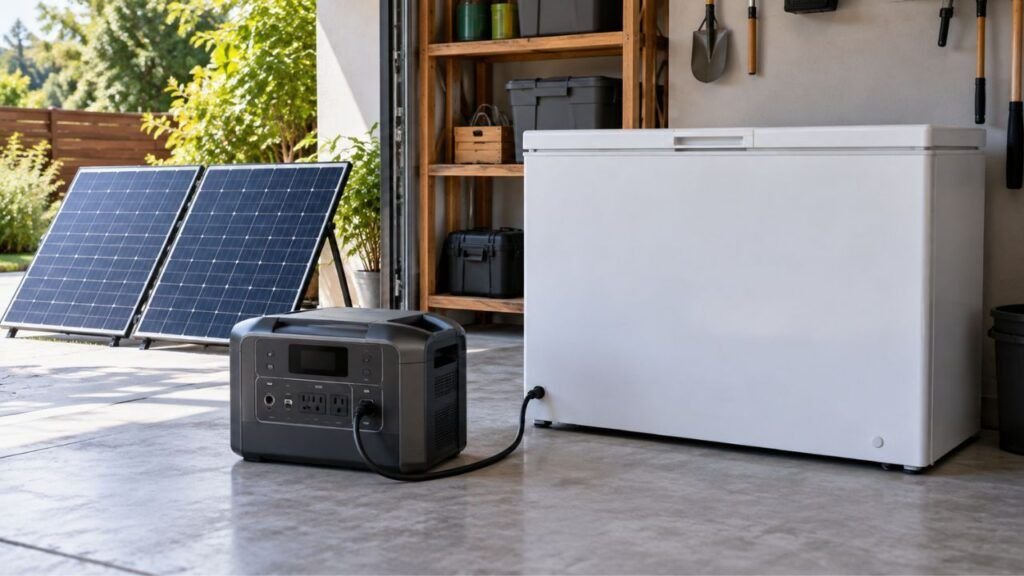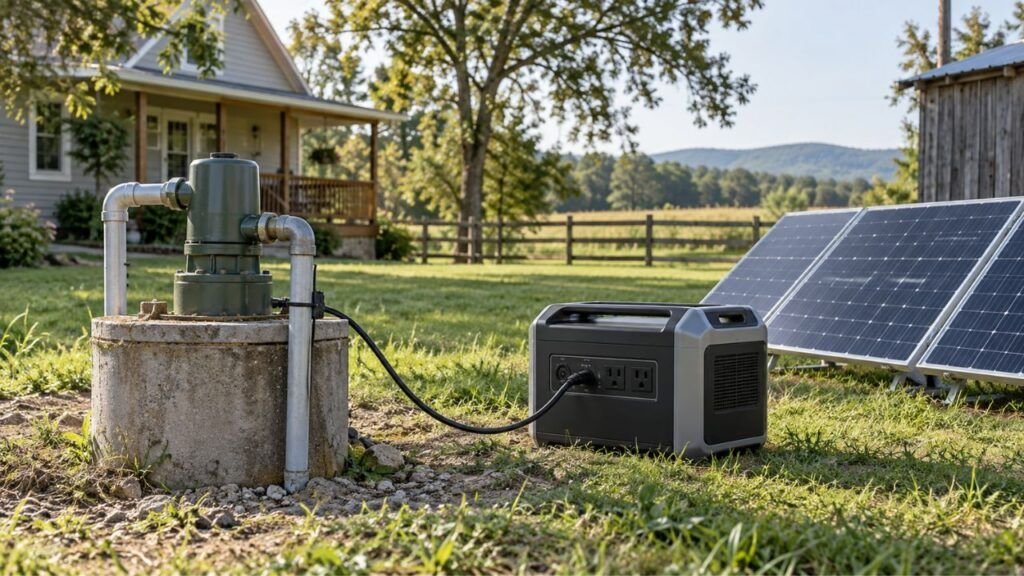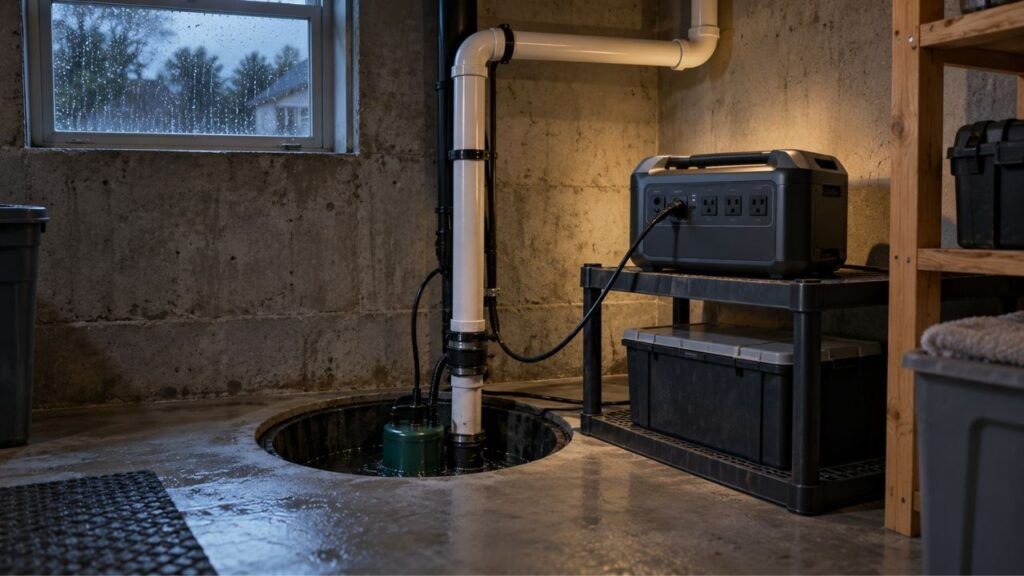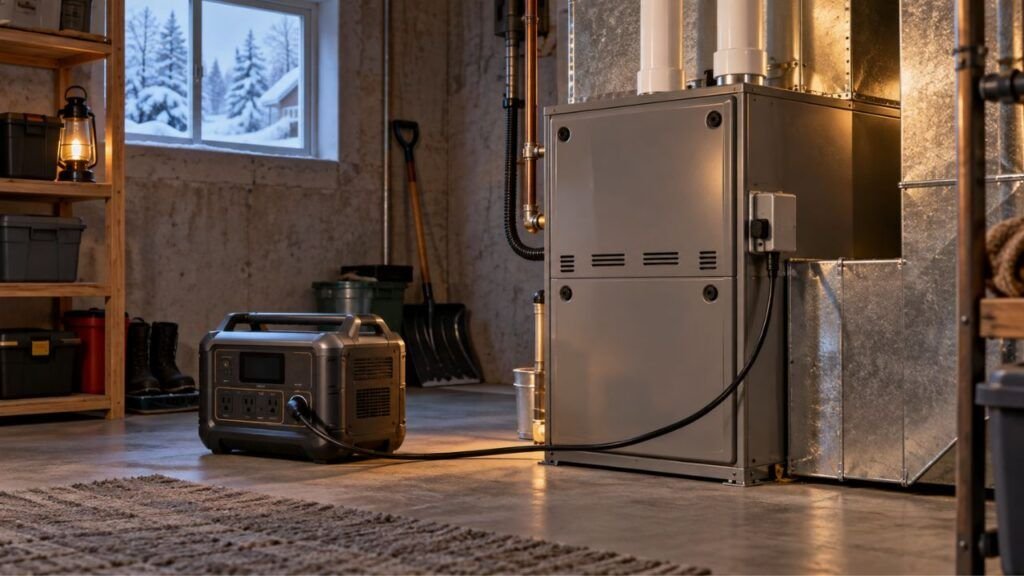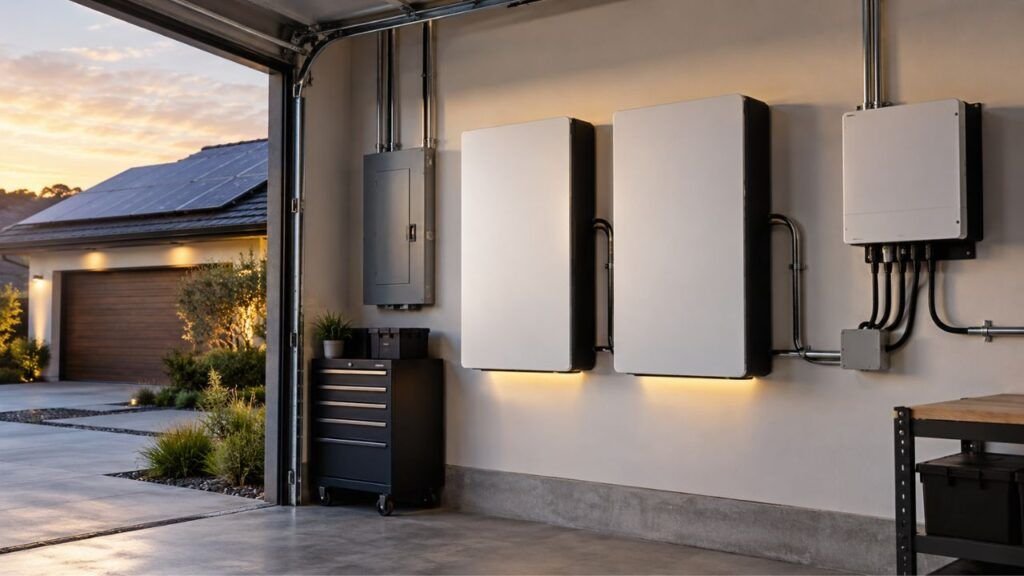
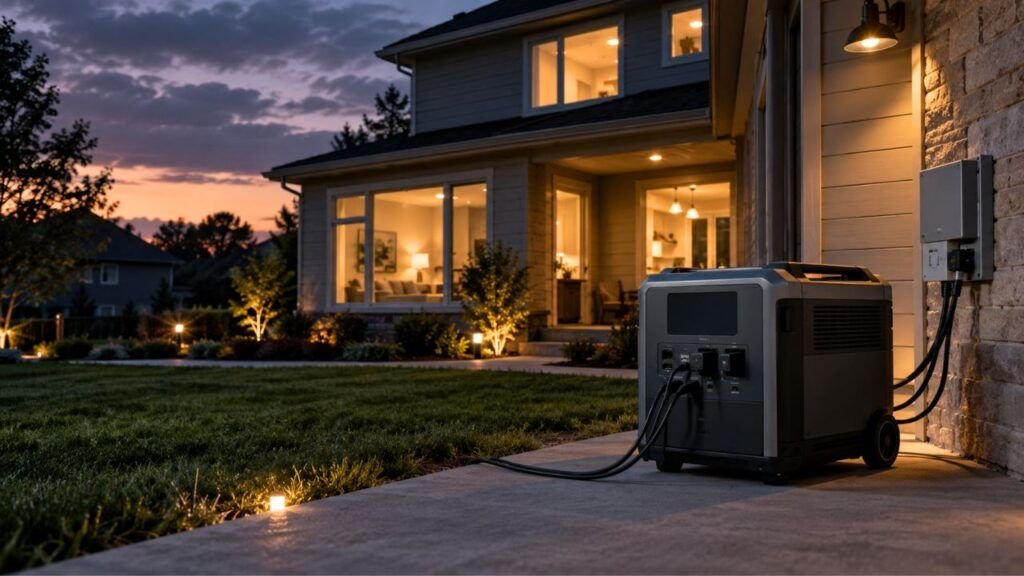
A typical home may need roughly 5,000 to 10,000 watts of surge power for essential backup, while homes running central HVAC, large pumps, or several major appliances may need 10,000 to 20,000 watts or more. Your actual requirement depends on what is already running when the largest motor or compressor starts.
In this guide, I’ll help you calculate your home’s surge requirement without simply guessing from house size. We’ll also look at running watts, startup loads, 120V versus 240V equipment, surge duration, solar generators, and common sizing mistakes.
Key Takeaways
- Surge power is the temporary extra power some appliances need during startup.
- Essential home backup may require around 5,000 to 10,000 peak watts.
- Central HVAC and large pumps can push surge needs much higher.
- Do not automatically add every appliance’s full starting wattage together.
- Start with your simultaneous running load and largest realistic startup surge.
- Battery capacity in watt-hours does not determine inverter surge capability.
- Check both surge wattage and how long that surge output can last.
- Your backup system must support the voltage your appliances require.
- Actual appliance specifications are more useful than generic wattage charts.
- Whole-home systems with large 240V loads may need professional sizing.
How Much Surge Power Does a Typical Home Need?
There is no single surge-power number that fits every house. Still, the ranges below can help you understand the general size of backup system you may be dealing with.
| Backup Goal | Rough Surge Power Range | Typical Loads |
| Limited essential backup | 2,000–4,000 W | Refrigerator, lights, router, chargers |
| Typical essential backup | 4,000–7,500 W | Essentials plus furnace blower or small pump |
| Broader home backup | 7,500–12,000 W | More circuits, pumps, cooking, limited cooling |
| Backup with central HVAC | 10,000–15,000+ W | Essentials plus central AC or larger pumps |
| Broad whole-home backup | 15,000–25,000+ W | Several major 120V and 240V appliances |
Treat these numbers as planning ranges rather than final sizing figures.
A refrigerator, furnace blower, sump pump, and a few lights might fit comfortably within one system. Add central air conditioning, an electric water heater, and a well pump, and the required peak power can increase quickly.
That is why I would never size home backup from a general chart alone.
What Is Surge Power in a Home?
Surge power is the short burst of additional electricity certain appliances need when starting. To calculate it correctly, you first need to separate continuous demand from startup demand.
Running Watts
Running watts are the power an appliance needs after it has started and settled into normal operation.
For example, a refrigerator compressor might use a few hundred watts while running. A furnace blower, pump, or air conditioner also has a normal operating wattage.
Your backup source must supply enough continuous output for everything operating together.
Starting or Surge Watts
Starting watts describe the higher power demand that can occur when a motor or compressor first turns on.
You may also see manufacturers use terms such as:
- Starting watts
- Surge watts
- Startup watts
- Peak watts
- Inrush power
These terms are often related, but manufacturers do not always define them identically.
Check the specification sheet carefully before comparing two backup systems.
Additional Starting Watts vs. Total Starting Watts
This distinction causes a lot of sizing mistakes.
Suppose an appliance uses:
- 500 watts while running
- 1,500 watts total while starting
Its additional startup demand is:
1,500 W − 500 W = 1,000 W
If that 500-watt running load is already included in your total, you normally add the additional 1,000 watts, not another full 1,500 watts.
That prevents you from counting the same running load twice.
Why Do Some Home Appliances Need Extra Power to Start?
Many motors and compressors need more electrical current when starting from a stopped position. Once the motor reaches normal operating speed, its power demand usually falls.
This is why refrigerators, freezers, well pumps, sump pumps, furnace blowers, and air conditioners deserve extra attention.
However, you should not assume every motor needs the same multiplier.
One appliance might have a fairly modest startup increase. Another could require several times its normal running power for a brief period.
The actual requirement depends on the motor, compressor design, controls, efficiency, and startup method.
Resistive loads behave differently. An electric heater or water-heating element may use a lot of continuous power without producing the same kind of compressor startup spike.
So rather than using a universal “multiply by three” or “multiply by seven” rule, check your actual equipment whenever possible.
Which Home Appliances Create the Largest Surge Loads?
A few motor-driven appliances usually matter much more than lights and electronics. The table below shows where I would look first when estimating your home’s startup requirement.
| Appliance | Typical Power Behavior | Startup Concern | What to Check |
| Refrigerator | Low to moderate running load | Compressor startup | Manual or manufacturer specs |
| Freezer | Low to moderate running load | Compressor startup | Starting watts |
| Central air conditioner | High running load | Potentially very high startup | HVAC specifications |
| Window air conditioner | Moderate load | Compressor startup | Product label |
| Well pump | Moderate to high load | Strong motor startup | Pump specifications |
| Sump pump | Moderate load | High relative startup | Starting amps or watts |
| Furnace blower | Moderate load | Motor startup | Equipment nameplate |
| Electric water heater | High continuous load | Usually less startup concern | Element wattage |
| Microwave | High operating load | Usually limited startup concern | Input wattage |
| Electric range | Very high operating load | Mostly continuous demand | Appliance specifications |
These are categories rather than exact wattages because two appliances of the same type can have very different electrical requirements.
For final sizing, use the equipment label, manual, manufacturer data, or measurements from appropriate electrical test equipment.
How to Calculate Your Home’s Surge Power Requirement
The easiest way to avoid buying too little or far too much backup power is to work from your own appliance list. Here is the process I recommend.
Step 1: Decide What You Actually Want to Back Up
Start by choosing your backup level.
Critical loads might include:
- Refrigerator
- Medical equipment
- Internet equipment
- Phone charging
- Essential lighting
- Sump pump
- Furnace controls
Essential living loads may add:
- Microwave
- Television
- More lighting
- Furnace blower
- Window air conditioner
- Selected kitchen appliances
Whole-home backup may also include:
- Central HVAC
- Well pump
- Electric water heater
- Electric range
- Clothes dryer
- Multiple large household circuits
You do not need to size your system for every breaker simply because it exists.
Reducing the number of heavy loads operating together can dramatically reduce the required generator or inverter size.
Step 2: Find Each Appliance’s Running Watts
Check the appliance label or manufacturer’s documentation.
If watts are not listed but volts and amps are available, a basic estimate is:
Watts = Volts × Amps
For example:
120 V × 5 A = 600 W
Remember that a nameplate may show maximum electrical input rather than average everyday consumption.
For larger hardwired equipment, manufacturer specifications are usually more useful than generic online charts.
Step 3: Add Everything That Could Run at the Same Time
Now add the running watts for all loads you expect to operate simultaneously.
The formula is:
Total running load = sum of simultaneous running watts
The word simultaneous matters.
If you never plan to use the microwave while an electric cooking appliance is operating, you may not need to include both at the same time.
Load management can make a smaller backup system surprisingly capable.
Step 4: Find the Largest Additional Startup Surge
Next, identify the appliance with the biggest realistic startup event.
If you know its total starting watts:
Additional startup surge = starting watts − running watts
Then calculate:
Estimated peak requirement = total running load + largest additional startup surge
This is usually more useful than adding the full starting wattage of every appliance.
Step 5: Consider Whether Two Large Motors Could Start Together
The previous calculation assumes one significant startup event occurs at a time.
Real homes are not always that predictable.
Your refrigerator could restart just as a sump pump activates. A furnace blower could start while another compressor is already cycling.
For smaller loads, this may not matter.
For central air conditioners, large pumps, or several automatic motor loads, simultaneous startup deserves closer attention.
You may need to:
- Stagger large appliance starts
- Turn some circuits off temporarily
- Use manual load management
- Use an automatic load-management system
- Increase available surge capacity
Whole-home automatic systems deserve particularly careful sizing.
Step 6: Add Practical Headroom
Running a backup source right at its maximum rating leaves little room for unexpected demand.
A practical planning margin of roughly 15% to 25% can provide useful breathing room.
However, do not treat this percentage as a universal electrical rule.
Extra capacity cannot fix:
- Wrong voltage
- Insufficient surge duration
- An undersized outlet
- An incompatible transfer setup
- A system that cannot start your HVAC equipment
Think of headroom as extra flexibility, not a substitute for correct sizing.
Step 7: Compare Both Ratings on the Backup System
Your backup source must pass two tests.
Continuous output ≥ total running load
And:
Surge output ≥ calculated startup peak
Passing only one test is not enough.
A generator might offer plenty of peak wattage but insufficient continuous output.
A battery inverter might run your normal loads comfortably but shut down whenever the largest compressor starts.
Check both numbers.
Example Surge Power Calculation for a Home
A worked example makes this much easier to understand. The numbers below are illustrative, so you should replace them with your actual appliance specifications.
| Load | Running Watts | Total Starting Watts | Additional Surge |
| Refrigerator | 200 W | 900 W | 700 W |
| Furnace blower | 600 W | 1,800 W | 1,200 W |
| Sump pump | 800 W | 2,000 W | 1,200 W |
| Microwave | 1,200 W | 1,200 W | 0 W |
| Lights | 250 W | 250 W | 0 W |
| Router and electronics | 150 W | 150 W | 0 W |
First, add the running load:
200 + 600 + 800 + 1,200 + 250 + 150 = 3,200 watts
The largest additional startup surge is:
1,200 watts
Now calculate the estimated peak:
3,200 W + 1,200 W = 4,400 W
So this example home needs at least:
- 3,200 watts of continuous output
- 4,400 watts of usable startup capability
I would still want some practical headroom rather than selecting a unit rated exactly at those numbers.
The appliance specifications and startup behavior should ultimately determine the final size.
Should You Add All the Starting Watts Together?
Usually, no.
If all appliances are already included at their running wattage, adding every appliance’s complete starting wattage can significantly exaggerate the requirement.
A more practical calculation is generally:
Total simultaneous running watts + largest additional startup surge
That approach assumes large appliances start separately.
If two or more substantial motors can realistically start together, then calculate that combined scenario instead.
For example, a refrigerator compressor and small fan starting together may not concern you.
A central air conditioner and large well pump starting together can be a completely different situation.
What Happens If Two Appliances Surge at the Same Time?
Automatic appliances do not wait for you to schedule their startup. A refrigerator thermostat, pump switch, and HVAC system can all call for power independently.
If their startup events overlap, your peak demand can exceed the simple single-surge calculation.
You can reduce that risk by:
- Starting major loads one at a time
- Temporarily disabling unnecessary appliances
- Avoiding several motor-driven loads together
- Using load-management equipment
- Delaying HVAC startup after power restoration
- Providing additional inverter or generator headroom
This is especially important with automatic whole-home backup.
A system that works perfectly during manual testing may behave differently when several appliances restart after an outage.
Why Surge Duration Matters, Not Just Surge Watts
A large surge rating sounds impressive, but the number alone does not tell you everything. You also need to know whether that power is available long enough to start your appliance successfully.
A Peak Rating May Last Only Briefly
A backup unit advertised with 10,000 watts of peak output does not necessarily provide 10,000 watts continuously.
Peak power is temporary.
Some devices need only a very short burst. Others may require elevated power for longer while their motor or compressor accelerates.
If the power source reduces output or shuts down before startup finishes, the appliance may never get running.
Compare Peak Watts and Peak Duration
When the manufacturer provides the information, compare:
- Continuous output
- Surge output
- Surge duration
- Overload duration
- Automatic shutdown behavior
Two systems with identical advertised peak wattage can perform differently with the same motor.
This is one reason I would never choose home backup by looking at the biggest wattage number printed on the box.
Why This Matters More With Battery Backup
A battery system needs several parts to support the startup event.
These include:
- Battery cells
- Battery management system
- Inverter
- Internal wiring
- Output connections
A battery can store a huge amount of energy and still have an inverter that cannot start your largest appliance.
That brings us to another important distinction.
Surge Power vs. Battery Capacity: Watts and Watt-Hours Are Different
Watts and watt-hours answer two completely different questions.
Watts tell you how much power the system can deliver at one moment.
Watt-hours tell you how much energy the battery stores for later use.
Imagine a solar generator with a large 5,000Wh battery.
That sounds impressive.
But if its inverter cannot provide the startup power required by your air conditioner, the large battery does not solve the problem.
Likewise, a small battery could have a powerful inverter but provide only a short runtime.
A basic battery runtime estimate is:
Runtime = usable battery capacity in Wh ÷ average load in W
For example:
4,000 Wh ÷ 800 W = about 5 hours
Real runtime will usually be lower because of inverter losses, standby consumption, temperature, and changing appliance loads.
Size watts for power and watt-hours for runtime separately.
Does a Solar Generator Need More Surge Power Than a Fuel Generator?
Both systems must meet the startup demand of the connected appliances. However, they provide that power in different ways, so you should compare their ratings carefully.
Solar Generators and Portable Power Stations
A solar generator generally uses a battery and inverter to produce household AC power.
Check:
- Continuous inverter output
- Surge output
- Surge duration
- Battery discharge limits
- 120V or 240V capability
- Individual outlet limits
Do not assume a large battery means a powerful inverter.
Also remember that adding solar panels improves charging capability. It does not automatically increase inverter surge power.
Portable Fuel Generators
Fuel generators usually list both running watts and starting watts.
Make sure both ratings exceed your calculated requirements.
Also check whether the rated output changes with fuel type.
A dual-fuel or tri-fuel generator may produce different output on gasoline, propane, and natural gas.
Standby Generators
Home standby generators can supply larger household loads and may work with automatic transfer and load-management equipment.
These systems require more careful electrical planning because power can be restored to many circuits automatically.
Professional sizing becomes increasingly valuable when central HVAC and several 240V appliances are involved.
Why 120V vs. 240V Matters for Home Surge Power
Wattage alone does not tell you whether a backup source can operate an appliance.
Many smaller appliances use 120V power.
Larger household equipment often requires 240V, including:
- Central air conditioners
- Some heat pumps
- Electric clothes dryers
- Electric ranges
- Electric water heaters
- Larger well pumps
- Some workshop equipment
A 120V-only solar generator cannot power a 240V appliance simply because its wattage rating looks high enough.
You also need to check outlet amperage.
For example, a generator may advertise several thousand watts of total output while an individual outlet has a much lower limit.
Always verify:
- System voltage
- Outlet voltage
- Outlet amperage
- Total continuous output
- Surge rating
- Connection method
All of these limits matter.
Can a Soft Starter Reduce the Surge Power Your Home Needs?
A compatible soft starter can reduce the startup stress of some air-conditioning compressors.
Instead of allowing the compressor to demand its full normal inrush current instantly, the device manages the startup process more gradually.
That can make certain HVAC systems easier for a generator or battery inverter to start.
However, do not assume every air conditioner benefits equally.
The result depends on:
- Compressor design
- HVAC system type
- Existing starting components
- Equipment compatibility
- Backup source characteristics
Some modern variable-speed systems already use electronics that control motor startup differently.
If you are considering a soft starter for central HVAC, follow the equipment manufacturer’s requirements and use qualified installation when necessary.
Does Home Size Determine How Much Surge Power You Need?
Not reliably.
Square footage can give you a rough idea of how many electrical loads a home might contain, but it does not tell you which loads operate together.
Consider two houses.
A larger home might use:
- Natural gas heating
- Gas water heating
- Gas cooking
A smaller all-electric home might have:
- Heat pump
- Electric backup heat
- Electric water heater
- Electric range
- Large well pump
The smaller home could easily have the higher electrical peak.
Your surge requirement depends more on:
- HVAC type
- Fuel mix
- Pumps
- Electric heating
- Electric cooking
- Laundry appliances
- EV charging
- Backup goals
- Simultaneous operation
Use the actual loads rather than assuming a certain generator size based on square footage.
Why Your Monthly Electric Bill Cannot Tell You Your Surge Requirement
Your utility bill measures energy used over time. Surge sizing is about the highest power demand that can happen within a much shorter period.
An average American household may consume several hundred kilowatt-hours of electricity each month.
Spread evenly across every hour, that number may appear surprisingly small.
But households do not use electricity evenly.
Demand can rise suddenly when:
- Central AC starts
- An electric oven heats
- A water heater activates
- A pump starts
- A dryer operates
- Several appliances run together
Your monthly energy usage can help estimate battery capacity.
It cannot tell you whether an inverter will successfully start your air conditioner tomorrow afternoon.
For surge sizing, instantaneous demand matters more.
Do You Really Need a 20% to 25% Power Buffer?
Some additional headroom is useful, but I would not treat 20% or 25% as a strict rule for every home.
Extra capacity can help with:
- Unexpected appliances turning on
- Small startup variations
- Future loads
- Generator derating
- Avoiding operation at maximum output
- Short periods of higher demand
For example, if your calculation shows a 5,000-watt requirement, choosing exactly 5,000 watts leaves little flexibility.
However, adding 25% does not solve every problem.
A larger wattage number cannot compensate for:
- Wrong voltage
- Insufficient surge duration
- Low outlet capacity
- Improper home connection
- Incompatible equipment
Calculate correctly first. Add reasonable headroom second.
Common Mistakes When Calculating Home Surge Power
Surge calculations are not difficult once you separate running loads from startup loads. Most errors happen because one important limit gets overlooked.
- Sizing from monthly energy use: Kilowatt-hours do not show instantaneous startup demand.
- Sizing from house square footage: Appliances matter more than home size.
- Ignoring startup watts: Motors and compressors can overload an undersized source.
- Adding every full starting wattage: This can greatly overstate required capacity.
- Double-counting running power: Add only the extra startup portion when appropriate.
- Using one universal surge multiplier: Different motors have different startup characteristics.
- Ignoring simultaneous starts: Automatic equipment can occasionally start together.
- Checking peak watts but not surge duration: Peak power must last long enough.
- Ignoring continuous output: Your system must also sustain the normal load.
- Ignoring voltage: Some household appliances require 240V.
- Ignoring outlet limits: Total generator wattage does not override outlet ratings.
- Assuming more battery means more output: Watt-hours and inverter watts are different.
- Depending entirely on generic charts: Use actual equipment specifications whenever possible.
- Ignoring fuel type: Some generators produce less power on certain fuels.
Avoiding these mistakes will usually give you a far more realistic answer than choosing a generator from a simple home-size chart.
When Should You Get a Professional Load Calculation?
Basic essential-load backup can often be estimated using appliance specifications. More complicated whole-home setups deserve additional attention.
Consider professional sizing when:
- You want true whole-home backup
- Central air conditioning must run
- You have a large heat pump
- Electric resistance heat needs backup
- You have a large well pump
- Several 240V appliances must operate
- Your home is mostly electric
- You want automatic transfer
- Several large motors can start automatically
- Backup power will connect directly to household wiring
A professional can also help verify transfer equipment, conductor sizing, panel compatibility, grounding requirements, and local electrical-code considerations.
Never improvise a connection between a generator or portable power station and household wiring.
Use properly approved equipment designed for that purpose.
Final Words
So, how much surge power does a home need?
For essential backup, roughly 5,000 to 10,000 watts of surge capability may cover many homes, depending on the appliances involved. Central HVAC, large pumps, electric heating, and broad whole-home backup can push that requirement toward 10,000 to 20,000 watts or more.
The better approach is not choosing a number from a chart.
Calculate your simultaneous running load, identify the largest realistic startup event, and make sure your backup source can handle both.
Also check surge duration, voltage, outlet limits, and battery capacity separately.
Once those numbers match your actual appliances, you can choose backup power with much more confidence.
Related FAQs
Is 5,000 Watts of Surge Power Enough for a House?
It can be enough for carefully managed essential loads such as refrigeration, lighting, communications, and selected heating equipment. Central AC, large pumps, or multiple electric appliances may require considerably more.
Is 10,000 Surge Watts Enough for Home Backup?
Ten thousand surge watts can support many essential or broader backup setups, but it does not guarantee whole-home operation. Check your continuous load, largest startup requirement, voltage needs, and simultaneous appliance use.
How Much Higher Should Surge Watts Be Than Running Watts?
There is no universal percentage because startup demand varies by appliance. Instead, add your simultaneous running loads and determine the largest additional startup demand from the actual equipment specifications.
Do I Add All Starting Watts When Sizing a Generator?
Usually not. If motors are expected to start separately, add the total simultaneous running load and the largest additional startup surge. Include multiple surges only when those motors can realistically start together.
How Much Surge Power Does a Refrigerator Need?
It depends on the compressor and refrigerator design. The startup requirement can be substantially higher than normal running power, so use the appliance label or manufacturer specifications rather than relying on one generic refrigerator wattage.
How Much Surge Power Does Central Air Conditioning Need?
Central air conditioners can have some of the largest startup loads in a home. The exact requirement depends on compressor size, design, starting equipment, and whether the system uses conventional or variable-speed technology.
Does a Well Pump Need High Surge Power?
Many well pumps have significant motor-starting requirements compared with their normal running load. Check the pump nameplate or manufacturer data and make sure your backup source also provides the required voltage.
Can a Solar Generator Handle Appliance Startup Surges?
Yes, if its inverter provides enough surge power for long enough to start the appliance. Battery capacity alone does not determine whether a solar generator can handle a compressor or pump startup.
Can a Battery Have Enough Capacity but Not Enough Surge Power?
Yes. A battery may store enough watt-hours to run an appliance for many hours while its inverter lacks the peak wattage required to start that appliance. Capacity and output must be checked separately.
How Long Does a Generator’s Surge Rating Last?
It varies by generator or inverter design. Surge power is temporary rather than continuous, so check the manufacturer’s specifications to see how the peak rating is defined and how long it can be maintained.
Does a Soft Starter Reduce Generator Size?
A compatible soft starter can reduce startup demand for certain HVAC compressors, which may make the system easier to start with a smaller backup source. The result depends on the specific HVAC equipment and backup system.
Do 240V Appliances Require More Surge Power?
Not simply because they use 240V. Surge demand depends on the appliance itself. However, many high-power household loads use 240V, so your backup source must provide both sufficient wattage and the correct voltage.

Austin Parker writes practical generator how-to guides, troubleshooting advice, and buying guides for solar, portable, and fuel-powered generators. His focus is helping readers solve common power problems, understand their options, and choose dependable equipment for real-world use.