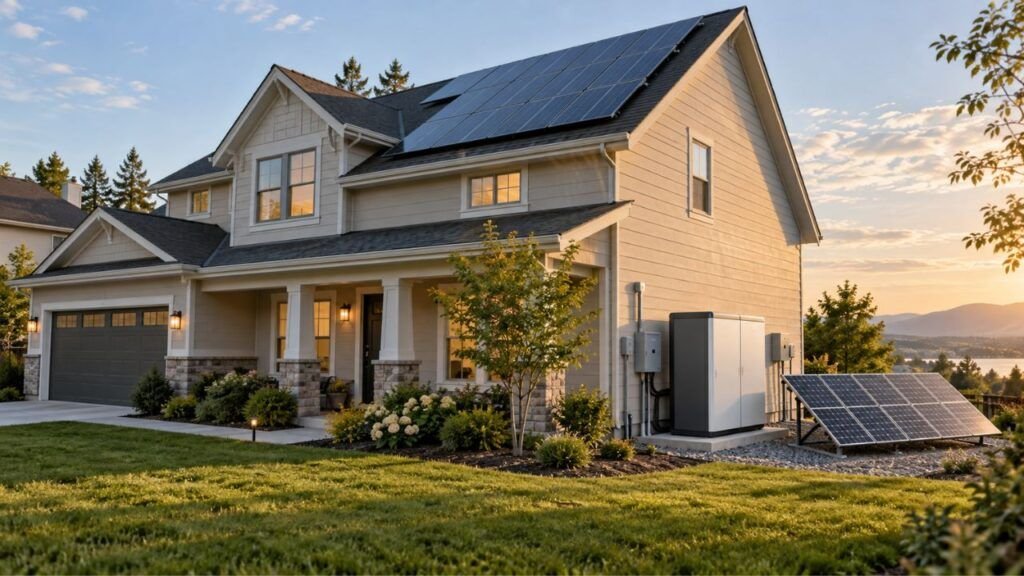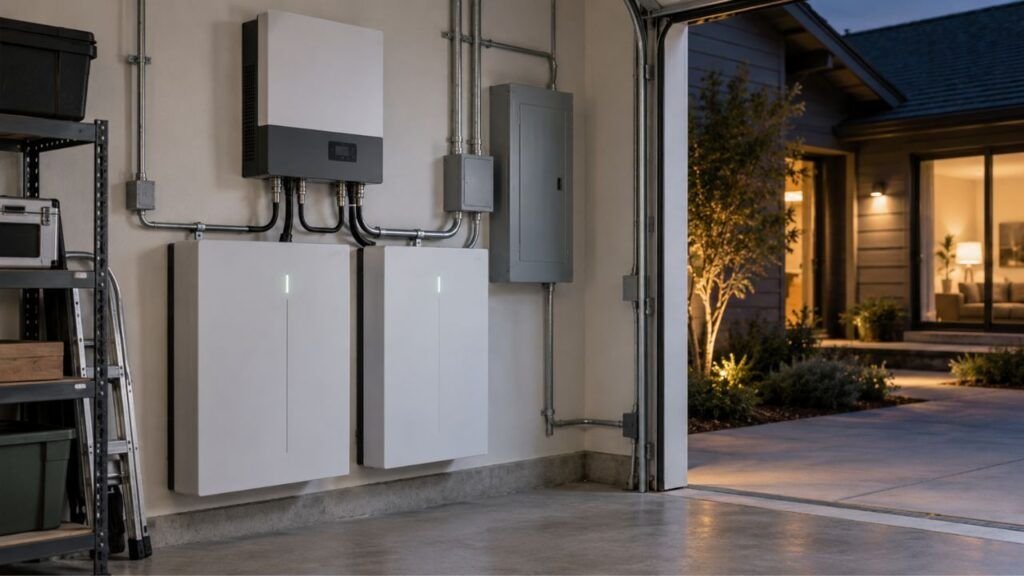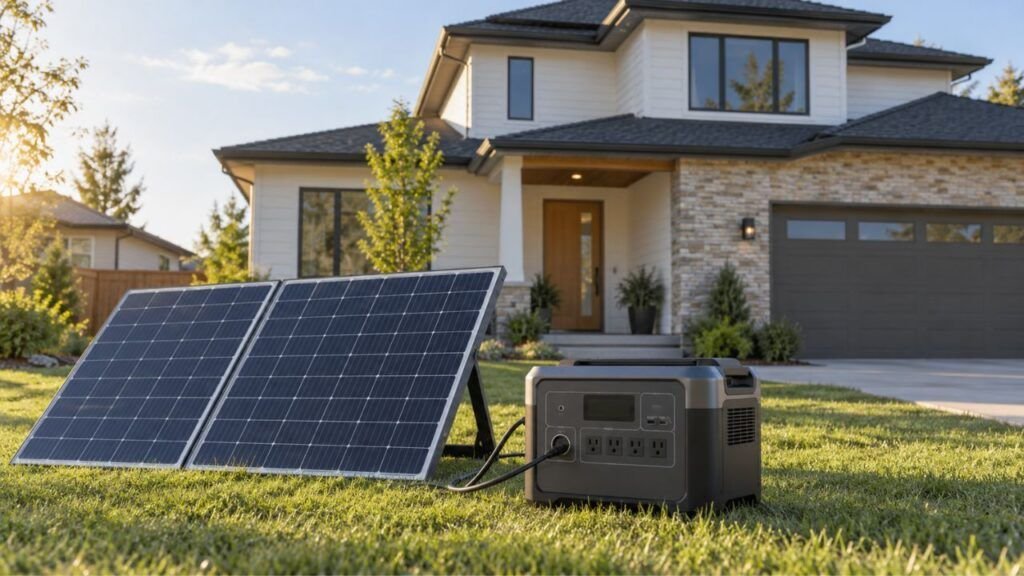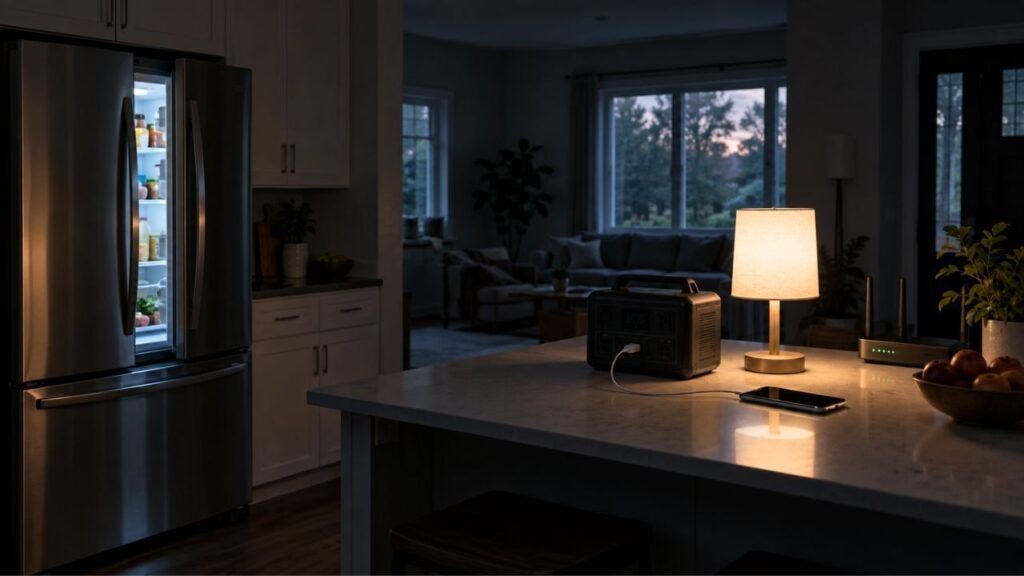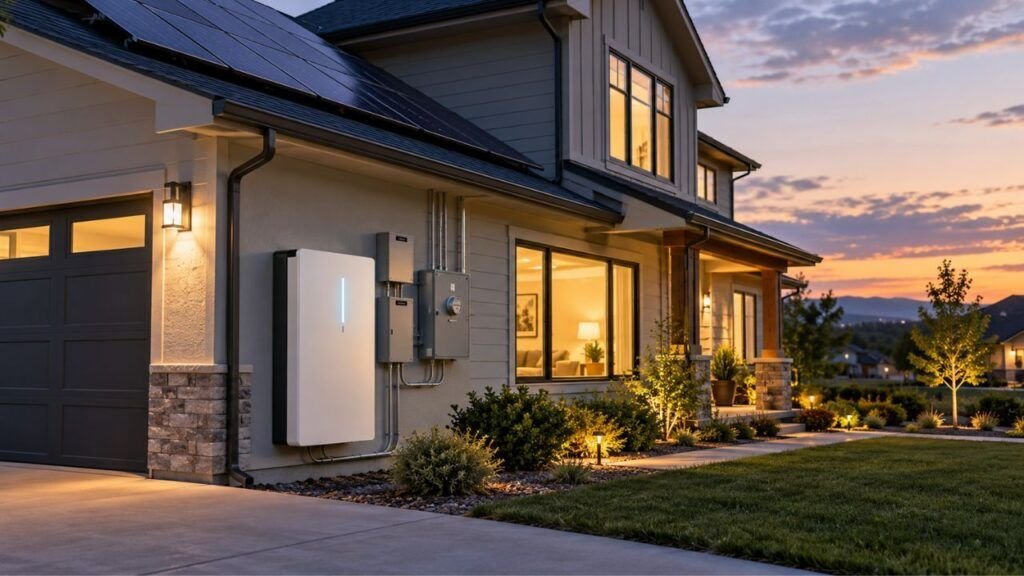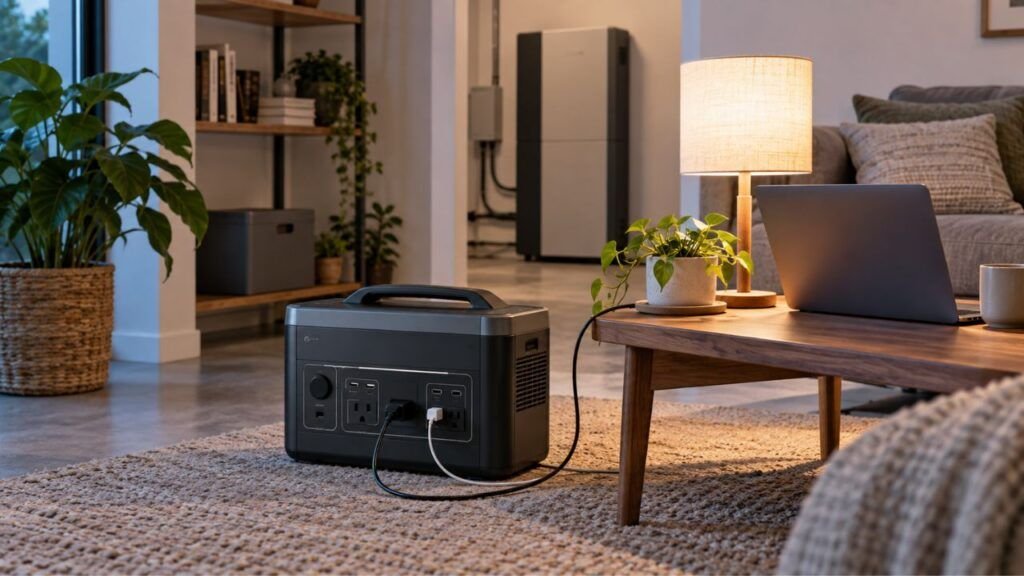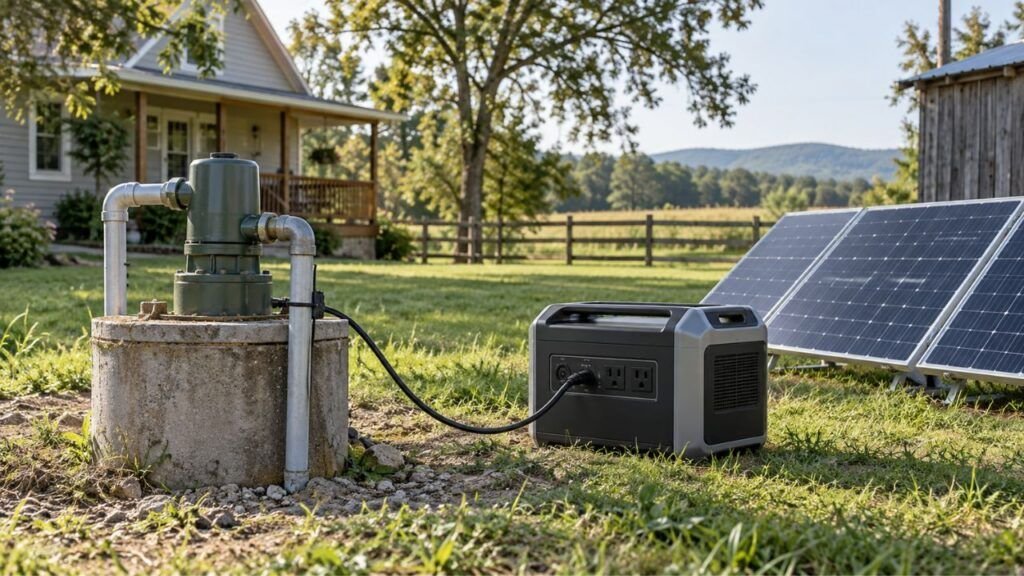
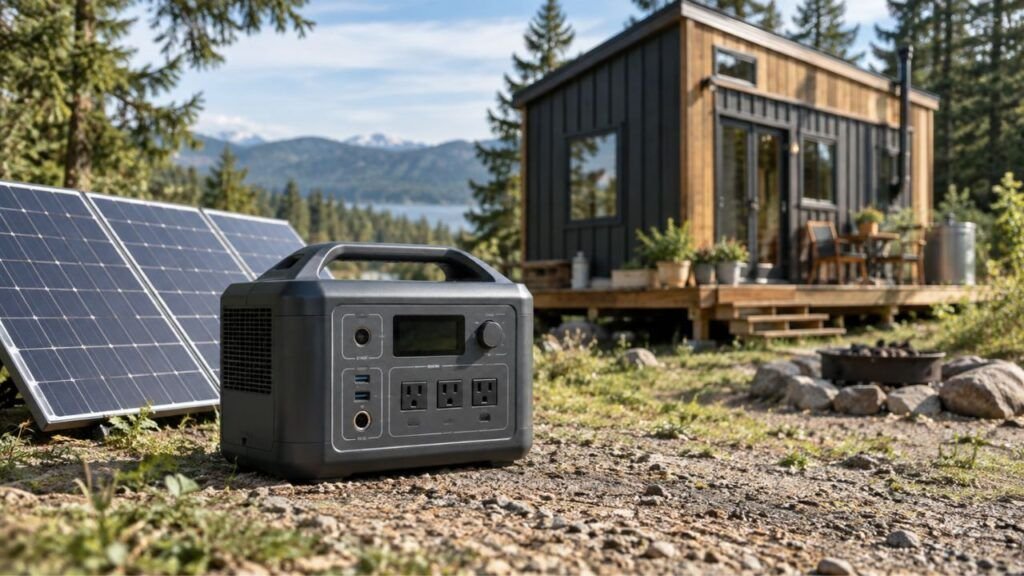
Yes, a properly sized solar generator can handle off-grid tiny-home living. The key is matching battery capacity, inverter output, solar charging capacity, and daily electricity use to your actual lifestyle.
The challenge is not simply finding a powerful solar generator. You need enough stored energy, enough solar panels, and enough charging time. In this guide, I’ll walk you through each part step by step.
Key Takeaways
- A solar generator can power an efficient off-grid tiny home.
- Daily energy use matters more than the home’s square footage.
- Battery capacity determines how long your appliances can run.
- Inverter wattage determines which appliances can operate together.
- Solar input determines how quickly your battery can recharge.
- Electric heating and water heating greatly increase energy demand.
- Expandable batteries are useful for cloudy days and overnight use.
- A backup generator can provide extra security during poor weather.
Can a Solar Generator Really Power an Off-Grid Tiny Home?
Yes, but there is an important difference between powering a tiny home occasionally and supporting full-time off-grid living.
A modern solar generator can comfortably run refrigerators, lights, laptops, televisions, water pumps, internet equipment, fans, and many kitchen appliances.
Larger expandable systems can also handle air conditioners, microwaves, induction cooktops, and other higher-wattage appliances.
The real question is whether your solar generator can supply enough energy every day.
That depends heavily on how you heat, cook, cool, and heat water.
A tiny home using propane for heating and cooking may require surprisingly little electricity. An all-electric tiny home can require several times more battery capacity.
This is why I would never choose a system using house size alone.
Your actual electricity use tells you much more.
It also helps to understand what we mean by a solar generator.
Most solar generators combine several components inside one system:
- Lithium battery storage
- An inverter
- A solar charge controller
- AC outlets
- DC and USB connections
- Monitoring electronics
You then connect compatible solar panels for recharging.
A permanent off-grid solar system usually separates these components. That approach gives you more freedom when designing very large systems.
For a tiny home, however, a modular solar generator can be much simpler.
What Actually Determines Whether a Solar Generator Can Handle Tiny-Home Living?
Several specifications determine whether your system works comfortably or constantly struggles. I recommend checking all of them instead of focusing on one impressive wattage number.
Battery Capacity in kWh
Battery capacity tells you how much electrical energy you can store.
Manufacturers may list this capacity in watt-hours or kilowatt-hours.
For example:
1,000Wh equals 1kWh.
A 5kWh battery therefore stores about five times the energy of a 1kWh battery.
But don’t confuse battery capacity with inverter wattage.
A solar generator advertised as having a 3,000W output does not necessarily have 3kWh of battery storage.
Those are completely different measurements.
Your battery capacity determines how long your appliances can operate before the system needs charging.
You should also remember that real usable energy can be lower. The inverter and electronics consume some power during operation.
For full-time off-grid living, battery expansion can be very valuable.
It allows you to add extra storage without replacing the entire system.
Continuous Inverter Output
The inverter converts battery power into AC electricity for household appliances.
Its continuous wattage rating tells you how much load the system can support at once.
Imagine your appliances are drawing:
- Refrigerator: 150W
- Microwave: 1,200W
- Coffee maker: 900W
- Lights: 80W
Running everything together could require more than 2,300W.
A 1,500W inverter would struggle even with a large battery.
This is why you need to consider simultaneous loads.
You don’t necessarily need to run everything together. Good energy management can reduce your required inverter size.
Surge or Starting Capacity
Some appliances briefly need much more power when starting.
This often happens with equipment containing motors or compressors.
Common examples include:
- Refrigerators
- Freezers
- Water pumps
- Air conditioners
- Power tools
A refrigerator may consume modest power while running. Its compressor can require considerably more power for a moment.
Your solar generator needs enough surge capability to handle those starts.
Otherwise, the system may shut down even with plenty of battery remaining.
Maximum Solar Input
This is one specification I would pay very close attention to.
Maximum solar input determines how quickly your solar generator can recharge from panels.
Suppose your generator has 10kWh of battery storage.
That sounds excellent.
But imagine the unit accepts only 800W of solar input.
Recovering several kilowatt-hours every day could become difficult during short winter days.
Now compare that with a system accepting 2,000W or more.
The second system can potentially recover energy much faster.
Remember this simple rule:
A large battery does not automatically mean fast solar charging.
Check these specifications before buying:
- Maximum solar input wattage
- Solar voltage range
- Maximum solar current
- Number of solar inputs
- Panel compatibility
You also need to stay within the manufacturer’s electrical limits.
120V Versus 240V Output
Many portable solar generators primarily provide 120V AC power.
That works perfectly for many tiny-home appliances.
However, some equipment may require 240V.
Possible examples include certain:
- Well pumps
- Mini-split systems
- Electric ranges
- Clothes dryers
- Water heaters
- Workshop equipment
Not every tiny home needs 240V power.
Still, you should check before buying your generator.
Having enough battery capacity will not help if your appliance requires a voltage your system cannot provide.
How Much Electricity Does a Tiny Home Actually Use?
Tiny-home electricity consumption varies dramatically between households. Your appliance choices, climate, heating system, cooking method, and daily habits all influence the final number.
| Tiny-Home Lifestyle | Example Daily Electricity Use | Typical Loads | Solar-Generator Difficulty |
| Minimal, highly efficient | About 2–4 kWh | Fridge, lights, laptops, router, fans, pump | Relatively easy |
| Comfortable moderate use | About 4–7 kWh | Above plus microwave, TV, coffee maker, occasional AC | Moderate |
| Higher electrical use | About 7–10+ kWh | More cooling, electric cooking, entertainment, appliances | More demanding |
| Heavily all-electric | 10–20+ kWh possible | Electric heat, hot water, cooking, AC, laundry | Much harder |
These numbers are examples, not fixed requirements.
Two identical tiny homes can have completely different energy needs.
One owner may use propane for cooking and heating.
Another may use electric heating, induction cooking, air conditioning, and electric hot water.
The second home will need considerably more solar and battery storage.
That is why measuring or estimating your daily kWh is essential.
Which Tiny-Home Appliances Use the Most Power?
Some appliances barely affect your battery, while others can dominate your entire energy budget. Knowing the difference makes system sizing much easier.
Easy Loads for a Solar Generator
Most modern solar generators handle basic electronics easily.
Typical examples include:
- LED lights
- Smartphones
- Tablets
- Laptops
- Internet routers
- Starlink equipment
- Televisions
- Fans
- Efficient refrigerators
These loads may run for several hours without causing huge power spikes.
Your refrigerator is usually one of the most important continuous loads.
However, an efficient refrigerator can still work well with solar power.
High-Wattage but Short-Duration Loads
Some appliances draw considerable power but run briefly.
Examples include:
- Microwave
- Electric kettle
- Coffee maker
- Toaster
- Hair dryer
- Induction burner
- Blender
A 1,500W appliance sounds demanding.
But running it for five minutes uses much less energy than running a 500W appliance for several hours.
This is where understanding watts and watt-hours becomes useful.
High wattage affects inverter requirements.
Long operating time affects battery capacity.
Loads That Can Change the Entire System Size
Several appliances can completely change your solar design.
These include:
- Electric resistance heaters
- Electric water heaters
- Air conditioners
- Clothes dryers
- Electric ovens
- Electric ranges
These appliances combine high wattage with longer operating times.
That combination drains batteries quickly.
If you plan to use several of them regularly, expect a much larger system.
Why Electric Heating Is the Biggest Challenge for Off-Grid Solar
Electric resistance heating can consume enormous amounts of stored energy.
A small heater may draw around 1,500W continuously.
Run that heater for six hours, and the theoretical energy consumption reaches about 9kWh.
That single appliance could exceed the entire daily electricity budget of an efficient tiny home.
This is why many off-grid homeowners reduce heating demand first.
Good insulation makes a major difference.
So does choosing an efficient heating method.
Common off-grid approaches include:
- Propane heating
- Wood stoves
- High-efficiency mini-split heat pumps
- Improved insulation
- Better air sealing
- Passive solar design
Electric resistance heating can still work.
You simply need enough battery storage and solar production to support it.
In cold northern states, that requirement can become expensive quickly.
Winter also creates another problem.
Heating demand rises exactly when solar production often falls.
Keep that relationship in mind while planning your system.
What Size Solar Generator Do You Need for a Tiny Home?
There is no universal solar-generator size for every tiny home. I recommend sizing your system from actual energy consumption instead of guessing from floor area.
Step 1: Calculate Daily Energy Consumption
Start by listing every electrical device you expect to use.
Then use this basic calculation:
Appliance watts × hours used = watt-hours per day
For example:
A 100W device running five hours uses approximately:
100W × 5 hours = 500Wh
Do this for each appliance.
Then add the numbers together.
For refrigerators and air conditioners, remember that compressors cycle.
They usually do not draw their full running power continuously.
A plug-in electricity monitor can give you better real-world numbers.
Step 2: Calculate Your Peak Simultaneous Load
Next, determine which appliances may run together.
Suppose you have:
- Refrigerator: 150W
- Microwave: 1,200W
- Coffee maker: 900W
- Lights: 100W
Your combined load would be roughly 2,350W.
You would want an inverter capable of handling that load comfortably.
You should also consider surge requirements from compressors and motors.
Step 3: Size Battery Storage
Now determine how many days of stored energy you want.
A simple planning formula is:
Daily electricity use × desired days of autonomy = battery requirement
Suppose your tiny home uses 4kWh daily.
One day of energy would require about 4kWh.
Two days would require about 8kWh before considering losses and reserve capacity.
I would avoid designing a system that depends on reaching zero battery every day.
A little extra capacity gives you breathing room.
Step 4: Size Your Solar Array
Now determine how much solar power you need to replace your daily consumption.
A simple starting calculation is:
Daily Wh ÷ peak sun hours = solar array wattage
Imagine your home uses 4,000Wh daily.
If your location receives five useful peak sun hours:
4,000Wh ÷ 5 hours = 800W
That is only the theoretical starting point.
Real systems experience losses from:
- Panel temperature
- Wiring
- Charging conversion
- Inverter operation
- Dust
- Clouds
- Panel angle
- Partial shading
For that reason, you would normally add additional solar capacity.
Step 5: Check the Generator’s Maximum Solar Input
This step prevents a very common mistake.
Imagine you calculate that a 1,500W solar array would suit your home.
Your generator accepts only 800W of solar input.
Adding 1,500W of panels does not automatically let the generator charge at 1,500W.
The charge controller determines how much solar power the system can accept.
Voltage limits matter too.
Never exceed the manufacturer’s allowed PV voltage range.
Step 6: Check 120V, 240V, and Surge Requirements
Finally, review every major appliance.
Ask yourself:
- Does anything require 240V?
- What is the highest starting surge?
- Which appliances run together?
- Will future appliances increase demand?
This final check can save you from buying the wrong system.
Example: Sizing a Solar Generator for a 4 kWh/Day Tiny Home
Let’s look at a simple planning example. These figures are not universal requirements, but they show how the sizing process works.
| Requirement | Example Target | Why It Matters |
| Daily energy use | 4 kWh | Amount consumed during a typical day |
| Battery storage | Around 6–8 kWh | Provides useful overnight and weather reserve |
| Continuous inverter | Around 3,000W+ | Supports several appliances together |
| Theoretical solar minimum | Around 800W | Based on 4kWh and five peak sun hours |
| Practical solar target | Around 1,200–1,600W+ | Adds recovery and real-world margin |
| Battery expansion | Recommended | Helps during poor-weather periods |
Here’s how I would think about this system.
Your home consumes around 4kWh daily.
A 4kWh battery technically matches one normal day’s consumption.
However, that leaves very little flexibility.
A 6–8kWh setup provides more breathing room for overnight loads, cloudy periods, and occasional heavier use.
Next comes solar production.
An 800W array could theoretically produce 4kWh during five perfect peak-sun hours.
Real conditions are rarely perfect.
Using around 1,200W to 1,600W gives you more recovery potential.
Your exact requirement depends heavily on location.
Arizona and Washington State will not have identical solar conditions.
Neither will summer and winter.
How Much Solar Panel Capacity Do You Need?
Solar-panel sizing determines whether your system can recover what you use every day. Battery storage keeps you running temporarily, but solar generation keeps the system sustainable.
Peak Sun Hours Matter More Than Daylight Hours
A common mistake is counting daylight hours.
Ten hours of daylight does not equal ten hours at full rated panel output.
Solar professionals often work with peak sun hours instead.
Peak sun hours represent the equivalent number of hours receiving strong enough sunlight to equal full-rated solar production.
Your number varies by:
- State
- Season
- Weather
- Panel orientation
- Roof angle
- Shading
- Local climate
A homeowner in Southern California may have very different production from someone in Maine.
Use location-specific solar estimates whenever possible.
Design Around Your Difficult Season
Do not size your off-grid system using only beautiful summer weather.
Think about the season when solar production is weakest.
For many U.S. locations, that means winter.
Winter can bring:
- Shorter daylight periods
- Lower sun angles
- More cloud cover
- Snow
- Increased heating demand
That combination can expose an undersized system quickly.
If you plan to live off-grid year-round, design for realistic seasonal conditions.
Roof-Mounted Versus Ground-Mounted Panels
Tiny homes often have limited roof space.
Roof vents, skylights, chimneys, antennas, and unusual roof shapes can reduce usable area.
Ground-mounted panels can solve that problem.
They may also let you adjust panel angles more easily.
However, ground arrays require additional space.
They also need proper mounting and cable planning.
If your tiny home moves frequently, permanent ground mounting may not be practical.
Portable Panels Versus Rigid Panels
Portable solar panels are convenient.
You can move them toward better sunlight and store them during travel.
They work particularly well with tiny homes on wheels.
However, unfolding and positioning several large portable panels every day becomes inconvenient.
Rigid panels usually make more sense for permanent full-time installations.
Some owners combine both approaches.
They use fixed panels daily and deploy portable panels when extra production is needed.
What Happens During Cloudy Weather?
Solar panels can still produce electricity under cloudy skies, but output may fall significantly. Your battery capacity becomes especially important during these periods.
You can improve cloudy-weather reliability by:
- Installing additional battery storage
- Using more solar capacity within safe system limits
- Reducing optional appliance use
- Running heavy loads during stronger sunlight
- Maintaining an emergency battery reserve
- Keeping a secondary charging option
- Monitoring expected weather conditions
- Avoiding unnecessary standby loads
I would not design an off-grid system assuming every day will be sunny.
Even traditionally sunny locations experience storms and seasonal changes.
Battery autonomy provides the buffer you need.
How Many Days of Battery Backup Should an Off-Grid Tiny Home Have?
There is no single correct number.
Some homeowners manage comfortably with roughly one day of stored electricity.
Others prefer two or three days.
Your ideal reserve depends on:
- Climate
- Solar availability
- Energy consumption
- Backup generator access
- Seasonal conditions
- Distance from utility power
- Comfort level
Suppose your tiny home uses 4kWh daily.
A 4kWh usable battery provides roughly one day’s energy before considering real-world losses and operating reserves.
An 8kWh system gives you considerably more flexibility.
More storage is especially useful overnight and during storms.
However, battery storage alone does not solve everything.
Eventually, you still need enough solar power to refill those batteries.
Think of storage and solar generation as a team.
Solar Generator vs. Permanent Off-Grid Solar System for a Tiny Home
Both approaches can work well, but they solve the problem differently. Your best option depends on portability, electrical demand, expansion needs, and how permanent your tiny-home setup will be.
| Factor | Solar Generator | Permanent Off-Grid Solar System |
| Installation | Relatively simple | More complex |
| Portability | Excellent | Limited |
| Battery expansion | Depends on model | Highly customizable |
| Solar expansion | Limited by built-in controller | Much more flexible |
| Inverter | Built into system | Selected separately |
| 120V/240V options | Model-dependent | Can be designed as needed |
| Component replacement | Often proprietary | Individual parts can be replaced |
| Tiny home on wheels | Excellent fit | Possible, but more complex |
| High electrical demand | Requires large modular system | Easier to customize |
| Best use | Mobile or moderate-demand homes | Permanent high-demand off-grid homes |
A solar generator usually wins for simplicity.
You get the battery, inverter, charging electronics, and outlets together.
Installation can also be much easier.
A component-based system wins in flexibility.
You can choose larger charge controllers, bigger inverters, more batteries, and larger solar arrays.
For a stationary tiny home with very high electricity consumption, that flexibility can become valuable.
For a mobile tiny home with moderate energy needs, a modular solar generator may be easier.
Is an Expandable Solar Generator Better for Full-Time Tiny-Home Living?
For serious off-grid living, I strongly prefer expandable systems.
Your energy needs may change.
You might add air conditioning later.
You could work from home and use more electronics.
Winter conditions may also reveal that your first battery is too small.
Expandable systems let you increase storage without replacing everything.
They also provide more overnight capacity.
However, check exactly how expansion works.
Look for:
- Maximum supported battery capacity
- Number of expansion batteries
- Expansion battery cost
- Connection requirements
- Charging limitations
- Compatibility between battery generations
Some systems advertise expansion but have relatively low maximum limits.
Read the specifications before committing.
Do You Need 240V Power in a Tiny Home?
Not necessarily.
Many tiny homes can operate almost entirely on 120V appliances.
That can simplify your electrical system significantly.
However, 240V becomes important if you plan to use certain large appliances.
Possible examples include:
- Larger well pumps
- Some mini-split systems
- Electric dryers
- Electric ranges
- Electric water heaters
- Certain workshop tools
Make a complete appliance list before choosing your solar generator.
If even one essential appliance requires 240V, your power system must support it.
Do not assume every large solar generator automatically provides 240V output.
Some require two connected units or special accessories.
Others provide it directly.
Always verify your exact configuration.
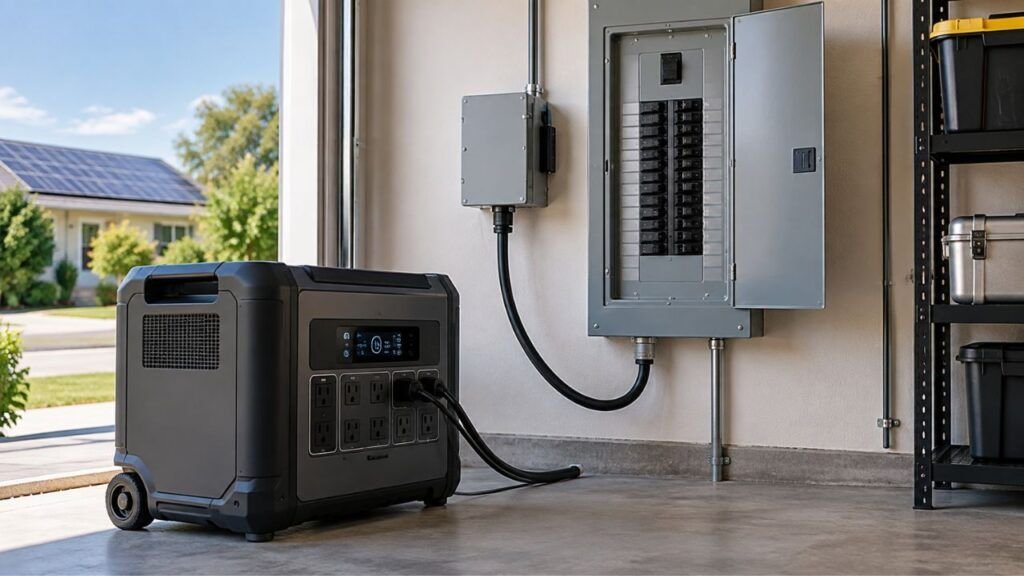
Can a Solar Generator Be Connected to a Tiny Home’s Electrical Panel?
Yes, some solar generators can supply circuits inside a tiny home, but the connection must be designed correctly.
There are several ways people use these systems.
The simplest method is plugging appliances directly into the generator.
That works for refrigerators, lights, laptops, and other portable equipment.
A more integrated setup can power selected household circuits.
Some larger systems also support home-panel integration through approved equipment.
This approach is cleaner for permanent living.
You can operate wall outlets and lighting without running extension cords everywhere.
However, electrical safety matters here.
Never improvise a connection that backfeeds power through a household outlet.
Improper backfeeding can create electrocution and fire hazards.
Follow the generator manufacturer’s installation requirements.
Permanent panel connections should also meet applicable electrical codes.
Using a qualified electrician is the safer choice for hardwired installations.
Tiny House on Wheels vs. Stationary Tiny Home
Your tiny home’s mobility can influence the best solar setup. A system that works beautifully on private land may be inconvenient when the home moves regularly.
Tiny House on Wheels
Solar generators are especially attractive for mobile tiny homes.
The all-in-one design keeps the power system relatively simple.
You also avoid installing several separate electrical components.
Still, think about:
- Battery weight
- Secure mounting
- Roof space
- Panel storage
- Road vibration
- Changing solar conditions
- Cable management
Portable solar panels can be useful when parked.
You can place them where sunlight is strongest.
Fixed roof panels provide easier daily charging while traveling.
Many mobile setups benefit from combining both.
Stationary Tiny Home
A stationary tiny home gives you more freedom.
You can install:
- Larger rigid solar arrays
- Ground-mounted panels
- Permanent wiring
- Bigger battery banks
- Transfer equipment
- Larger inverters
You also don’t need to worry as much about equipment weight during travel.
This makes larger off-grid systems easier to design.
A modular solar generator can still work perfectly.
You simply have more alternatives available.
When a Solar Generator Is a Good Fit for Off-Grid Tiny-Home Living
A solar generator makes the most sense when your lifestyle matches the system’s strengths.
It can be a particularly good fit when:
- Your daily electricity use stays reasonably low.
- You use efficient appliances.
- Your home has good solar exposure.
- Heating uses propane, wood, or another efficient option.
- Your system supports battery expansion.
- Maximum solar input matches your daily energy needs.
- Most appliances use 120V power.
- You can manage heavy appliances intelligently.
- Portability matters.
- You value simple installation.
- You have backup charging for extended bad weather.
In those conditions, solar-generator living can feel surprisingly normal.
You simply become more aware of your energy use.
When a Solar Generator May Not Be the Best Choice
An all-in-one solar generator is not automatically ideal for every tiny home.
A custom off-grid system may make more sense when:
- Electric resistance heating runs frequently.
- Electric water heating consumes significant energy.
- Multiple large appliances run together.
- Several essential loads require 240V.
- Daily electricity use regularly exceeds 10kWh.
- You want a very large permanent solar array.
- Your generator’s PV input becomes a bottleneck.
- Proprietary expansion batteries become too expensive.
- You want easier component-by-component repairs.
- You expect the system to expand substantially later.
This does not mean a solar generator cannot work.
It means you may be pushing beyond what the format does best.
Should You Keep a Backup Generator?
For remote full-time living, having a backup power source can be extremely useful.
Imagine several cloudy winter days arriving together.
Your solar production falls.
At the same time, your heating and lighting demand increases.
Eventually, even a large battery bank can become depleted.
A fuel-powered backup generator can recharge the battery during those situations.
Possible backup options include:
- Propane generator
- Gas generator
- Dual-fuel generator
- Vehicle charging
- Shore power when available
You may rarely use the backup.
That is fine.
Its purpose is protecting you during unusual conditions.
Never operate a gasoline or propane generator inside the tiny home.
Fuel-burning generators produce carbon monoxide.
They should remain outdoors and safely positioned away from openings.
Follow the manufacturer’s placement and operating instructions.
How to Make a Solar Generator Work Better for Off-Grid Living
You can often improve off-grid reliability without buying another battery immediately. Small efficiency changes can reduce your daily consumption substantially.
Try these practical habits:
- Choose efficient refrigerators and appliances.
- Use LED lighting throughout the home.
- Improve insulation and air sealing.
- Run heavy appliances during strong sunlight.
- Avoid using several high-wattage devices together.
- Pre-cool the home while solar production is high.
- Use timers for unnecessary standby loads.
- Turn off unused electronics completely.
- Track daily battery consumption.
- Keep solar panels free from heavy dirt.
- Prevent shadows from covering panels.
- Adjust portable panels toward stronger sunlight.
- Maintain reserve battery capacity for nighttime.
- Reduce unnecessary electric heating.
- Expand storage before repeatedly exhausting your battery.
One of the best things you can do is monitor consumption.
Once you know where your electricity goes, saving energy becomes much easier.
You may discover one appliance is consuming far more than expected.
Fixing that problem can be cheaper than adding another battery.
Final Verdict
Yes, a solar generator can handle off-grid tiny-home living, especially when the home is designed around energy efficiency.
The important number is not your tiny home’s square footage.
Your daily kWh consumption matters much more.
An efficient home using several kilowatt-hours each day can work very well with a large expandable solar generator and properly sized solar array.
An all-electric tiny home is more difficult.
Electric resistance heating, water heating, cooking, cooling, and laundry can quickly increase the required battery and solar capacity.
Before buying anything, calculate four things:
- Your daily energy consumption
- Your maximum simultaneous wattage
- Your desired battery autonomy
- Your realistic daily solar production
Then check the solar generator’s maximum PV input, inverter output, surge capability, battery expansion, and voltage support.
If those numbers match your lifestyle, full-time solar-powered tiny-home living can be completely practical.
Related FAQs
Can a 2,000W Solar Generator Run a Tiny House?
A 2,000W solar generator can run many tiny-home appliances, but the wattage rating only tells you its maximum output. You also need enough battery capacity, surge power, and daily solar charging to support full-time use.
How Many kWh of Battery Do I Need for an Off-Grid Tiny Home?
Your battery requirement depends on daily consumption and desired backup time. If your tiny home uses 4kWh daily, roughly 4kWh covers about one theoretical day, while additional capacity provides a safer reserve for nighttime and cloudy weather.
How Many Solar Panels Does an Off-Grid Tiny House Need?
Calculate your daily electricity consumption first, then divide it by local peak sun hours. After that, add extra panel capacity for charging losses, weather, seasonal changes, and imperfect panel conditions.
Can a Solar Generator Run a Mini-Split Air Conditioner?
Yes, many larger solar generators can run efficient mini-split air conditioners. Check the mini-split’s running wattage, starting demand, voltage, daily operating hours, and the generator’s inverter and battery capacity before deciding.
Can You Run Electric Heat From a Solar Generator?
You can, but electric resistance heating drains batteries quickly because heaters often draw high power continuously. Full-time electric heating normally requires much larger batteries and solar arrays than propane, wood, or efficient heat-pump heating.
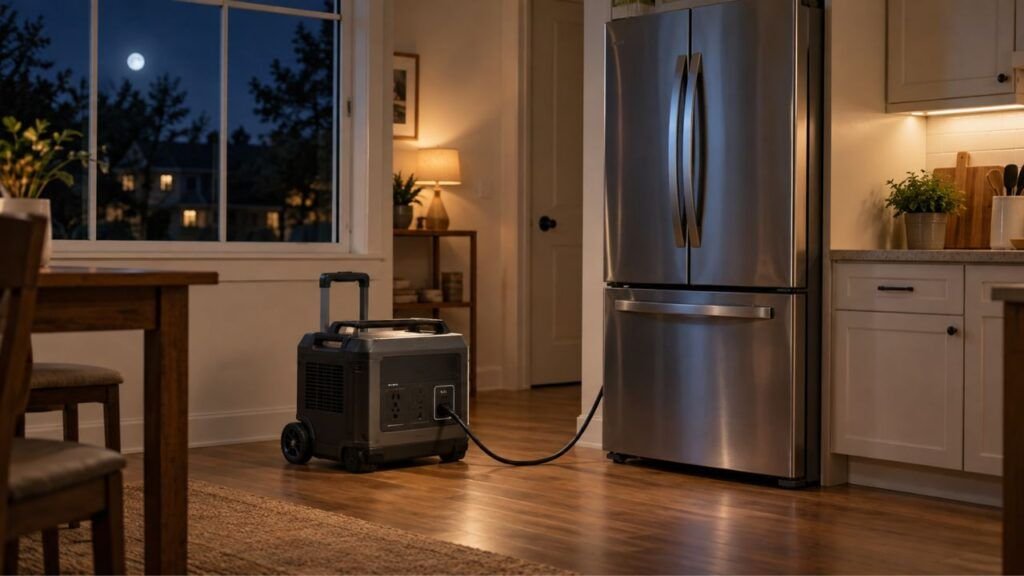
Can a Solar Generator Run a Tiny-Home Refrigerator Overnight?
Yes, a properly sized solar generator can usually operate an efficient refrigerator overnight. What matters most is the refrigerator’s actual overnight energy consumption and the amount of battery capacity remaining after daytime use.
Do You Need a Backup Generator for an Off-Grid Tiny Home?
You do not always need one, but a backup generator can be extremely useful during long cloudy periods, winter storms, unexpected high energy use, or maintenance problems with your main solar system.
Can You Connect a Solar Generator Directly to a Tiny-House Breaker Panel?
Some solar generators support panel integration through approved transfer equipment or manufacturer-designed systems. Permanent connections should follow the product instructions, applicable electrical codes, and professional electrician guidance instead of improvised backfeeding.
Is 5 kWh of Battery Enough for a Tiny Home?
A 5kWh battery can be enough for an efficient tiny home with modest daily electricity use. However, households using heavy air conditioning, electric cooking, heating, or hot water may need considerably more storage.
Can You Live Off-Grid With Solar During Winter?
Yes, but winter requires careful planning because solar days are shorter while heating demand can increase. A larger solar array, additional battery storage, efficient heating, and backup charging can make winter off-grid living much more reliable.

Austin Parker writes practical generator how-to guides, troubleshooting advice, and buying guides for solar, portable, and fuel-powered generators. His focus is helping readers solve common power problems, understand their options, and choose dependable equipment for real-world use.