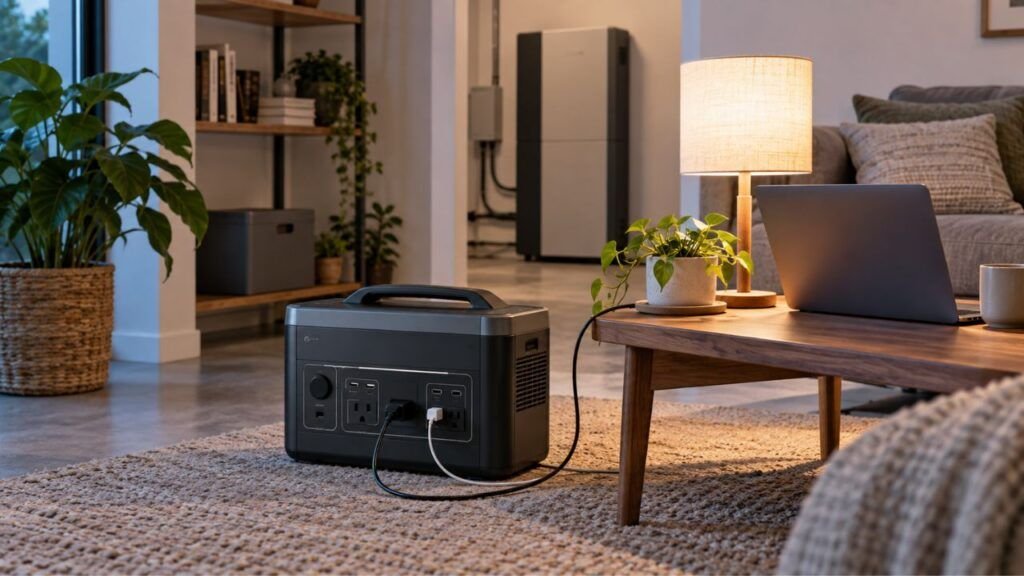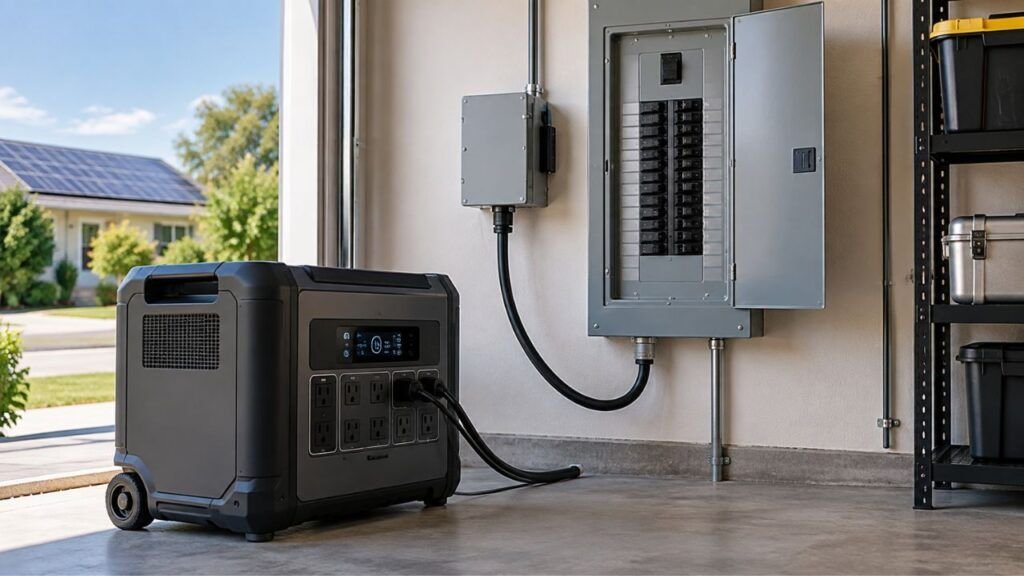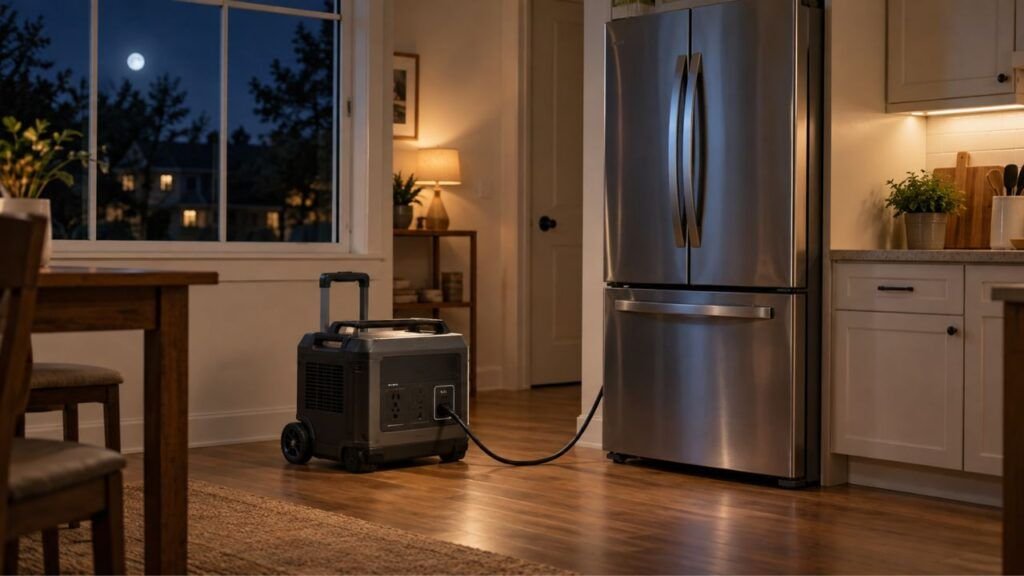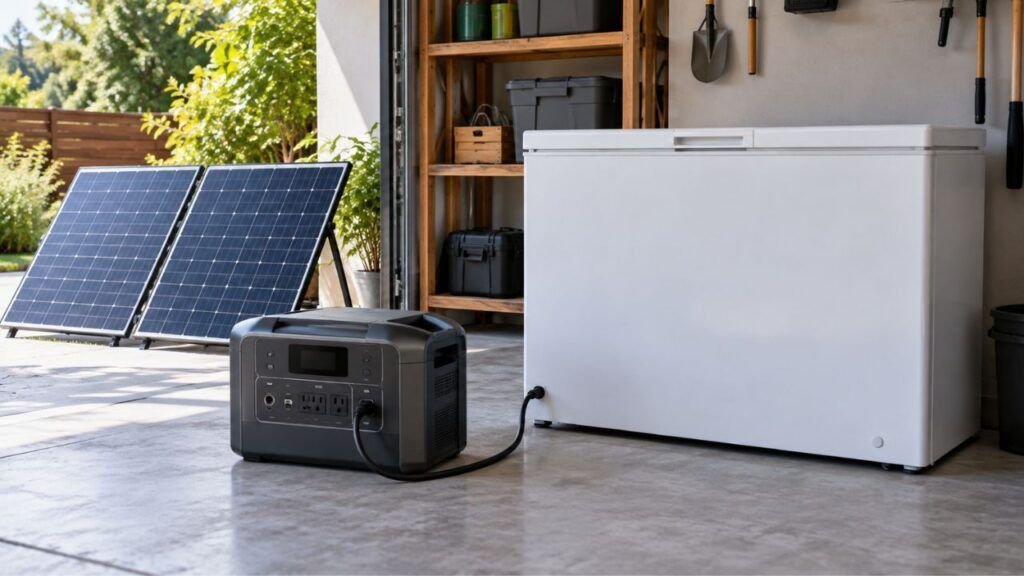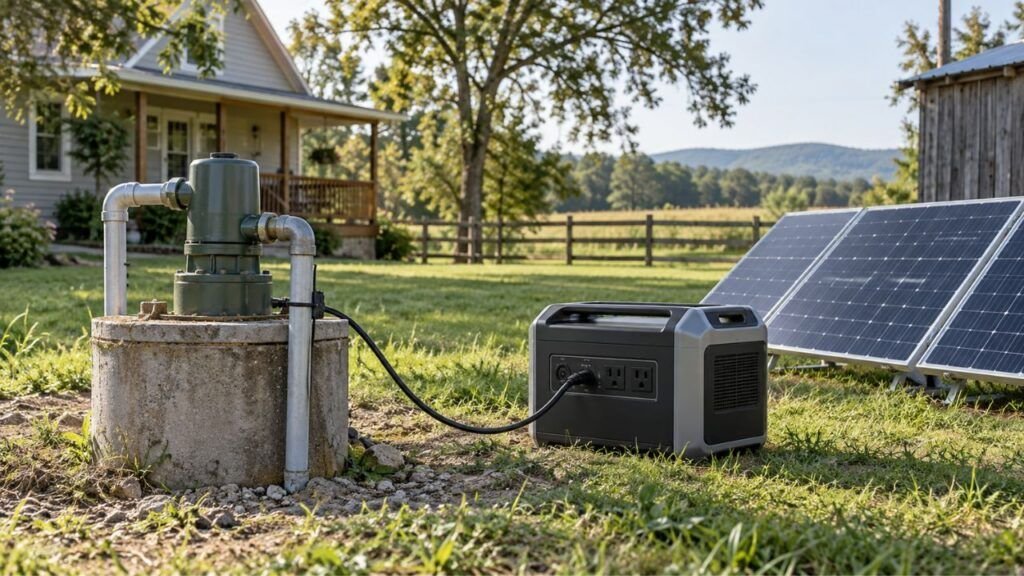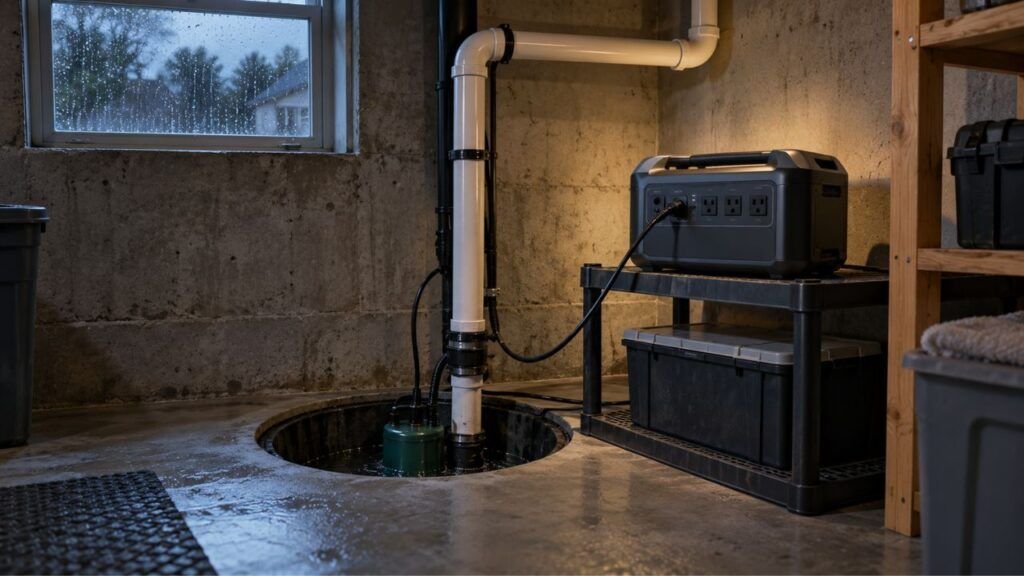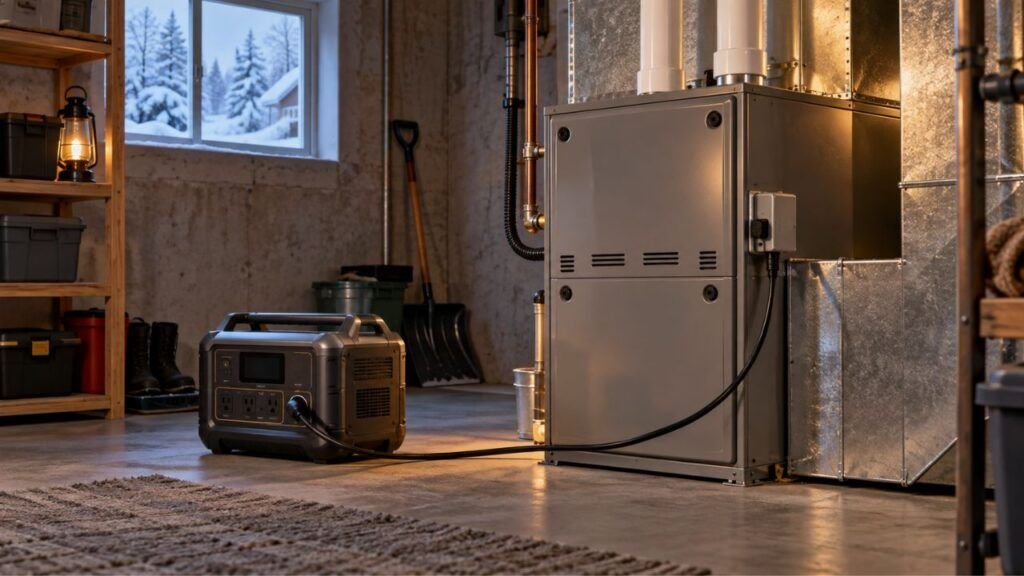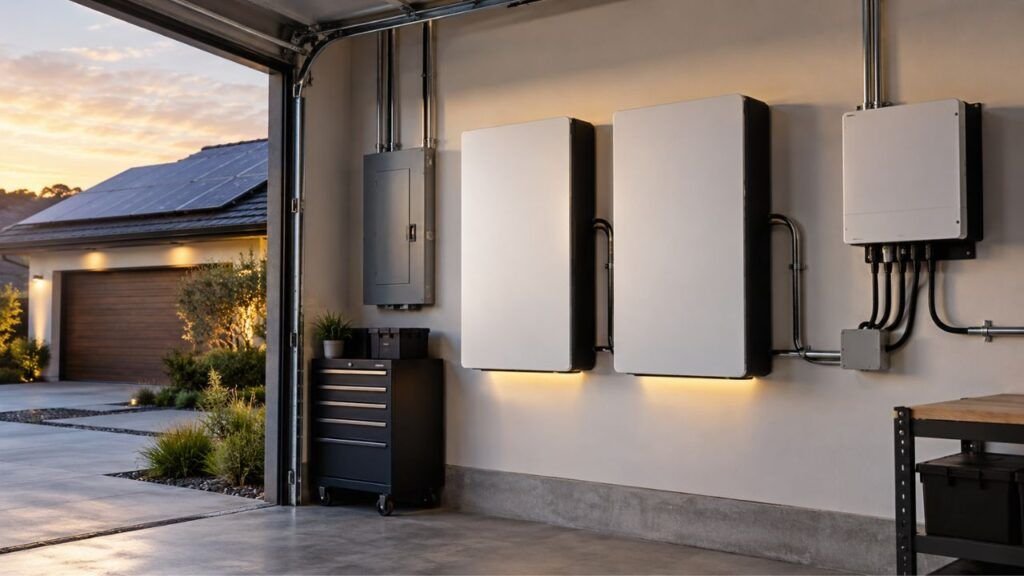
If you are looking for the best whole house solar generators, choosing the right battery capacity and power output matters. A suitable system can keep essential appliances running during outages and support larger household loads when properly configured.
The Jackery HomePower 3600 Plus offers flexible home backup, while the ABOK Ark3600 Portable Power Station suits essential appliances. The EF ECOFLOW DELTA Pro Ultra handles larger power demands, the BLUETTI Apex 300 provides modular storage, and the Anker SOLIX F3800 Plus offers higher output for demanding household circuits.
After evaluating the top whole house solar generators, we’ve narrowed down 12 options for different household needs. In this guide, we’ll compare their battery capacity, power output, solar charging, expandability, and limitations so you can choose with confidence.
We’re reader-supported. When you buy through links on our site, we may earn an affiliate commission. As an Amazon Associate, we earn from qualifying purchases at no extra cost to you.
Best Whole House Solar Generator: Our Top Picks
- Best Overall: Jackery HomePower 3600 Plus
- Best for Essential Backup: ABOK Ark3600 Portable Power Station
- Best for Extended Backup: EF ECOFLOW DELTA Pro Ultra
- Best Modular Storage: BLUETTI Apex 300 Solar Generator
- Best for Fast Charging: PowerMax 3600SE 3600W Portable Power Station
- Best Compact Option: Jackery HomePower 3000
- Best for Smaller Homes: EF ECOFLOW DELTA 3 MAX Portable Power Station
- Best for Efficient Backup: BLUETTI Elite 200 V2 Solar Generator
- Best Lightweight Option: Jackery Explorer 2000 v2
- Best for High Output: Anker SOLIX F3800 Plus Portable Power Station
- Best for Quiet Backup: EF ECOFLOW DELTA 3 Ultra
- Best Expandable Option: GROWATT HELIOS 3600 Portable Power Station
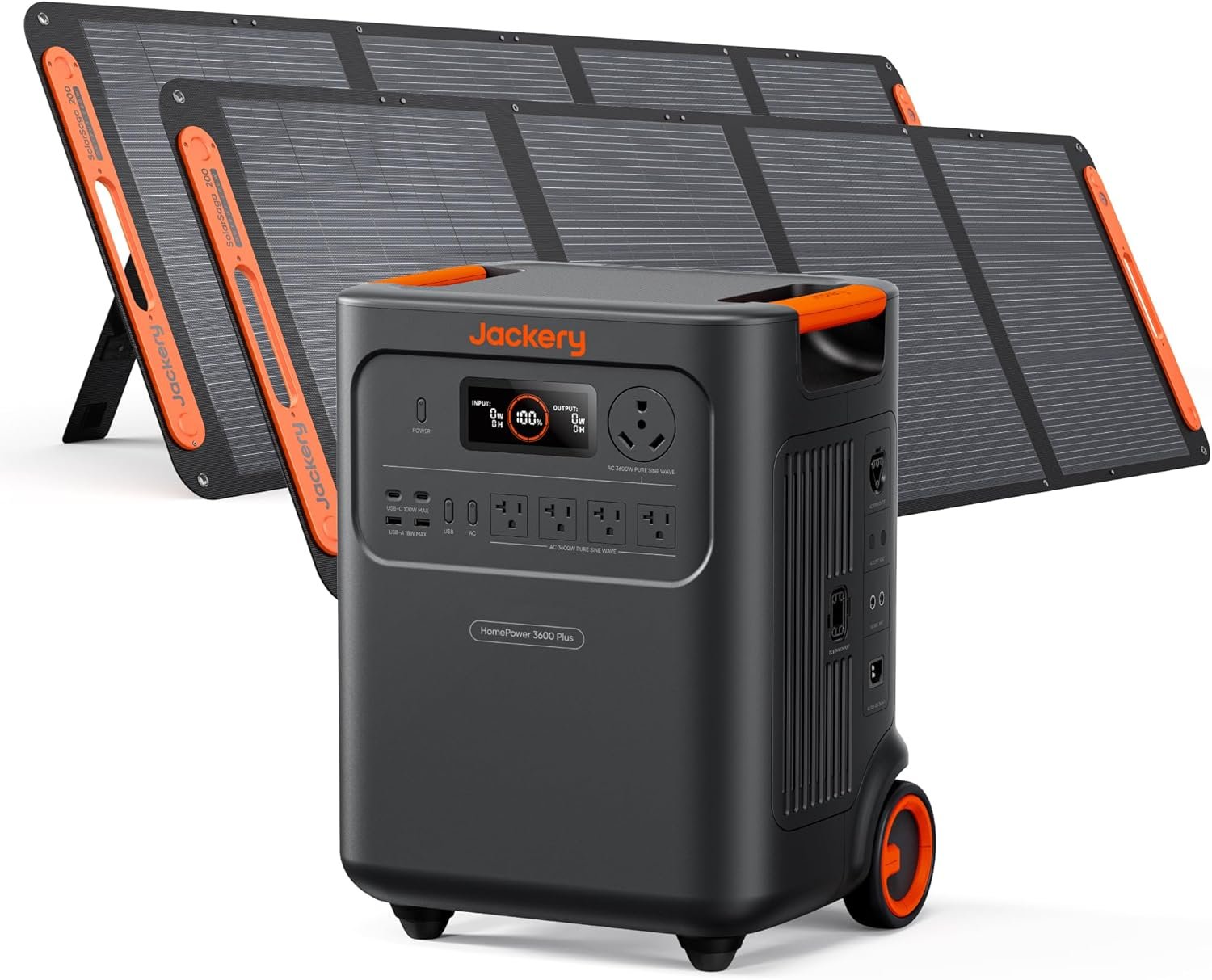
1. Best Overall: Jackery HomePower 3600 Plus
Key Details:
- Battery Capacity: 3,584Wh LiFePO4, expandable up to 21kWh per unit.
- Power Output: 3,600W continuous output, 7,200W with two units.
- Voltage: 120V, with 240V support in a paired configuration.
- Solar Charging: Includes 2×200W solar panels with multiple charging options.
- Battery Lifespan: 6,000 charging cycles with ceramic membrane battery technology.
If you’re looking for reliable whole-house solar backup power, the Jackery HomePower 3600 Plus offers a practical combination of capacity and flexibility. Its 3,600W output handles refrigerators, lights, kitchen appliances, and other household essentials. The 3,584Wh battery also provides useful backup during unexpected outages.
What we like most is its expandable battery storage. You can increase capacity to around 21kWh per unit or 43kWh with multiple units and batteries. Pairing two units also provides 240V support, making it more suitable for demanding household circuits and compatible appliances.
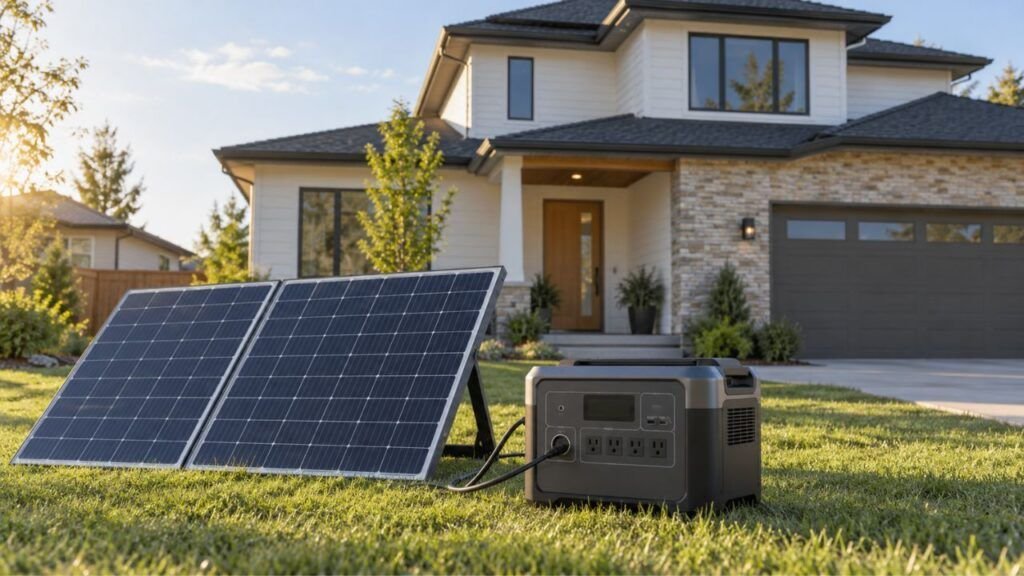
The Jackery HomePower 3600 Plus also makes recharging convenient. It includes two 200W solar panels and supports AC, solar, hybrid, and generator charging. Under optimal conditions, hybrid charging takes around two hours. Its wheeled design also makes moving the power station around your home easier.
In our opinion, this is a solid option for homeowners planning a flexible emergency power setup. Its LiFePO4 battery and protective technology add long-term value. However, powering an entire home requires sufficient expansion batteries and appropriate electrical integration.
Pros:
- The 3,600W output handles multiple essential household appliances.
- Expandable battery capacity supports longer power outages.
- Paired units provide 240V support for compatible home circuits.
- Solar panels, fast charging, and wheels improve convenience.
Cons:
- A single unit cannot power 240V household circuits.
- The included 400W solar array limits solar recharging speed.
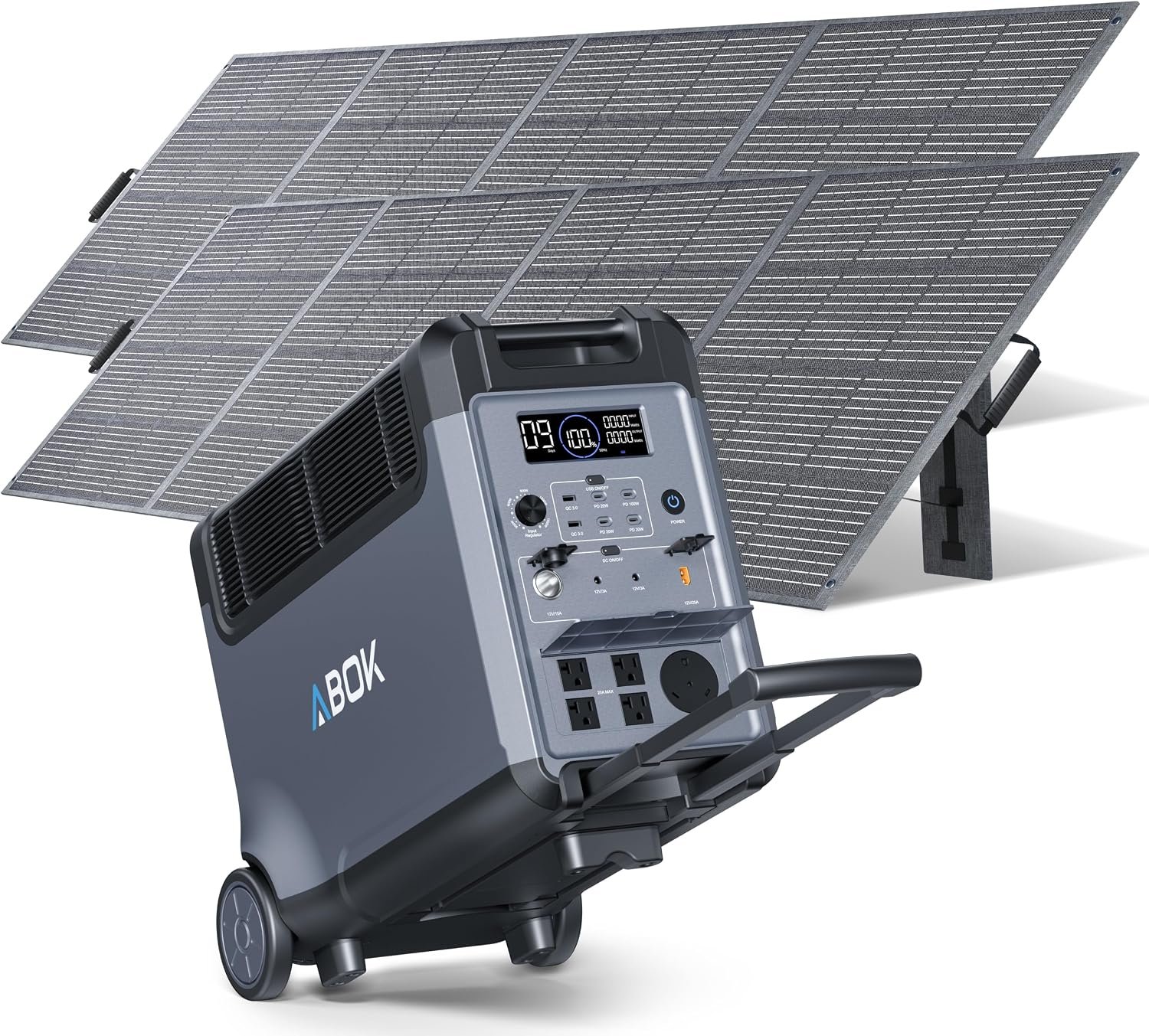
2. Best for Essential Backup: ABOK Ark3600 Portable Power Station
Key Details:
- Battery Capacity: 3,840Wh LiFePO4, expandable to 11,520Wh.
- Power Output: 3,600W continuous output with 7,200W peak power.
- Solar Charging: Includes 2×400W panels, supports up to 2,000W solar input.
- Charging Speed: Up to 3,500W combined AC and solar charging.
- Connectivity: 15 output ports, Bluetooth app control, and 4,000 battery cycles.
For homeowners who want dependable backup without a complicated setup, the ABOK Ark3600 offers plenty of flexibility. Its 3,840Wh battery and 3,600W output can keep refrigerators, lights, internet equipment, and selected kitchen appliances running during outages. You also get enough ports to connect several devices simultaneously.
One feature we particularly like is its expandable storage. You can increase battery capacity to 11,520Wh, which is helpful when outages last overnight or longer. This makes it a practical home backup solar generator for households prioritizing essential appliances over powering every circuit.
The ABOK Ark3600 also includes two 400W solar panels, providing a useful starting point for renewable charging. With a compatible larger array, solar input reaches 2,000W. Combined AC and solar charging supports up to 3,500W, while the app helps monitor consumption and schedule charging.
If your main concern is keeping household essentials operational, this setup offers good capacity and charging flexibility. Its EVE LiFePO4 battery and advanced protection system add confidence. However, the 120V output limits its usefulness for homes requiring direct 240V appliance backup.
Pros:
- The 3,840Wh battery provides useful storage for household essentials.
- Expandable capacity reaches 11,520Wh for longer outages.
- Two included 400W panels support convenient solar recharging.
- Fifteen output ports and app control simplify power management.
Cons:
- The 120V output cannot directly supply 240V appliances.
- Its 92-pound weight makes frequent transportation inconvenient.
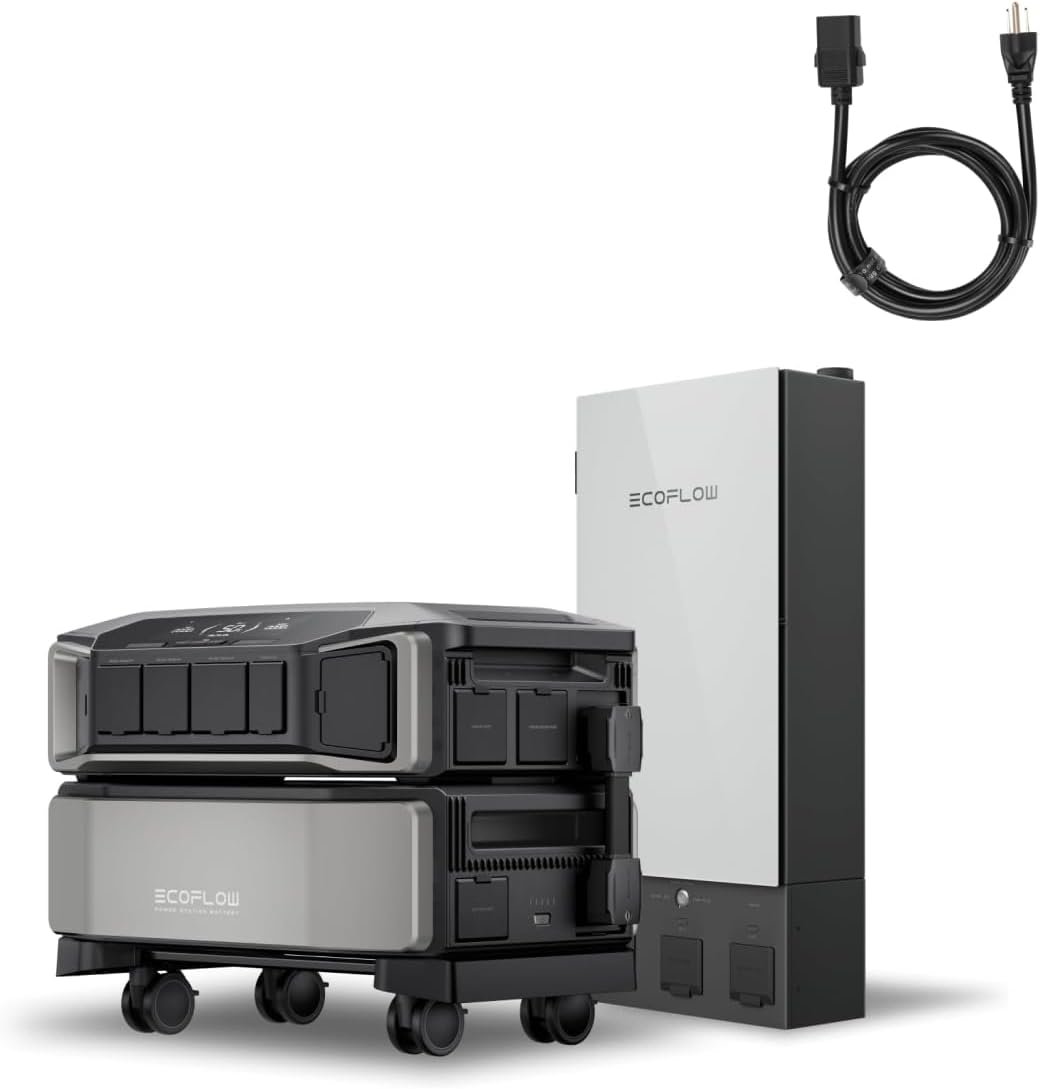
3. Best for Extended Backup: EF ECOFLOW DELTA Pro Ultra
Key Details:
- Battery Capacity: 12,288Wh with two batteries, expandable up to 90kWh.
- Power Output: 7,200W continuous, expandable to 21,600W with three inverters.
- Voltage: Native 120V/240V split-phase output.
- Charging Options: Supports solar, AC, EV charging equipment, and generators.
- Backup Features: Online UPS capability, app monitoring, and smart circuit management.
When a short power outage turns into several days without electricity, the EF ECOFLOW DELTA Pro Ultra becomes particularly appealing. This configuration provides approximately 12.3kWh of battery storage and 7,200W continuous output. It can support refrigerators, pumps, kitchen appliances, and compatible 240V equipment when properly configured.
What makes this system stand out is its impressive scalability. You can expand storage to 90kWh and increase output to 21.6kW with three inverters. In our view, that flexibility makes it suitable for homeowners planning a more comprehensive whole-house battery backup system.
The EF ECOFLOW DELTA Pro Ultra also offers multiple charging methods, including solar, wall outlets, and compatible generators. With suitable home integration equipment, you can prioritize important circuits through the EcoFlow app. Its online UPS functionality also provides additional protection for compatible sensitive electronics.
You will find this system especially useful if your home has substantial electrical demands. Native 120V/240V output is another major advantage over smaller power stations. However, its weight, premium pricing, and electrical integration requirements make it a more involved investment.
Pros:
- The 7,200W output supports demanding household appliances.
- Native 120V/240V output accommodates different home circuits.
- Expandable storage reaches 90kWh for extended backup needs.
- Smart energy management and flexible charging improve usability.
Cons:
- Its premium price requires a substantial initial investment.
- The heavy configuration and home integration add setup complexity.
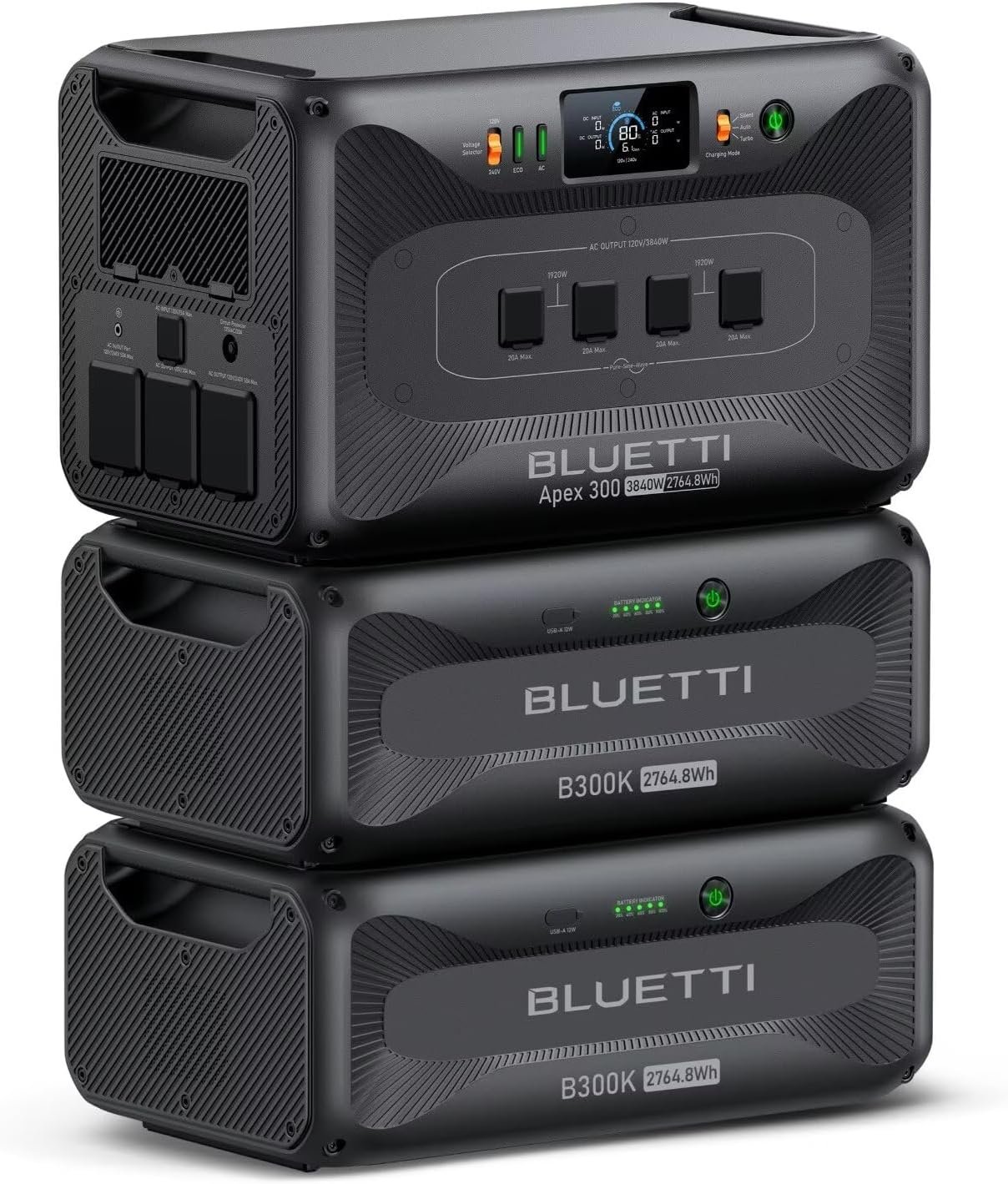
4. Best Modular Storage: BLUETTI Apex 300 Solar Generator
Key Details:
- Battery Capacity: 8,294.4Wh with two B300K expansion batteries.
- Power Output: 3,840W continuous AC output with 7,680W Power Lifting mode.
- Voltage: Simultaneous 120V/240V output.
- Solar Charging: Up to 2,400W built-in solar input, expandable to 6,400W.
- Battery Lifespan: 6,000+ cycles with LiFePO4 cells and smart BMS protection.
The BLUETTI Apex 300 is worth considering if you want substantial battery storage without immediately building a large installed system. Paired with two B300K batteries, it provides approximately 8.3kWh of capacity. Its 3,840W output handles refrigerators, lights, selected kitchen appliances, and other essential household loads.
Unlike many smaller solar generators, this configuration supports simultaneous 120V and 240V output. We like this flexibility because some homes need split-phase power for larger appliances. Its 7,680W Power Lifting mode also helps with compatible resistive loads, although it doesn’t increase normal continuous output.
The BLUETTI Apex 300 supports up to 2,400W solar input directly, with higher charging capacity available through additional equipment. Its modular battery system also allows storage expansion when your household needs increase. Low standby consumption is another advantage when powering smaller devices for extended periods.
In our opinion, this setup suits homeowners who prioritize battery capacity, dual-voltage capability, and future expansion. Its LiFePO4 cells are rated for over 6,000 cycles, supporting long-term ownership. Just remember that the complete system weighs around 214 pounds, and solar panels require a separate purchase.
Pros:
- The 8.3kWh battery configuration provides substantial backup storage.
- Simultaneous 120V/240V output supports more household applications.
- Modular expansion makes increasing battery capacity straightforward.
- Low standby consumption helps conserve energy during extended outages.
Cons:
- The complete battery system is heavy and requires considerable space.
- Solar panels and some expansion accessories cost extra.
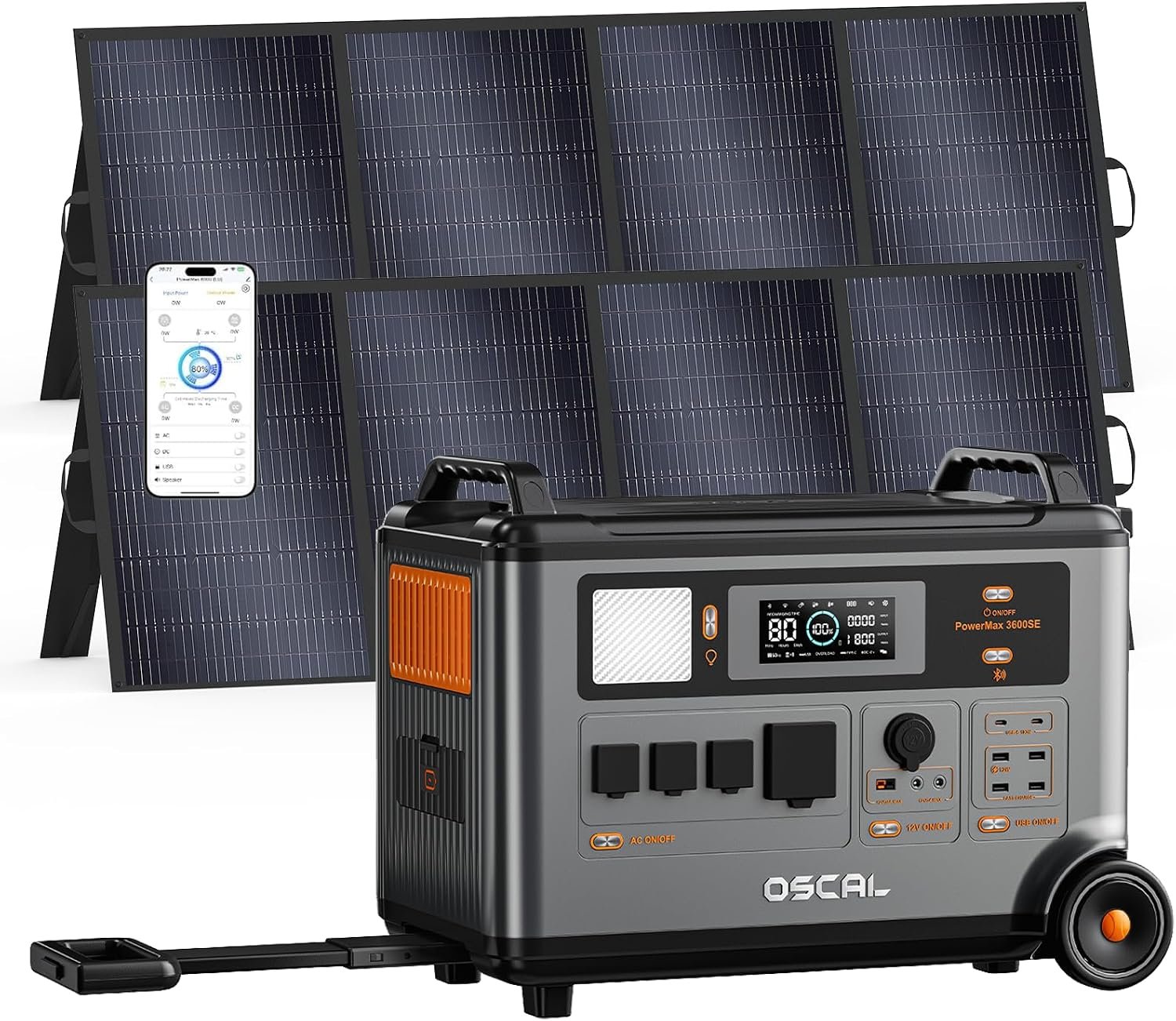
5. Best for Fast Charging: PowerMax 3600SE 3600W Portable Power Station
Key Details:
- Battery Capacity: 3,600Wh LiFePO4 battery with 3,500+ charging cycles.
- Power Output: 3,600W continuous output with 7,200W surge capacity.
- Solar Charging: Includes 2×400W solar panels with up to 1,600W solar input.
- Charging Speed: Supports up to 3,000W combined charging, with approximately 2.4-hour full recharge.
- Backup Features: 14 output ports, 5–8ms EPS switching, and smart app control.
If you’re looking for a whole house solar generator with fast charging and practical backup capacity, the ApaxFolleawall PowerMax 3600SE is worth considering. Its 3,600W output can handle refrigerators, microwaves, lighting, and other essential appliances. The 3,600Wh battery also provides useful storage during unexpected power outages.
What we particularly like is its flexible charging system. The package includes two 400W solar panels, while the power station supports up to 1,600W solar input. With combined AC and solar charging, it can recharge in approximately 2.4 hours under optimal conditions, helping restore backup capacity between outages.
The ApaxFolleawall PowerMax 3600SE also features 5–8ms EPS switching, which is helpful for compatible computers, routers, and other sensitive equipment. You will find 14 output ports for connecting multiple devices, while smartphone controls make monitoring battery levels and power consumption convenient.
In our opinion, this solar generator suits homeowners who prioritize essential circuit backup and quick recharging. Its LiFePO4 battery and multiple protection features add long-term value. However, with no specified expandable capacity or 240V output, it is better suited for selected household appliances than comprehensive whole-house coverage.
Pros:
- The 3,600W output supports several essential household appliances.
- Fast hybrid charging helps replenish battery power quickly.
- Two included 400W panels provide convenient solar charging.
- Rapid EPS switching and app control improve everyday usability.
Cons:
- No specified battery expansion limits extended backup duration.
- The lack of confirmed 240V output restricts whole-house applications.
6. Best Compact Option: Jackery HomePower 3000

Key Details:
- Battery Capacity: 3,072Wh LiFePO4 battery with 4,000 charging cycles.
- Power Output: 3,600W continuous output with 7,200W surge capacity.
- Solar Charging: Includes 2×200W SolarSaga panels.
- Charging Speed: Approximately 1.7 hours with hybrid AC and DC charging.
- Backup Features: ≤20ms UPS switching, ChargeShield 2.0, and TT-30 RV outlet.
For homeowners who want powerful emergency backup without a bulky setup, the Jackery HomePower 3000 offers an appealing balance. Its 3,600W output handles refrigerators, lights, fans, and selected kitchen appliances. The 3,072Wh battery provides enough storage for several essential household devices during shorter outages.
One thing we like is its compact construction. Jackery uses Cell-to-Body technology to reduce size while maintaining a substantial power capacity. You can move it between rooms more conveniently than many larger home backup systems. Its 7,200W surge rating also helps accommodate compatible appliances with higher starting demands.
The Jackery HomePower 3000 includes two 200W solar panels and supports several charging methods. Hybrid charging can replenish the battery in approximately 1.7 hours, while the included solar panels take around nine hours to reach 80% under favorable conditions. Its ≤20ms UPS switching also adds convenience for compatible electronics.
If your priority is keeping everyday essentials running during blackouts, this portable solar generator makes sense. Its LiFePO4 battery, ChargeShield 2.0 technology, and multiple outlets add practical value. However, the 3kWh battery and 120V-focused design make it better for essential-load backup than powering an entire house.
Pros:
- The 3,600W output handles multiple essential household appliances.
- Compact construction makes transportation and storage convenient.
- Fast hybrid charging reduces preparation time between outages.
- Included solar panels and UPS functionality improve backup flexibility.
Cons:
- The 3,072Wh battery limits runtime under heavier household loads.
- It lacks native 240V output for large split-phase appliances.
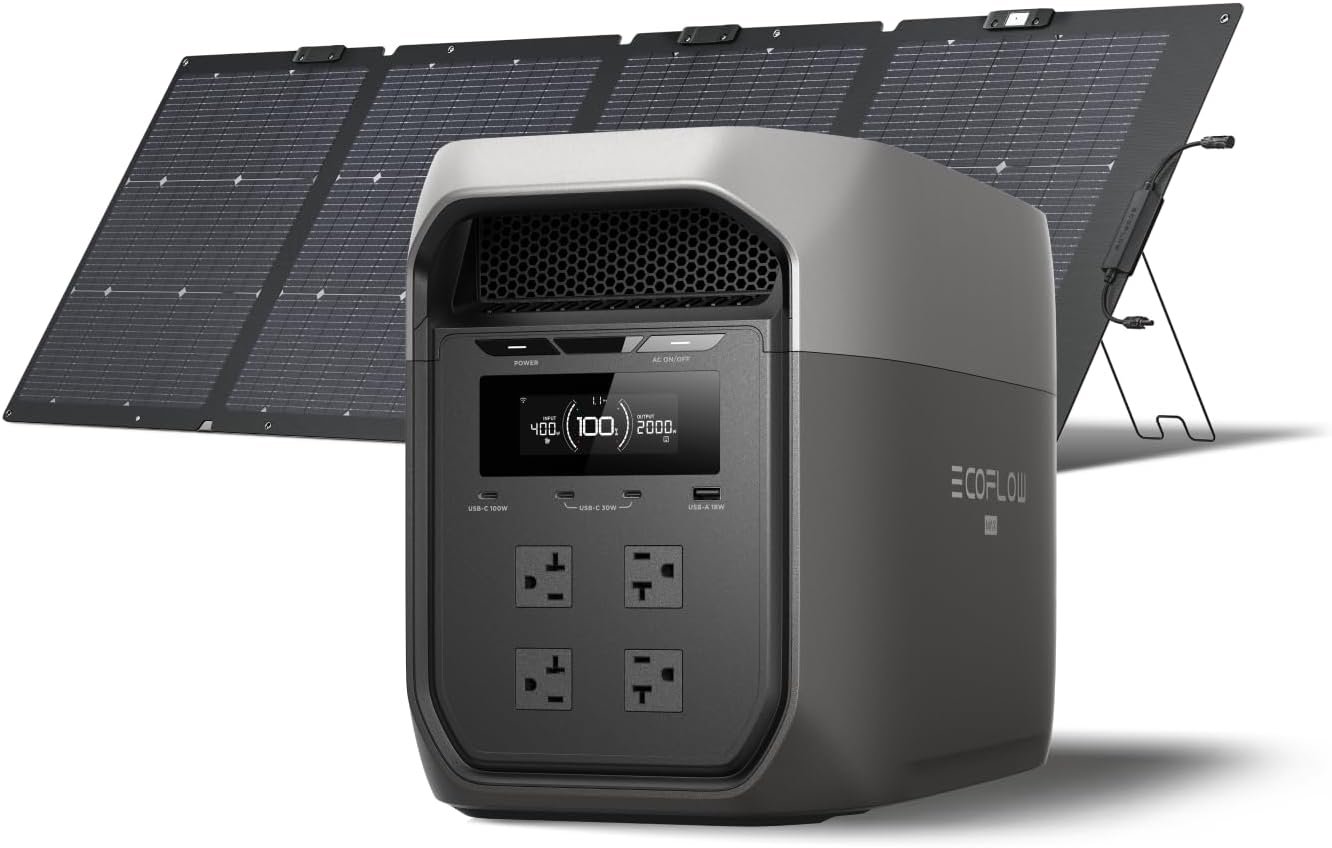
7. Best for Smaller Homes: EF ECOFLOW DELTA 3 MAX Portable Power Station
Key Details:
- Battery Capacity: 2,048Wh LiFePO4 battery.
- Power Output: 2,400W continuous output with 3,400W X-Boost mode.
- Solar Charging: Includes one 220W solar panel.
- Charging Speed: Approximately 1.13 hours to reach 80% via AC charging.
- Backup Features: Less than 10ms transfer time, app control, and 65.6-lb weight.
Not every homeowner needs a massive battery system for occasional outages. The EF ECOFLOW DELTA 3 Max offers 2,400W continuous output and a 2,048Wh battery, making it useful for smaller households and essential appliances. It can support refrigerators, fans, lighting, internet equipment, and selected kitchen devices within its output limits.
What makes this EcoFlow power station appealing is its fast recharging capability. With X-Stream technology, the battery can reach 80% in approximately 1.13 hours using AC power. Its 3,400W X-Boost mode also helps operate certain higher-wattage appliances, although this feature is not equivalent to increased continuous inverter output.
The EF ECOFLOW DELTA 3 Max includes a 220W solar panel for renewable charging during daylight. Its less-than-10ms backup switching can help maintain power to compatible electronics when grid electricity fails. We also like the smartphone app, which lets you monitor consumption and manage charging schedules.
In our view, this model is a practical alternative to larger whole house solar generators when you only need essential backup. Its relatively portable design and quiet operation make indoor use convenient. However, the smaller battery and limited solar panel capacity mean longer outages require careful power management.
Pros:
- The 2,400W output supports many everyday household essentials.
- Rapid AC charging restores battery capacity relatively quickly.
- Fast backup switching helps protect compatible sensitive electronics.
- App monitoring and portable construction improve convenience.
Cons:
- The 2,048Wh battery offers limited runtime for larger household loads.
- The included 220W panel provides relatively slow solar recharging.
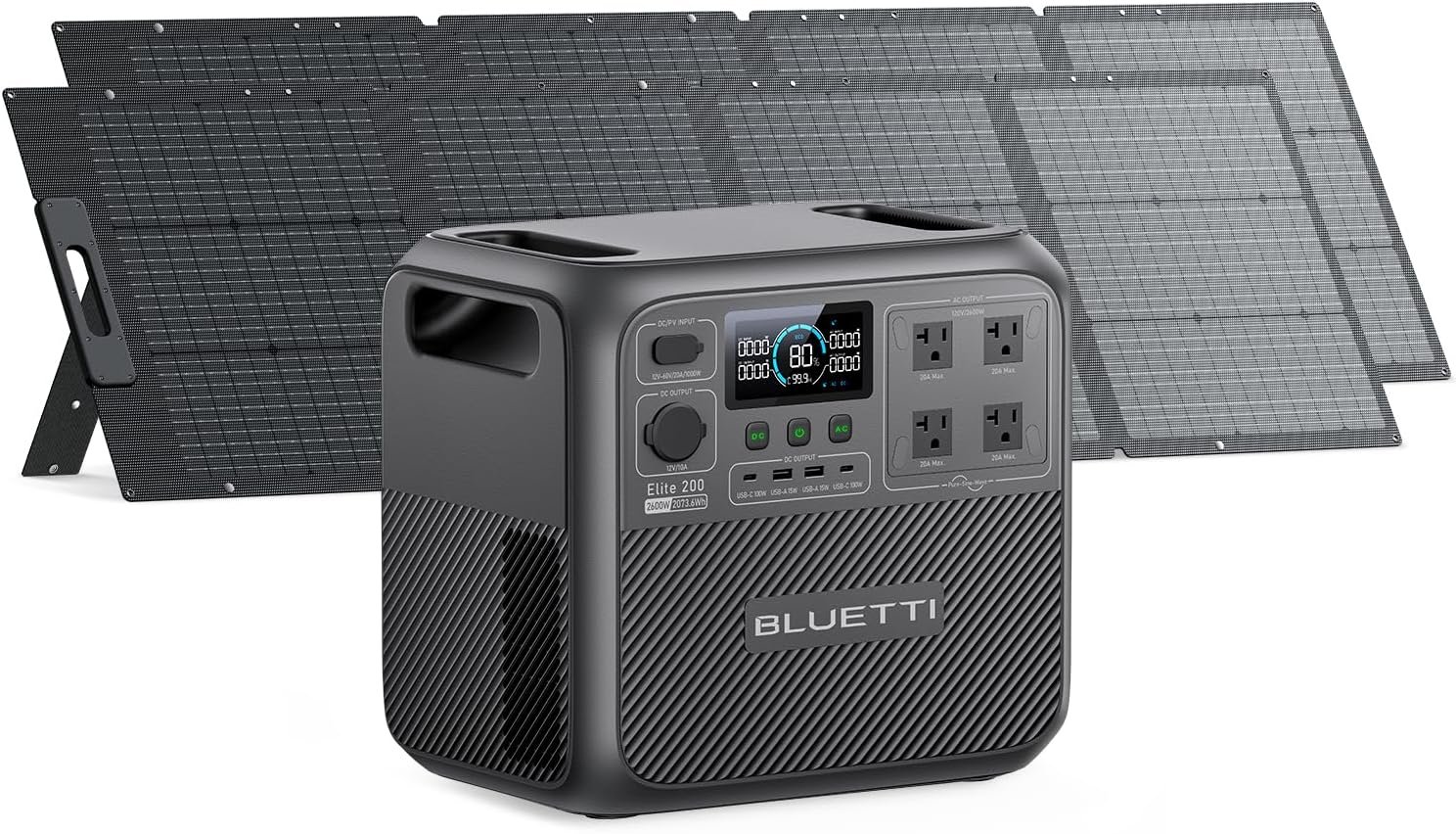
8. Best for Efficient Backup: BLUETTI Elite 200 V2 Solar Generator
Key Details:
- Battery Capacity: 2,073.6Wh LiFePO4 battery with 6,000+ charging cycles.
- Power Output: 2,600W continuous output with 3,900W Power Lifting mode.
- Solar Charging: Includes 2×200W solar panels.
- Charging Speed: Approximately 5.5 hours with the included 400W solar array.
- Backup Features: ≤15ms UPS switching, 10W idle consumption, and 53.4-lb weight.
If you want a compact solar generator that uses stored energy efficiently, the BLUETTI Elite 200 V2 is an interesting choice. Its 2,600W continuous output can run refrigerators, lighting, fans, and other essential household appliances. The 2,073.6Wh battery makes it suitable for short-term backup when keeping critical devices operational matters most.
What we particularly appreciate is its low standby power consumption. With approximately 10W idle usage, less energy is wasted when powering smaller continuous loads. Its 3,900W Power Lifting mode also supports certain high-wattage resistive appliances, although normal continuous output remains limited to 2,600W.
The BLUETTI Elite 200 V2 includes two 200W solar panels, making renewable charging convenient during daylight. Under favorable conditions, the included array can recharge the battery in approximately 5.5 hours. You also get ≤15ms UPS switching and multiple charging options, which are helpful for maintaining essential electronics during outages.
For homeowners comparing portable home backup solar generators, this model offers useful efficiency and durability. Its LiFePO4 battery is rated for over 6,000 cycles, while the 53.4-pound design is easier to move than larger systems. Still, its limited battery capacity and 120V output make it better suited for essential appliances than full-house electrical backup.
Pros:
- The 2,600W output supports several common household appliances.
- Low standby consumption helps extend backup runtime.
- LiFePO4 batteries rated for 6,000+ cycles support long-term use.
- Included solar panels and compact construction improve portability.
Cons:
- The smaller battery limits backup duration during heavy usage.
- The 120V output cannot directly support 240V household circuits.
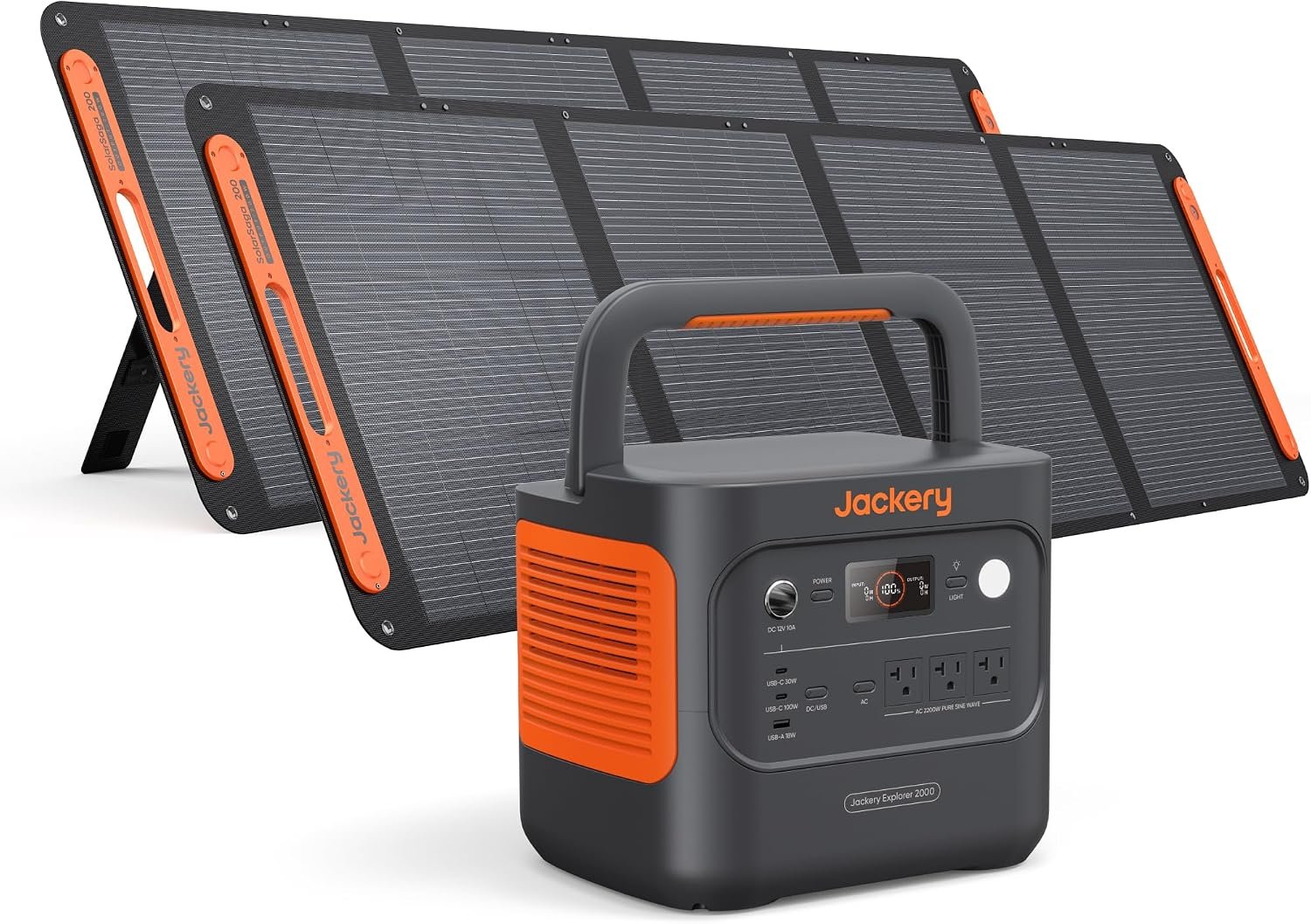
9. Best Lightweight Option: Jackery Explorer 2000 v2
Key Details:
- Battery Capacity: 2,042Wh LiFePO4 battery with up to 10 years of expected service life.
- Power Output: 2,200W continuous AC output.
- Solar Charging: Includes 2×200W solar panels with approximately 6-hour full charging.
- Charging Speed: Reaches 80% in 66 minutes via AC charging.
- Backup Features: 20ms UPS switching, three AC outlets, and 39.5-lb power station weight.
If portability matters as much as emergency backup, the Jackery Explorer 2000 v2 is worth considering. Its 2,200W output handles refrigerators, lighting, Wi-Fi routers, and other essential household appliances. The 2,042Wh battery provides a useful power reserve during shorter outages, especially when you manage your electricity consumption carefully.
What we particularly like is its lightweight construction. At just 39.5 pounds for the power station, it’s considerably easier to move than larger whole-house battery systems. Jackery’s Cell-to-Body technology helps reduce its size while maintaining a durable structure. You can conveniently use it in different rooms or store it between emergencies.
The Jackery Explorer 2000 v2 also includes two 200W solar panels for renewable charging. Under favorable conditions, solar charging takes around six hours. AC charging reaches 80% in approximately 66 minutes, while its 20ms UPS switching helps maintain power to compatible electronics during unexpected interruptions.
In our opinion, this solar generator makes sense for homeowners who want portable emergency backup rather than a permanently installed system. Its LiFePO4 battery and quiet operation are additional advantages. However, the limited capacity and 120V output make it better for essential appliances than running an entire house.
Pros:
- The 2,200W output supports several essential household appliances.
- Lightweight construction makes moving and storing the unit convenient.
- Fast AC charging helps restore backup power quickly.
- Included solar panels and UPS functionality improve emergency readiness.
Cons:
- The 2,042Wh battery limits runtime under heavier electrical loads.
- It cannot directly power 240V household appliances.
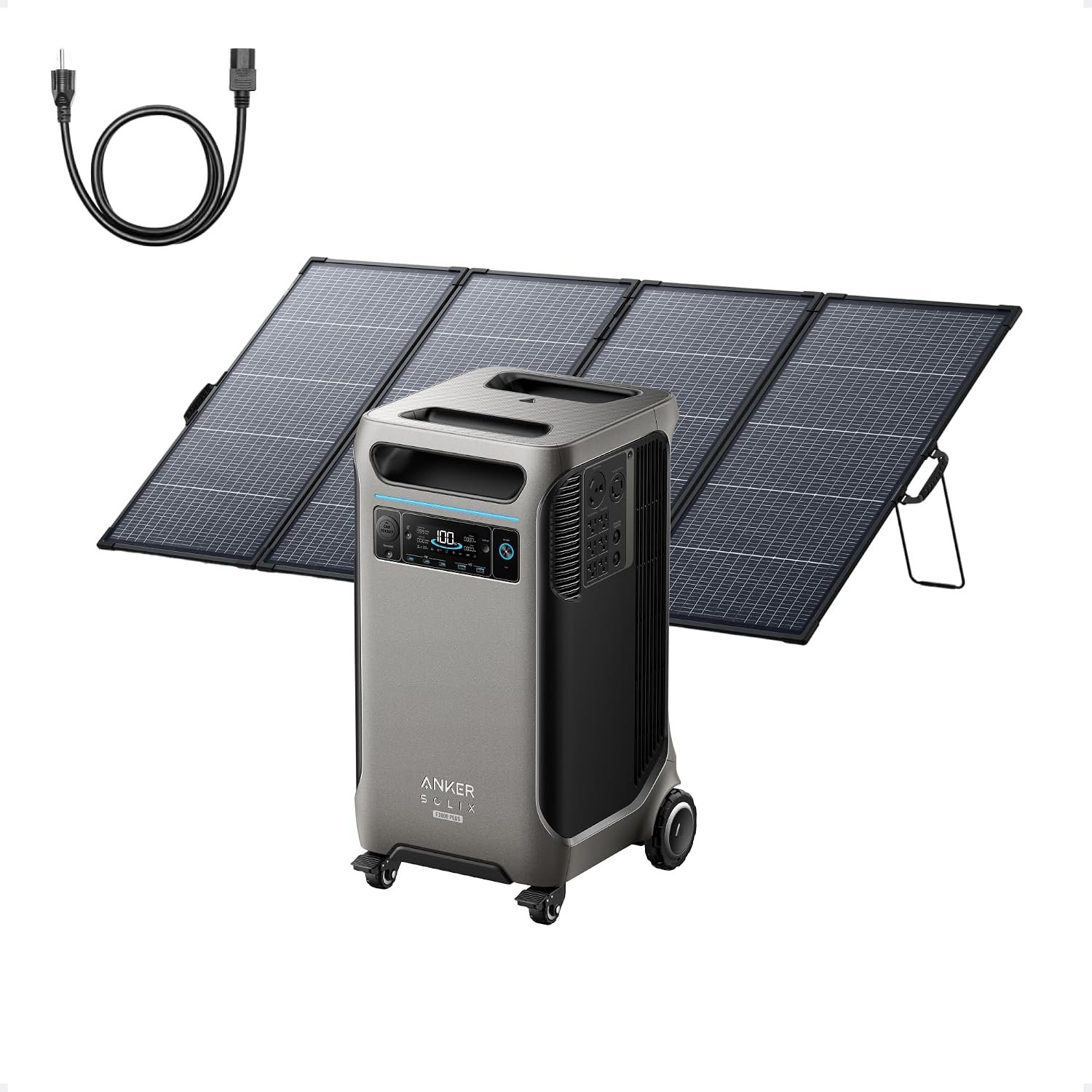
10. Best for High Output: Anker SOLIX F3800 Plus Portable Power Station
Key Details:
- Battery Capacity: 3,840Wh LiFePO4, expandable up to 26.9kWh per unit.
- Power Output: 6,000W continuous output, expandable to 12,000W with two units.
- Voltage: Native 120V/240V dual-voltage support.
- Solar Charging: Includes a 400W bifacial panel with up to 3,200W solar input.
- Backup Features: Generator charging support, smart temperature management, and a 146.4-lb design.
When your home has demanding appliances, the Anker SOLIX F3800 Plus offers considerably more output than smaller portable solar generators. Its 6,000W inverter supports refrigerators, water pumps, kitchen equipment, and compatible 240V appliances. The 3,840Wh battery provides initial backup storage, although heavy household loads require additional capacity for longer operation.
What makes this system particularly attractive is its expandable design. You can increase battery storage to 26.9kWh with six expansion batteries or reach 53.8kWh using two units and additional batteries. Pairing two stations also increases continuous output to 12,000W, making it suitable for more comprehensive whole-house backup configurations.
The Anker SOLIX F3800 Plus also supports up to 3,200W solar input, although the included panel provides 400W of rated capacity. We like its flexible charging options, including solar, AC, compatible generators, and home power integration. Its native 120V/240V output also eliminates the need for a second unit solely to access split-phase power.
If you’re planning a scalable home backup solar system, this model offers impressive flexibility. Its LiFePO4 batteries, temperature management, and sturdy construction support long-term use. However, the base battery is relatively small compared with its inverter output, so expansion batteries are worth considering for extended outages.
Pros:
- The 6,000W output handles demanding household electrical loads.
- Native 120V/240V support accommodates compatible larger appliances.
- Expandable storage reaches 53.8kWh with a dual-unit configuration.
- High solar input and generator charging improve backup flexibility.
Cons:
- The 3,840Wh base battery drains quickly under heavy loads.
- Expansion batteries and home integration equipment increase total costs.
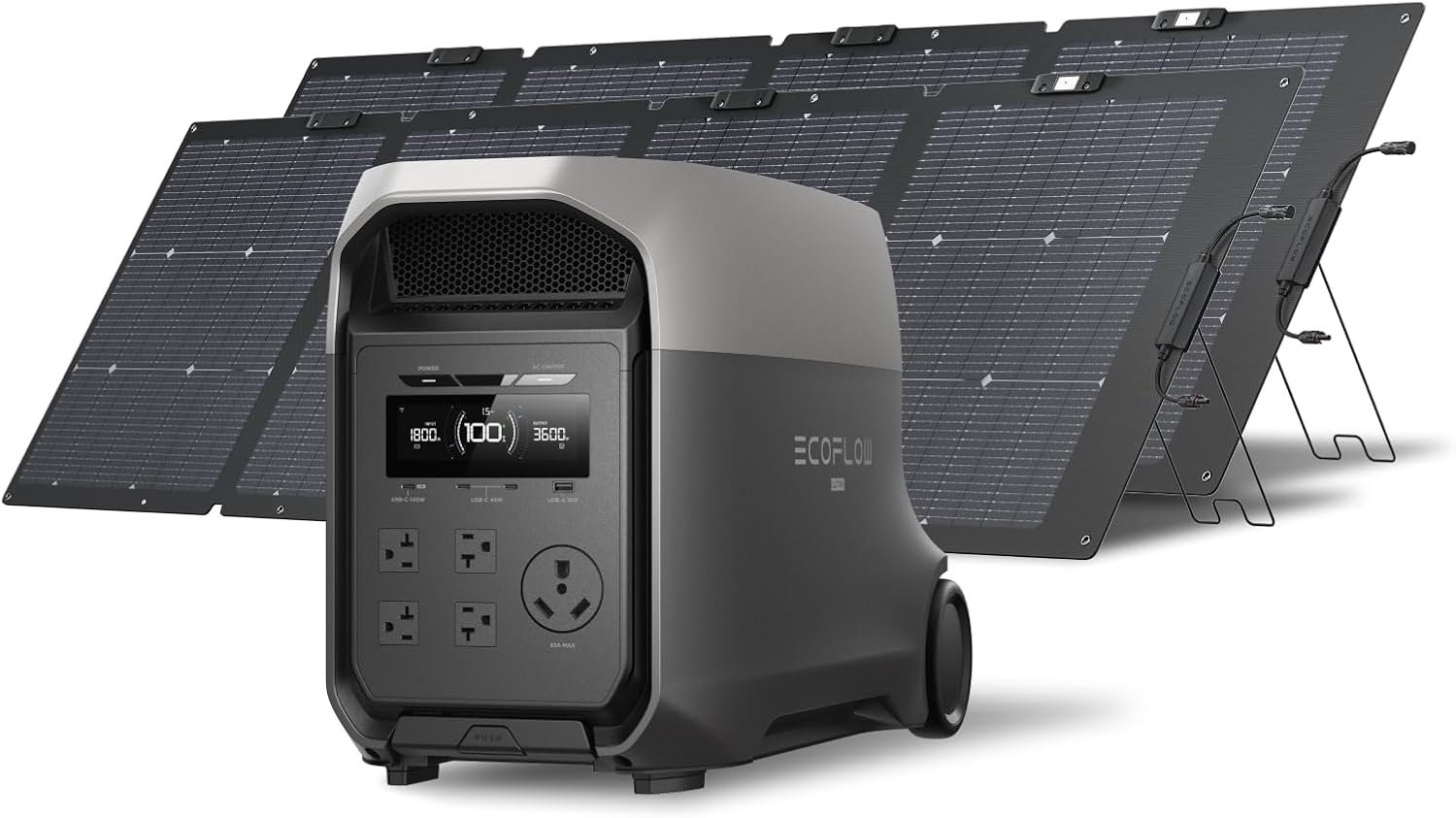
11. Best for Quiet Backup: EF ECOFLOW DELTA 3 Ultra
Key Details:
- Battery Capacity: 3,072Wh LiFePO4 battery.
- Power Output: 3,600W continuous output with 7,200W surge capacity.
- Solar Charging: Includes 2×220W solar panels.
- Backup Features: Less than 10ms UPS switching and 25dB advertised operating noise.
- Portability: 72.1-lb design with app control and multiple charging options.
For homeowners who prefer quiet emergency power, the EF ECOFLOW DELTA 3 Ultra offers a practical combination of output and capacity. Its 3,600W inverter can handle refrigerators, lighting, microwaves, and other essential appliances. The 3,072Wh battery also provides useful backup storage when storms or unexpected outages interrupt your electricity supply.
One thing we like is its low-noise operation. EcoFlow advertises operating noise as low as 25dB under suitable conditions, making it appealing for indoor use. Its X-Quiet 3.0 technology helps manage cooling noise, while the 7,200W surge rating provides additional starting power for compatible appliances.
The EF ECOFLOW DELTA 3 Ultra includes two 220W solar panels, giving you a convenient starting point for renewable charging. It also supports AC, car, and compatible generator charging. Its less-than-10ms UPS switching helps maintain electricity to compatible electronics, while smartphone monitoring makes tracking battery usage easier.
In our view, this model suits households that prioritize quiet operation and essential-load backup. Its LiFePO4 battery and multiple protection features add value for regular emergency use. However, the 3kWh capacity is relatively modest for prolonged outages, especially when several high-wattage appliances are running together.
Pros:
- The 3,600W output handles several essential household appliances.
- Quiet operation makes indoor backup use more comfortable.
- Fast UPS switching supports compatible sensitive electronics.
- Included solar panels provide convenient renewable charging.
Cons:
- The 3,072Wh battery limits runtime during extended outages.
- Native 240V split-phase output is not specified for this model.
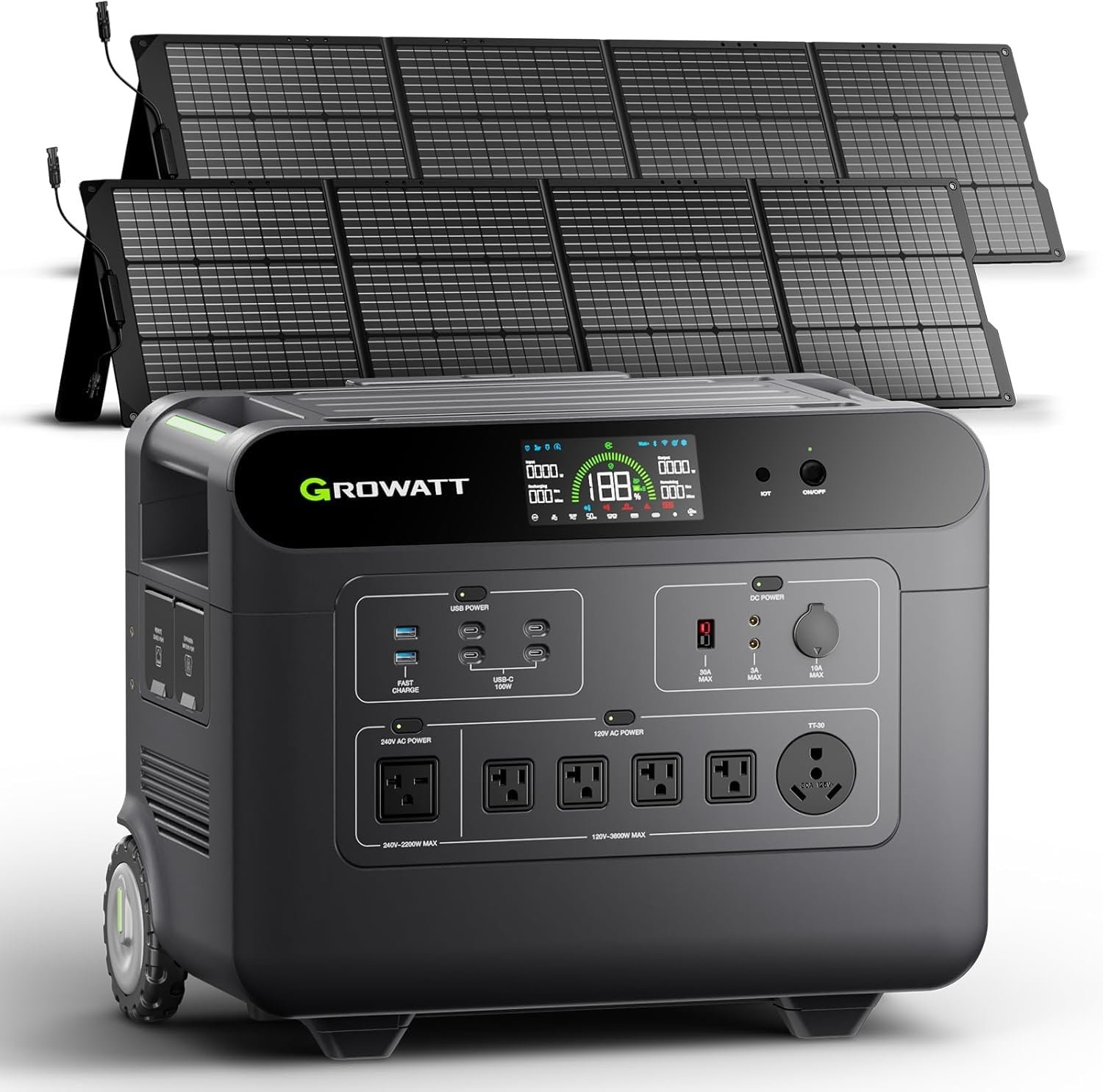
12. Best Expandable Option: GROWATT HELIOS 3600 Portable Power Station
Key Details:
- Battery Capacity: 3,600Wh LiFePO4, expandable up to 36kWh.
- Power Output: 3,600W continuous, expandable to 7,200W with two units.
- Voltage: 120V standard output, with 240V split-phase support when paired.
- Solar Charging: Includes 2×200W panels and supports up to 2,000W solar input.
- Backup Features: 15ms EPS switching, app energy management, and 4,000 battery cycles.
If you’re planning to expand your home backup system over time, the GROWATT HELIOS 3600 offers plenty of flexibility. Its 3,600W output handles refrigerators, lighting, kitchen appliances, and other household essentials. The 3,600Wh battery provides a useful starting capacity, particularly for homeowners preparing for occasional blackouts.
What stands out is its ability to grow with your household requirements. You can pair two compatible units to achieve 7,200W output and 240V split-phase power. Battery capacity can also expand up to 36kWh, making the system more suitable for longer outages and additional electrical circuits.
The GROWATT HELIOS 3600 includes two 200W solar panels and supports up to 2,000W solar charging with a larger compatible array. We also like its smart energy management features, which allow scheduled charging and solar prioritization. The 15ms EPS switching provides additional convenience for compatible equipment during grid interruptions.
For homeowners who want a scalable whole-house solar generator, this model offers a practical starting point. Its LiFePO4 battery, protective management system, and cold-start technology add useful features for emergency preparedness. However, achieving comprehensive home backup requires additional batteries, a second unit for 240V, and suitable electrical integration.
Pros:
- The 3,600W output supports multiple essential household appliances.
- Expandable battery capacity reaches 36kWh for longer outages.
- Paired units provide 7,200W output and 240V split-phase support.
- Smart energy management and solar charging improve flexibility.
Cons:
- A single unit cannot directly support 240V household circuits.
- Full-house backup requires additional equipment and investment.
What Is a Whole House Solar Generator?
A whole house solar generator is a battery-powered backup system designed to supply electricity to household appliances and circuits during power outages. It stores energy from solar panels or other charging sources and converts that energy into usable AC electricity through a built-in inverter.
Unlike smaller portable power stations, whole-house solar generators typically offer higher power output, expandable battery storage, and 120V/240V compatibility. These features allow suitable systems to support refrigerators, water pumps, lighting, heating equipment, and other essential household loads.
However, not every solar generator can independently power an entire house. Some models support only selected appliances, while larger systems can supply multiple home circuits through compatible transfer equipment. The actual coverage depends on inverter output, battery capacity, and household electricity consumption.
Can a Solar Generator Really Power an Entire House?
Yes, a solar generator can power an entire house when its inverter output, battery capacity, and electrical connections match the home’s requirements. High-capacity systems with 120V/240V output can support major appliances, including refrigerators, well pumps, and compatible air conditioning systems.
However, running an entire home requires considerably more energy than powering a few essential appliances. A 3kWh battery might support selected devices for several hours, while a properly configured 20kWh or larger system can provide significantly longer backup. Actual runtime depends on electricity consumption and usable battery capacity.
If you want reliable whole-house backup during extended outages, consider an expandable solar generator with sufficient solar charging capability. You’ll also need compatible transfer equipment or a home backup panel installed correctly to supply household circuits safely.
How to Choose the Best Whole House Solar Generator
Choosing the right whole house solar generator depends on how much electricity your home needs and how long you want backup power. Before buying, compare these important features to find a system that fits your household requirements.
Battery Capacity and Expandable Storage
Battery capacity determines how much electricity your solar generator can store. It is measured in watt-hours (Wh) or kilowatt-hours (kWh). A 3kWh battery can support essential appliances for a limited period, while larger 10kWh to 30kWh systems provide more energy for extended outages.
If your household uses several appliances simultaneously, expandable battery storage is worth considering. It allows you to increase backup capacity without replacing the entire system. Remember that usable capacity is slightly lower than the advertised capacity because of conversion losses and operating limits.
Continuous Wattage and Surge Power
Continuous wattage determines how much electricity your solar generator can deliver at once. For example, a 3,600W unit can operate multiple appliances as long as their combined running power stays within that limit.
Surge power is equally important for refrigerators, pumps, and air conditioners because their motors may require additional electricity when starting. Always check both ratings and avoid confusing temporary power-boosting modes with normal continuous output.
120V and 240V Compatibility
Most U.S. homes use both 120V and 240V electricity. Standard outlets commonly supply 120V, while appliances such as electric dryers, well pumps, and central air conditioners may require 240V.
If you plan to power larger household circuits, choose a solar generator with compatible 120V/240V split-phase output. Some models provide both voltages directly, while others require two paired units. Check the manufacturer’s specifications before purchasing.
Solar Charging Capacity and Efficiency
Solar input determines how quickly your generator can recharge from compatible solar panels. A system supporting 2,000W solar input can generally replenish its battery faster than one limited to 400W when sufficient sunlight and panel capacity are available.
Look for efficient MPPT solar charging, which helps optimize energy collection as sunlight changes. Also, check the supported solar voltage, current, and wattage limits before connecting additional panels.
LiFePO4 Battery Technology and Lifespan
Lithium iron phosphate (LiFePO4 or LFP) batteries are popular in home backup systems because they offer long cycle life and good thermal stability. Many modern solar generators advertise 3,000 to 6,000 or more charging cycles under specified conditions.
However, battery lifespan also depends on temperature, charging habits, and usage. Check the manufacturer’s cycle-life rating, remaining capacity specification, and battery management protections rather than relying only on advertised service years.
Solar Panel Compatibility and Charging Options
Not every solar panel works with every solar generator. Check the supported input voltage, connector type, maximum solar wattage, and panel configuration before choosing a solar kit.
We also recommend considering multiple charging methods. AC outlets, solar panels, and compatible external generators provide more flexibility when sunlight is limited or you need to recharge quickly before another outage.
Home Electrical Integration and Transfer Switches
If you want to power household circuits instead of individual appliances, electrical integration matters. Some whole-house solar generators support manual transfer switches, while others work with dedicated smart home backup panels.
A properly installed system can safely isolate backup power from the utility grid. Always confirm equipment compatibility and have household electrical connections completed by a qualified electrician.
UPS Functionality and Automatic Switching
An uninterruptible power supply (UPS) feature helps connected electronics remain powered when grid electricity fails. Depending on the model, switching times may range from nearly instantaneous to approximately 20 milliseconds.
This feature is useful for computers, networking equipment, and other compatible electronics. However, not every device tolerates the same transfer time, so check equipment requirements and the generator’s specific UPS or EPS rating.
Portability, Weight, and Noise
Whole-house solar generators vary considerably in size and weight. Smaller models are easier to transport, while large systems with expansion batteries may require permanent or semi-permanent placement.
If you plan to use the generator indoors, consider fan noise, ventilation requirements, and available installation space. Wheeled designs and modular batteries can make heavy systems easier to position and maintain.
Safety Features and Overall Cost
Look for a reliable battery management system with overcharge, overheating, short-circuit, and overload protection. Relevant third-party safety certifications and clear manufacturer documentation also help when evaluating equipment.
Finally, compare the total system cost rather than the power station price alone. Expansion batteries, additional solar panels, transfer switches, and professional installation can significantly increase the overall investment.
Portable Solar Generators vs. Installed Home Battery Backup Systems
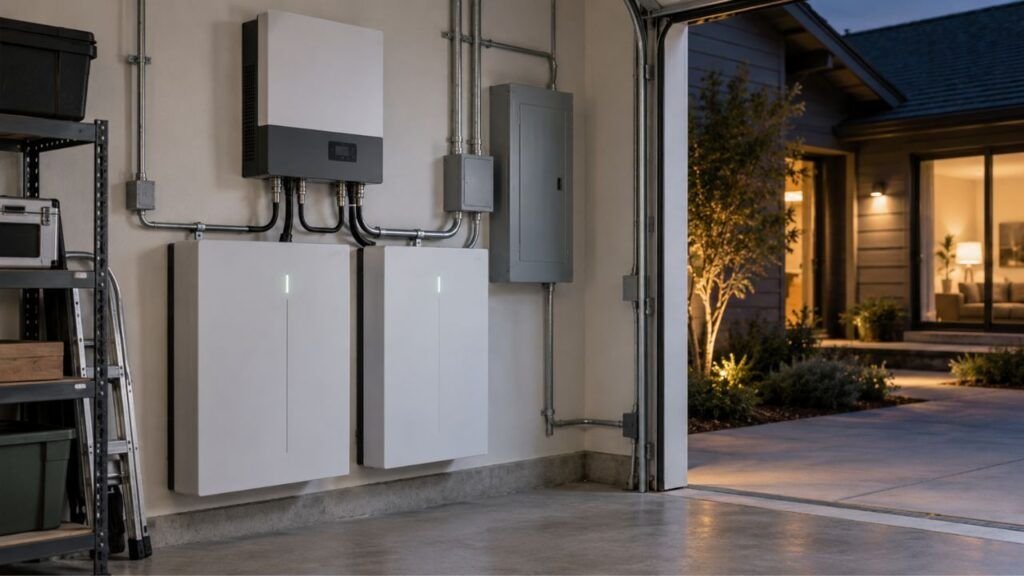
Portable solar generators and installed home battery backup systems both store electricity for outages, but they serve different needs. The portable models offer flexible placement and straightforward appliance connections, while installed systems are designed for more permanent home electrical integration.
If you’re deciding between these options, the following comparison explains their main differences.
| Features | Portable Solar Generators | Installed Home Battery Systems |
| Installation | Usually simple for direct appliance use | Requires professional electrical installation |
| Battery Capacity | Small to large, depending on expansion | Typically designed for scalable home storage |
| Power Output | Varies by inverter and configuration | Designed around household circuit requirements |
| Portability | Can be moved or transported | Permanently installed |
| Solar Charging | Compatible portable or fixed panels | Usually integrated with rooftop solar |
| Home Integration | Transfer equipment may be required | Connected through dedicated electrical equipment |
| Automatic Backup | Available on selected models | Common with suitable backup controls |
| Expansion | Available on compatible models | Often supports additional batteries |
| Initial Cost | Often lower for small configurations | Typically higher installation investment |
| Suitable For | Essential appliances and expandable backup | Permanent whole-home energy management |
Portable solar generators make sense when you need flexible emergency backup or want to start with a smaller system. Installed home batteries are generally more suitable for homeowners who want permanent solar storage, automatic backup, and everyday energy management.
How Many Solar Panels Do You Need for a Whole House Solar Generator?
The number of solar panels you need depends on your daily electricity consumption, panel wattage, available sunlight, and the generator’s solar input capacity. For example, a home requiring 10kWh of electricity daily may need approximately eight 400W solar panels, assuming four peak sun hours and 80% overall energy yield.
However, that estimate represents a 3,200W solar array, which may exceed the charging limit of smaller power stations. A generator with only 1,000W solar input cannot use the full rated output of that array through a single limited input. Always match your panel configuration to the manufacturer’s voltage, current, and wattage requirements.
If you’re planning whole-house solar backup, calculate daily electricity use before choosing panels. You will also need enough battery storage for nighttime consumption and cloudy weather. Solar production changes throughout the year, so consider local sunlight conditions and seasonal demand rather than relying only on ideal charging estimates.
How to Maintain a Whole House Solar Generator
Whole house solar generators require less routine maintenance than fuel-powered generators. However, proper battery care, clean solar panels, and regular inspections help maintain dependable performance during emergencies.
- Monitor Battery Charge: Check battery levels regularly and follow the manufacturer’s recommended charging and storage practices.
- Clean Solar Panels: Remove dust, dirt, and debris with suitable cleaning methods to maintain effective sunlight exposure.
- Inspect Cables and Connectors: Check power cords, solar connectors, and expansion battery connections for visible damage or looseness.
- Maintain Proper Ventilation: Keep cooling vents unobstructed and allow adequate airflow around the power station.
- Avoid Extreme Temperatures: Store and operate the generator within its specified temperature limits to protect battery performance.
- Update System Software: Install manufacturer-approved firmware updates when available to maintain compatibility and functionality.
- Test Backup Operation: Periodically check the generator with suitable household loads to confirm it operates as expected.
- Check Expansion Batteries: Inspect connected battery modules and monitor their charging status through the manufacturer’s app.
- Store Equipment Properly: Keep the generator dry and protected from moisture, direct heat, and physical damage.
- Follow the User Manual: Use manufacturer-approved charging accessories and maintenance procedures to reduce equipment risks.
Final Words
Choosing the right whole house solar generator comes down to power output, battery capacity, and your household’s electrical needs. If you want reliable backup during outages, look for a system that supports your essential appliances and offers enough storage for your expected runtime.
The Jackery HomePower 3600 Plus provides a balanced starting point for expandable backup. The EF ECOFLOW DELTA Pro Ultra suits larger households needing substantial power and battery storage, while the Anker SOLIX F3800 Plus offers 6,000W output and native 120V/240V compatibility.
Before buying, calculate your household’s electricity demand and consider future battery expansion. That way, you can choose a solar backup system that matches your needs without spending unnecessarily on capacity you may never use.
Related FAQs
Can a Solar Generator Power a Whole House?
Yes, a properly sized solar generator can power an entire house when it supports the required continuous wattage, battery capacity, and 120V/240V circuits. Smaller models generally handle essential appliances rather than every household circuit.
What Is the Best Solar Generator for Whole House Backup?
The Jackery HomePower 3600 Plus is a versatile option for expandable home backup. For larger electrical demands, the EcoFlow DELTA Pro Ultra offers 7,200W output, native 240V support, and substantially greater expansion potential.
How Many Watts Does a Solar Generator Need to Run a House?
A solar generator may need around 5,000W to 15,000W or more for substantial household loads, depending on the appliances running simultaneously. Full-house requirements can exceed this range, especially with electric heating, cooling, and large motor loads.
How Long Can a Whole House Solar Generator Run?
Runtime depends on battery capacity and electricity consumption. For example, a 10kWh battery could run a constant 1,000W load for roughly eight to nine hours after typical conversion losses.
Can a Solar Generator Run Central Air Conditioning?
Yes, a sufficiently powerful solar generator can run a compatible central air conditioner. However, the system must support the required 240V supply, running wattage, startup surge, and battery capacity.
Can a Solar Generator Run a 240V Well Pump?
Yes, solar generators with compatible 240V split-phase output can operate well pumps. Check the pump’s running power, startup requirements, and the generator’s surge capability before connecting it.
How Many Solar Panels Do You Need to Power a House?
The number depends on household energy consumption and sunlight availability. For example, approximately eight 400W panels could produce around 10kWh daily under favorable conditions with four peak sun hours and estimated system losses.
Can You Use a Solar Generator During a Power Outage?
Yes, solar generators can supply stored electricity during outages. You can connect compatible appliances directly or use approved home backup equipment to power selected circuits.
Can a Whole House Solar Generator Work Without Solar Panels?
Yes, most whole-house solar generators can charge from household AC power and operate from stored battery energy without solar panels. However, solar panels provide an additional way to replenish electricity when the grid is unavailable.
Are Whole House Solar Generators Worth the Money?
Whole-house solar generators can be worthwhile if you experience frequent outages, need quiet indoor backup, or want expandable battery storage. Their value depends on electricity requirements, outage frequency, total system cost, and expected usage.
Can You Connect a Solar Generator Directly to Your House?
You can connect a compatible solar generator to household circuits through approved transfer equipment or a dedicated home backup panel. Never connect it to an ordinary wall outlet to feed electricity into household wiring.
Is a Solar Generator Better Than a Gas Generator for Home Backup?
Solar generators offer quieter operation, no exhaust during battery use, and lower routine maintenance. Gas generators can be more practical for sustained high-power demands when fuel is available. The right choice depends on your backup requirements.

Austin Parker writes practical generator how-to guides, troubleshooting advice, and buying guides for solar, portable, and fuel-powered generators. His focus is helping readers solve common power problems, understand their options, and choose dependable equipment for real-world use.