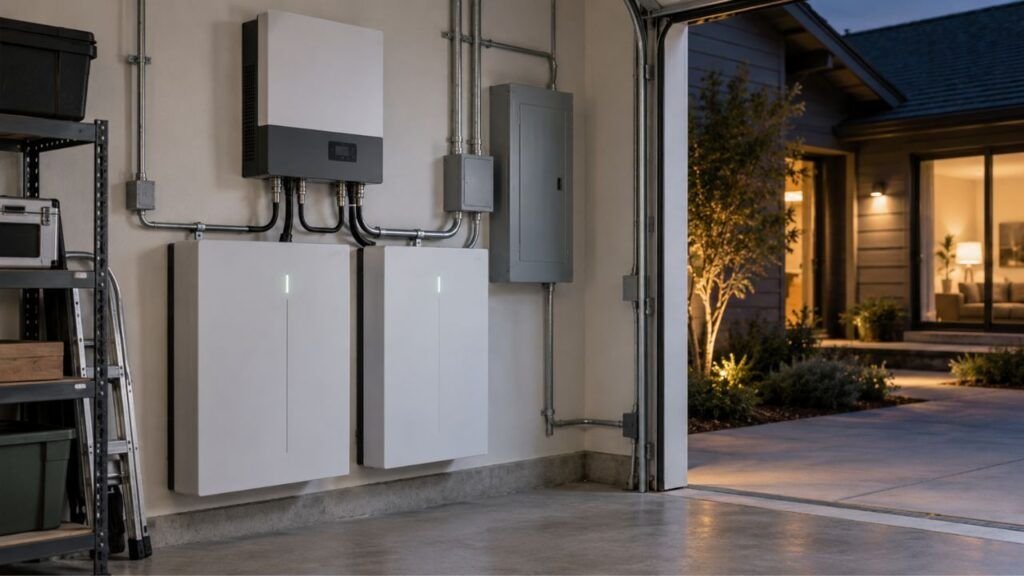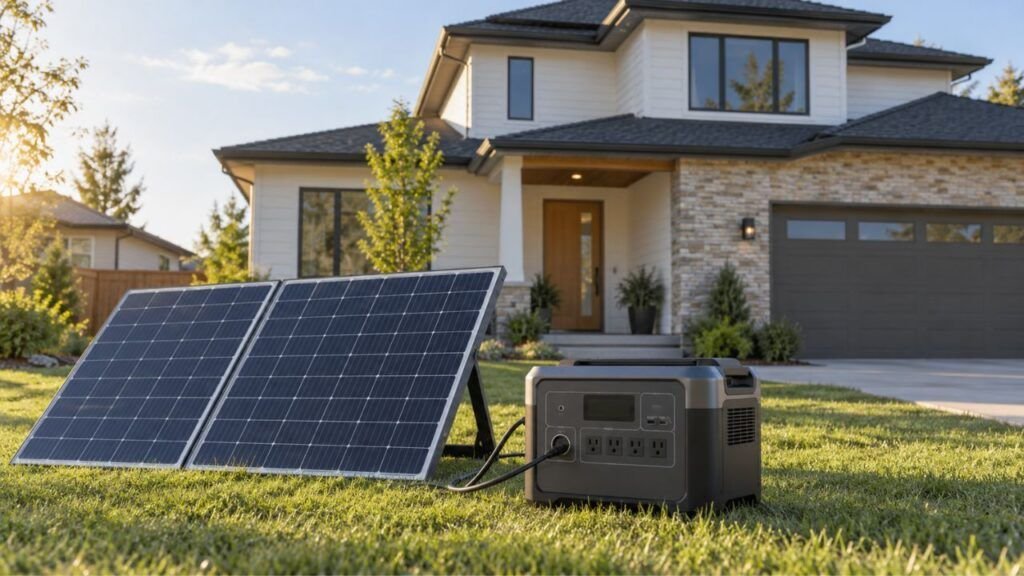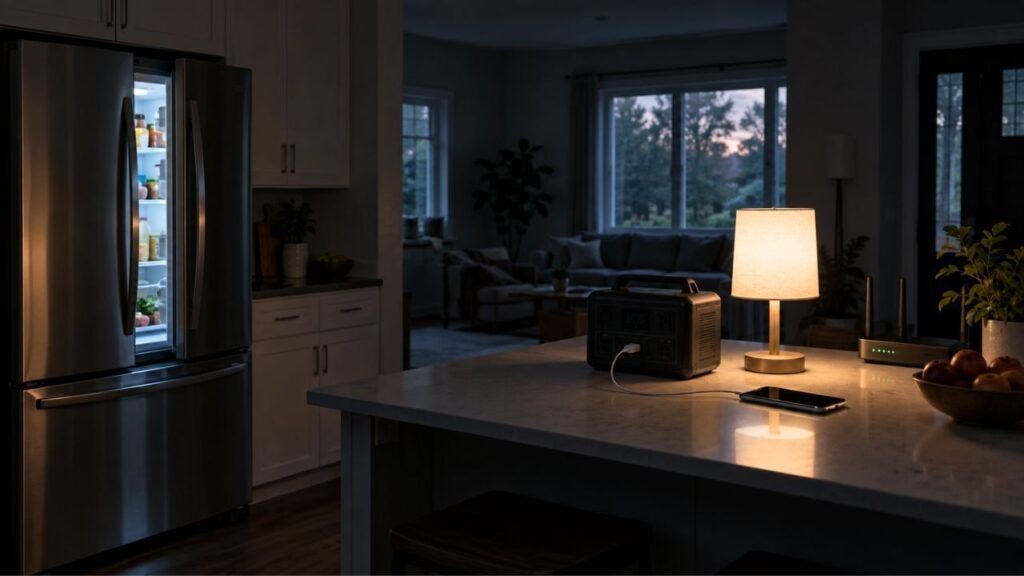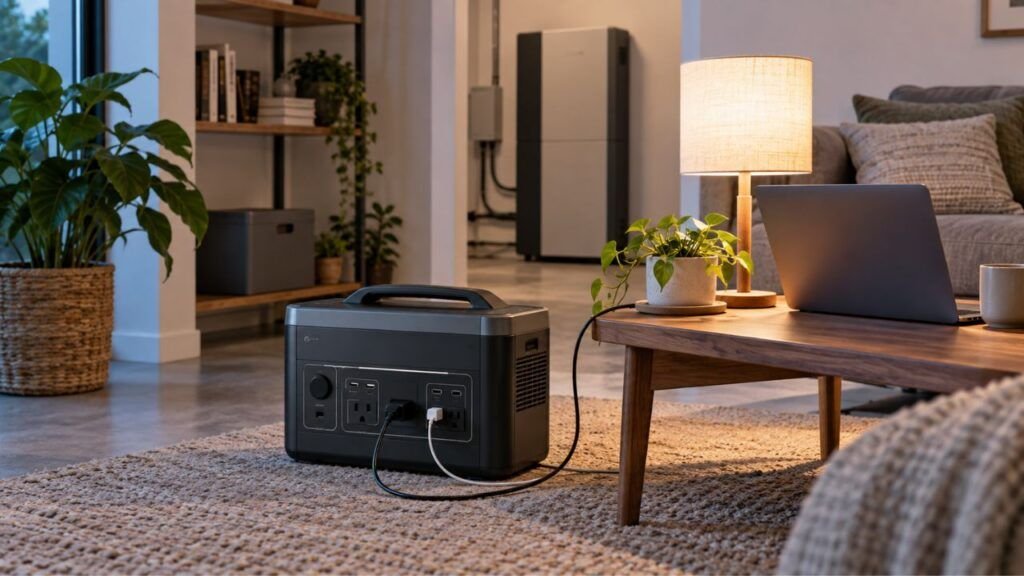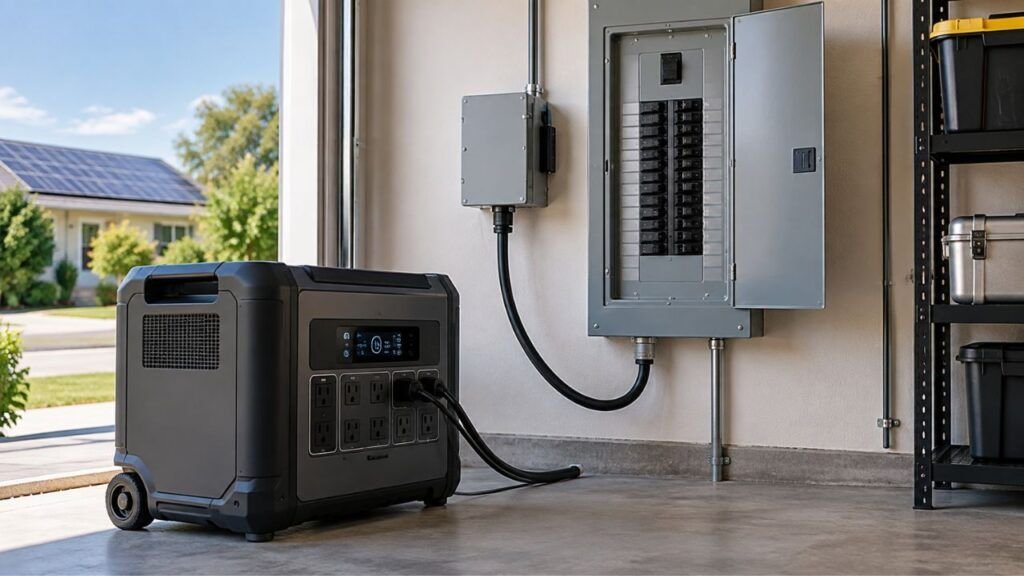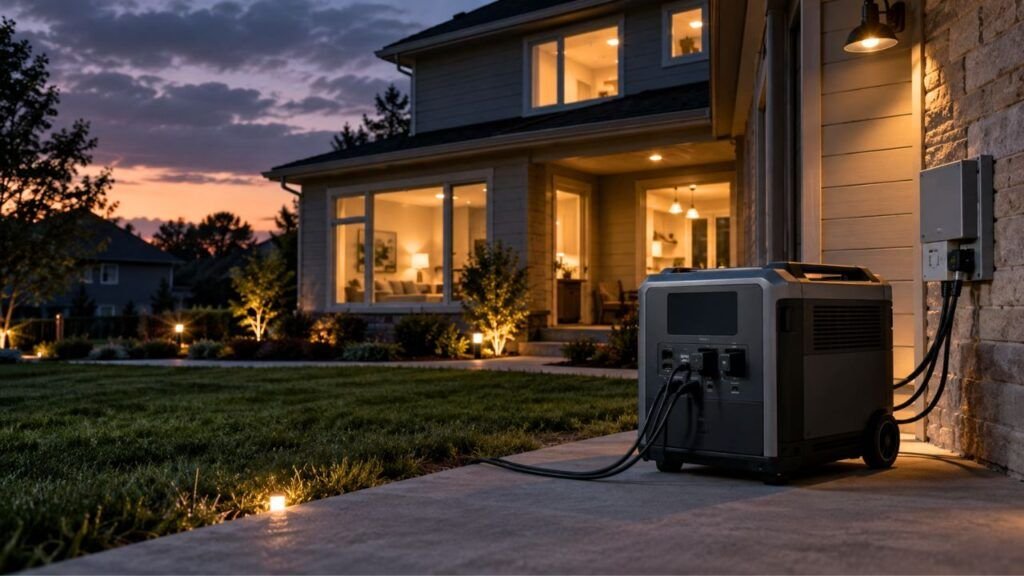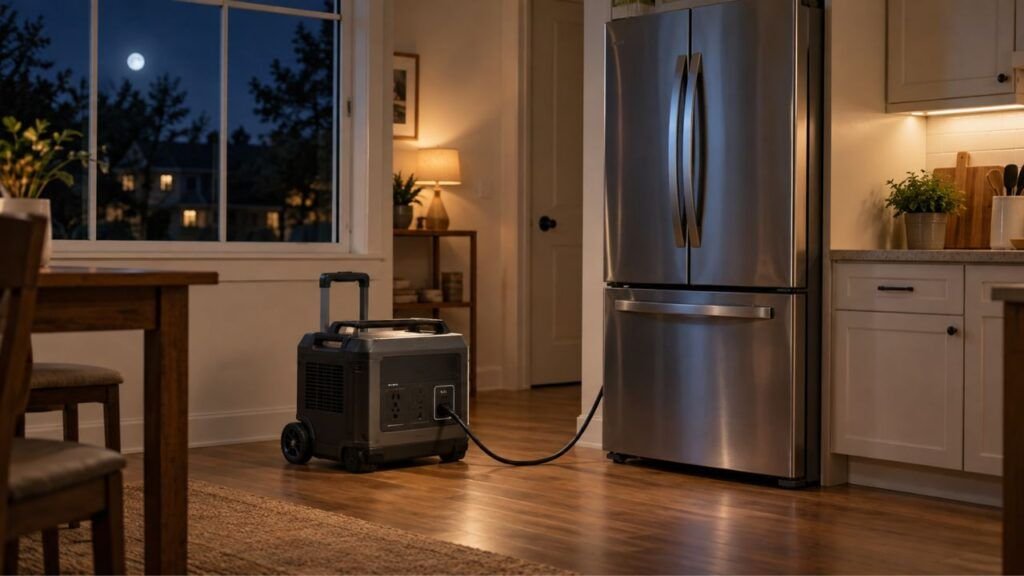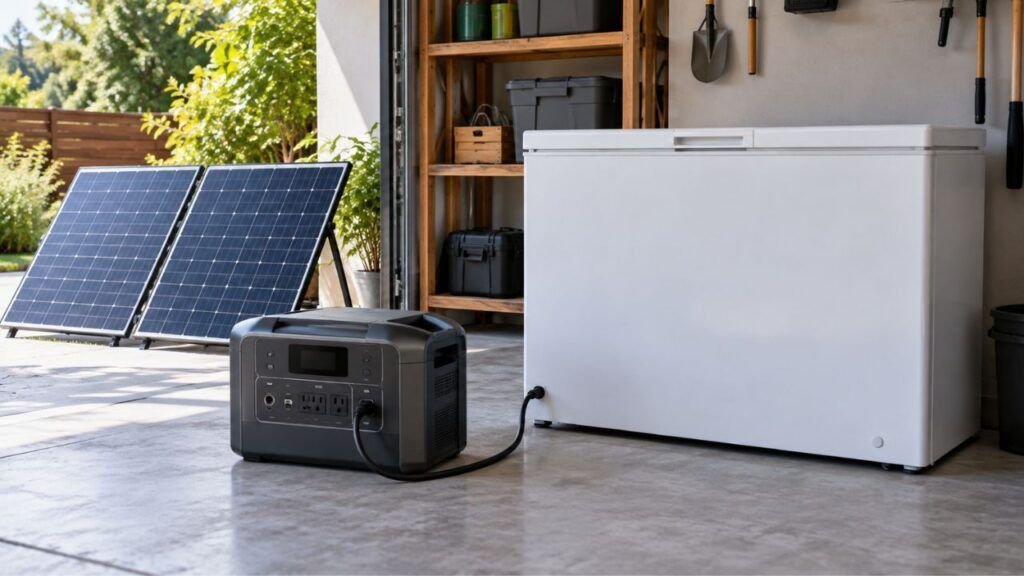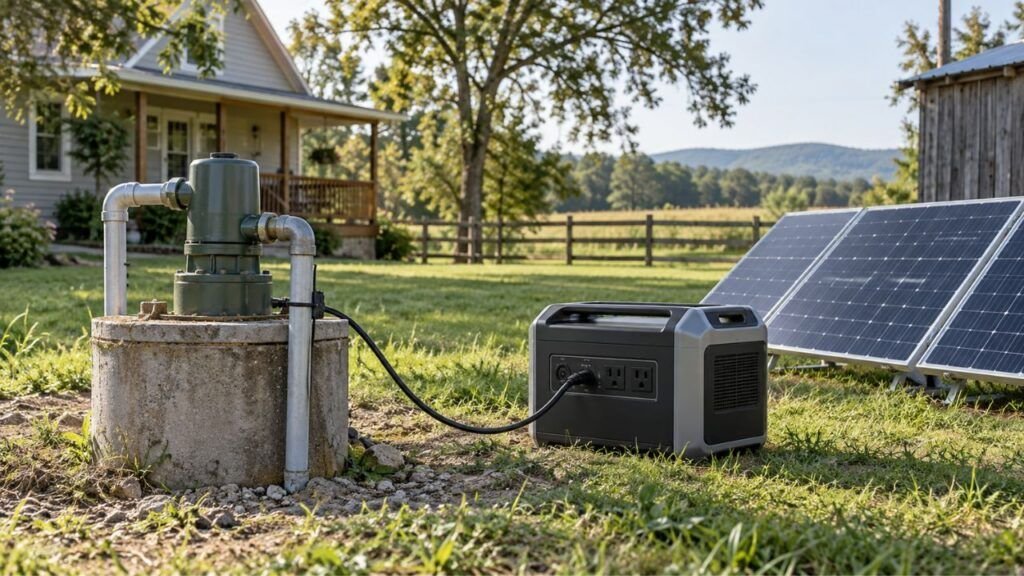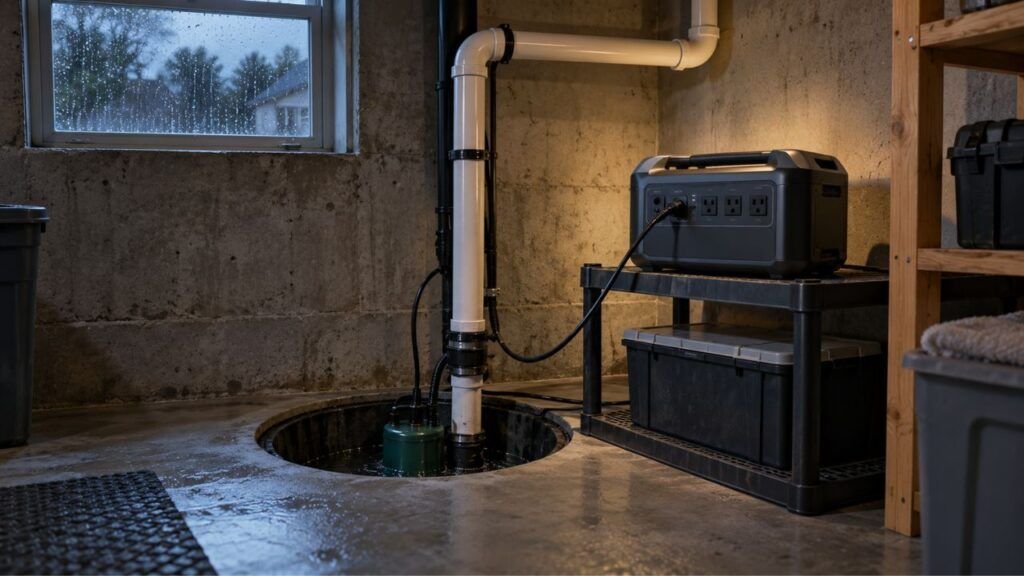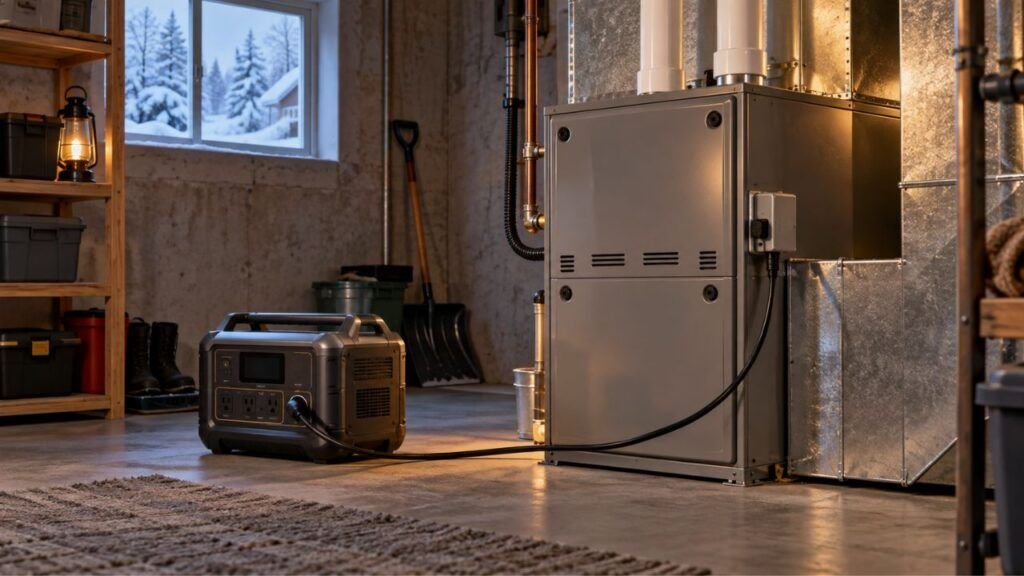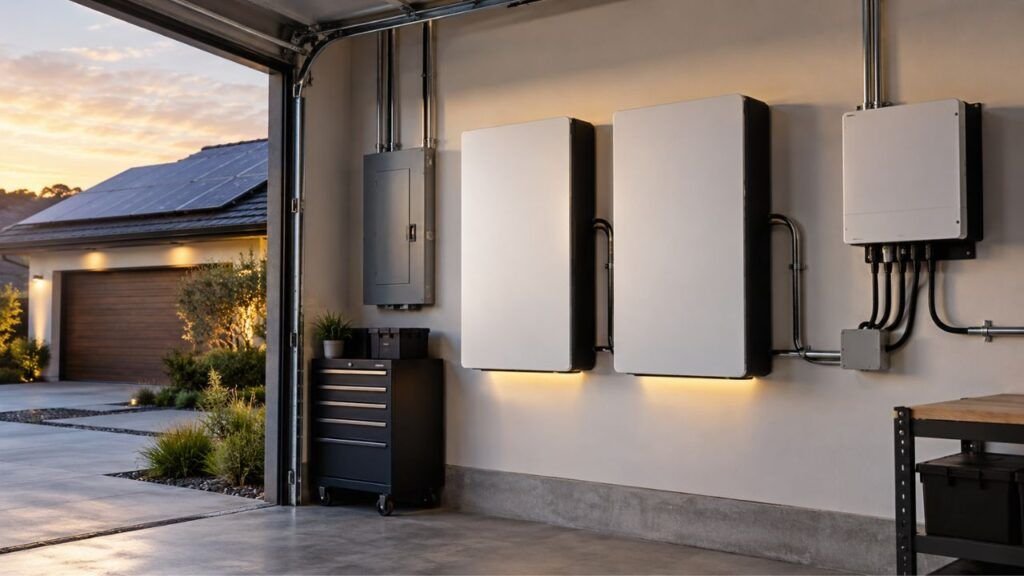
If you are looking for the best battery generators, choosing the right one can make power outages and off-grid living easier. These rechargeable power stations provide quiet, reliable power for household appliances, camping, and emergency backup.
BLUETTI Elite 300 Portable Power Station offers balanced performance, while EF ECOFLOW 12kWh Power Station handles larger home backup needs. For solar charging, Jackery HomePower 3600 Plus is a practical choice. ABOK Ark3600 suits RV living, and DJI Power 2000 Portable Power Station delivers strong output at an affordable price.
After testing the top battery generators, we’ve narrowed down our picks for different power needs. In this guide, we’ll compare battery capacity, power output, charging performance, and practical features to help you choose confidently.
We’re reader-supported. When you buy through links on our site, we may earn an affiliate commission. As an Amazon Associate, we earn from qualifying purchases at no extra cost to you.
Best Battery Generator: Our Top Picks
- Best Overall: BLUETTI Elite 300 Portable Power Station
- Best for Home Backup: EF ECOFLOW 12kWh Power Station DELTA Pro Ultra
- Best Solar Kit Option: Jackery HomePower 3600 Plus
- Best for RVs: ABOK Ark3600 Portable Power Station
- Best for Power Outages: Jackery HomePower 3000
- Best Expandable Option: BLUETTI Apex 300 Portable Power Station
- Best Fast Charging Option: EF ECOFLOW DELTA 3 MAX Portable Power Station
- Best Compact Option: BLUETTI Elite 200 V2
- Best for Travel: Jackery Explorer 2000 v2
- Best Quiet Operation: EF ECOFLOW DELTA 3 Ultra
- Best Heavy-Duty: Anker SOLIX F3800 Plus Portable Power Station
- Best Value Option: DJI Power 2000 Portable Power Station
1. Best Overall: BLUETTI Elite 300 Portable Power Station
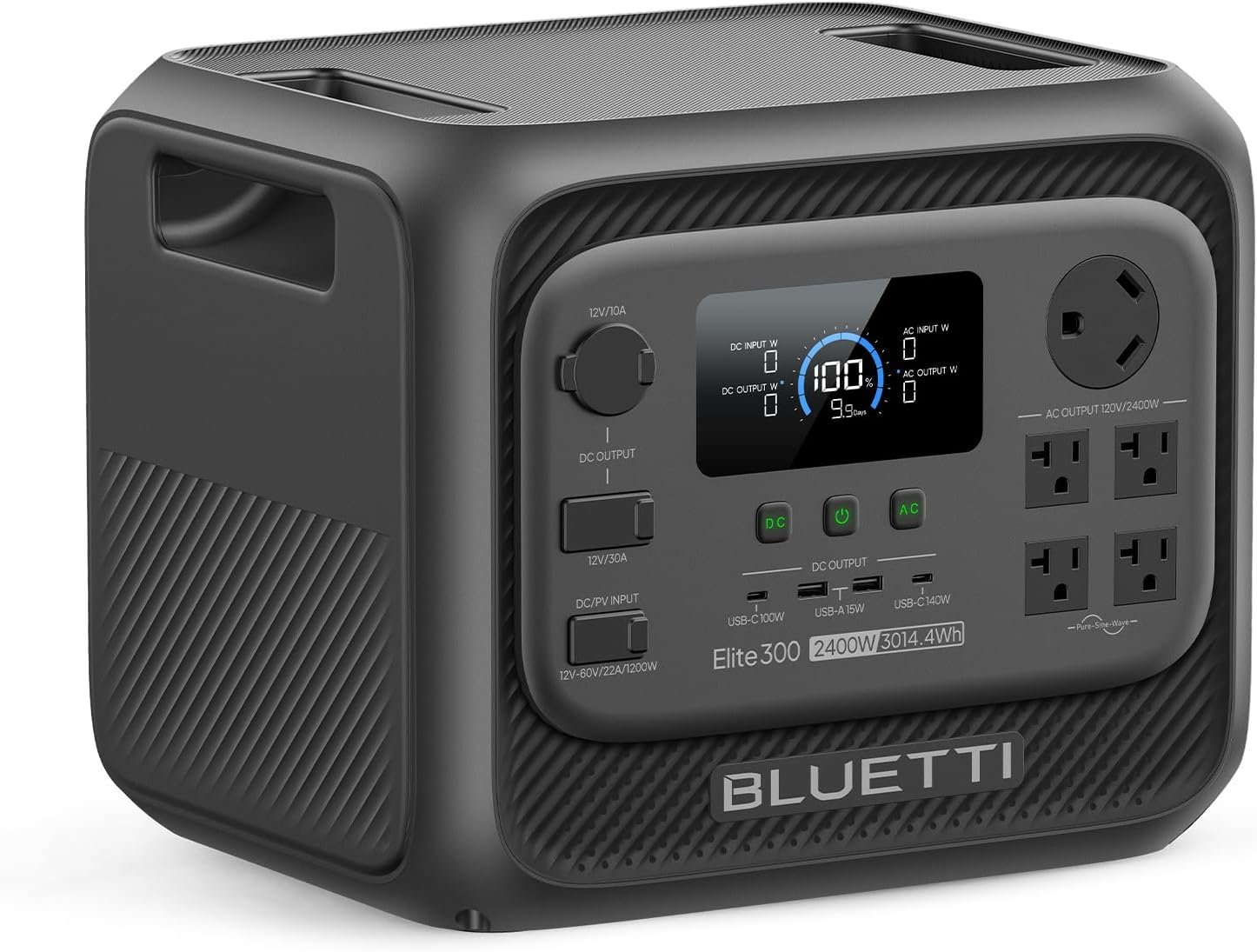
Key Details:
- 3,014.4Wh LiFePO4 battery with over 6,000 charge cycles
- 2,400W continuous AC output with 4,800W surge power
- Fast charging from 0–80% in approximately 78 minutes
- TT-30 RV outlet, 12V/30A DC output, and 10ms UPS backup
- Weighs 58 lbs with AC, solar, and car charging support
The BLUETTI Elite 300 Portable Power Station is a great choice if you need a reliable battery generator for home backup, camping, or RV trips. Its 3,014Wh battery can power refrigerators, lights, Wi-Fi routers, and other essentials during outages. Plus, the compact design makes storage easier without sacrificing much battery capacity.
What we like most is its 2,400W continuous output and 4,800W surge capacity. You can power multiple household appliances together within its output limits. The dedicated TT-30 RV outlet and 12V/30A DC connection also make it convenient for campervan and motorhome owners.
The BLUETTI Elite 300 also features 10ms UPS switching to help keep compatible electronics running during sudden power interruptions. Its LiFePO4 battery supports over 6,000 charge cycles, which is impressive for regular use. You will also find app controls for monitoring battery levels and power consumption.
Charging flexibility is another reason to consider this portable battery generator. It supports AC, solar, and vehicle charging, reaching 80% in approximately 78 minutes under optimal conditions. In our opinion, its combination of capacity, useful outlets, and long battery life makes it a practical all-around power solution.
Pros:
- Large 3kWh battery in a compact design
- Dedicated RV outlet and versatile DC connections
- Fast recharging with multiple charging methods
- Long-lasting LiFePO4 battery with smart app control
Cons:
- 2,400W output limits some heavy-duty appliances
- Solar panels require an additional purchase
2. Best for Home Backup: EF ECOFLOW 12kWh Power Station DELTA Pro Ultra
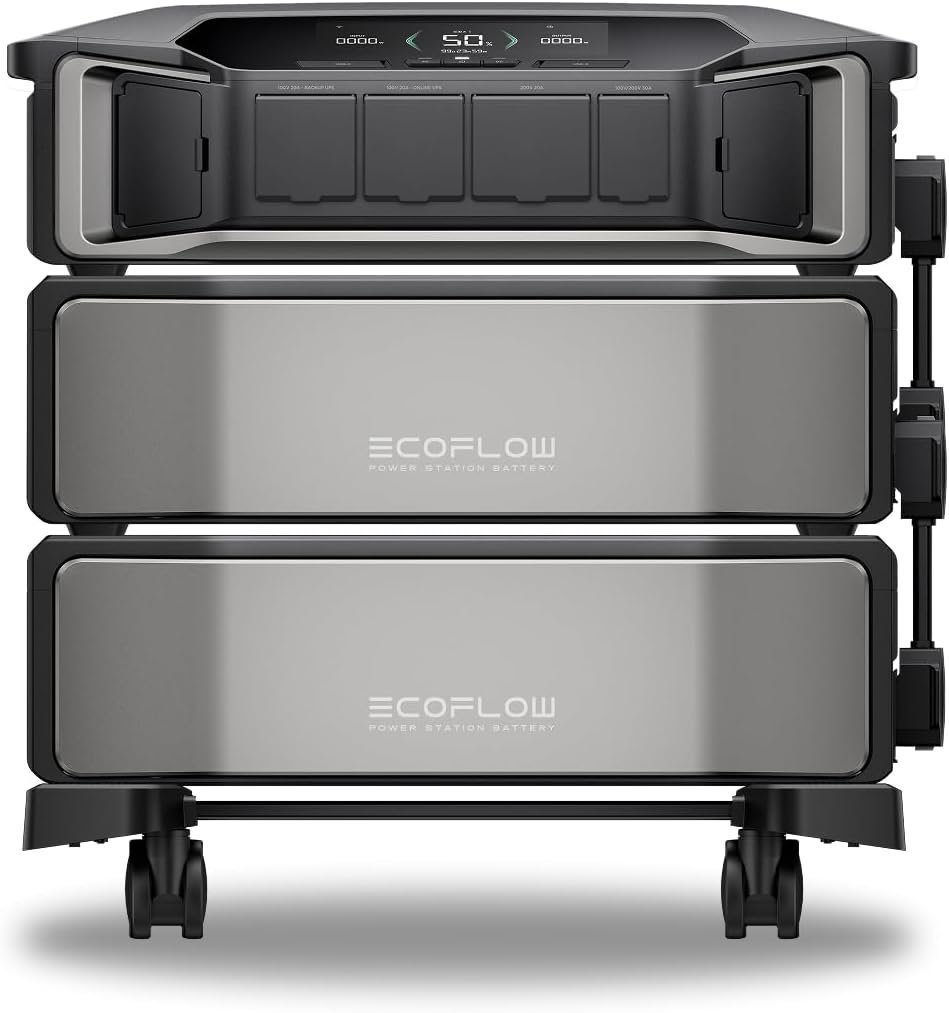
Key Details:
- 12,288Wh battery capacity with two 6,144Wh battery modules
- 7,200W continuous AC output with 120V/240V support
- Expandable capacity up to 90kWh with compatible equipment
- Online UPS functionality with 0ms transfer time on supported outputs
- Approximately 294 lbs with AC, solar, EV, and generator charging options
When you need serious backup power for your home, the EF ECOFLOW DELTA Pro Ultra Power Station is worth considering. With two batteries providing 12,288Wh of capacity, it can keep refrigerators, lighting, Wi-Fi, and other household essentials running during extended outages. It’s particularly useful for homeowners who need more than basic emergency power.
Its 7,200W continuous output is a major advantage over smaller rechargeable generators. You can operate compatible 120V and 240V appliances, including certain air conditioners and larger household equipment. If your power requirements increase, connecting additional inverters can expand the system’s output to 21.6kW.
We also like the expandable storage system of the EF ECOFLOW DELTA Pro Ultra Power Station. It supports up to 90kWh with compatible expansion equipment, making it suitable for longer blackouts. The EcoFlow app helps manage energy consumption, while online UPS functionality protects compatible electronics through supported outputs.
Another useful feature is its flexible recharging system. You can recharge through solar panels, wall outlets, compatible EV chargers, or gas generators. However, the heavy construction and home integration requirements make this battery backup system more suitable for stationary household use than frequent transportation.
Pros:
- Massive 12kWh capacity for extended home backup
- Powerful 7,200W output with dual-voltage support
- Expandable storage for larger household energy needs
- Flexible charging and advanced energy management
Cons:
- Expensive compared with smaller battery generators
- Heavy system requiring additional home integration equipment
3. Best Solar Kit Option: Jackery HomePower 3600 Plus
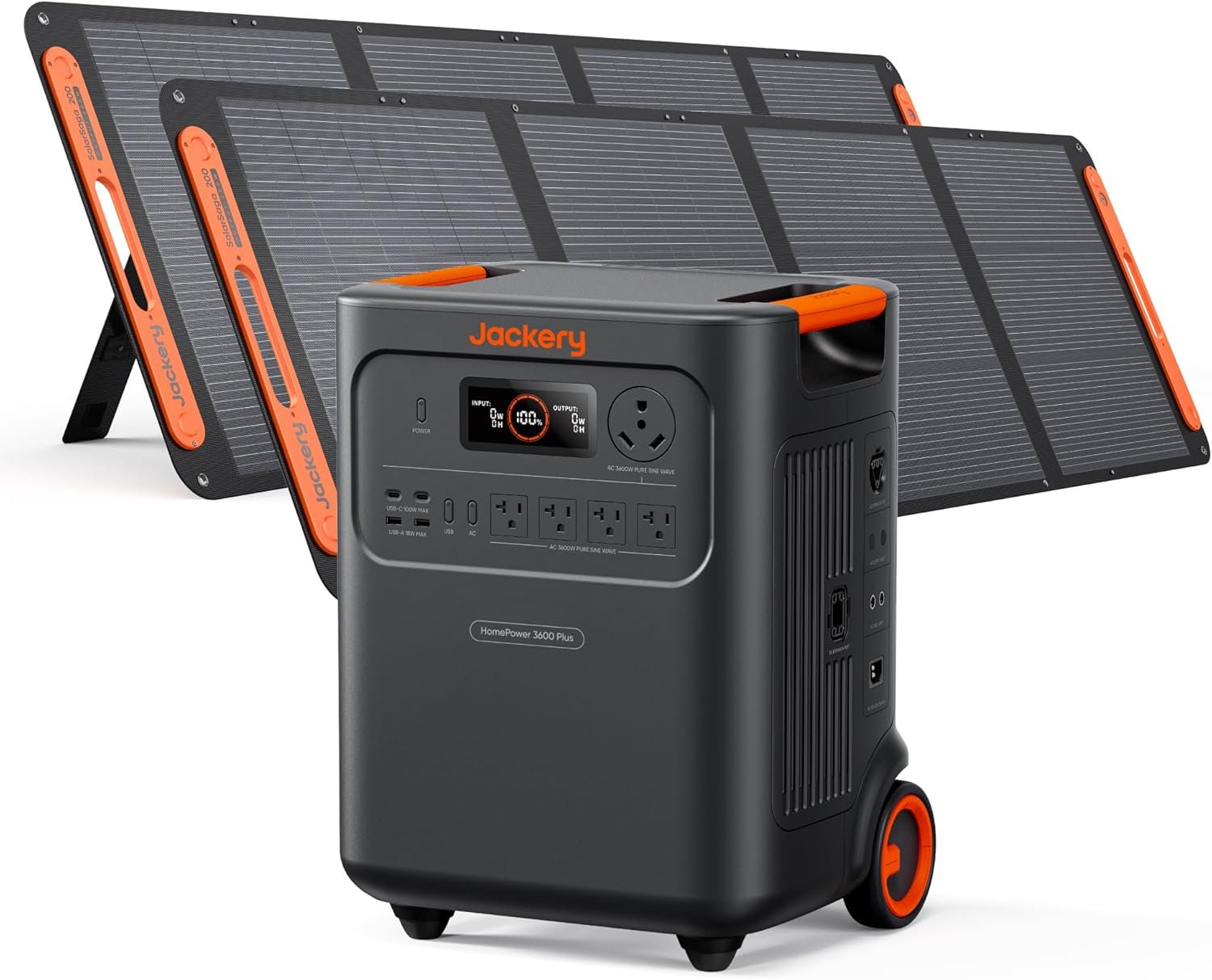
Key Details:
- 3,584Wh LiFePO4 battery rated for 6,000 charge cycles
- 3,600W continuous AC output with 120V support
- Includes two 200W solar panels for renewable charging
- Expandable battery capacity up to approximately 21kWh per unit
- Recharges in 2.5 hours via AC or 2 hours using hybrid charging
If you’re looking for a solar-powered battery generator for household emergencies, the Jackery HomePower 3600 Plus offers a practical setup. It combines a 3,584Wh battery with two 200W solar panels, allowing you to recharge using sunlight. The stored energy can support refrigerators, fans, lights, and other essentials when grid power isn’t available.
We particularly like its 3,600W continuous output, which handles many everyday appliances without a fuel-powered generator. You can also connect two compatible units for 7,200W output and 240V capability. This makes it a flexible option if your household power requirements grow.
The Jackery HomePower 3600 Plus also offers convenient charging options. AC charging takes approximately 2.5 hours, while hybrid charging can reduce that to around two hours. Solar charging is helpful during outages, although the included 400W panels will take considerably longer to replenish the battery.
Another advantage is its luggage-style design with built-in wheels and a telescopic handle. You can move this portable power station between rooms or outside for solar charging without much hassle. In our opinion, its strong output, expandable capacity, and included solar panels make it appealing for emergency preparedness.
Pros:
- Includes two 200W solar panels
- Strong 3,600W output for household appliances
- Expandable battery capacity with parallel operation
- Wheeled design for convenient transportation
Cons:
- Included solar panels require longer charging times
- Parallel operation requires another unit and compatible accessories
4. Best for RVs: ABOK Ark3600 Portable Power Station
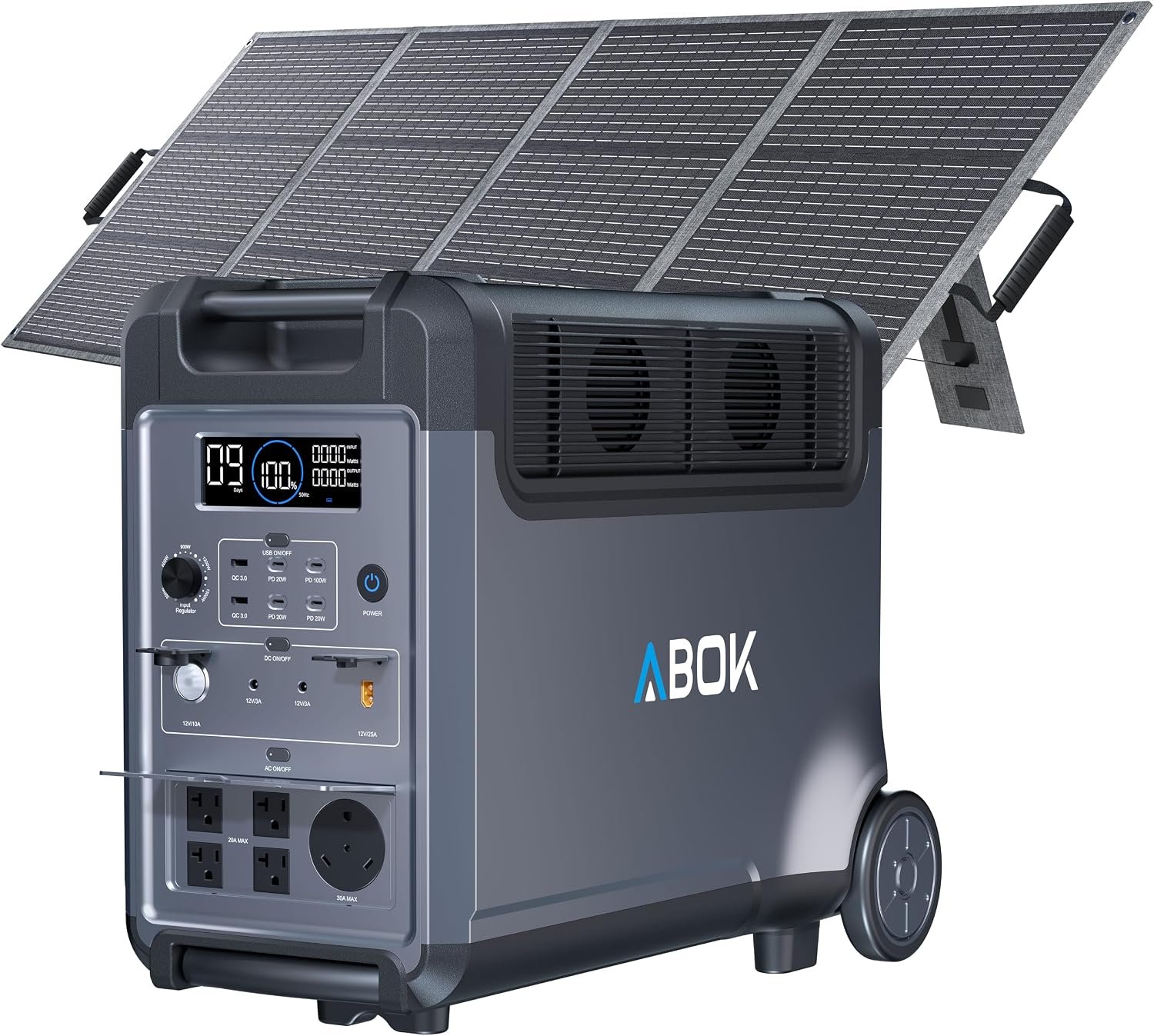
Key Details:
- 3,840Wh LiFePO4 battery with over 4,000 charge cycles
- 3,600W continuous AC output with 4,500W peak power
- Expandable battery capacity up to 11,520Wh
- 15 output ports, including 30A AC, USB-C, USB-A, and DC
- Supports 2,000W solar input, 1,500W AC charging, and Bluetooth control
For RV owners who enjoy off-grid camping, the ABOK Ark3600 Portable Power Station offers plenty of battery capacity and output power. Its 3,840Wh LiFePO4 battery can run portable refrigerators, lights, fans, and other camping equipment. The 3,600W continuous output also makes it suitable for operating compatible higher-wattage RV appliances.
One thing we like is its selection of 15 output ports. You will find multiple AC outlets, USB-A, USB-C, and DC connections for different devices. The 30A AC outlet is particularly useful for compatible RV electrical setups, reducing the need for additional adapters.
The ABOK Ark3600 Portable Power Station also supports up to 2,000W solar input, making it practical for extended off-grid stays. Standard AC charging takes approximately three hours, while combined AC and solar charging can be faster. Its expandable battery system also lets you increase storage capacity when needed.
At 92 pounds, this rechargeable battery generator isn’t particularly lightweight. However, the telescopic handle and built-in wheels make transportation easier on firm ground. You also get Bluetooth app control for monitoring battery performance. From our perspective, it’s a capable option for RV living, off-grid cabins, and emergency backup.
Pros:
- Large 3,840Wh battery with expandable storage
- Powerful AC output and 15 versatile ports
- High solar input capacity for off-grid charging
- Built-in wheels, telescopic handle, and Bluetooth control
Cons:
- Heavy 92 lb construction limits portability
- Expansion batteries and solar equipment increase costs
5. Best for Power Outages: Jackery HomePower 3000
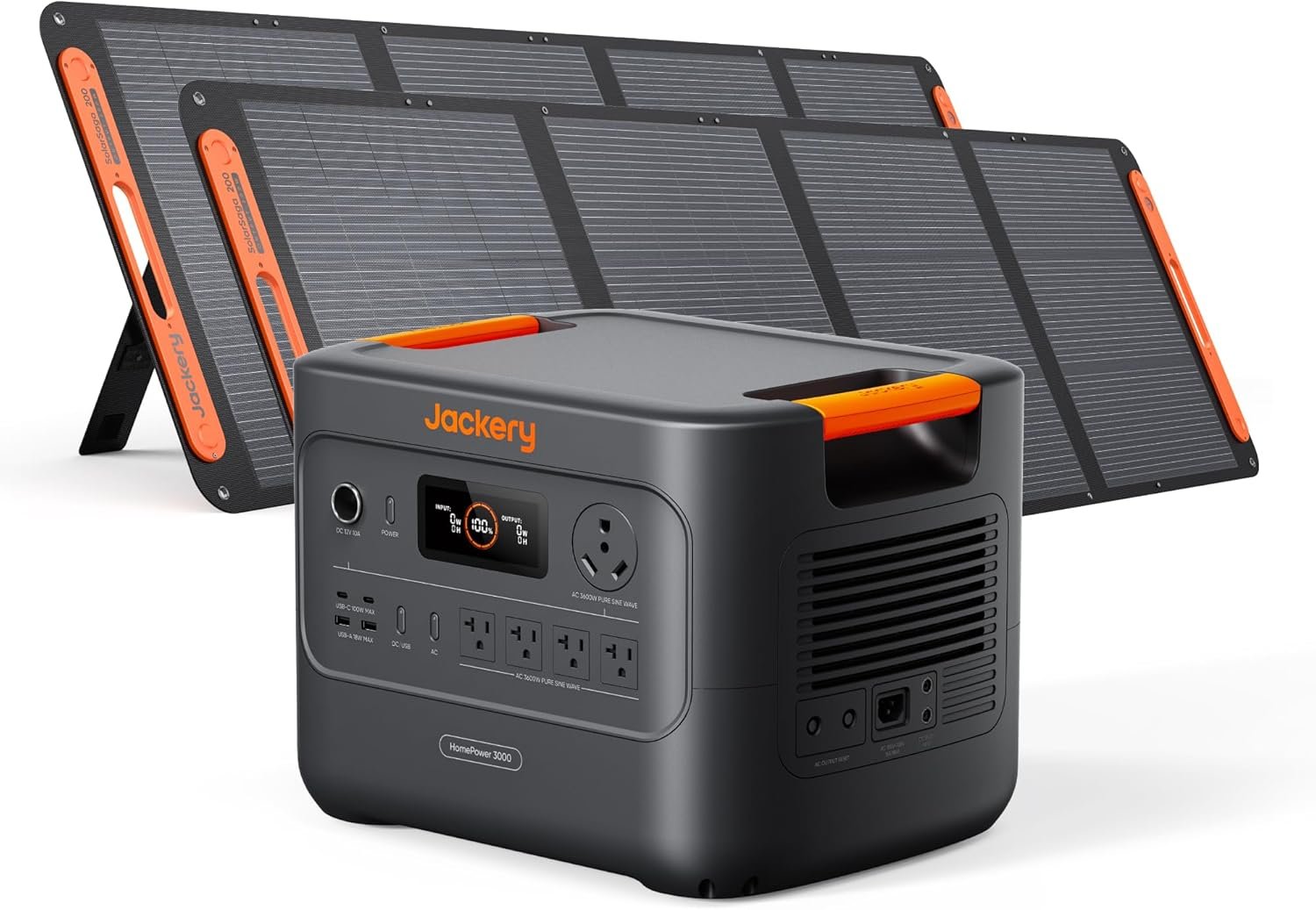
Key Details:
- 3,072Wh LiFePO4 battery with 4,000 charge cycles
- 3,600W continuous AC output with 7,200W surge power
- Includes two 200W solar panels for emergency recharging
- ≤20ms UPS backup, TT-30 RV outlet, and dual 100W USB-C ports
- Recharges in 2.2 hours via AC or 1.7 hours with hybrid charging
The Jackery HomePower 3000 is worth considering if you need a reliable battery generator for unexpected power outages. Its 3,072Wh capacity can keep refrigerators, fans, Wi-Fi routers, and essential electronics running when electricity goes out. The 3,600W AC output also provides enough power for multiple household appliances within its rated limits.
What we like most is its emergency backup capability. The ≤20ms UPS switching helps keep compatible electronics running during sudden outages. You will also find a TT-30 RV outlet and dual 100W USB-C ports, making this rechargeable power station useful for both home emergencies and outdoor activities.
Another advantage of the Jackery HomePower 3000 is its flexible charging system. It reaches a full charge in approximately 2.2 hours using AC power or 1.7 hours with hybrid charging. The included 400W solar panels provide another charging option, although reaching 80% through solar alone can take around nine hours under suitable conditions.
In our opinion, the compact CTB battery design makes this portable battery generator easier to store and transport than many bulky backup systems. Its LiFePO4 battery also offers long-term durability, with 4,000 rated cycles to 70% capacity. However, the 3kWh battery may need regular recharging if you’re running several power-hungry appliances.
Pros:
- Powerful 3,600W output for household essentials
- Fast UPS switching for compatible electronics
- Includes 400W solar panels and versatile outlets
- Long-lasting LiFePO4 battery with compact construction
Cons:
- Limited runtime when powering multiple heavy appliances
- Solar recharging takes considerably longer than AC charging
6. Best Expandable Option: BLUETTI Apex 300 Portable Power Station
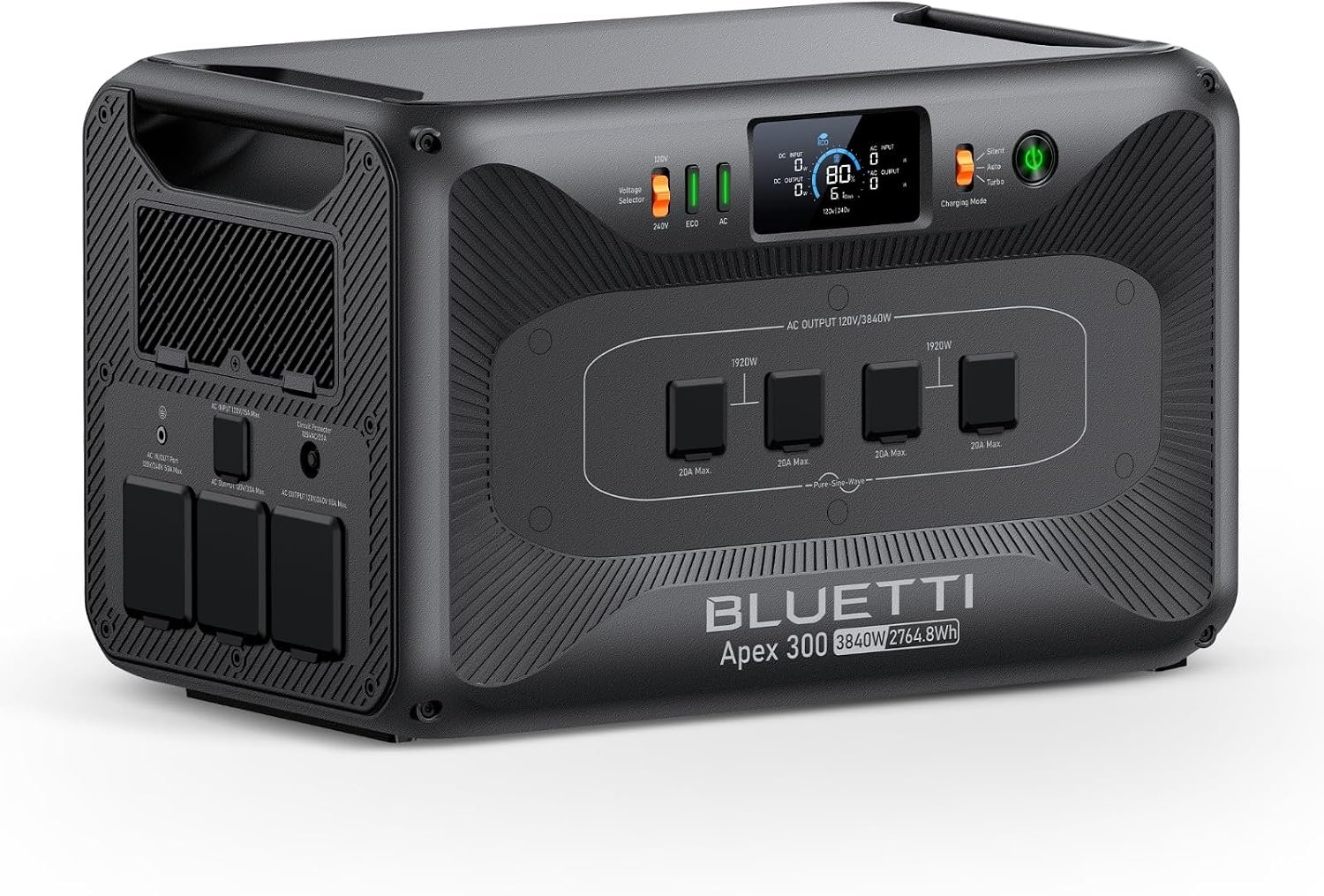
Key Details:
- 2,764.8Wh LiFePO4 battery with over 6,000 charge cycles
- 3,840W continuous AC output with 7,680W power-lifting mode
- Supports 120V/240V operation for compatible appliances
- Expandable using B300K or B500K battery modules
- 14 output ports, smart app control, and fast AC charging
Need more battery capacity without replacing your entire power station? The BLUETTI Apex 300 Portable Power Station offers a flexible solution for home backup, RV travel, and off-grid living. Its 2,764.8Wh battery provides useful energy storage for refrigerators, lights, and household essentials, while the 3,840W continuous output handles many demanding appliances.
One thing we particularly like is its expandable design. You can connect compatible B300K or B500K batteries when longer runtime becomes necessary. The BLUETTI Apex 300 also supports selectable 120V and 240V operation, giving you more flexibility with compatible appliances and electrical setups. Just remember that expansion equipment increases the overall cost.
Charging performance is another strong point of this lithium battery generator. It supports wall outlets, solar panels, vehicle charging, and generators, with additional accessories available for higher charging input. Its LiFePO4 battery is rated for over 6,000 cycles, making it suitable for frequent backup use over many years.
You will also find 14 output ports, app-based monitoring, and fast backup switching for compatible devices. At approximately 66 pounds, it’s manageable for occasional relocation but still fairly heavy. From our perspective, its expandable storage and high AC output make it particularly appealing for households and RV owners with changing power requirements.
Pros:
- Expandable battery capacity for longer backup needs
- Strong 3,840W continuous output
- Flexible 120V/240V operation
- Long-life LiFePO4 battery with smart monitoring
Cons:
- Expansion batteries and accessories cost extra
- Relatively heavy for frequent transportation
7. Best Fast Charging Option: EF ECOFLOW DELTA 3 MAX Portable Power Station
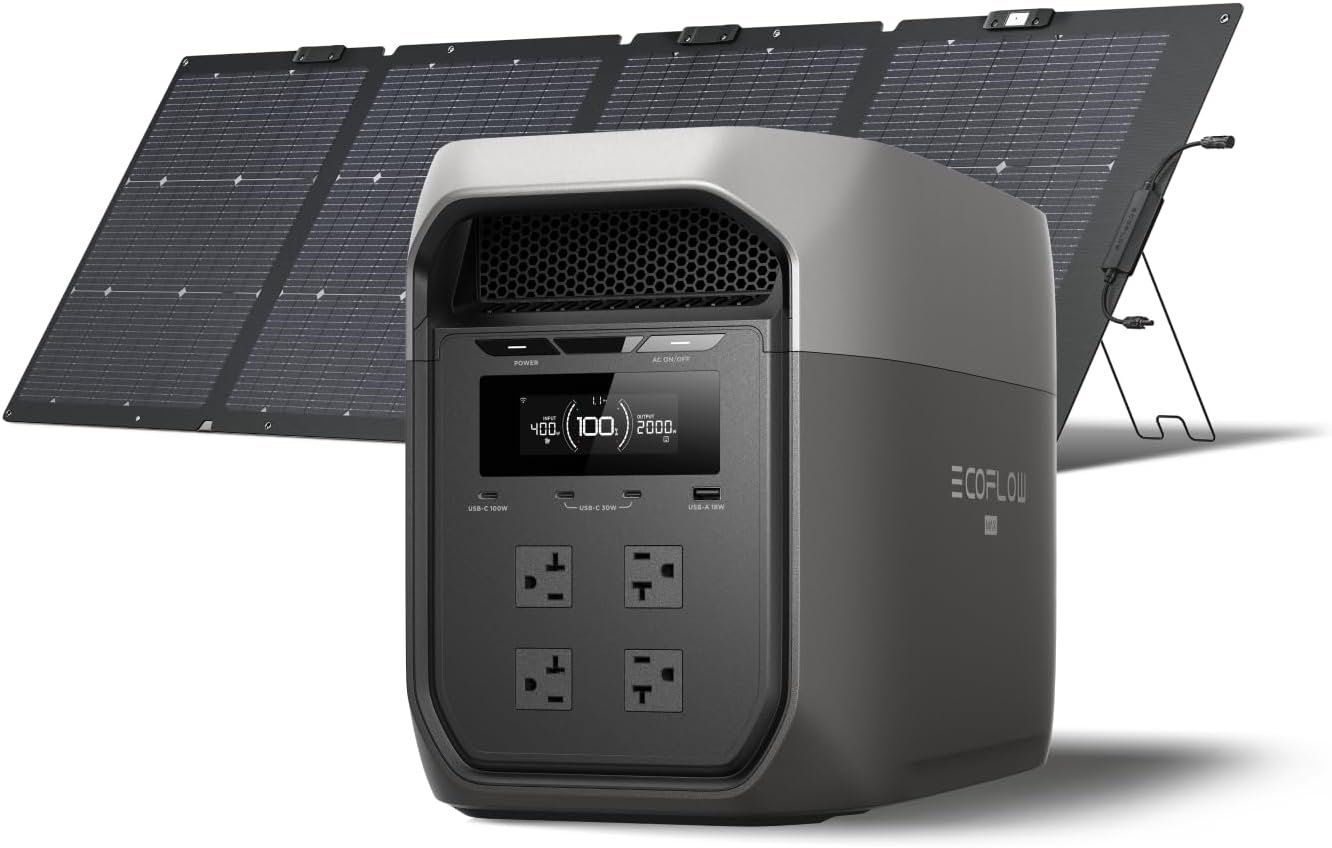
Key Details:
- 2,048Wh LiFePO4 battery with 2,400W continuous AC output
- Up to 3,400W appliance support through X-Boost mode
- Recharges from 0–80% in approximately 68 minutes
- Includes one 220W solar panel for off-grid charging
- 10ms backup switching with EcoFlow app connectivity
When quick recharging matters, the EF ECOFLOW DELTA 3 Max is an appealing battery-powered generator for home backup and camping. Its 2,048Wh battery provides enough stored energy for lights, laptops, televisions, and other everyday essentials. With 2,400W continuous AC output, it can also operate many household appliances without the noise or exhaust of a gas generator.
The standout feature here is its fast charging technology. You can recharge the battery from 0–80% in approximately 68 minutes using compatible AC charging. We also like its X-Boost mode, which supports certain appliances rated up to 3,400W by adjusting the output voltage. However, this feature isn’t suitable for every high-wattage device.
The EF ECOFLOW DELTA 3 Max also includes a 220W solar panel, which is useful when camping or preparing for extended outages. Its 10ms backup switching helps keep compatible electronics operational during power interruptions. You will also find smart app controls for checking battery levels, monitoring consumption, and managing charging settings.
Another advantage is its LiFePO4 battery, designed for long-term use. The cooling system also helps reduce operating noise, making it suitable for indoor backup and overnight camping. In our opinion, this portable power station makes sense if you prioritize quick recharging and moderate power requirements over maximum battery capacity.
Pros:
- Fast 0–80% charging in approximately 68 minutes
- Strong 2,400W output with X-Boost support
- Includes a 220W solar panel
- Smart app controls and fast backup switching
Cons:
- 2,048Wh capacity limits extended appliance runtime
- X-Boost mode isn’t compatible with every appliance
8. Best Compact Option: BLUETTI Elite 200 V2
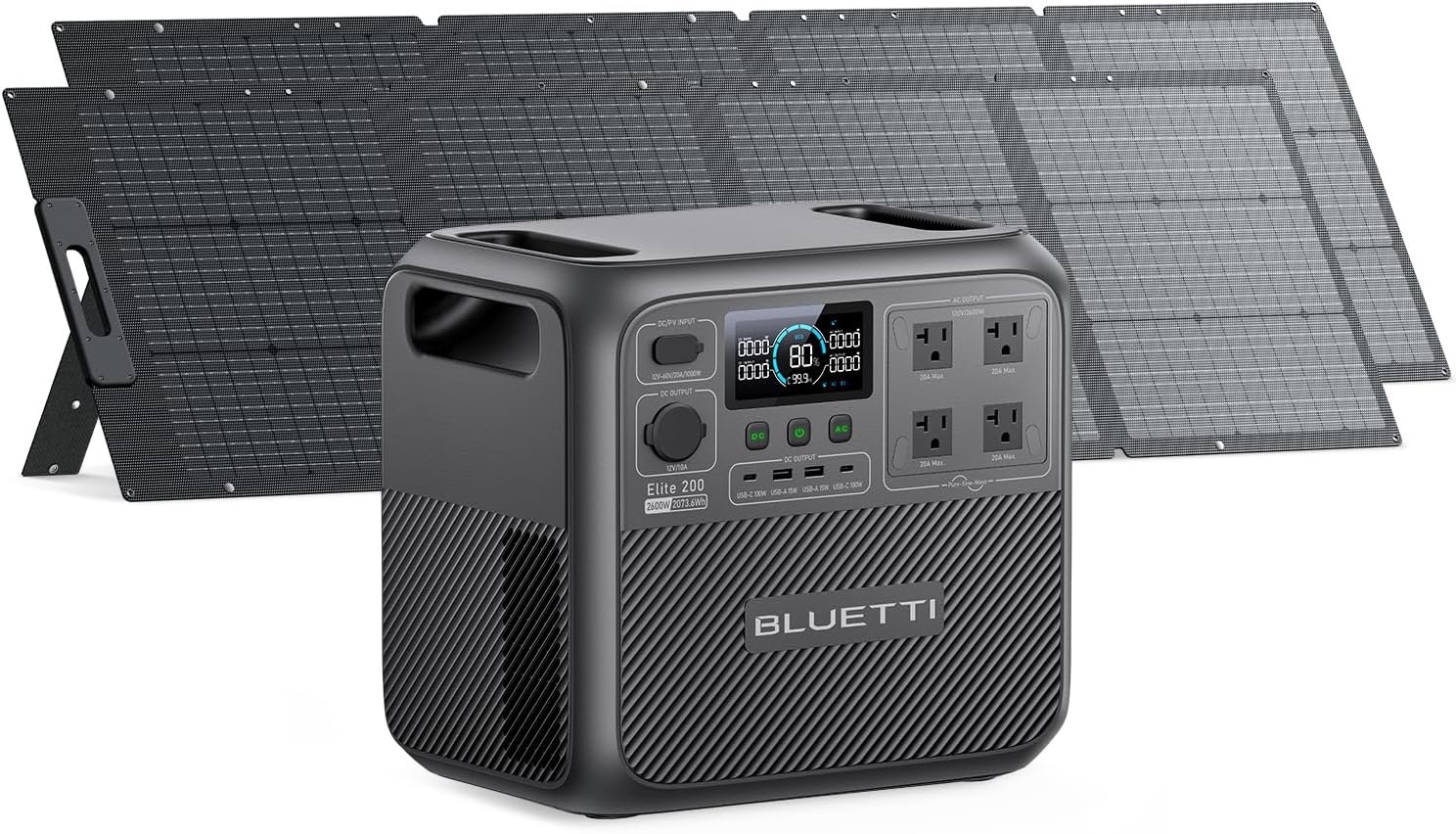
Key Details:
- 2,073.6Wh LiFePO4 battery with over 6,000 charge cycles
- 2,600W continuous AC output with 3,900W power-lifting mode
- Includes two 200W solar panels for off-grid recharging
- Supports up to 1,000W solar input and ≤15ms UPS backup
- Weighs 53.4 lbs with AC, solar, and car charging options
If you’re looking for a compact rechargeable generator without giving up useful power, the BLUETTI Elite 200 V2 is worth a look. Its 2,073.6Wh LiFePO4 battery offers a practical balance between capacity and portability. You can use it for home emergencies, camping trips, RV travel, or powering essential electronics away from electrical hookups.
We particularly like its 2,600W continuous output, which is impressive for a 2kWh portable power station. It can run refrigerators, coffee makers, and other compatible appliances within its rated capacity. The 3,900W power-lifting mode adds flexibility for certain resistive loads, while the ability to power up to nine devices simultaneously is convenient for everyday use.
The BLUETTI Elite 200 V2 also stands out for its efficient battery management. Its approximately 10W standby consumption helps conserve stored energy compared with systems that draw more power while idle. The LiFePO4 battery is rated for over 6,000 charge cycles, while the ≤15ms UPS switching provides additional protection for compatible electronics during outages.
Charging flexibility makes this solar battery generator even more practical. The included two 200W solar panels can recharge it in approximately 5.5 hours under favorable sunlight, while combined AC and DC charging can reach 80% in around 50 minutes. From our standpoint, its compact construction, strong output, and long battery lifespan make it a useful choice for portable backup power.
Pros:
- Compact design with strong 2,600W AC output
- Includes two 200W solar panels
- Low standby consumption and long battery lifespan
- Fast hybrid charging with UPS functionality
Cons:
- Limited capacity for prolonged heavy appliance use
- Heavier than smaller camping-focused power stations
9. Best for Travel: Jackery Explorer 2000 v2
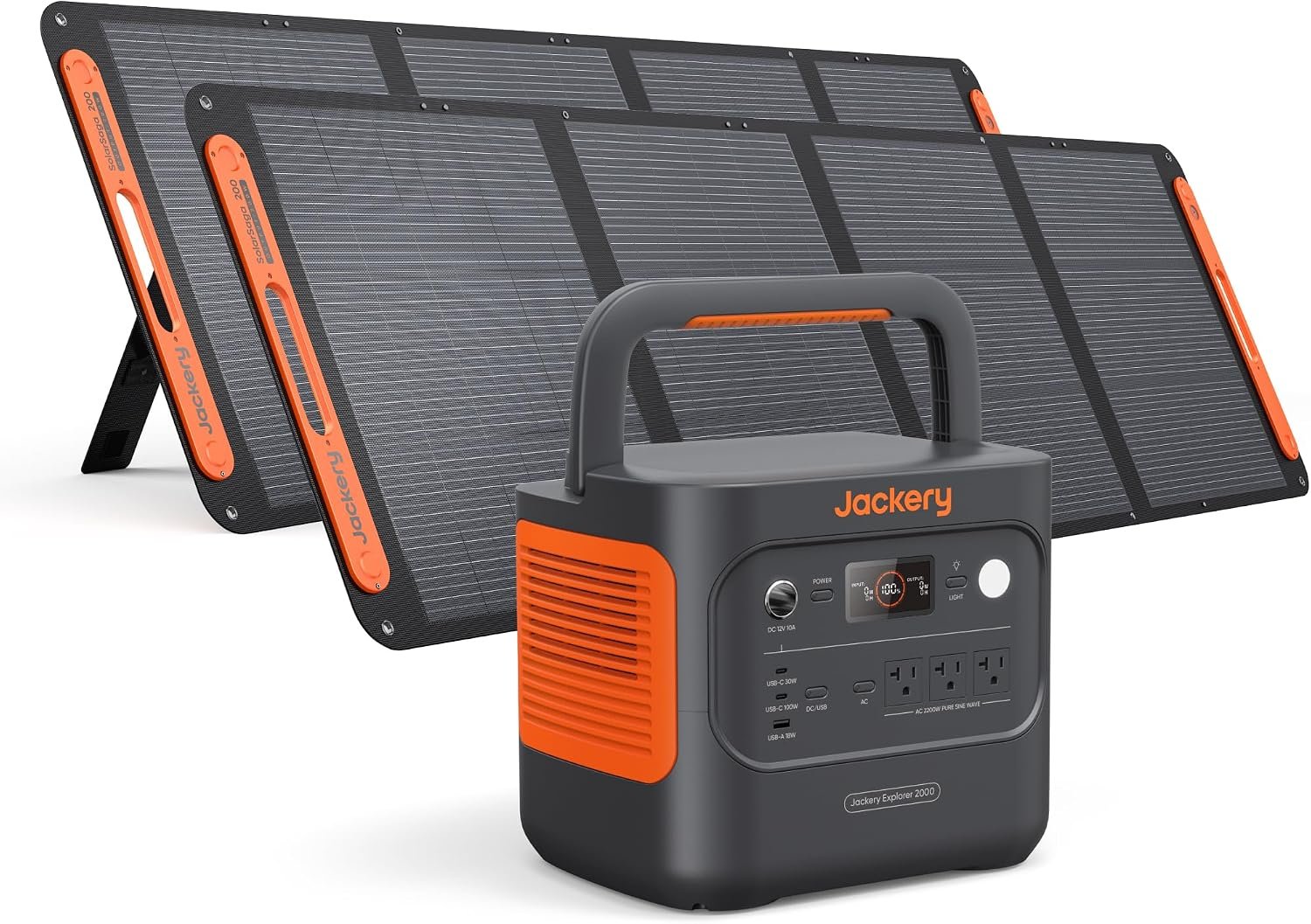
Key Details:
- 2,042Wh LiFePO4 battery with 2,200W continuous AC output
- Includes two 200W solar panels for off-grid charging
- Recharges from 0–80% in approximately 66 minutes via AC
- 20ms UPS backup, three AC outlets, and 100W USB-C charging
- Power station weighs 39.5 lbs with compact CTB battery technology
If you need a portable battery generator for camping, road trips, or occasional home backup, the Jackery Explorer 2000 v2 is worth considering. Its 2,042Wh battery provides useful energy for refrigerators, laptops, lights, and other essential devices. The relatively lightweight design also makes it convenient to transport between locations.
What we like most is its 2,200W continuous output, which handles many everyday appliances without much trouble. You will find three AC outlets and a 100W USB-C port for charging multiple devices. The 20ms UPS switching also helps keep compatible electronics running when electricity suddenly goes out.
The Jackery Explorer 2000 v2 also offers impressive charging flexibility. It reaches 80% in approximately 66 minutes using AC power, while the included 400W solar panels can fully recharge it in around six hours under favorable conditions. Its silent charging mode is another useful feature when noise matters.
In our opinion, this rechargeable power station offers a practical balance of capacity and portability. The LiFePO4 battery is designed for long-term use, while the compact CTB construction saves valuable storage space. However, its 2kWh capacity may require frequent recharging when powering high-wattage appliances.
Pros:
- Lightweight and compact for a 2kWh power station
- Includes two 200W solar panels
- Fast AC charging with quiet charging mode
- Reliable LiFePO4 battery with UPS functionality
Cons:
- Limited battery capacity for extended home backup
- Only three AC outlets for household appliances
10. Best Quiet Operation: EF ECOFLOW DELTA 3 Ultra
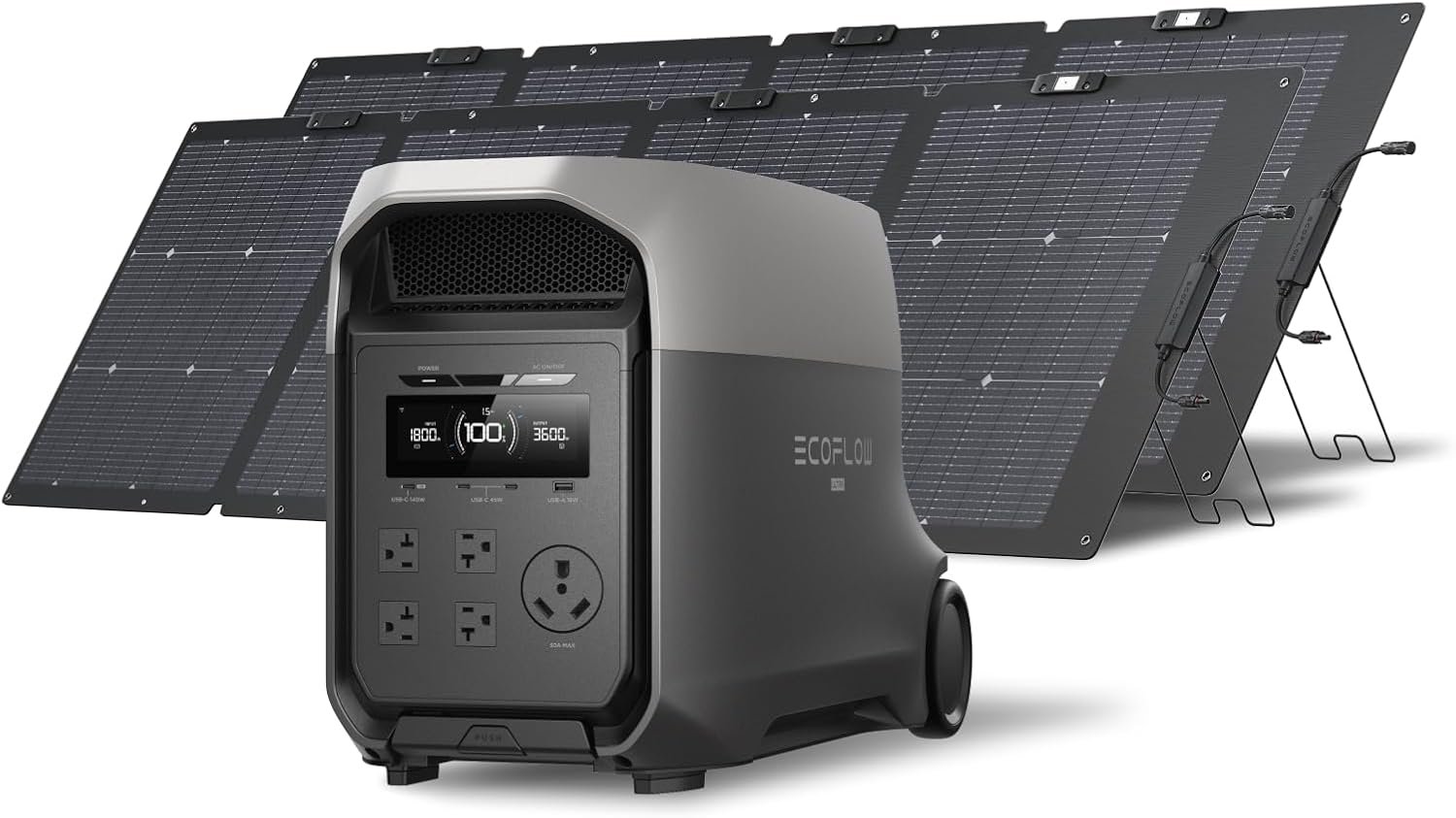
Key Details:
- 3,072Wh LiFePO4 battery with 3,600W continuous AC output
- 7,200W surge power for compatible high-demand appliances
- Includes two 220W solar panels for renewable charging
- Less than 10ms UPS switching for compatible electronics
- 25dB claimed low-noise operation with four charging methods
When you want reliable backup power without excessive operating noise, the EF ECOFLOW DELTA 3 Ultra makes a strong impression. Its 3,072Wh LiFePO4 battery can support refrigerators, lights, computers, and other household essentials. With 3,600W continuous output, it also handles many demanding appliances during power outages or off-grid activities.
One thing we particularly like is its quiet cooling technology. The claimed noise level can be as low as 25dB under specified conditions, making it appealing for indoor use, RV living, and overnight backup. You will also find a 7,200W surge rating to help manage short startup demands from compatible appliances.
The EF ECOFLOW DELTA 3 Ultra also features less than 10ms UPS switching, which helps prevent interruptions to compatible computers and networking equipment. Its LiFePO4 battery is designed for long-term use, while the built-in protection system monitors battery conditions during charging and discharging.
Charging options are another practical advantage. You can recharge through wall outlets, solar panels, vehicle charging, or a compatible EcoFlow generator. The included two 220W solar panels add flexibility for outdoor use. From our standpoint, this solar battery generator is particularly appealing when quiet operation and strong AC output are priorities.
Pros:
- Quiet operation suitable for indoor and RV use
- Powerful 3,600W continuous AC output
- Includes two 220W solar panels
- Fast UPS switching with flexible charging options
Cons:
- 72.1 lb weight makes frequent transportation difficult
- Included solar panels take longer to recharge the battery
11. Best Heavy-Duty: Anker SOLIX F3800 Plus Portable Power Station
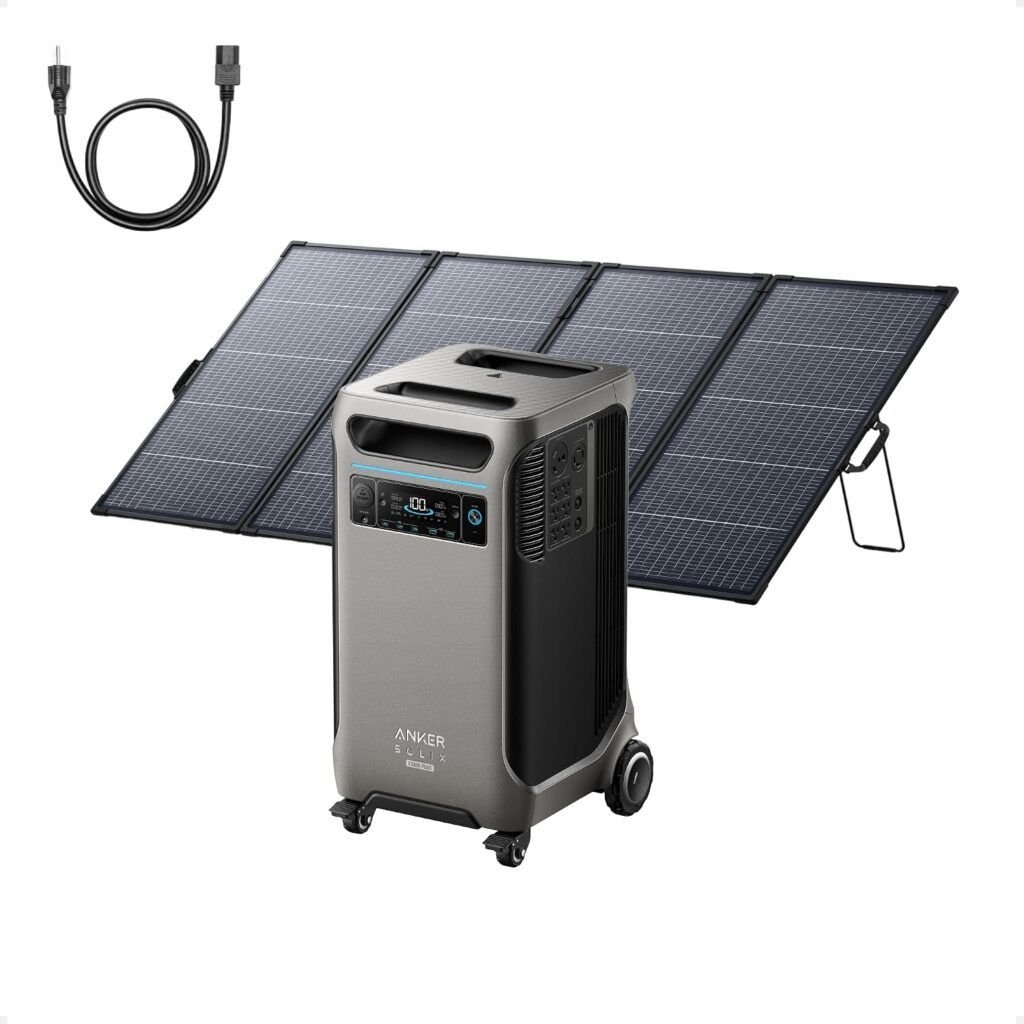
Key Details:
- 3,840Wh LiFePO4 battery with 6,000W continuous AC output
- Supports 120V/240V dual-voltage operation
- Expandable to 26.9kWh or 53.8kWh with a dual-unit system
- Includes a 400W bifacial solar panel with up to 3,200W solar input
- Weighs 146.4 lbs with AC, solar, and generator charging support
For homeowners who need serious power for larger appliances, the Anker SOLIX F3800 Plus offers impressive performance specifications. Its 3,840Wh LiFePO4 battery provides backup energy for essential household equipment, while the 6,000W continuous output supports demanding loads. This makes it particularly useful for emergency home backup and larger off-grid power setups.
What makes this battery-powered generator stand out is its 120V/240V dual-voltage capability. You can operate compatible heavy-duty appliances, including certain dryers and larger household equipment. We also like that two compatible units can deliver up to 12,000W output, providing greater flexibility for households with higher electricity demands.
The Anker SOLIX F3800 Plus also supports expandable battery storage. You can increase capacity to 26.9kWh using six expansion batteries or reach 53.8kWh with a supported dual-unit configuration. Its LiFePO4 battery and smart temperature management system are designed for long-term operation, making it suitable for regular backup requirements.
Another advantage is its flexible recharging system. You get a 400W bifacial solar panel, while the power station supports up to 3,200W solar input with a larger compatible array. Fast combined solar and generator charging is also available. In our opinion, this high-capacity portable power station makes sense for homeowners who prioritize output power and expandability over easy portability.
Pros:
- Massive 6,000W output for demanding appliances
- Supports both 120V and 240V power requirements
- Expandable battery capacity for extended outages
- High solar input with multiple charging methods
Cons:
- Heavy 146.4 lb construction limits portability
- Additional batteries and home integration equipment increase costs
12. Best Value Option: DJI Power 2000 Portable Power Station
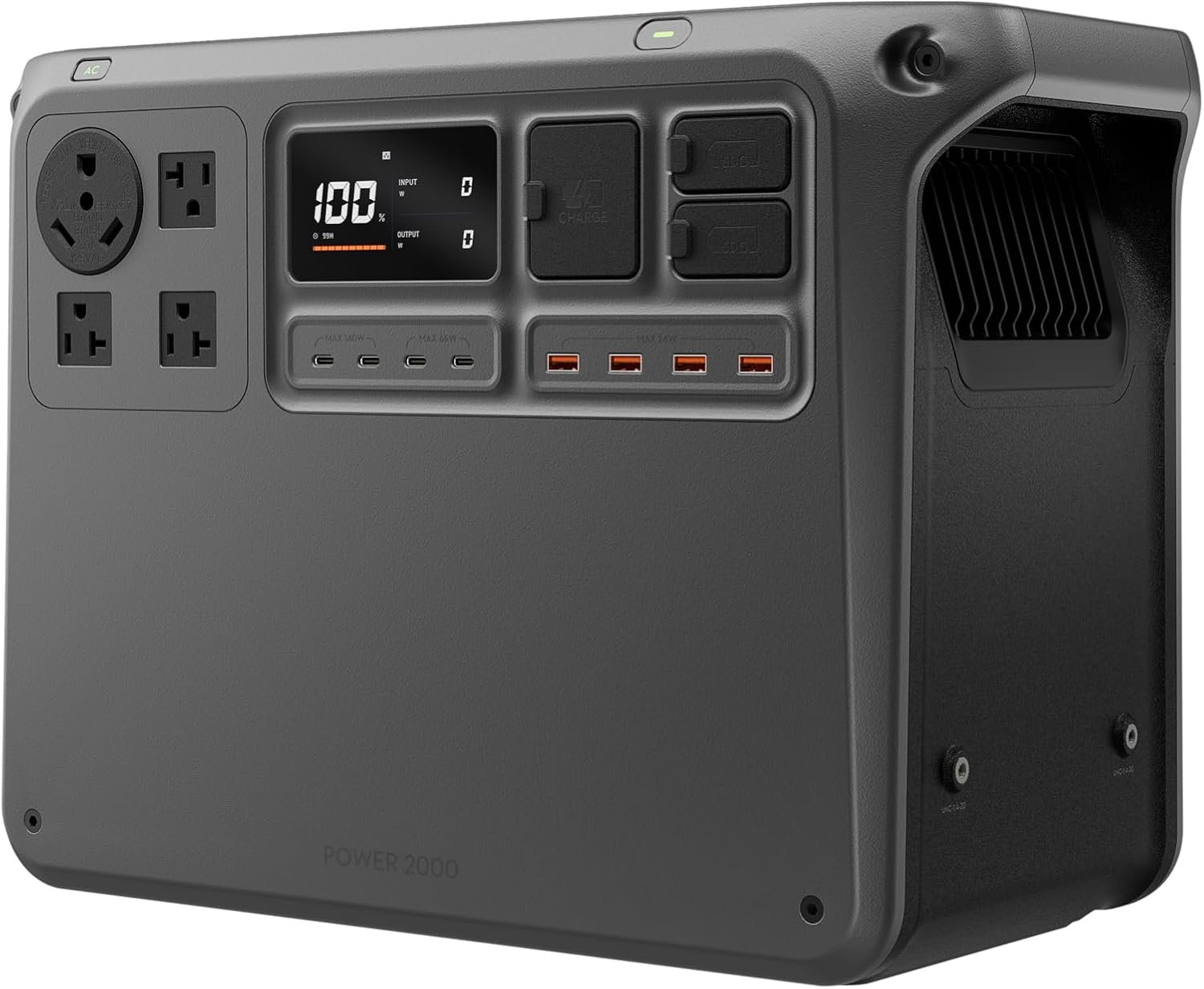
Key Details:
- 2,048Wh LiFePO4 battery with 3,000W continuous AC output
- Expandable storage capacity up to approximately 22.5kWh
- Recharges from 0–80% in just 55 minutes via AC
- 15 output ports with ≤10ms UPS backup and wireless app control
- Weighs 47.8 lbs with 30dB super-quiet charging mode
If you’re looking for an affordable battery generator with strong output, the DJI Power 2000 offers excellent value for its specifications. Its 2,048Wh battery can power refrigerators, laptops, lights, and other everyday essentials during outages. The 3,000W continuous AC output is particularly impressive for a rechargeable power station in this capacity range.
We particularly like its fast charging performance. You can recharge from 0–80% in approximately 55 minutes using AC power, which is convenient before camping trips or unexpected storms. The super-quiet charging mode operates at a claimed 30dB, making it suitable for charging in quieter indoor environments.
The DJI Power 2000 also provides 15 output ports, including AC, USB-C, USB-A, and dedicated DJI SDC connections. Its ≤10ms UPS switching helps protect compatible electronics during sudden outages. You can also expand battery storage up to approximately 22.5kWh, giving you room to increase backup capacity as needed.
Another thing we appreciate is its relatively manageable 47.8 lb weight and durable construction. The LiFePO4 battery, temperature monitoring, and protective housing add confidence for regular use. From our perspective, this portable battery generator offers a compelling combination of power, charging speed, and affordability, especially for camping, household essentials, and emergency preparedness.
Pros:
- Affordable price for 2,048Wh capacity and 3,000W output
- Fast 55-minute charging to 80%
- Expandable battery storage with 15 versatile ports
- Relatively portable design with quiet charging
Cons:
- Solar and vehicle charging require separate accessories
- Base 2kWh capacity limits extended heavy appliance use
What Is a Battery Generator and How Does It Work?
A battery generator is a rechargeable power station that stores electricity and supplies power to household appliances, electronics, and outdoor equipment. Unlike traditional gas generators, it operates without burning fuel, making it a quieter, exhaust-free option for indoor backup, camping, and RV use.
These generators use lithium batteries, typically LiFePO4, to store electrical energy. A built-in inverter converts stored DC electricity into AC power for standard household appliances. Meanwhile, the battery management system (BMS) monitors charging, temperature, and voltage to protect the battery.
You can recharge a battery-powered generator through wall outlets, solar panels, or compatible vehicle chargers. However, it doesn’t produce electricity independently like a fuel-powered generator. Instead, it stores energy from external sources for later use.
How to Choose the Best Battery Generator
Choosing the right battery generator depends on how much electricity you need, what appliances you plan to run, and how often you can recharge. Here are the important features to consider before buying a portable battery backup system.
Battery Capacity (Wh) and Your Power Requirements
Battery capacity determines how much energy a generator can store. A 1,000Wh model works well for basic electronics, while 2,000Wh to 4,000Wh units offer more flexibility for refrigerators and household essentials. Larger backup systems are better suited for extended outages.
Continuous Output (W) and Surge Capacity
Continuous output determines how much power a generator can supply at once. Surge capacity handles brief startup demands from appliances like refrigerators and pumps. For example, a 3,600W generator can support multiple devices if their combined running wattage stays below its rated output.
LiFePO4 vs. NMC Battery Chemistry
LiFePO4 batteries generally offer longer cycle life and better thermal stability, making them appealing for regular backup use. NMC batteries have higher energy density, allowing lighter designs in some cases. For long-term reliability, we generally prefer LiFePO4 technology.
Pure Sine Wave Inverter and Power Quality
A pure sine wave inverter supplies smooth AC electricity similar to household grid power. This is important for computers, televisions, refrigerators, and sensitive electronics. Before purchasing, check whether the generator includes a pure sine wave inverter rather than a modified sine wave design.
Battery Runtime and Energy Efficiency
Runtime depends on battery capacity, appliance wattage, and conversion losses. A 2,000Wh power station running a 200W appliance might deliver around eight hours under suitable conditions. Remember that higher loads, cooling fans, and inverter losses can reduce actual runtime.
AC, Solar, and Car Charging Options
Multiple charging methods make a portable battery generator more convenient. AC charging is usually the easiest at home, while solar panels help during extended outages. Vehicle charging is useful for camping and road trips, although standard 12V outlets typically charge much more slowly.
Charging Speed and Solar Input Compatibility
Fast charging reduces downtime, especially when preparing for emergencies. Some modern power stations recharge in under two hours using high-power AC input. For solar charging, check the maximum input wattage, supported voltage range, and connector compatibility.
AC Outlets, USB-C, USB-A, and DC Ports
The right output connections make powering different devices easier. AC outlets handle household appliances, while USB-C and USB-A support phones and laptops. RV owners should also consider 12V DC outputs and TT-30 connections when compatible with their electrical systems.
UPS/EPS Functionality and Transfer Time
UPS and EPS features automatically switch to battery power when grid electricity fails. Some portable generators offer transfer times of 10ms to 20ms, while certain online UPS systems provide zero-transfer-time operation. Check device compatibility because not every backup mode prevents sensitive equipment from restarting.
Portability, Weight, and Build Quality
If you frequently move your generator, weight matters as much as battery capacity. Smaller units are easier to carry, while large backup systems may weigh over 100 pounds. Look for comfortable handles, sturdy wheels, durable housing, and suitable ventilation.
Battery Lifespan and Expandability
LiFePO4 generators often advertise 3,000 to 6,000 or more charge cycles, although their remaining capacity at that point varies. Expandable models also let you connect additional batteries for longer backup periods. Consider expansion costs and compatibility before choosing a system.
Safety Features and Certifications
Look for a dependable BMS, temperature monitoring, overload protection, and short-circuit protection. Relevant independent safety certifications are also important. Verify that certifications apply to the exact model and its intended use, not simply the manufacturer’s product lineup.
Price, Replacement Costs, and Manufacturer Support
Don’t choose a battery generator based on price alone. Compare usable capacity, power output, charging accessories, and long-term operating costs. Also consider replacement battery availability, customer support, firmware updates, and whether additional equipment is needed for home integration.
What Size Battery Generator Do You Need?
The right battery generator size depends on your appliance wattage and backup duration. Smaller units handle electronics, while larger battery systems support refrigerators, RV appliances, and extended home outages.
Understanding Watts, Watt-Hours, and Kilowatt-Hours
- Watts (W): Measure how much power an appliance uses.
- Watt-hours (Wh): Measure how much energy a battery stores.
- Kilowatt-hours (kWh): Equal 1,000Wh of stored energy.
For example, a 2,000Wh battery generator stores 2kWh of energy, but actual runtime depends on appliance consumption.
How to Calculate Battery Generator Runtime
Use this simple formula to estimate runtime:
Runtime(hours)Usablecapacity(Wh)Averageload(W)
For example, a 2,000Wh generator running a 100W appliance could theoretically last 20 hours. Assuming 80% usable energy, expect around 16 hours. Actual results vary with inverter losses, temperature, and appliance cycling.
Battery Generator Size for Home Backup
A 2,000Wh to 4,000Wh battery generator is a practical starting point for refrigerators, lights, and routers. For longer outages or multiple appliances, consider expandable systems with 6kWh to 12kWh or more capacity.
Battery Generator Size for Camping and RV Use
For phones, laptops, and camping lights, a 500Wh to 1,000Wh portable power station is often sufficient. RV refrigerators, fans, and additional appliances may require 2,000Wh to 4,000Wh, preferably with solar or vehicle charging.
Battery Generator Size for Emergency Power
A 1,000Wh generator can handle basic electronics during short outages. For refrigeration and other household essentials, consider 2,000Wh to 4,000Wh. Extended emergencies may require larger batteries and dependable recharging options.
Battery Generators vs. Gas Generators: Which Is Better?
Battery and gas generators both provide electricity when grid power isn’t available, but they serve different needs. Battery models are quieter and easier to use indoors, while gas generators can provide extended power when sufficient fuel is available.
| Features | Battery Generators | Gas Generators |
| Power source | Rechargeable batteries | Gasoline or other compatible fuel |
| Power output | Depends on inverter size | Depends on engine and alternator |
| Runtime | Limited by stored energy | Extended by refueling |
| Noise | Generally quiet | Noticeable engine noise |
| Emissions | No engine exhaust | Produces exhaust and carbon monoxide |
| Indoor use | Suitable when approved for indoor use | Never operate indoors |
| Recharging or refueling | AC, solar, or vehicle charging | Requires fuel |
| Maintenance | Relatively minimal | Oil, filters, fuel system, and engine care |
| Initial cost | Often higher per unit of stored energy | Often lower for comparable output |
| Extended outages | Requires recharging access | Can continue with fuel supplies |
For home electronics, camping, and shorter outages, a battery-powered generator is often more convenient. It starts instantly, produces no combustion exhaust, and requires little routine maintenance.
Gas generators may be more practical during prolonged emergencies when recharging isn’t possible. However, they must operate outdoors, safely away from windows, doors, and ventilation openings.
How Long Do Battery Generators Last?
Battery generators can run for several hours or even days on a single charge, depending on battery capacity and appliance power consumption. Larger batteries generally provide longer runtime, while high-wattage appliances drain stored energy faster.
Most modern battery generators use LiFePO4 batteries, which typically support 3,000 to 6,000 or more charging cycles. With proper care, these rechargeable power stations can remain useful for 10 years or longer, although their capacity gradually decreases.
Battery lifespan also depends on temperature, charging habits, and usage frequency. Excessive heat can accelerate degradation, while freezing temperatures may reduce performance and restrict charging.
To extend battery life, avoid frequent deep discharges, store the generator in a cool, dry place, and follow the manufacturer’s charging recommendations. Regular maintenance also helps maintain reliable backup power over time.
Safety Tips When Using a Battery Generator
Battery generators are generally convenient for indoor backup, but safe operation still matters. Proper charging, ventilation, and electrical connections help protect both the equipment and connected appliances.
- Use Compatible Cables: Choose approved charging cables, adapters, and connectors with suitable electrical ratings.
- Avoid Overloading: Keep connected appliances within the generator’s continuous and surge output limits.
- Monitor Battery Temperature: Charge and operate within the manufacturer’s recommended temperature range.
- Maintain Ventilation: Keep cooling fans and ventilation openings clear during operation.
- Prevent Water Exposure: Protect the power station from rain, flooding, and excessive moisture unless specifically rated for those conditions.
- Check Battery Protection: Choose models with a reliable BMS, temperature monitoring, and overload protection.
- Avoid Unsafe Home Connections: Never connect a generator directly to household wiring using a backfeeding cable.
- Use Professional Installation: Have qualified electricians install compatible home transfer switches and integration equipment.
For U.S. buyers, safety certification also deserves attention. UL 2743 covers portable power packs, while UL 9540 applies to energy storage systems intended for stationary installation and premises wiring integration. A portable power pack certification alone does not establish compliance for an installed home energy storage system.
How to Maintain a Battery Generator for Long-Term Use
A rechargeable battery generator requires less routine maintenance than a gas-powered unit. Still, a few simple habits can help preserve battery health, charging performance, and overall reliability.
- Follow Charging Recommendations: Maintain battery charge levels according to manufacturer guidance.
- Store Properly: Keep the generator in a dry, temperature-controlled environment.
- Clean Regularly: Remove dust from ventilation openings, charging ports, and exterior surfaces.
- Avoid Deep Discharges: Don’t repeatedly drain the battery completely unless recommended.
- Inspect Cables: Check charging wires, plugs, and connectors for visible damage.
- Update Firmware: Install official firmware updates when appropriate.
- Check Battery Health: Monitor capacity, charging behavior, and unusual warning messages.
- Test Before Emergencies: Periodically charge the generator and check that important equipment operates correctly.
Final Words
Choosing the right battery generator comes down to your power requirements, intended use, and budget. If you need occasional backup for electronics, a compact 2kWh model may be enough. For refrigerators, larger appliances, and extended outages, consider higher output and expandable battery storage.
For overall use, the BLUETTI Elite 300 Portable Power Station offers a balanced combination of capacity and portability, while the EF ECOFLOW 12kWh Power Station DELTA Pro Ultra handles demanding home backup needs. If affordability matters most, the DJI Power 2000 Portable Power Station delivers strong output and fast charging at a reasonable price.
Before buying, calculate your appliance wattage, estimate the runtime you need, and check available charging methods. A well-sized rechargeable power station can make outages less stressful and provide dependable electricity wherever conventional power isn’t available.
Related FAQs
Are Battery Generators Worth Buying?
Yes, battery generators are worth considering if you need quiet, rechargeable backup power for home emergencies, camping, or RV use. They are particularly convenient for electronics and essential appliances, although large systems can be expensive.
Can a Battery Generator Power an Entire House?
Yes, certain high-output battery generator systems can power an entire house when properly sized and installed. However, whole-home backup often requires substantial battery storage, compatible integration equipment, and professional electrical installation.
How Long Can a Battery Generator Run a Refrigerator?
A 2,000Wh battery generator might power a refrigerator for roughly 16 to 32 hours when average consumption ranges from 50W to 100W and usable energy is approximately 1,600Wh. Actual runtime depends on refrigerator efficiency, temperature, compressor cycling, and inverter losses.
Are Battery Generators Safe to Use Indoors?
Yes, portable battery generators designed for indoor use don’t produce combustion exhaust like gasoline generators. However, they still require proper ventilation, safe charging conditions, and protection from water and excessive heat.
Can You Use a Battery Generator Without Solar Panels?
Absolutely. Most battery generators can recharge from household outlets, and many also support car charging or compatible fuel-powered generators. Solar panels are optional unless your particular setup depends on them.
How Many Hours Can a 1000Wh Battery Generator Last?
A 1,000Wh battery generator could theoretically run a 100W appliance for 10 hours. Assuming approximately 80% usable AC energy, a more practical starting estimate is eight hours, although actual performance varies.
Can a Battery Generator Run an Air Conditioner?
Yes, provided the generator has enough continuous output, surge capability, and battery capacity. Portable air conditioners may work with 2,000W to 4,000W models, depending on their requirements, while larger central systems need considerably more power.
Is a LiFePO4 Battery Generator Better Than an NMC Model?
LiFePO4 batteries generally offer longer cycle life and better thermal stability, making them attractive for frequent backup use. NMC batteries can provide higher energy density, which may help reduce weight. The right choice depends on portability and intended usage.
Can You Leave a Battery Generator Plugged In?
Many modern power stations support extended AC connection and automatic battery management. However, continuous charging recommendations differ by manufacturer. Follow the specific model’s instructions, especially regarding UPS operation and long-term storage.
What Is the Difference Between a Battery Generator and a Power Bank?
A battery generator typically has a larger battery, built-in inverter, and AC outlets for household appliances. A power bank is usually smaller and primarily designed to charge phones, tablets, and other USB-powered electronics.

Austin Parker writes practical generator how-to guides, troubleshooting advice, and buying guides for solar, portable, and fuel-powered generators. His focus is helping readers solve common power problems, understand their options, and choose dependable equipment for real-world use.