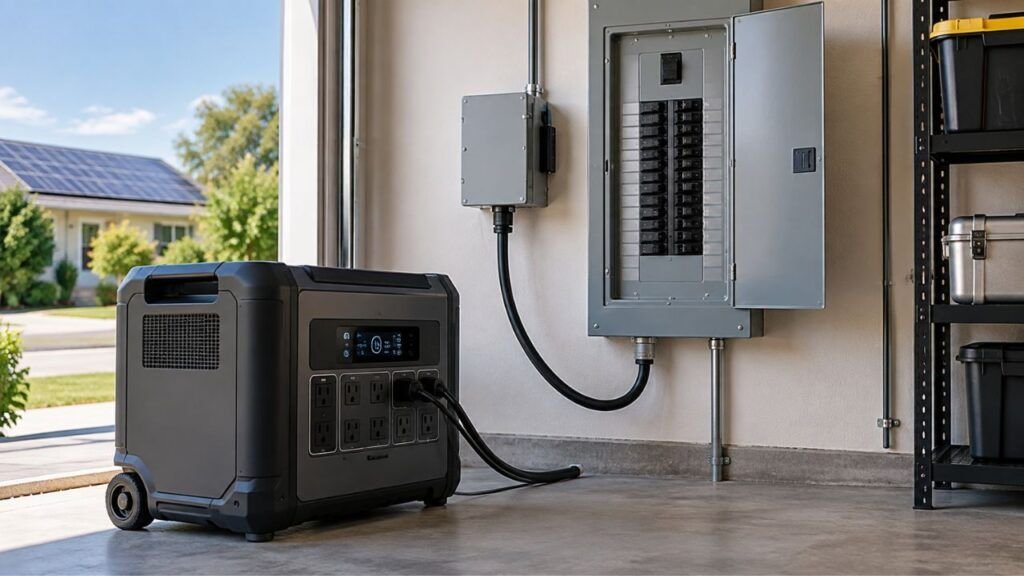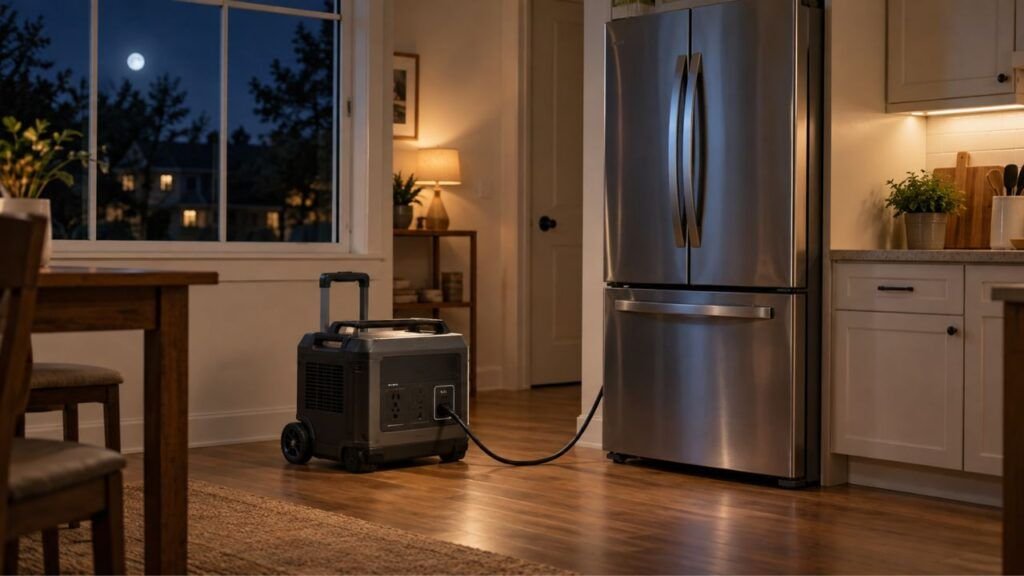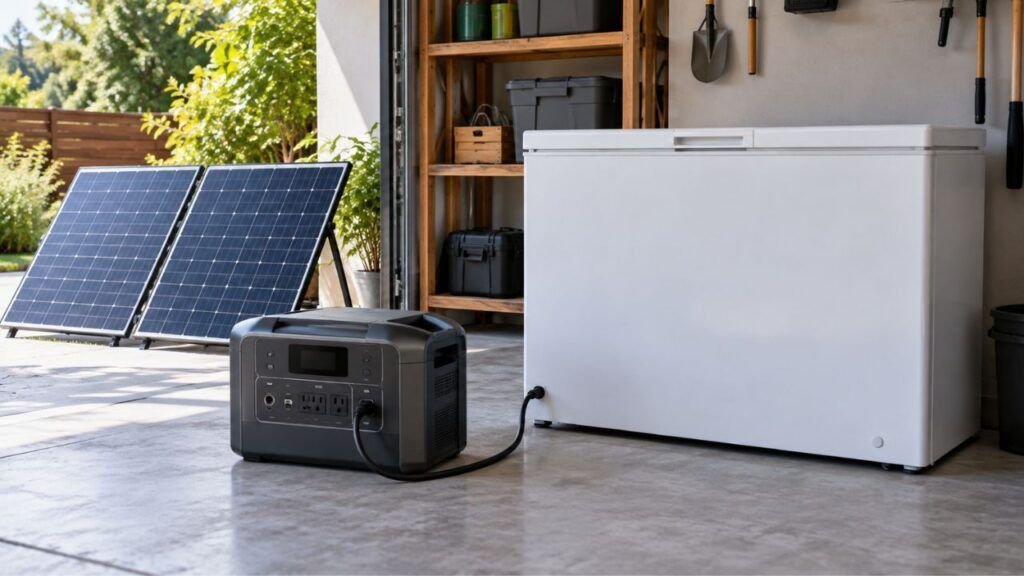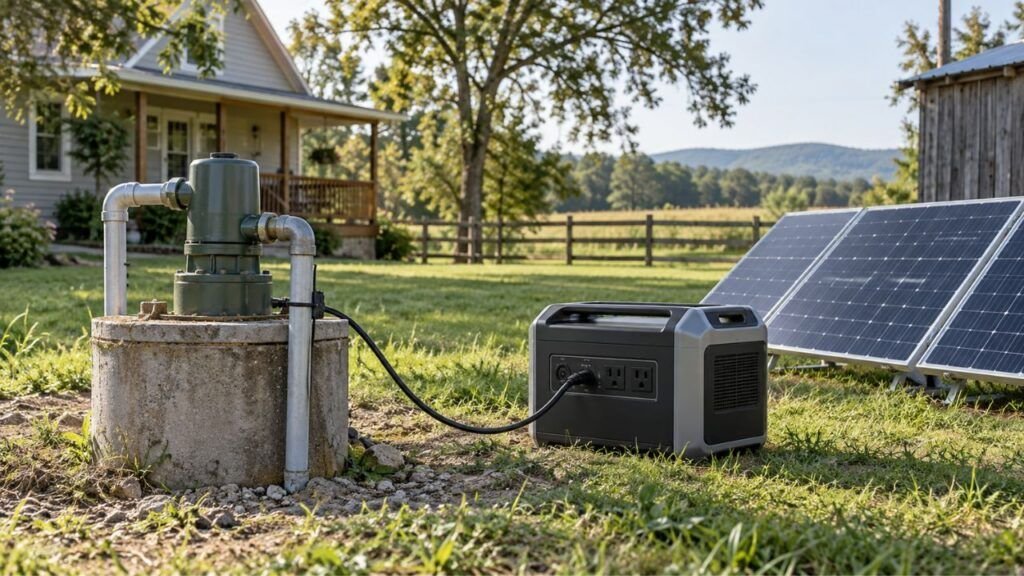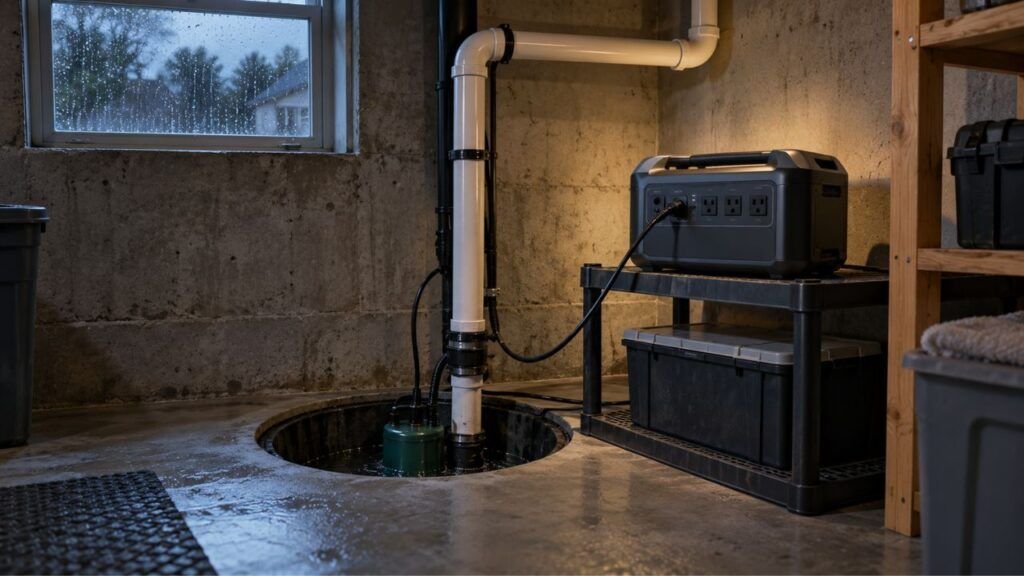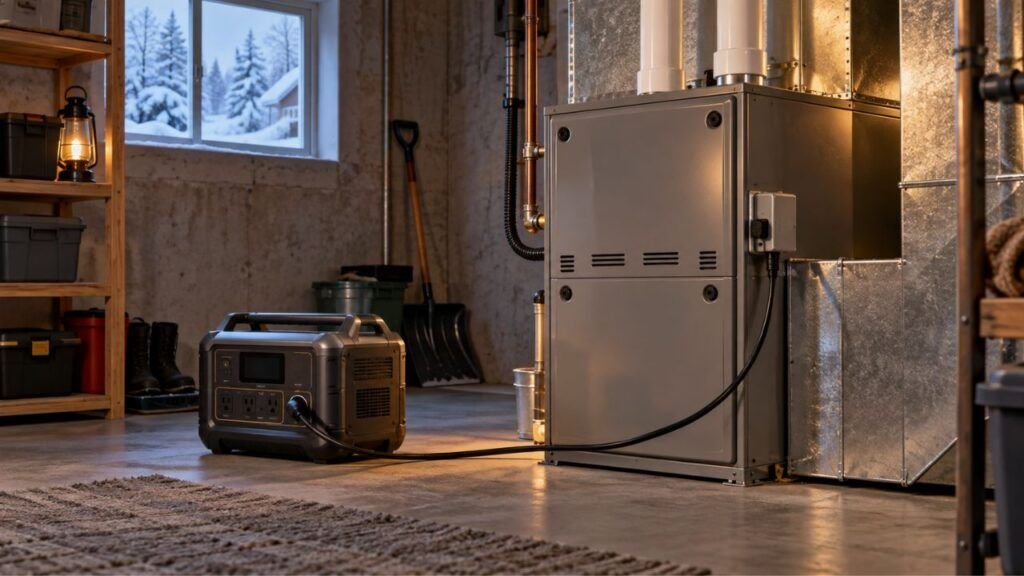
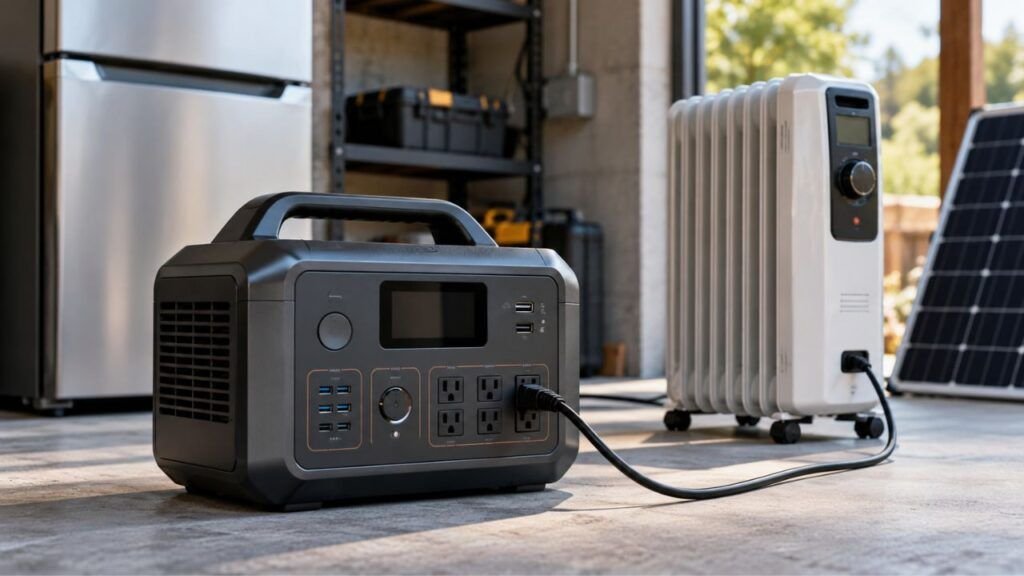
Your solar generator usually shuts off under load because the appliance demands more power than the inverter or battery can safely supply. Startup surges, low battery voltage, BMS protection, overheating, and certain power settings can all trigger an automatic shutdown.
The good news is that a shutdown does not always mean something is broken. This guide will help you identify the cause, safely test your setup, and stop the problem from happening again.
Key Takeaways
- An immediate shutdown usually points to overload or startup surge.
- A shutdown after several minutes often suggests overheating or sustained overload.
- Battery percentage does not determine your generator’s maximum output power.
- Motor-driven appliances can demand far more power during startup.
- Battery voltage can temporarily drop when a heavy load starts.
- The battery management system may disconnect power during excessive current.
- Eco mode can shut down AC output during very light loads.
- Repeated shutdowns with small loads may indicate a battery or hardware problem.
What Does “Shutting Off Under Load” Actually Mean?
When I say your solar generator shuts off “under load,” I mean it works normally until you connect or start an appliance.
For example, the display may look completely normal with nothing connected. Then you start your refrigerator, microwave, pump, or air conditioner. Suddenly, the AC output disappears or the entire power station switches off.
However, there are several versions of this problem.
Your entire solar generator may completely shut down. In other situations, only the AC outlets stop supplying power. The display, USB ports, or DC outlets might continue working.
Sometimes the connected appliance turns off while the power station remains running. Your generator might also shut down briefly, reset itself, and start operating again.
These differences matter because they provide clues about the actual problem.
Also, this article focuses on battery-powered solar generators and portable power stations. Gasoline, propane, and dual-fuel generators have completely different shutdown causes.
Quick Diagnosis: What the Shutdown Pattern Usually Means
The timing of the shutdown can tell you a surprising amount. Before changing anything, notice exactly when the problem happens.
| What You Notice | Most Likely Cause | First Thing to Check |
| Shuts off immediately when a refrigerator or pump starts | Startup surge | Appliance starting watts versus surge rating |
| Stops when another appliance gets connected | Continuous overload | Total running wattage |
| Battery shows charge but dies under heavy load | Voltage sag or BMS limit | Battery level and fault message |
| Runs several minutes before shutting down | Overheating or sustained overload | Temperature, airflow, and load |
| AC shuts off while the screen stays on | Inverter protection | AC error or overload warning |
| Turns off during very light loads | Eco mode or AC timeout | Automatic shutoff settings |
| Problem happens during pass-through charging | Mode-specific output limit | Manual and pass-through rating |
| Randomly shuts down with ordinary loads | Battery or internal fault | Error history and known-good appliance test |
You do not need to diagnose everything immediately. Start with the symptom that most closely matches your situation.
Why Does a Solar Generator Shut Off Under Load?
Several protection systems can shut down a solar generator under load. Each one protects the inverter, battery, wiring, or connected equipment from unsafe conditions.
The Appliance Exceeds the Continuous Output Rating
Continuous output is the amount of AC power your solar generator can provide steadily.
Suppose your power station has a 1,500-watt continuous inverter. You should not expect it to continuously run appliances totaling 1,800 watts.
The inverter will usually recognize the overload and disconnect the AC output.
High-wattage appliances commonly causing this problem include:
- Space heaters
- Electric kettles
- Hair dryers
- Microwaves
- Coffee makers
- Toasters
- Hot plates
- Large cooking appliances
You also need to count everything running simultaneously.
A refrigerator using 200 watts might seem insignificant. Add an 800-watt coffee maker and 1,000-watt microwave, however, and your total quickly climbs.
This is why your generator may power each appliance separately but shut down when several operate together.
Startup Surge Exceeds the Inverter’s Peak Power
Startup surge is one of the most common causes I would check.
Some appliances need a quick burst of additional power when starting. Motors and compressors are especially demanding during those first few moments.
Common examples include:
- Refrigerators
- Freezers
- Window air conditioners
- Sump pumps
- Well pumps
- Air compressors
- Power tools
- Shop vacuums
Imagine your refrigerator normally consumes around 200 watts. Its compressor might briefly demand several times that amount during startup.
Your solar generator therefore needs enough surge capacity, not just sufficient continuous wattage.
That explains a frustrating situation many people experience.
The appliance’s running wattage looks safely below the generator’s limit. Yet the power station shuts off the moment the compressor starts.
Also, do not look only at the advertised peak wattage.
Surge duration matters too.
One inverter might handle a large surge for several seconds. Another might provide its advertised peak output only very briefly.
Always compare the appliance’s starting requirements with your exact generator specifications.
Battery Voltage Drops Under the Heavy Load
A battery can look perfectly healthy until you demand substantial current.
When a large appliance starts, the battery must quickly deliver more power. That increased current can cause its voltage to temporarily drop.
This is commonly called voltage sag.
If the voltage drops below the generator’s protection threshold, the system may shut down.
Possible causes include:
- Low battery charge
- Heavy current demand
- Aging battery cells
- Cold battery temperatures
- Reduced battery capacity
- Excessive electrical resistance
- Battery performance problems
You may notice something confusing after the shutdown.
The battery voltage can recover once the heavy load disappears. The generator may then restart and appear normal again.
That does not necessarily mean the original shutdown was random.
The heavy load may simply have pushed the battery below its safe operating range.
Avoid relying on universal voltage cutoff numbers you find online.
Different battery chemistries, system voltages, manufacturers, and firmware versions use different protection thresholds.
The Battery Management System Trips
Lithium solar generators include a battery management system, commonly called the BMS.
Think of the BMS as the battery’s protective supervisor.
It continually monitors operating conditions and can restrict or disconnect output when something moves outside safe limits.
The BMS commonly watches:
- Battery current
- Cell voltage
- Battery temperature
- Charge conditions
- Discharge conditions
- Cell balance
- Short-circuit conditions
A BMS trip can sometimes look exactly like an inverter overload.
However, they are not quite the same problem.
An inverter overload means the AC side demands more than the inverter can provide.
A BMS trip means the battery cannot safely deliver what the system requests.
This difference becomes especially important with high-power appliances.
Your inverter might technically support the appliance’s wattage. However, the battery could still reach its current discharge limit first.
The Inverter or Battery Is Overheating
Heat-related shutdowns usually behave differently from startup overloads.
Instead of turning off instantly, your solar generator may work normally for several minutes before suddenly stopping.
High electrical loads create heat inside the inverter.
The battery, charging electronics, and power conversion components can also warm significantly.
Overheating becomes more likely when:
- The generator runs near maximum output.
- Room temperature is already high.
- Cooling vents are blocked.
- Dust restricts outside ventilation openings.
- The unit sits in direct sunlight.
- Equipment surrounds the power station.
- The generator operates inside a tight compartment.
- Charging and heavy discharging happen simultaneously.
Hot summer conditions can make this problem much worse.
Your generator may operate a demanding appliance comfortably during cool weather. The same load might trigger thermal protection during a hot afternoon.
If the station shuts down after running awhile, check its temperature first.
Move unnecessary objects away from its cooling area. Let the unit cool before testing it again.
Never cover cooling vents while the generator is operating.
Eco Mode or AC Auto-Shutoff Is Turning the Output Off
Not every shutdown happens because the load is too large.
Sometimes the opposite happens.
Many portable power stations include an automatic AC shutoff or eco mode. These features reduce unnecessary inverter consumption when connected devices draw very little power.
That is normally useful.
However, it can create problems with appliances that cycle on and off.
Examples include:
- Refrigerators
- Freezers
- Internet equipment
- Medical equipment with intermittent demand
- Small chargers
- Low-power electronics
A refrigerator compressor, for example, does not run continuously.
During the compressor’s off cycle, power consumption becomes very low. Some generators may interpret that low draw as no active appliance.
The AC inverter can then shut itself off.
If your generator turns off during low-demand periods, check its eco settings.
This problem is different from a heavy-load overload.
Pass-Through or UPS Mode Has a Different Power Limit
Pass-through charging allows some solar generators to power appliances while charging themselves.
This feature is convenient, but operating limits can change depending on the model.
A station advertised with a certain inverter rating may have different restrictions while:
- Charging from a wall outlet
- Operating in bypass mode
- Running as a UPS
- Charging and discharging simultaneously
Do not automatically assume every operating mode supports the headline output rating.
Check your specific model’s operating instructions.
This becomes especially important when powering refrigerators, heaters, pumps, or other demanding appliances during charging.
Wiring or Connections Are Causing Excessive Voltage Drop
This section mainly applies to systems with external batteries or separate inverters.
Most portable all-in-one solar generators hide their high-current battery wiring internally. You should never open the unit to troubleshoot those connections yourself.
However, external connections can matter with:
- DIY solar generator systems
- Separate inverter and battery setups
- Expansion battery systems
- Permanently installed battery backup systems
- Detachable high-current battery cables
Electrical resistance increases when connections become poor.
Possible problems include:
- Loose terminals
- Corroded connections
- Damaged connectors
- Undersized cables
- Excessively long cables
- Poorly installed battery connections
Higher resistance creates additional voltage drop under heavy loads.
Everything may work normally with a small appliance. Then a large load increases current and exposes the weak connection.
If your equipment uses external high-current wiring, have questionable connections professionally inspected.
The Appliance or Its Power Cord Has a Fault
Do not immediately assume your solar generator is defective.
Sometimes the connected appliance is causing the protection system to activate.
Possible appliance-side problems include:
- Damaged power cords
- Short circuits
- Failing compressors
- Faulty motors
- Internal electrical problems
- Abnormally high current draw
Extension cords and adapters can also cause trouble.
A damaged or unsuitable extension cord may create additional resistance, heat, or voltage problems.
Try testing your generator with another known-good appliance requiring modest power.
If the generator works normally, the original appliance deserves closer inspection.
The Battery or Internal Electronics May Be Failing
Protection shutdowns are common, but actual hardware problems can happen.
I would consider a battery or internal fault when normal loads suddenly become impossible to run.
Warning signs include:
- Small appliances repeatedly cause shutdowns.
- Runtime has dropped dramatically.
- Battery percentage falls unusually fast.
- Battery percentage suddenly jumps downward under load.
- Persistent error messages keep returning.
- The problem continues after fully charging.
- Shutdowns happen with several different appliances.
- The generator behaves abnormally even when cool.
At this point, repeatedly restarting the generator is not useful.
Record the error message and contact the manufacturer or qualified service provider.
Battery Capacity, Output Watts, and Surge Watts Are Not the Same Thing
Solar generator specifications can be confusing because several numbers describe completely different things. Knowing these differences prevents many shutdown problems.
| Specification | What It Tells You | What It Does Not Tell You |
| Battery capacity (Wh) | Roughly how much energy is stored | Maximum appliance wattage |
| Continuous output (W) | Power the inverter supplies steadily | Whether every motor can start |
| Surge output (W) | Short-term startup capability | How long peak power remains available |
| Battery discharge limit | Maximum safe battery-side output | Expected runtime |
| Solar input (W) | Maximum solar charging capability | Maximum AC appliance output |
A large battery does not automatically mean a powerful inverter.
For example, a 2,000Wh battery might provide excellent runtime. However, its inverter could still be limited to 1,000 watts.
Likewise, a solar generator with 800 watts of solar input does not automatically support an 800-watt increase in appliance output.
Stored energy, charging power, and appliance output are separate specifications.
Why Does My Solar Generator Shut Off Even With 50% or 100% Battery?
Battery percentage tells you how much stored energy the system estimates remains.
It does not tell you how much power the generator can safely deliver at one moment.
Your battery might show 80% while the connected appliance exceeds the inverter’s output limit.
A large startup surge can still trigger protection.
The BMS can also reach its maximum discharge current while plenty of energy remains stored.
Temperature matters as well.
A battery that is extremely cold or hot may have more operating restrictions than one sitting within its preferred temperature range.
Battery age can also affect performance.
Older cells may experience more voltage drop under substantial current. The displayed percentage can look healthy while voltage falls sharply during a heavy load.
So when diagnosing this problem, do not focus only on battery percentage.
Look at the load wattage, fault code, temperature, and shutdown timing together.
How to Troubleshoot a Solar Generator That Shuts Off Under Load
You can diagnose many shutdown problems without opening anything. Work through these steps slowly and change one thing at a time.
- Check the error message first. Look for overload, temperature, battery, or output warnings before resetting anything.
- Notice what actually turned off. Determine whether the entire generator stopped or only its AC output.
- Disconnect all appliances. Remove the load before restarting the power station.
- Check the battery level. Recharge it first if the state of charge is low.
- Check for excessive heat. Let the station cool before performing another heavy-load test.
- Restart the generator normally. Follow the manufacturer’s standard restart procedure.
- Test one small appliance. Use a known-good lamp, television, or similar modest load.
- Test the problem appliance alone. Do not connect other unnecessary devices during this test.
- Check its running wattage. Compare that number with your inverter’s continuous rating.
- Check its startup demand. Motor-driven appliances often require significantly higher starting power.
- Watch the display while starting it. Note sudden wattage changes and warning messages.
- Review eco mode settings. Do this when shutdowns happen during light or intermittent loads.
- Check your operating mode. Pass-through and UPS operation may have separate limits.
- Inspect accessible plugs and cables. Look for heat damage, discoloration, looseness, or damaged insulation.
- Contact support when normal loads still fail. Persistent shutdowns can indicate battery or internal hardware problems.
Avoid repeatedly forcing the same overload test.
Protection systems exist for a reason, and constant fault cycling provides little additional information.
How Do I Know Whether It Is Surge Overload or Battery Voltage Sag?
Surge overload and voltage sag can look almost identical. However, a few patterns can help you determine which one deserves attention first.
Signs It Is Probably a Surge Problem
Look for these clues:
- Shutdown happens exactly when a motor starts.
- Refrigerators, pumps, or air conditioners trigger the problem.
- Small resistive loads work normally.
- The display reports overload or overcurrent.
- Removing one appliance prevents the shutdown.
- The appliance works from a higher-output power source.
If these clues match, compare startup watts with surge capacity.
Signs It Is Probably Voltage Sag or a Battery-Side Problem
Look for these clues:
- Shutdown becomes worse at lower battery percentages.
- Battery percentage suddenly drops during a heavy load.
- The generator recovers after removing the appliance.
- A battery warning appears instead of an overload warning.
- The same appliance worked better when the battery was newer.
- Cold temperatures make the problem noticeably worse.
These symptoms can point toward battery voltage or discharge limitations.
You should still check your model’s error codes before making conclusions.
Will Adding More Solar Panels Stop the Shutdown?
Usually, no.
Additional solar panels can help your battery recharge faster when sunlight conditions allow.
They can also offset some energy consumption while your system is operating.
However, adding solar panels normally does not increase the inverter’s continuous AC output.
Suppose your inverter supports 1,800 watts continuously.
Adding another 400 watts of solar does not suddenly turn it into a 2,200-watt inverter.
The inverter’s output electronics still have their original limits.
More solar can improve charging. It cannot automatically solve an AC overload.
Will a Bigger Battery Fix a Solar Generator That Shuts Off Under Load?
Sometimes it helps, but a larger battery is not a guaranteed solution.
More battery capacity mainly increases available stored energy and potential runtime.
On some expandable systems, adding batteries can also increase battery-side current capability.
That depends entirely on the system design.
However, expansion batteries do not automatically increase your inverter’s AC wattage.
If your 2,000-watt inverter keeps shutting down while starting a 3,000-watt load, additional battery capacity may not solve the problem.
Check whether the limitation comes from the inverter or battery first.
That distinction can save you from buying unnecessary equipment.
How to Prevent Your Solar Generator From Shutting Off Under Heavy Loads
Most shutdowns are easier to prevent than troubleshoot during an outage. A little preparation makes your backup setup much more dependable.
- Know your generator’s continuous AC output rating.
- Check startup requirements for motor-driven appliances.
- Avoid starting several large appliances simultaneously.
- Give the inverter some headroom during extended operation.
- Keep ventilation openings completely unobstructed.
- Avoid unnecessary exposure to direct summer sunlight.
- Start demanding appliances with adequate battery charge.
- Use compatible expansion batteries and approved accessories.
- Check eco settings before powering intermittent appliances.
- Learn how boost modes work before depending on them.
- Test important appliances before an emergency happens.
- Keep your generator within recommended operating temperatures.
- Install manufacturer firmware updates when appropriate.
- Inspect external cables and connectors for visible damage.
- Do not exceed operating limits during pass-through charging.
One of the best things you can do is perform a realistic outage test.
Connect the refrigerator, lights, router, and other essential devices you plan to use.
See how the system behaves before you actually need it.
That simple test can uncover surge problems ahead of time.
When Should You Stop Troubleshooting and Contact Support?
Basic testing is useful, but some symptoms deserve professional attention. Stop normal troubleshooting when the system shows signs of electrical or battery damage.
Contact the manufacturer or a qualified technician if:
- A small known-good appliance repeatedly triggers shutdown.
- Battery fault messages keep returning.
- The housing becomes unusually hot under light loads.
- An outlet or connector looks melted or discolored.
- You notice a burning smell.
- The battery housing appears swollen.
- The generator makes popping or unusual electrical noises.
- Several different appliances trigger the same problem.
- The generator shuts down even after cooling completely.
- Problems continue after a full charge and normal restart.
Do not open an integrated lithium power station yourself.
You should also never bypass its BMS, overload protection, thermal protection, or other safety systems.
Those protections exist to prevent battery damage, equipment failure, electrical shock, and fire hazards.
Final Verdict
A solar generator shutting off under load usually means its protection system has detected a condition it cannot safely handle.
The shutdown pattern gives you your best starting clue.
An immediate shutdown usually suggests startup surge or overload. A shutdown after adding another appliance often points toward excessive continuous wattage. Shutdowns after several minutes commonly suggest overheating.
If the problem becomes worse at lower battery levels, voltage sag or BMS protection deserves attention. If AC power disappears during tiny or intermittent loads, check the generator’s eco and auto-off settings.
Most importantly, do not assume the battery percentage tells the whole story.
Check your appliance wattage, inverter rating, startup surge, fault messages, operating temperature, and battery condition together.
That approach will usually show you whether you need a smaller load, different settings, more suitable equipment, or professional service.
Related FAQs
Why Does My Solar Generator Shut Off When My Refrigerator Starts?
Your refrigerator’s compressor probably requires a brief startup surge that exceeds the generator’s available surge capacity. Compare the refrigerator’s starting requirement with your solar generator’s peak output rating.
Why Does My Solar Generator Shut Off When I Plug in a Heater?
Electric heaters create a large continuous load, often around 1,500 watts. Your generator may shut down when the heater exceeds its continuous inverter rating or pushes total connected loads beyond that limit.
Why Does My Power Station Shut Off Even Though the Battery Is Half Full?
Battery percentage measures remaining stored energy, not maximum power output. The inverter can still overload, battery voltage can sag, or the BMS can reach its discharge limit with plenty of charge remaining.
Why Does the AC Output Shut Off but the Solar Generator Stay On?
This usually means the inverter protection system disabled only the AC section. Overload, excessive startup current, thermal protection, or an AC timeout setting can cause this behavior.
Can Low Battery Voltage Make a Solar Generator Shut Off Under Load?
Yes. Heavy appliances can pull battery voltage downward, especially when the battery is low, cold, aging, or heavily loaded. The generator may then shut down to protect the battery.
Why Does My Solar Generator Work With Small Devices but Not an Air Conditioner?
Air conditioners use compressors that require substantial startup current. Your generator may easily handle the normal running wattage but still lack enough short-term surge capacity to start the compressor.
Why Does My Solar Generator Shut Off After Running for 10 or 20 Minutes?
A delayed shutdown often points toward heat buildup or sustained overload. Check the generator’s temperature, ventilation, ambient conditions, connected wattage, and any thermal warning shown on its display.
Can an Overload Damage a Solar Generator?
Modern solar generators usually include overload protection that disconnects output before serious damage occurs. However, repeatedly forcing overload conditions can create unnecessary heat and should not become normal operating practice.
Should I Reset My Solar Generator After an Overload?
Yes, but first disconnect the excessive load and allow the generator to cool when necessary. Then restart it according to your manufacturer’s instructions before reconnecting a smaller, appropriate load.
Will More Solar Panels Prevent an Overload Shutdown?
Usually not. Additional panels increase available charging power, but they normally do not increase the inverter’s continuous or surge AC output rating.
Can a Bad Battery Cause a Solar Generator to Shut Off Under Load?
Yes. An aging, damaged, cold, or imbalanced battery can experience excessive voltage drop or trigger BMS protection when a demanding appliance begins drawing significant current.
Why Does My Solar Generator Keep Restarting After an Overload?
The generator may automatically reset after its protection system removes the load. If the appliance remains connected, the same overload can happen again, creating a repeating shutdown and restart cycle.

Austin Parker writes practical generator how-to guides, troubleshooting advice, and buying guides for solar, portable, and fuel-powered generators. His focus is helping readers solve common power problems, understand their options, and choose dependable equipment for real-world use.