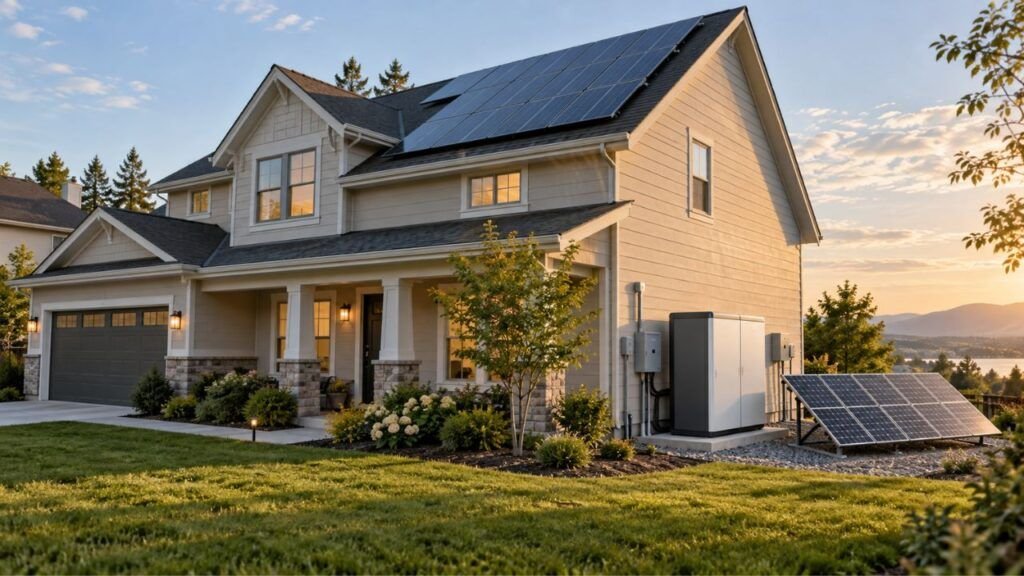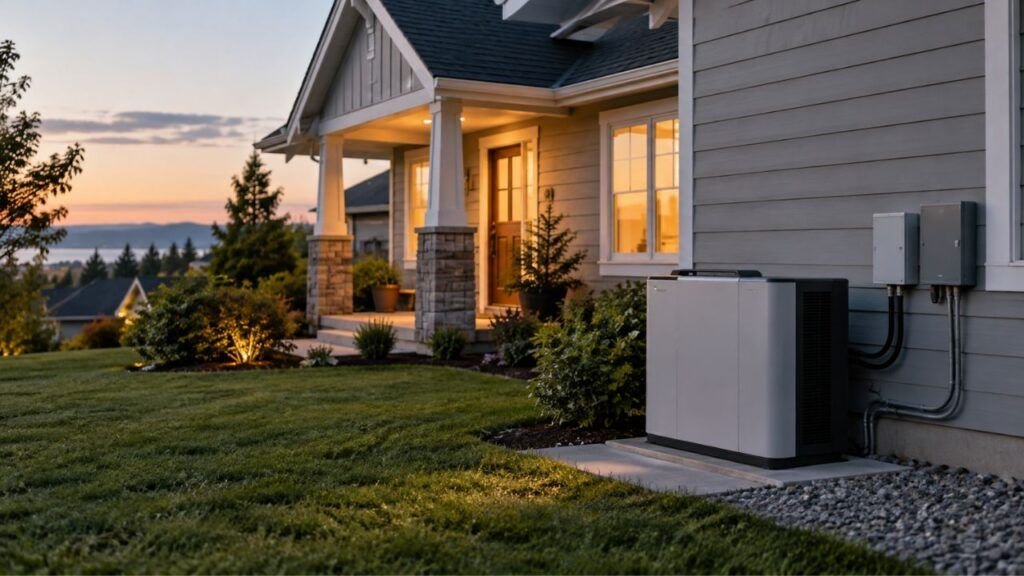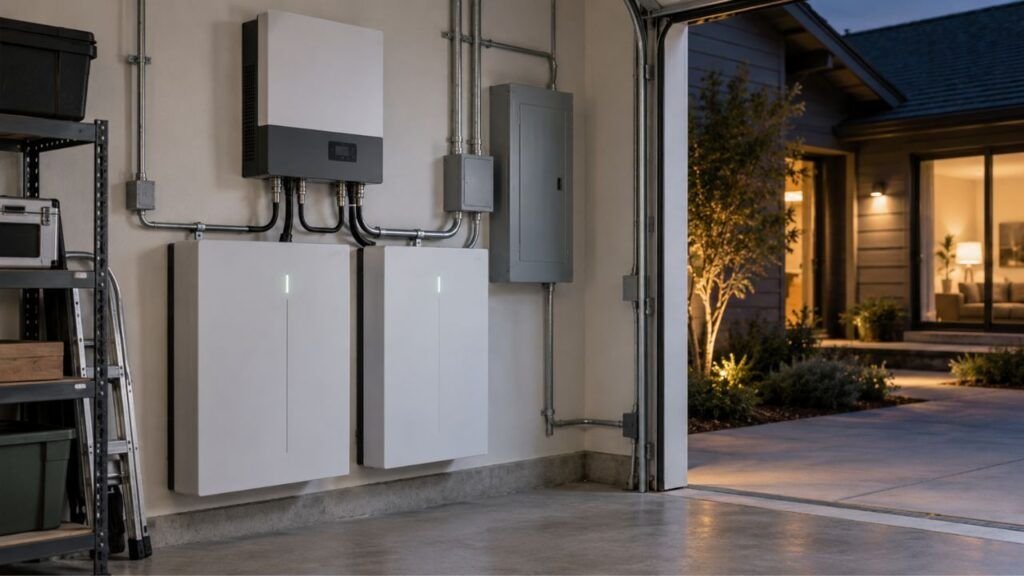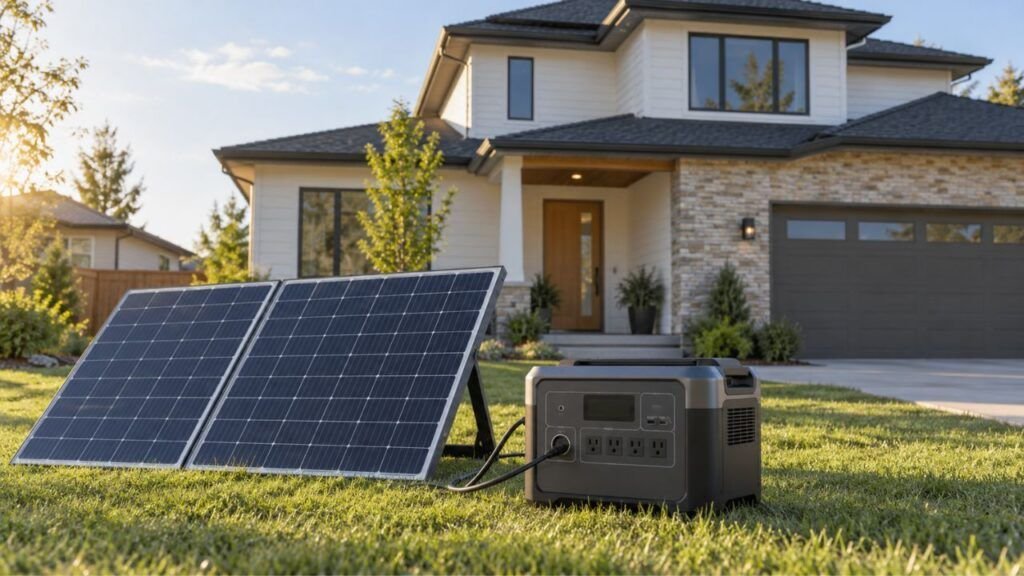
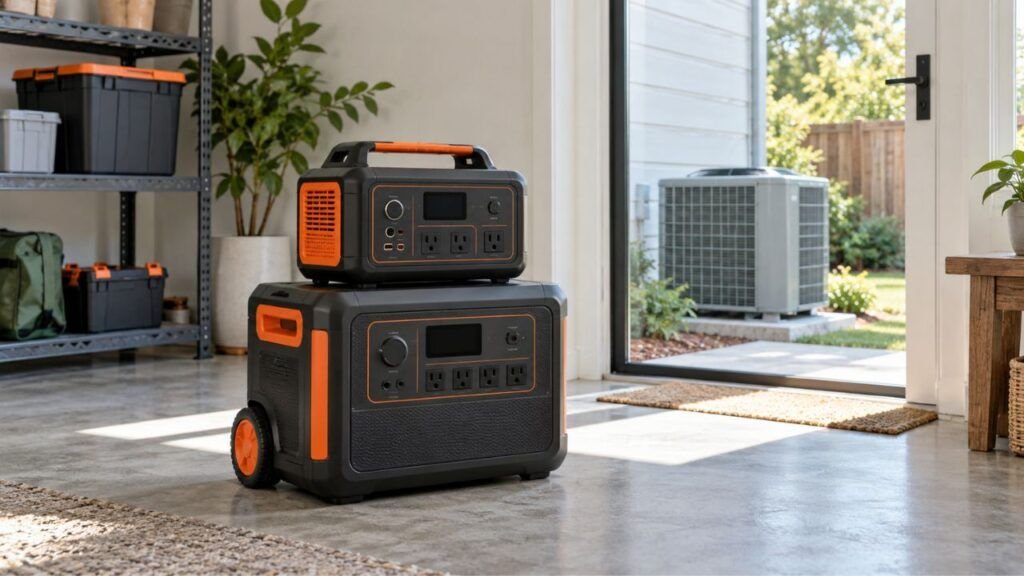
Yes, a solar generator can run a central air conditioner, but most standard portable units are not powerful enough. You usually need a large 120/240V or 240V-capable system with enough continuous output, startup capacity, battery storage, and solar input for your specific HVAC system.
In this guide, I’ll show you what actually matters when sizing one. We’ll cover AC power requirements, startup surge, battery runtime, solar panels, soft starters, and how to check whether your central AC is compatible.
Key Takeaways
- Most U.S. central air conditioners require 208/230V or 240V power.
- Small 120V portable solar generators usually cannot run central AC.
- Inverter output must cover both the outdoor unit and indoor blower.
- Compressor startup demand can be much higher than running power.
- Battery capacity determines runtime, not the inverter watt rating.
- A soft starter may reduce compressor startup current considerably.
- Large batteries are often needed for several hours of cooling.
- Solar panels can extend runtime but may not fully offset AC consumption.
- Central HVAC backup normally requires proper home electrical integration.
- Always check your specific HVAC model before sizing the system.
Can a Solar Generator Actually Run Central Air?
A solar generator can power central air when every electrical requirement matches. The important part is understanding that central AC needs much more than a large battery.
When the Answer Is Yes
Running central air from solar backup becomes realistic when your system provides the correct voltage and enough inverter power.
The solar generator must handle the AC’s normal operating load. It must also handle the compressor when it starts.
Your indoor blower or air handler needs power as well. Without that equipment, cooled air cannot circulate through your home.
You will generally need:
- 120/240V or compatible 240V output
- Enough continuous inverter output
- Sufficient compressor startup capability
- A large battery bank
- Power for the indoor HVAC equipment
- Appropriate home electrical integration
The exact numbers depend on your HVAC model.
When the Answer Is No
A solar generator will not successfully run your central AC simply because its advertised wattage looks high.
Problems commonly occur when:
- The generator only provides 120V power.
- Its inverter cannot handle compressor startup.
- Battery capacity is too small.
- The indoor blower is not backed up.
- Other appliances consume available inverter capacity.
- The HVAC system cannot be connected safely.
This is why matching specifications matters more than buying the largest-looking portable power station.
Portable Solar Generator vs Whole-Home Solar Generator
There is a major difference between portable and whole-home systems.
A typical portable solar generator may store around 1 to 3kWh. It might provide enough power for refrigerators, lights, electronics, and smaller air conditioners.
Central AC belongs in another category.
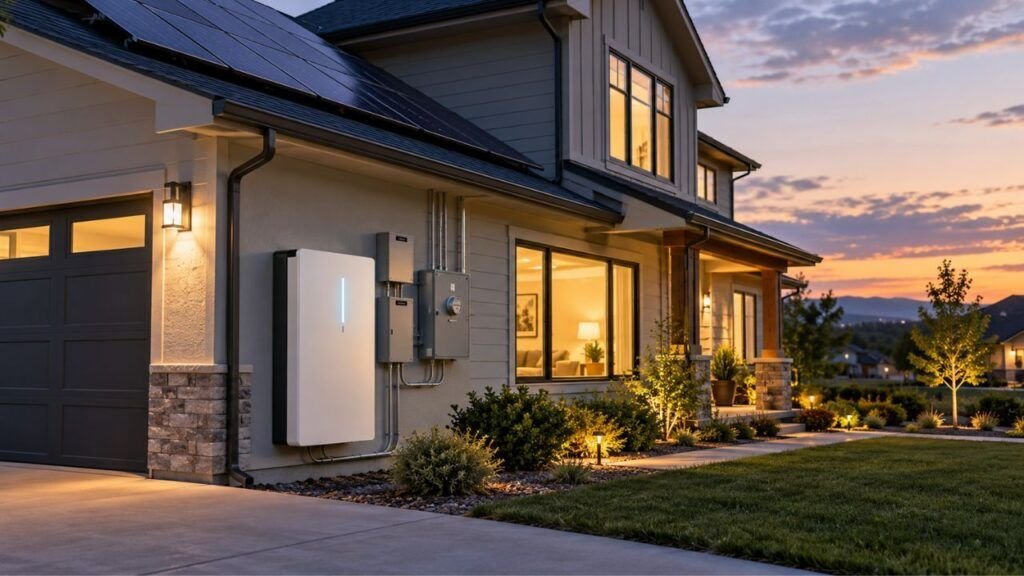
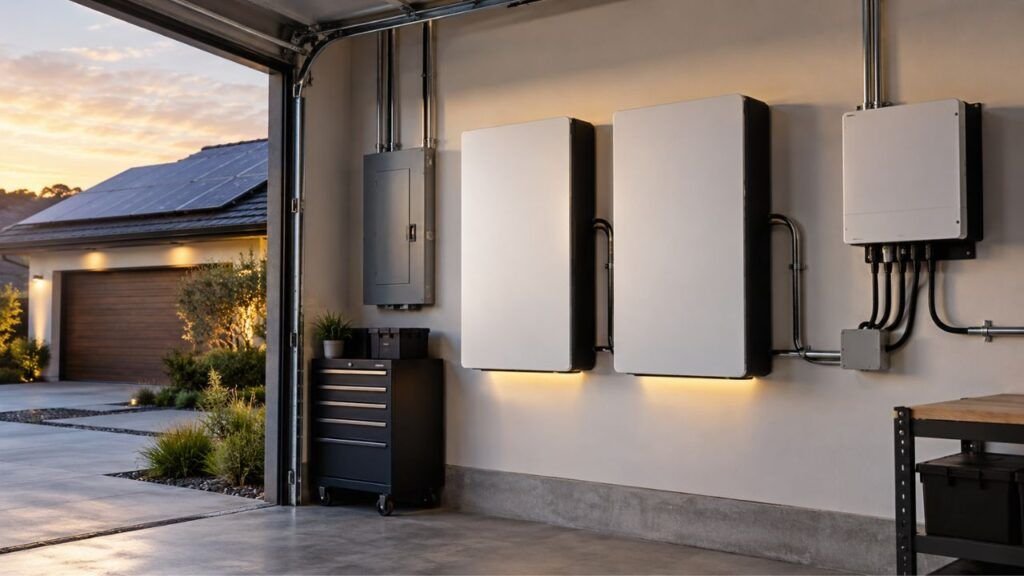
Large modular systems can provide 240V output, several kilowatts of continuous power, expandable batteries, and home panel integration.
Both products may be called solar generators. However, their capabilities are completely different.
For central air, think more like a home backup system. Do not think of a small camping power station.
Why Is Central Air So Difficult to Run on Battery Power?
Central air conditioners combine high running demand with difficult motor startup loads. That combination creates two separate challenges for a solar generator.
The Compressor Uses a Lot of Power
The outdoor compressor does most of the heavy electrical work.
Its exact power consumption depends on:
- AC size
- Efficiency rating
- Compressor design
- Outdoor temperature
- System age
- Cooling demand
A smaller, efficient system may use considerably less electricity than an older large unit.
That is why tonnage alone cannot tell you exactly how many watts your AC needs.
Compressor Startup Can Be Much Higher
Traditional compressors can require a large burst of current when starting.
Your solar generator might handle the AC once running. However, it could still shut down when the compressor starts.
This startup demand is sometimes associated with the unit’s LRA, or Locked Rotor Amps.
LRA values can be dramatically higher than normal operating current.
That does not mean your compressor continuously pulls its full LRA. Instead, it shows why startup capability requires separate consideration.
Your Indoor Blower Also Needs Electricity
Central air conditioning uses more than the outdoor condenser.
Your furnace blower or indoor air handler pushes cooled air throughout your ductwork.
If the outdoor compressor runs but the blower does not, your home will not cool correctly.
The blower may also be on another circuit.
Therefore, sizing only for the outdoor condenser can underestimate your actual backup requirement.
Hot Weather Makes Runtime Harder to Predict
An AC usually works hardest when you need backup power most.
During extreme heat, the compressor may stay on longer. High humidity can increase cooling demand too.
Runtime also changes with:
- House insulation
- Air leakage
- Thermostat setting
- Indoor temperature
- Window exposure
- Duct efficiency
- AC efficiency
That is why simple battery calculations should be treated as estimates.
How Much Power Does a Central Air Conditioner Need?
Central AC power consumption varies considerably between systems. You can use tonnage for rough planning, but your equipment label provides better information.
| Central AC Size | Cooling Capacity | Typical Application | Common Voltage Class | Backup Difficulty |
| 1.5 ton | 18,000 BTU/h | Smaller homes or zones | 208/230V | Moderate to High |
| 2 ton | 24,000 BTU/h | Smaller homes | 208/230V | High |
| 2.5 ton | 30,000 BTU/h | Small to medium homes | 208/230V | High |
| 3 ton | 36,000 BTU/h | Common residential size | 208/230V | High |
| 4 ton | 48,000 BTU/h | Larger cooling loads | 208/230V | Very High |
| 5 ton | 60,000 BTU/h | Large residential systems | 208/230V | Very High |
Do not turn this table into a wattage calculator.
Two 3-ton air conditioners can have very different electrical requirements.
One may have an older single-stage compressor. Another might use variable-speed technology that starts much more gently.
Always use your actual equipment specifications before buying backup power.
What Size Solar Generator Do You Need for Central Air?
You need to size voltage, inverter output, starting capability, battery capacity, and solar charging separately. One large wattage number cannot tell you whether the system will work.
Requirement 1: 240V or 120/240V Split-Phase Output
This requirement eliminates many portable solar generators immediately.
Most conventional U.S. central AC condensers operate around 208/230V or 240V.
A 120V-only power station cannot normally supply that equipment directly.
Even a 5,000W inverter would not solve the problem if it provides the wrong voltage.
Look for a system specifically designed for 120/240V home backup or compatible 240V operation.
Requirement 2: Enough Continuous AC Output
Next, calculate the power needed while everything is operating.
That could include:
- Outdoor condenser
- Furnace blower
- Air handler
- Thermostat and controls
- Condensate equipment
- Other essential home circuits
Suppose your complete HVAC system averages around 3,000W during operation.
You would not want an inverter rated at exactly 3,000W.
Extra headroom reduces overload risk when operating conditions change.
Requirement 3: Enough Startup Capacity
This is where many otherwise capable systems fail.
A traditional compressor can demand much more power briefly during startup.
Do not assume that doubling the running watts always gives an accurate starting requirement.
Instead, check:
- AC nameplate
- Technical specifications
- Compressor information
- Manufacturer documentation
- Actual current measurements when needed
Your generator must tolerate that startup event without tripping.
Requirement 4: Enough Battery Capacity
This is where watts and watt-hours become important.
Watts or kilowatts measure power.
They tell you how much power the system can provide at once.
Watt-hours or kilowatt-hours measure energy.
They tell you approximately how long the battery can support that load.
A 7,000W inverter with only 2kWh of battery storage could potentially handle a large load but only for a short period.
A 15kWh battery with an undersized inverter creates the opposite problem.
You need enough of both.
Requirement 5: Enough Solar Input
Solar input determines how quickly your battery can recover.
It may also reduce the rate at which the battery drains during daylight.
However, panel wattage should not be treated as guaranteed continuous production.
A 3,000W solar array rarely produces exactly 3,000W from sunrise until sunset.
Real output changes throughout the day.
How to Read Your Central AC Nameplate Before Choosing a Generator
Your HVAC nameplate gives you much better information than online wattage estimates. Take a photo of the label and look for several important electrical specifications.
Voltage
Look for values such as:
- 208/230V
- 230V
- 240V
- 1 Phase
- 1 PH
Your solar backup system must provide compatible voltage.
If the condenser requires 240V, a normal 120V portable station is usually not enough.
RLA
RLA generally means Rated Load Amps when discussing the compressor.
It helps describe the compressor’s operating electrical requirements.
Do not assume the compressor constantly consumes exactly its listed RLA.
Operating current changes with conditions.
Still, this value is useful when understanding the equipment’s electrical demands.
LRA
LRA means Locked Rotor Amps.
It represents a much higher current condition associated with a compressor motor that is not yet turning.
You will often notice that LRA is considerably higher than RLA.
That difference helps explain why starting central AC can be harder than keeping it running.
MCA and MOCP
You might also find:
MCA: Minimum Circuit Ampacity
MOCP: Maximum Overcurrent Protection
These values help determine proper circuit and protection requirements.
However, do not mistake MOCP or breaker size for actual running power.
For example, a system connected to a 40A breaker does not automatically consume 40 amps whenever it operates.
What If Your Label Does Not Show Enough Information?
Do not guess.
Instead:
- Find the exact condenser model number.
- Check the manufacturer’s technical specifications.
- Check information for the indoor HVAC equipment too.
- Ask an HVAC technician when specifications remain unclear.
- Measure operating and startup current when necessary.
These extra steps could save you from buying an expensive system that still cannot start your AC.
Central AC Running Watts vs Startup Surge: What Matters More?
Both matter, but they solve different problems.
Running watts determine whether your inverter can keep the AC operating.
Startup capacity determines whether the compressor can successfully turn on.
Battery capacity determines how long everything can continue operating.
Imagine an AC needing roughly 3,000W during operation.
A 6,000W inverter might comfortably handle that running load. However, it can still fail if the compressor’s starting demand exceeds the inverter’s short-term capability.
Meanwhile, even a powerful inverter cannot provide long runtime without enough battery storage.
You must satisfy all three requirements.
Can a Soft Starter Let a Smaller Solar Generator Run Central AC?
A soft starter can make some central air conditioners much easier to start from battery or generator power. However, it does not reduce every part of the system’s energy requirement.
What a Soft Starter Does
A conventional compressor can draw a large amount of current almost instantly.
A soft starter controls how the compressor starts.
Instead of allowing such an abrupt electrical demand, it helps the motor accelerate more gradually.
That lower starting current can make a major difference for generators and inverters.
How Much Can It Reduce Startup Current?
The reduction depends on the compressor, soft starter, installation, and HVAC design.
Some compatible residential systems can see substantial starting-current reductions.
You should not assume every central AC will receive the same percentage reduction.
Verify compatibility with your specific compressor.
What a Soft Starter Does Not Do
A soft starter can help with startup, but it does not solve everything.
It does not:
- Add battery capacity.
- Turn 120V power into 240V.
- Increase your inverter’s continuous output.
- Eliminate normal compressor consumption.
- Make an undersized solar array larger.
- Replace proper electrical integration.
This distinction matters.
A soft starter might help a capable inverter start your compressor. It will not turn a small portable power station into whole-home backup.
Soft Start vs Hard Start Kit
A soft starter and hard start kit are not the same thing.
A hard start kit is generally intended to help the compressor start more quickly by providing additional starting assistance.
A soft starter focuses on managing and reducing startup current.
Do not assume one can simply replace the other.
Have compatibility checked for your particular HVAC equipment.
How Long Will a Solar Generator Run Central Air?
Runtime depends mainly on usable battery capacity and average HVAC power consumption. The following calculation gives you a useful starting point.
Estimated runtime = usable battery capacity ÷ average HVAC power draw
For example:
A 10kWh usable battery supporting an average 3kW HVAC load gives:
10kWh ÷ 3kW = about 3.3 hours
Actual runtime will usually differ.
Here is a simple planning example using a 3,000W average HVAC load.
| Usable Battery Capacity | Theoretical Runtime at 3,000W | Practical Planning Estimate |
| 5kWh | 1.7 hours | Around 1.3 to 1.5 hours |
| 10kWh | 3.3 hours | Around 2.6 to 3 hours |
| 15kWh | 5 hours | Around 4 to 4.5 hours |
| 20kWh | 6.7 hours | Around 5.3 to 6 hours |
These numbers are examples rather than guarantees.
Your central AC may cycle instead of continuously drawing 3,000W. Solar panels may also contribute energy while the AC runs.
On extremely hot days, the compressor could run much longer.
That can reduce expected runtime.
What Changes Central AC Battery Runtime?
Several real-world conditions affect how quickly your battery drains.
- Outdoor temperature
- Humidity
- Thermostat setting
- Indoor starting temperature
- AC efficiency
- Compressor design
- Single-stage or variable-speed operation
- House insulation
- Window heat gain
- Air leakage
- Duct condition
- Equipment sizing
- Compressor cycling
- Battery conversion losses
- Other appliances
- Solar production during operation
The thermostat setting can make a surprisingly large difference.
Trying to maintain 68°F during a severe heat wave demands much more energy than keeping the house around 76°F.
During an outage, comfort and battery conservation usually need balancing.
How Many Solar Panels Do You Need to Run Central Air?
The correct solar array size depends on how many kilowatt-hours your AC consumes each day. Panel wattage should be based on energy replacement, not just the AC’s instantaneous running wattage.
Panels Do Not Replace the Inverter or Battery
Solar panels normally feed energy into your power system.
The basic energy path looks like this:
Solar panels → power system → battery and home loads → central AC
The panels do not normally connect straight to your traditional central AC compressor.
Your inverter still supplies compatible household AC power.
Estimate Daily AC Energy Use First
Suppose your complete HVAC system averages 3kW while actively cooling.
If it accumulates four hours of compressor operation during the day:
3kW × 4 hours = 12kWh
That means the HVAC used approximately 12kWh.
Remember that this is only an example.
Your actual system might use much less or considerably more.
Convert Daily Energy Into Solar Array Size
A basic planning formula looks like this:
Daily energy needed ÷ peak sun hours = minimum theoretical array size
You should then increase that result to account for real-world losses.
Suppose you need to replace 12kWh and receive five useful peak-sun-hours.
12kWh ÷ 5 hours = 2.4kW
A theoretical 2.4kW array would produce 12kWh under ideal assumptions.
Real life is not ideal.
Therefore, you would normally need more panel capacity if your goal is reliably replacing that much energy.
Why a 2,000W Solar Array May Still Not Keep Up
A 2,000W array does not provide 2,000W all day.
Output can drop because of:
- Clouds
- Shade
- Poor panel angle
- High panel temperature
- Morning sunlight
- Evening sunlight
- Wiring losses
- Conversion losses
- Dirt and debris
- Seasonal sun conditions
Other household appliances may consume solar production too.
That is why a large central AC installation can require a surprisingly substantial solar array.
Can You Run Central AC Directly From Solar Panels?
Not in the simple way people sometimes imagine.
You generally cannot connect regular solar panels directly to a conventional central air conditioner and expect it to operate normally.
The power needs to be managed and converted.
With a solar generator or home battery system, the inverter produces usable household AC power.
The solar panels then provide energy to the system.
Specialized solar-powered HVAC products also exist, but those are different from running a conventional central AC from a solar generator.
For most homeowners, think of the panels as an energy source for the backup system rather than a direct AC connection.
How Do You Connect a Solar Generator to Central Air?
Central air conditioners are generally hardwired appliances. That means powering one during an outage requires a different setup than plugging in a refrigerator.
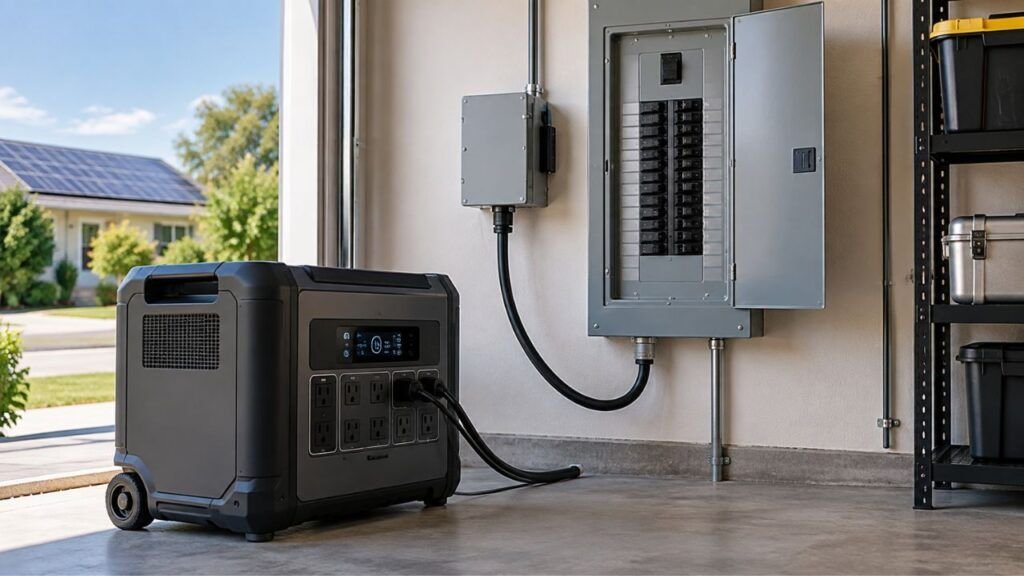
Whole-Home Transfer Switch or Smart Backup Panel
Large solar backup systems can integrate with a home’s electrical panel through approved transfer equipment.
When utility power fails, selected circuits can receive backup power from the battery system.
This approach can support circuits such as:
- Central AC
- Furnace or air handler
- Refrigerator
- Lighting
- Internet equipment
- Essential outlets
The exact arrangement depends on your home’s electrical system.
Dedicated Backup Circuits
You do not necessarily need to back up every circuit.
Many homeowners prioritize only important loads.
For example, the backup system might support:
- HVAC equipment
- Refrigerator
- Freezer
- Several lights
- Internet equipment
- Medical devices
Avoiding unnecessary loads can greatly extend cooling runtime.
Why an Extension Cord Is Not the Answer
Central air conditioners usually do not have a normal household plug.
The condenser is typically connected directly to a dedicated circuit.
Running an extension cord from a portable power station is therefore not the normal solution.
You need a properly designed electrical connection.
Professional Installation
Central AC involves high-current household electrical equipment.
A 240V home backup connection should be designed around your home’s electrical system and HVAC requirements.
A licensed electrician can confirm:
- Voltage compatibility
- Circuit requirements
- Transfer equipment
- Panel capacity
- Generator connection
- HVAC starting behavior
An HVAC professional may also need to confirm compressor or soft-start compatibility.
Does the Indoor Furnace or Air Handler Need Backup Power Too?
Yes. The indoor HVAC equipment needs power for central cooling to work properly.
Your outdoor unit removes heat, but the indoor blower moves conditioned air through your duct system.
Without airflow, the home will not cool normally.
This creates another sizing issue.
The outdoor condenser and indoor blower may be connected to different circuits.
They may also operate at different voltages.
For example, a condenser may use roughly 240V while a furnace blower system uses a 120V circuit.
Your backup system must supply everything needed for normal cooling operation.
Do not size the system for the condenser alone.
Single-Stage vs Variable-Speed Central AC on a Solar Generator
Different compressor technologies can behave very differently on battery power. Understanding your system type can help explain its startup and runtime characteristics.
| Factor | Single-Stage Central AC | Variable-Speed/Inverter Central AC |
| Compressor operation | Primarily full on or off | Adjusts output |
| Startup behavior | Often stronger inrush | Usually more gradual |
| Battery friendliness | More demanding | Often better |
| Partial-load efficiency | Lower | Generally higher |
| Runtime behavior | Strong cycling | More continuous modulation |
| Solar backup difficulty | Higher | Potentially easier |
| Need to check specifications | Yes | Yes |
Variable-speed systems can be attractive for battery backup because they often avoid the abrupt starting behavior found in traditional compressors.
They may also use less power once the home approaches the thermostat setting.
However, variable-speed does not automatically mean portable-generator compatible.
Some systems still require substantial 240V power.
Check actual specifications.
Can a 2,000W, 3,000W, or 5,000W Solar Generator Run Central AC?
Generator wattage gives you one useful number, but it does not tell the whole story. Voltage, startup capability, and battery capacity still matter.
Can a 2,000W Solar Generator Run Central AC?
Usually not.
Most conventional whole-home central air conditioners require more power and typically use 208/230V or 240V.
Many 2,000W portable stations also only provide 120V output.
They are usually better suited for a small window AC or another emergency cooling option.
Can a 3,000W Solar Generator Run Central AC?
Possibly in some unusual lower-demand situations, but I would not treat 3,000W as a general central AC recommendation.
A smaller high-efficiency system may have modest operating demand.
However, compressor startup can still exceed the inverter’s capability.
Voltage remains another concern.
Check your specific HVAC system before considering this size.
Can a 5,000W Solar Generator Run Central AC?
Possibly.
This is where central AC becomes more realistic, but the 5,000W number alone is not enough.
A 5,000W system must still have:
- Compatible 240V output
- Enough compressor startup capacity
- Sufficient battery storage
- Capacity for the indoor blower
- Appropriate transfer equipment
- Enough remaining power for essential loads
A 5,000W inverter with 2kWh of battery could potentially support a demanding appliance briefly.
That does not mean it provides useful all-night cooling.
What About 6,000W to 10,000W Systems?
These systems give you much more flexibility.
Higher inverter output provides additional headroom for:
- Central AC
- Blower motor
- Refrigerator
- Freezer
- Lights
- Other essential appliances
However, large inverter output still needs to be paired with a large battery.
If you’re planning several hours of whole-home cooling, battery capacity will usually become the bigger question.
Example: Sizing Solar Backup for a 3-Ton Central AC
A 3-ton AC is common in U.S. homes, but its tonnage does not reveal its exact electrical demand. Here’s how I would approach sizing without making unsafe assumptions.
- Confirm the voltage. Check whether the outdoor condenser requires 208/230V or 240V.
- Find the compressor specifications. Check operating current and startup information.
- Check the indoor blower. Find the furnace or air handler’s electrical requirements.
- Calculate complete HVAC demand. Add the equipment that must operate during cooling.
- Add other essential appliances. Include refrigerators, lights, internet equipment, and other planned loads.
- Choose enough continuous inverter capacity. Leave reasonable headroom above expected operating demand.
- Confirm compressor startup capability. Make sure the inverter can start the compressor reliably.
- Consider a compatible soft starter. This may reduce startup requirements on suitable systems.
- Calculate desired battery runtime. Multiply estimated average power by the cooling hours you need.
- Calculate solar replacement needs. Estimate daily kWh consumption and available peak-sun-hours.
Suppose your complete hypothetical HVAC load averages 3kW.
If you want approximately four hours of cooling:
3kW × 4 hours = 12kWh
You should then add capacity for system losses and reserve.
A battery around 15kWh could provide more practical headroom than exactly 12kWh.
Again, do not assume every 3-ton system averages 3kW.
Use your own system’s data.
How to Make Central AC Last Longer on Battery Backup
Small changes can noticeably reduce your cooling energy use during an outage.
- Pre-cool your home before severe weather arrives.
- Raise the thermostat several degrees during backup operation.
- Close blinds on sun-facing windows.
- Keep exterior doors closed.
- Seal obvious air leaks.
- Replace dirty HVAC filters.
- Keep supply and return vents unobstructed.
- Avoid using electric ovens during an outage.
- Delay laundry and electric water heating.
- Use ceiling fans to improve comfort.
- Cool hardest during strong solar production.
- Reduce unnecessary electrical loads.
- Keep your HVAC system properly maintained.
- Avoid extremely low thermostat settings.
You do not always need to maintain normal everyday comfort.
During an outage, maintaining a safe, reasonable temperature can stretch battery runtime considerably.
When Running Central AC From a Solar Generator Does Not Make Sense
Central AC backup can become expensive because both power output and battery capacity must be large.
It may not be practical when:
- Your battery bank is small.
- Your AC has extremely high startup current.
- You have limited solar-panel space.
- Your home experiences long cloudy outages.
- You only need emergency cooling for one room.
- Your older HVAC system uses excessive electricity.
- Whole-home battery costs exceed your backup budget.
In these situations, powering a smaller cooling appliance can make more sense.
You might get many more useful hours from the same battery.
A Smaller Emergency Cooling Setup May Be More Practical
You do not always need to cool the entire house during an outage.
Sometimes the smarter strategy is creating one comfortable room.
An efficient window AC or small inverter-style cooling system can use much less energy than central air.
That means a smaller solar generator can potentially provide longer runtime.
For example, instead of powering several tons of central cooling, you could cool:
- One bedroom
- A living room
- A home office
- An occupied downstairs area
Close unused rooms and reduce heat gain.
This approach can dramatically lower the battery capacity needed for emergency cooling.
It is especially useful when outages only happen occasionally.
Central AC Solar Generator Compatibility Checklist
Before spending money on a large solar backup system, confirm each item below.
- Central AC voltage
- Single-phase requirements
- Compressor operating current
- Compressor LRA or startup behavior
- Indoor blower requirements
- Air-handler requirements
- Generator continuous output
- Generator surge or starting capability
- 120/240V or 240V support
- Usable battery capacity
- Desired cooling runtime
- Solar input limit
- Planned solar array size
- Other home backup loads
- Transfer equipment compatibility
- Soft-start compatibility
- Home electrical installation requirements
If one major specification does not match, the system may not work as expected.
Check everything before buying.
Final Verdict
A solar generator can run a central air conditioner, but this usually requires a serious home-backup system rather than a small portable power station. Correct voltage, adequate inverter output, compressor startup capability, battery storage, and indoor blower power all matter.
There is no universal rule saying every central AC needs a 5,000W generator. Some efficient systems may need less running power, while older units can have extremely demanding startup characteristics.
Start with your AC nameplate and model specifications. Then calculate inverter power, startup requirements, battery runtime, and solar production separately.
If your central AC requires more backup capacity than makes financial sense, consider cooling one room instead. A smaller efficient AC can provide much longer emergency runtime from the same battery.
Related FAQs
Can a Solar Generator Run a 3-Ton Central Air Conditioner?
Yes, a sufficiently large solar generator may run a 3-ton central AC, but tonnage alone cannot determine compatibility. Check the unit’s voltage, operating current, compressor startup requirements, indoor blower load, inverter capacity, and battery size.
What Size Solar Generator Do I Need for a 3-Ton AC?
There is no universal solar generator size for every 3-ton AC. Many systems require 240V power and several kilowatts while operating, while compressor startup demand may be considerably higher. Use the actual HVAC specifications before selecting a generator.
Will a 5,000-Watt Solar Generator Run Central Air?
A 5,000W solar generator may run some central AC systems if it provides compatible 240V output and enough startup capacity. You must also consider the blower, battery capacity, and other appliances using backup power.
Can a 3,000-Watt Solar Generator Run Central AC?
A 3,000W system may work with certain small or highly efficient HVAC systems, but it is generally too limited for conventional central air. Voltage and compressor startup demand can prevent operation even when running wattage appears acceptable.
How Many Batteries Do I Need to Run Central Air?
Calculate battery needs using kilowatt-hours rather than battery count. For example, a system averaging 3kW for four hours requires about 12kWh before adding losses and reserve capacity. The number of battery modules depends on each module’s capacity.
How Long Will a 5kWh Battery Run Central AC?
If the HVAC averages 3,000W, a 5kWh usable battery provides about 1.7 theoretical hours. Real runtime will usually be shorter after conversion losses, although compressor cycling or active solar production may extend it.
How Long Will a 10kWh Battery Run Central AC?
A 10kWh usable battery powering a 3,000W average HVAC load provides roughly 3.3 theoretical hours. Real-world runtime depends on temperature, compressor cycling, system efficiency, solar production, and other household loads.
Does Central AC Need 240V?
Most conventional residential central AC condensers in the U.S. use approximately 208/230V or 240V power. However, specifications vary, so always check the equipment nameplate before selecting a backup system.
Does a Soft Start Help Run Central AC on a Solar Generator?
Yes. A compatible soft starter can reduce the compressor’s starting current, making it easier for an inverter to start the AC. However, it does not increase battery capacity or significantly reduce normal cooling energy requirements.
Can Solar Panels Keep Central AC Running All Day?
They can with a sufficiently large solar array, battery system, and favorable sunlight, but there is no guarantee. Your panels must produce enough daily energy to cover the AC and other loads while accounting for weather and system losses.
Can You Plug Central AC Directly Into a Solar Generator?
Usually not. Central air conditioners are normally hardwired to dedicated household circuits. A large solar backup system generally needs approved transfer equipment or compatible home-panel integration rather than a normal extension cord.
Is It Better to Run a Window AC During a Power Outage?
Often, yes. If your priority is maximizing battery runtime, cooling one occupied room with an efficient window AC can require far less energy than running central air throughout your entire home.

Austin Parker writes practical generator how-to guides, troubleshooting advice, and buying guides for solar, portable, and fuel-powered generators. His focus is helping readers solve common power problems, understand their options, and choose dependable equipment for real-world use.