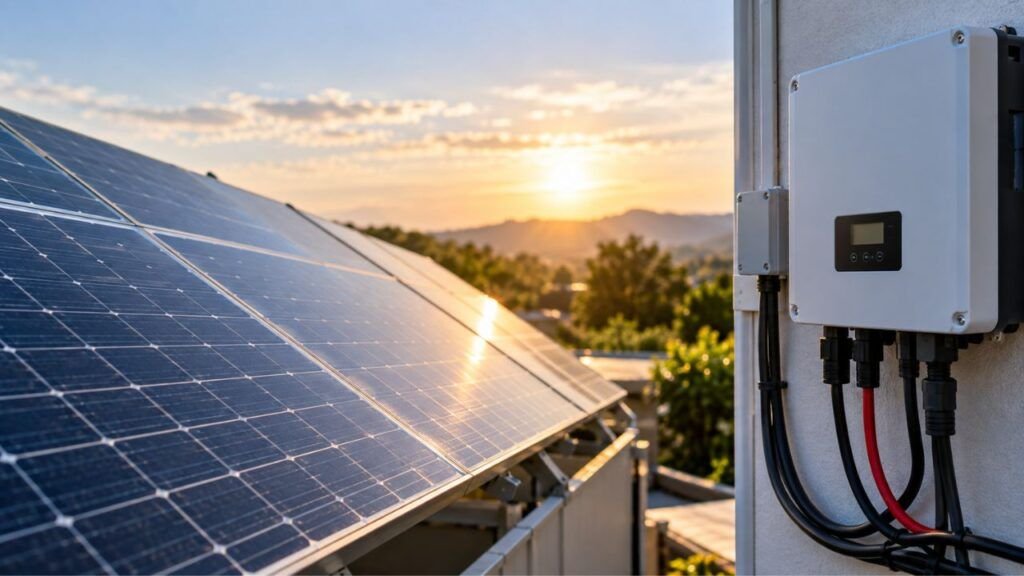
If solar panel voltage becomes too high, your inverter, charge controller, or solar generator may shut down to protect itself. If the voltage exceeds the equipment’s absolute maximum input rating, it can damage internal electronics and create serious electrical safety risks.
The good news is that excessive solar voltage is usually preventable. I’ll show you why it happens, how to calculate it, and what to do if your PV voltage is already too high.
Key Takeaways
- Excessive solar voltage can shut down or damage connected equipment.
- Too many panels in series commonly cause excessive PV voltage.
- Cold weather increases solar panel open-circuit voltage.
- Always calculate maximum voltage using the panel’s Voc rating.
- Series wiring increases voltage, while parallel wiring increases current.
- Solar generators also have strict maximum solar input voltage limits.
- A fuse or breaker does not normally protect against excessive voltage.
- Never intentionally exceed the manufacturer’s maximum PV input voltage.
What Happens If Solar Panel Voltage Is Too High?
When solar panel voltage rises beyond the range your equipment supports, several things can happen. The exact result depends on how high the voltage gets and which limit you exceed.
If the voltage only goes outside the normal operating range, your inverter or charge controller may stop producing power. It may display an error and restart once voltage returns to normal.
The situation becomes more serious when voltage exceeds the device’s absolute maximum rating. That can damage capacitors, transistors, circuit boards, and other input components.
In some cases, the equipment may fail immediately. Other systems may appear normal at first but suffer premature component failure later.
This is why I never recommend treating a maximum voltage rating as a target. You want enough safety margin for cold weather and changing conditions.
What Does Too High Solar Panel Voltage Actually Mean?
Solar equipment includes several different voltage specifications. Knowing the difference helps you determine whether your system is actually unsafe.
Open-Circuit Voltage (Voc)
Open-circuit voltage is the voltage a solar panel produces without a connected load.
You will normally find Voc printed on the panel’s specification label. It also appears on the manufacturer’s technical datasheet.
Voc is especially important when calculating maximum string voltage.
Do not use only the advertised “12V,” “24V,” or “48V” description. Those names do not tell you the panel’s true maximum voltage.
Maximum Power Voltage (Vmp)
Maximum power voltage is the approximate panel voltage during normal power production.
Vmp is usually lower than Voc.
For example, a panel might have a Vmp around 31 volts. Its Voc could be closer to 37 or 40 volts.
Vmp is useful for checking the equipment’s operating range. However, you should use Voc when checking maximum voltage limits.
MPPT Operating Voltage Range
MPPT stands for Maximum Power Point Tracking.
An MPPT controller or inverter has a voltage range where it operates efficiently.
For example, an inverter might have an MPPT range between 120V and 450V.
A solar string outside that range may stop working properly. However, that does not automatically mean the equipment is damaged.
Maximum PV Input Voltage
Maximum PV input voltage is much more important for safety.
This is the highest solar input voltage the device can safely accept.
If your controller says “150V maximum PV input,” you should design the array so its maximum cold-weather voltage remains below 150V.
Never assume the controller will simply reduce excessive voltage.
Maximum System Voltage
Solar panels also have a maximum system voltage rating.
This rating relates to the voltage the panel and its insulation system can safely withstand within an array.
Your entire system must stay within all applicable component ratings.
The lowest relevant voltage limit usually becomes your practical maximum.
Too-High Solar Voltage: What Can Actually Happen?
Excessive PV voltage can cause anything from a temporary shutdown to permanent equipment failure. Here are the main outcomes you may see.
The Inverter May Shut Down
Many modern solar inverters continuously monitor DC input voltage.
If the voltage becomes too high, the inverter may disconnect from the array. It can then display an overvoltage or DC input error.
You may suddenly notice solar production dropping to zero.
The inverter may restart automatically after the voltage decreases. This often happens after the panels warm up.
The Charge Controller May Stop Charging
An MPPT solar charge controller can also stop charging during overvoltage.
Your panels might be sitting in bright sunlight. However, the battery receives little or no charging power.
Some controllers recover after the voltage returns to a safe range.
Others may require a restart.
You should never depend on this protective behavior. A protection feature does not make excessive input voltage safe.
Internal Electronics Can Be Damaged
Exceeding the absolute voltage rating can damage sensitive electronic components.
These may include:
- Capacitors
- MOSFETs
- Switching components
- Input circuitry
- Circuit boards
- Voltage-sensing components
Sometimes the damage happens immediately.
In other cases, repeated electrical stress weakens components over time. The equipment may eventually fail earlier than expected.
Insulation and Components Can Be Overstressed
Voltage limits also apply to cables, connectors, disconnects, and electrical enclosures.
Using components below the required DC voltage rating can create dangerous insulation breakdown.
That risk becomes more serious in higher-voltage solar arrays.
Arcing and Electrical Hazards Can Increase
High DC voltage deserves extra care because DC arcs can persist.
An AC waveform regularly passes through zero volts. DC power does not behave the same way.
Improperly rated connectors, damaged insulation, or loose connections can therefore create dangerous arcing conditions.
I would not disconnect energized rooftop solar connectors unless you are trained and equipped to do it safely.
Solar Production May Temporarily Stop
Not every overvoltage event destroys equipment.
Sometimes the system protects itself by stopping solar production.
That may sound harmless, but repeated shutdowns still indicate a design problem.
You should find the cause instead of ignoring the warnings.
What Happens at Different Solar Voltage Levels?
Not every voltage problem has the same level of risk. This table shows how to think about each situation.
| Solar Voltage Condition | What It Means | Likely Result | Risk Level |
| Inside normal MPPT range | Normal operating condition | Normal power production | Normal |
| Outside MPPT range | Voltage is outside preferred operating range | Poor performance or shutdown | Moderate |
| Near maximum PV voltage | Very little safety margin remains | Cold weather may push voltage over | High |
| Above maximum PV input | Manufacturer’s limit is exceeded | Shutdown or equipment damage | Very High |
| Above component voltage rating | Equipment insulation or hardware rating is exceeded | Failure, arcing, or shock hazard | Very High |
Remember that every inverter and controller behaves differently.
One device may shut down safely. Another may suffer damage before protection activates.
That is why the manufacturer’s maximum rating should always control your design.
Why Does Solar Panel Voltage Become Too High?
Several common mistakes can push PV voltage beyond safe limits. Most problems come from system design rather than defective panels.
Too Many Solar Panels Are Connected in Series
This is one of the most common causes.
When solar panels are connected in series, their voltages add together.
Suppose each panel has a Voc of 40 volts.
Four panels in series would produce:
40V × 4 = 160V Voc
If your controller accepts only 150V, that string is already too high.
Cold weather could increase it even further.
Cold Weather Raises Solar Panel Voltage
This surprises many people.
Solar panels normally produce higher voltage when their cells become colder.
That means your system might operate perfectly during summer. Then it starts throwing overvoltage errors during a cold winter morning.
This is especially important in colder parts of the United States.
A string that measures safely below the limit during warm weather might exceed it during freezing conditions.
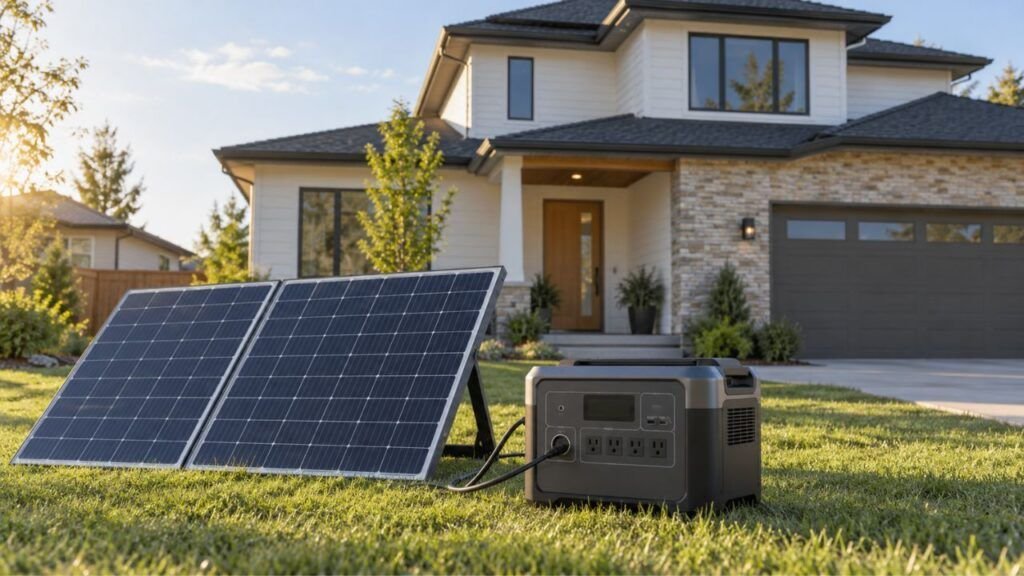
The Wrong Solar Panel Is Connected to a Solar Generator
Portable power stations also have maximum solar input voltage limits.
I often see people focus only on panel wattage.
That is a mistake.
A 400W panel is not automatically compatible with a power station supporting 400W solar input.
You also need to check:
- Panel Voc
- Panel Vmp
- Solar input voltage range
- Maximum input current
- Maximum solar wattage
- Connector compatibility
- Polarity
Voltage should be one of the first specifications you check.
Panels Were Added Without Recalculating Voltage
Adding another solar panel sounds simple.
However, adding one panel to an existing series string can raise voltage considerably.
You should recalculate total Voc every time you expand the array.
Do not assume the inverter can handle one more panel.
Voc Was Confused With Vmp
This is another common mistake.
Imagine your panel shows:
- Vmp: 32V
- Voc: 39V
You connect three panels in series.
Using Vmp, you might calculate:
32V × 3 = 96V
That looks safe for a 100V controller.
However, the actual Voc calculation becomes:
39V × 3 = 117V
Now the array exceeds that controller’s 100V maximum.
Cold weather increases the risk even more.
Cold-Weather Voltage Was Never Calculated
Solar panel Voc ratings are normally measured under standard test conditions.
Your real outdoor conditions will be different.
A professional system design accounts for the lowest expected temperature where the panels are installed.
Without that correction, your system can appear safe on paper but exceed limits during winter.
Series vs Parallel Solar Panels: Which One Raises Voltage?
How you connect solar panels changes the electrical characteristics of the array. This is especially important when troubleshooting excessive voltage.
| Wiring Method | Voltage | Current | Main Concern |
| Series | Adds together | Remains roughly the same | Excessive voltage |
| Parallel | Remains roughly the same | Adds together | Excessive current |
| Series-parallel | Both may increase | Both may increase | Check both limits |
Connecting panels in series increases total voltage.
Connecting them in parallel keeps voltage roughly similar while increasing current.
This means changing from series to parallel can sometimes reduce array voltage.
However, do not change wiring without checking current limits.
Your controller, connectors, fuses, and wires must safely handle the increased current.
Parallel connections can solve one problem while creating another.
How to Calculate Whether Your Solar Panel Voltage Is Too High
Checking solar voltage is easier once you know which numbers matter. Start with the panel label and your inverter or controller manual.
Step 1: Find the Panel’s Voc
Look for “Voc” or “Open Circuit Voltage.”
You can usually find it on:
- The rear panel label
- The manufacturer’s manual
- The product datasheet
Use this value instead of Vmp.
Step 2: Count the Panels Connected in Series
Only panels connected in series add their voltage together.
If you have four panels connected in series, multiply the individual Voc by four.
Use:
String Voc = Panel Voc × Number of Panels in Series
Example:
38V × 4 panels = 152V
Step 3: Find the Voc Temperature Coefficient
Most solar panel datasheets include a temperature coefficient for Voc.
It may look something like:
-0.28% per °C
The negative sign means Voc normally increases when panel temperature falls.
Step 4: Estimate Cold-Weather Voc
First find the temperature difference between standard test conditions and your expected cold temperature.
Standard panel ratings are commonly based around 25°C cell temperature.
Suppose your expected minimum temperature is -10°C.
The difference becomes:
25°C – (-10°C) = 35°C
If the Voc coefficient is 0.28% per °C, then:
0.28% × 35 = 9.8%
Your panel’s Voc could therefore rise by approximately 9.8% under that simplified example.
Step 5: Calculate Maximum String Voltage
Suppose your panel has a 40V Voc.
Cold-weather Voc becomes approximately:
40V × 1.098 = 43.92V
Now suppose three panels are connected in series:
43.92V × 3 = 131.76V
You would compare that result with your controller’s maximum PV input voltage.
Step 6: Compare Every Applicable Voltage Limit
Do not stop after checking only one specification.
Compare your calculated maximum against:
- Inverter maximum DC input voltage
- Charge controller maximum PV voltage
- Solar generator maximum solar input voltage
- Panel maximum system voltage
- Disconnect voltage rating
- Breaker voltage rating
- Connector voltage rating
- Applicable electrical code requirements
The lowest acceptable limit becomes the one you must respect.
Cold-Weather Solar Voltage Example
A simple example shows why winter temperatures matter so much.
Consider this setup:
| Specification | Value |
| Panel Voc | 29.5V |
| Voc temperature coefficient | -0.28%/°C |
| Lowest expected temperature | -10°C |
| Number of panels in series | 2 |
| Power station maximum PV voltage | 60V |
The temperature difference is:
25°C – (-10°C) = 35°C
Approximate voltage increase:
29.5 × 0.0028 × 35 = 2.89V
Cold-weather Voc per panel becomes:
29.5V + 2.89V = 32.39V
Two panels connected in series produce:
32.39V × 2 = 64.78V
Your power station accepts only 60V.
That means this two-panel series setup could exceed the input limit during cold weather.
This is why simply multiplying normal daytime voltage can give you a false sense of safety.
How Much Solar Panel Voltage Is Too High in the United States?
There is no single voltage that becomes “too high” for every U.S. solar system.
Your inverter or charge controller may have a much lower limit than the electrical code allows.
Recent NEC editions generally limit PV DC circuits on or inside one- and two-family dwellings to 600 volts.
However, local jurisdictions can adopt different NEC editions and amendments.
More importantly, a 600V code ceiling does not mean your inverter accepts 600V.
Your equipment might have maximum ratings such as:
- 60V
- 100V
- 150V
- 250V
- 450V
- 500V
Portable solar generators often have much lower limits than rooftop inverters.
Your real maximum is the lowest applicable voltage rating within the system.
Always follow both manufacturer requirements and locally adopted electrical codes.
Can Too Much Solar Wattage Cause the Same Problem as Too Much Voltage?
No. Solar voltage, current, and wattage are related but different limits.
This distinction is important.
Some solar equipment allows more connected panel wattage than its rated output power.
For example, an inverter may intentionally use a slightly oversized solar array. It can limit or “clip” excess available power under certain conditions.
That does not mean you can exceed its maximum voltage.
Voltage limits remain hard electrical limits.
Think of them separately:
- Voltage relates strongly to series configuration.
- Current relates strongly to parallel configuration.
- Wattage is voltage multiplied by current.
Always check all three specifications.
Never assume an acceptable wattage makes the array electrically compatible.
Can a Fuse or Circuit Breaker Protect Against Excessive Solar Voltage?
A standard fuse or circuit breaker does not usually protect equipment from sustained excessive PV voltage.
These devices primarily respond to excessive current.
For example, placing a fuse between a 70V solar array and a device rated for 60V does not make the connection safe.
The 70V can still reach the equipment.
Surge protection is also different.
A surge protective device can help protect against certain temporary voltage spikes.
It does not correct a solar string designed with excessive operating voltage.
The proper solution is correct array sizing and compatible equipment.
Solar Panel Voltage Too High for a Solar Generator or Portable Power Station
Solar generators need the same careful voltage checking as traditional charge controllers. Their solar input specifications can actually be less forgiving.
Check Maximum Solar Input Voltage First
Find the maximum PV or solar input voltage in the manual.
Do this before connecting the panel.
Never rely only on the power station’s advertised solar wattage.
Check the Panel’s Voc
Look at the panel’s open-circuit voltage.
Then account for cold-weather voltage increase.
This becomes especially important with rigid residential solar panels.
Residential panels often operate at higher voltages than smaller portable panels.
Be Careful With Series Connections
Two panels may each work perfectly when connected alone.
Connecting them in series can double the voltage.
For example:
One panel Voc: 35V
Two panels in series:
35V + 35V = 70V
If your power station allows only 60V, that combination is unsuitable.
Solar Wattage Does Not Override the Voltage Limit
Suppose your power station accepts 800 watts of solar.
That does not mean every 800W array will work.
The array must also meet voltage and current requirements.
Always match the complete solar input specification.
How to Tell If Solar Panel Voltage Is Too High
Several symptoms can point toward excessive PV voltage.
- The inverter displays a PV overvoltage warning.
- Solar charging suddenly stops during bright sunlight.
- The system shuts down on cold mornings.
- Power production returns later after temperatures rise.
- Your controller repeatedly restarts.
- A solar generator refuses to accept solar charging.
- Production graphs show unexplained gaps during winter.
- Logged PV voltage approaches the device’s maximum rating.
- The system worked before additional panels were installed.
These signs do not prove that high voltage is the problem.
Low voltage, wiring faults, connector problems, and equipment failures can create similar symptoms.
Check the actual PV voltage and system specifications before making changes.
What Should You Do If Solar Panel Voltage Is Too High?
If your array appears to exceed the equipment’s limit, avoid experimenting with live PV wiring. Start by checking specifications and calculations.
- Stop adding additional panels. Do not increase the string size.
- Find the maximum PV input voltage. Check the inverter or controller manual.
- Check each panel’s Voc. Do not rely only on nominal voltage.
- Count panels connected in series. Their Voc values add together.
- Calculate cold-weather Voc. Use the lowest expected local temperature.
- Review fault codes. Look for PV overvoltage or DC input warnings.
- Reduce panels per series string if needed. Recalculate before reconnecting.
- Consider parallel wiring carefully. Check increased current before changing configuration.
- Use higher-rated equipment when necessary. Never exceed the existing device’s limit.
- Get professional help for fixed rooftop systems. High-voltage PV wiring can remain energized in daylight.
Do not unplug energized rooftop MC4-style connectors simply to troubleshoot voltage.
Solar panels can produce dangerous DC voltage whenever exposed to light.
How to Prevent Solar Panel Overvoltage
Preventing excessive voltage is much easier than repairing damaged equipment.
- Calculate total string Voc before installing panels.
- Include cold-weather voltage correction.
- Leave reasonable voltage headroom below the maximum.
- Check voltage again when adding new panels.
- Never choose solar-generator panels by wattage alone.
- Check current before changing from series to parallel wiring.
- Match connectors and disconnects to the required DC voltage.
- Follow manufacturer-approved string-sizing recommendations.
- Use your area’s lowest expected winter temperature.
- Have permanent residential PV modifications checked professionally.
A little planning here can prevent expensive inverter replacements later.
High Solar Panel Voltage vs High Grid Voltage
High PV voltage and high utility-grid voltage are two different problems.
Furthermore, high solar panel voltage occurs on the DC side of your solar system.
Common causes include too many panels in series and cold-weather Voc increases.
This can affect the inverter’s PV input or a charge controller.
High grid voltage happens on the AC utility side.
A grid-tied inverter monitors utility voltage before sending power into your home or the grid.
If utility voltage becomes too high, the inverter may reduce production or disconnect.
The troubleshooting process is different.
If your error message says “PV overvoltage,” look at the solar array first.
If it says “grid overvoltage,” the issue may involve your AC connection or utility supply.
Final Verdict
Solar panel voltage becomes too high when the array exceeds the voltage limit of the equipment connected to it.
The biggest risks come from excessive series wiring and cold temperatures. Either can push your array’s open-circuit voltage above a safe level.
If you are checking your own setup, start with the panel Voc. Calculate the total series voltage and include winter temperature correction.
Then compare that number with your inverter, controller, or solar generator’s maximum PV input rating.
Do not intentionally exceed the published maximum.
A properly sized system should have enough voltage to operate efficiently while still leaving a reasonable safety margin.
Related FAQs
Can Too Much Voltage Damage a Solar Inverter?
Yes. If solar array voltage exceeds the inverter’s absolute maximum DC input rating, it can damage internal electronic components. Some inverters shut down before damage occurs, but you should never rely on that protection.
Will a Charge Controller Protect Itself From Too Much Solar Voltage?
Some charge controllers shut down when PV voltage becomes excessive, but protection varies by model. Exceeding the manufacturer’s absolute maximum voltage can still damage the controller.
Does Cold Weather Increase Solar Panel Voltage?
Yes. Solar panel open-circuit voltage normally increases as cell temperature decreases. That is why cold-weather Voc calculations are important when deciding how many panels can safely connect in series.
Can Solar Panels Produce More Voltage Than Their Listed Voc?
Yes, under colder conditions than the panel’s standard test temperature. The listed Voc is measured under specific test conditions, so real-world winter voltage can rise above that number.
Is Higher Solar Panel Voltage Always Better?
No. Higher voltage can reduce some wiring losses, but only when every component supports it. Increasing voltage beyond the inverter or controller limit can damage equipment.
Can I Connect Two Solar Panels in Series to a Power Station?
You can if their combined cold-weather Voc remains below the power station’s maximum solar input voltage. You must also check the supported MPPT range, current, wattage, connectors, and polarity.
What Happens If Solar Panel Voltage Is Too High for a Solar Generator?
The solar generator may stop charging, display an input error, or suffer damage if the voltage exceeds its absolute maximum rating. Always calculate the panels’ combined Voc before connecting them.
Can I Reduce Solar Voltage by Wiring Panels in Parallel?
Yes. Parallel wiring keeps array voltage close to one panel’s voltage while increasing current. However, you must verify that the controller, wires, connectors, and fuses can safely handle the additional current.
Does a Fuse Protect Against Excessive Solar Panel Voltage?
No. A standard fuse mainly protects against excessive current. It does not reduce an oversized solar array’s voltage or make an overvoltage connection safe.
Can a 48V Solar Panel Charge a 12V Battery?
Yes, when you use an appropriately rated MPPT charge controller. The controller can convert higher panel voltage for a lower-voltage battery, but the panel Voc must stay below the controller’s maximum PV input.
Is Voc or Vmp More Important for Maximum Solar Voltage?
Voc is the more important number when checking maximum solar voltage. Vmp helps determine operating performance, while Voc is used to calculate the highest voltage a solar string may produce.
How Much Above Maximum PV Voltage Is Safe?
You should not intentionally exceed the manufacturer’s published maximum PV input voltage at all. Design the array below that limit and include enough margin for cold-weather voltage increases.

Austin Parker writes practical generator how-to guides, troubleshooting advice, and buying guides for solar, portable, and fuel-powered generators. His focus is helping readers solve common power problems, understand their options, and choose dependable equipment for real-world use.