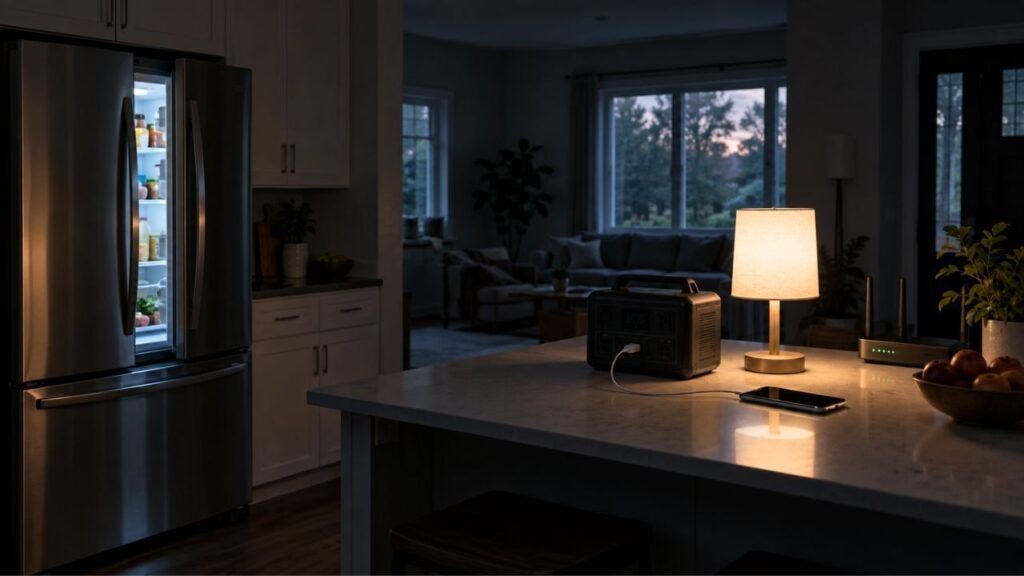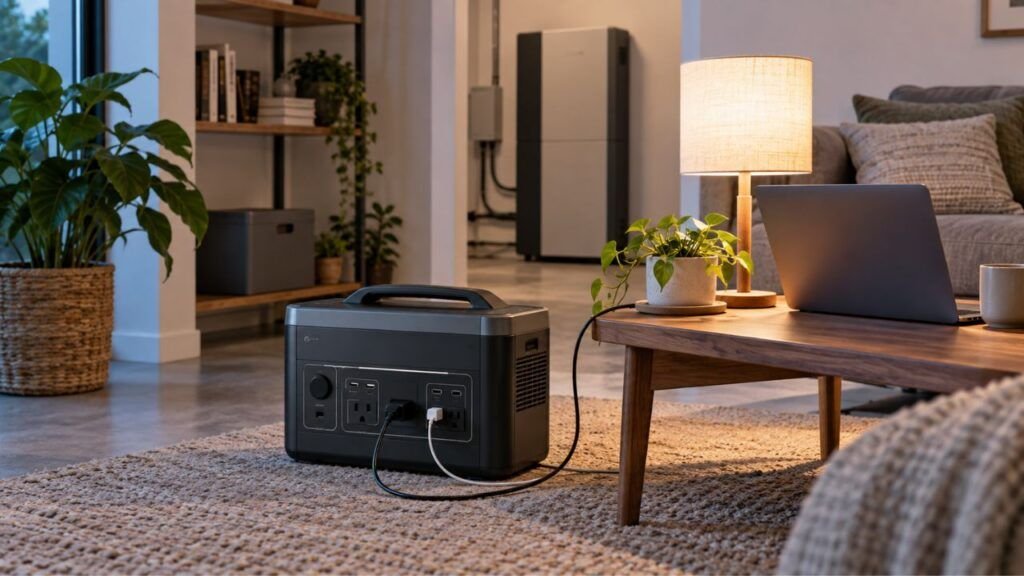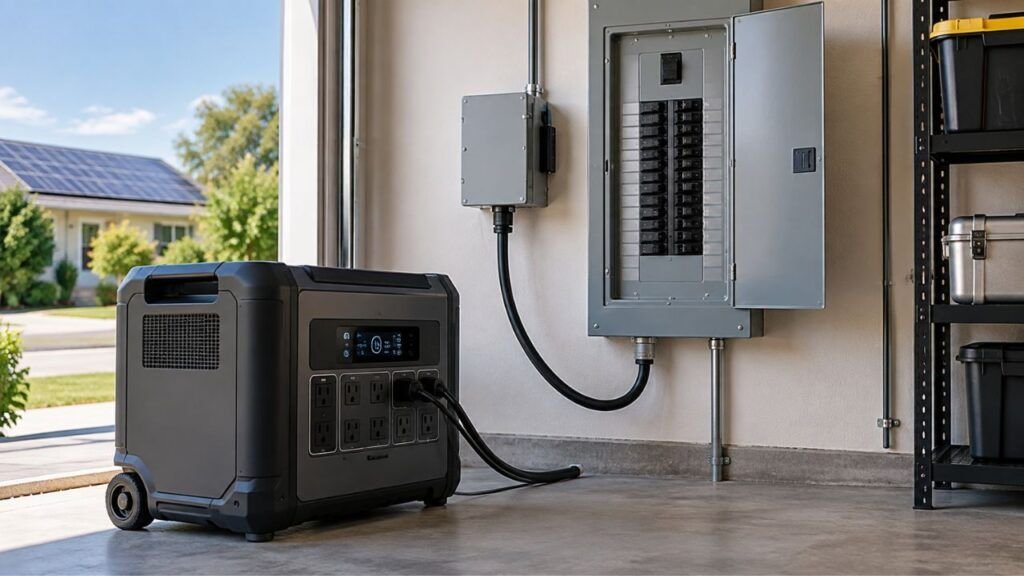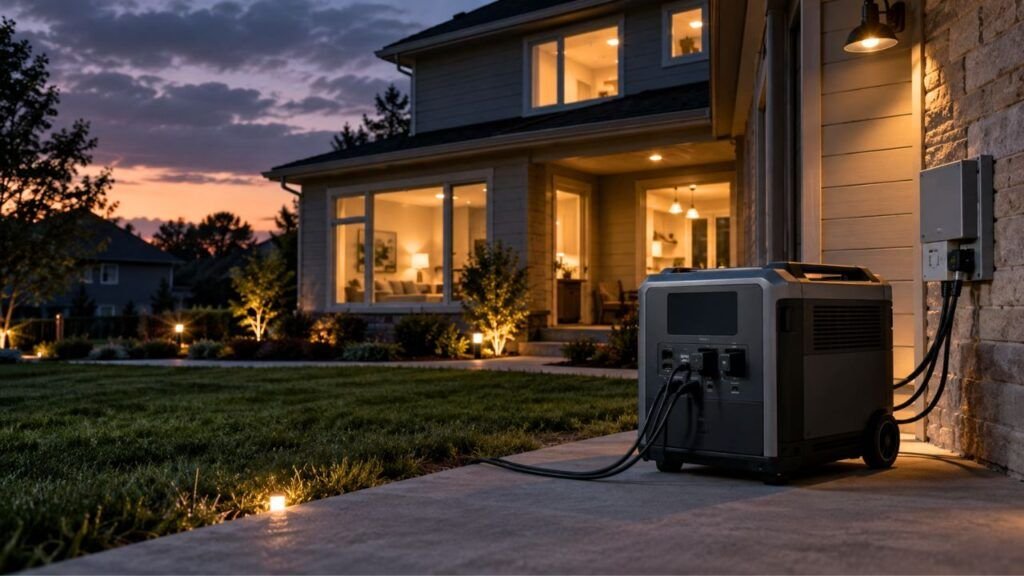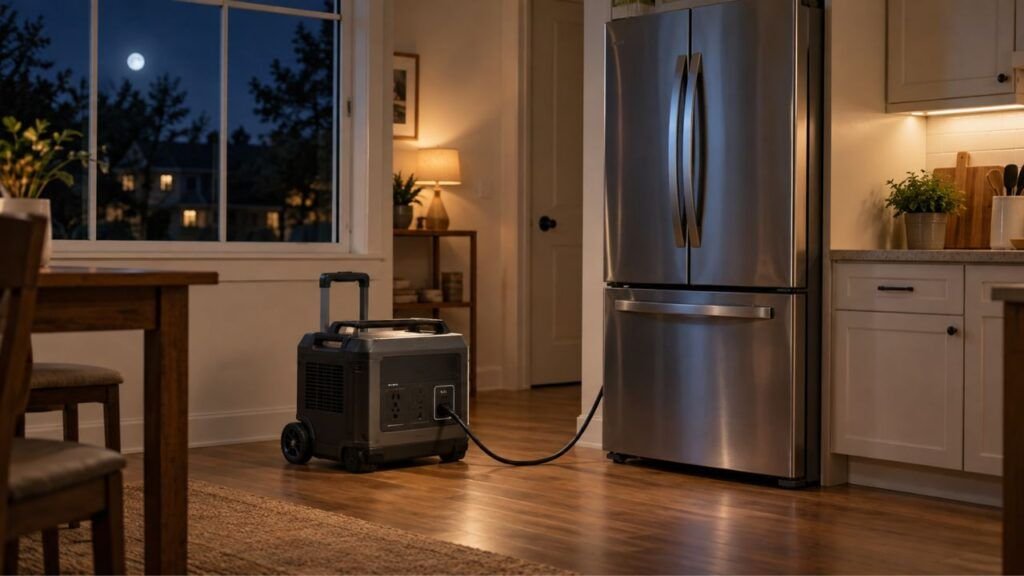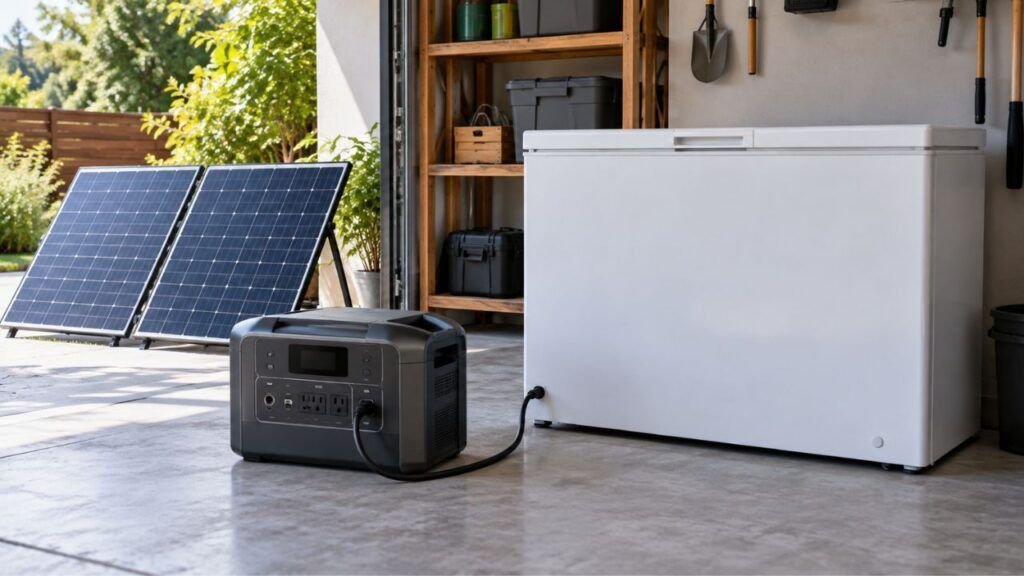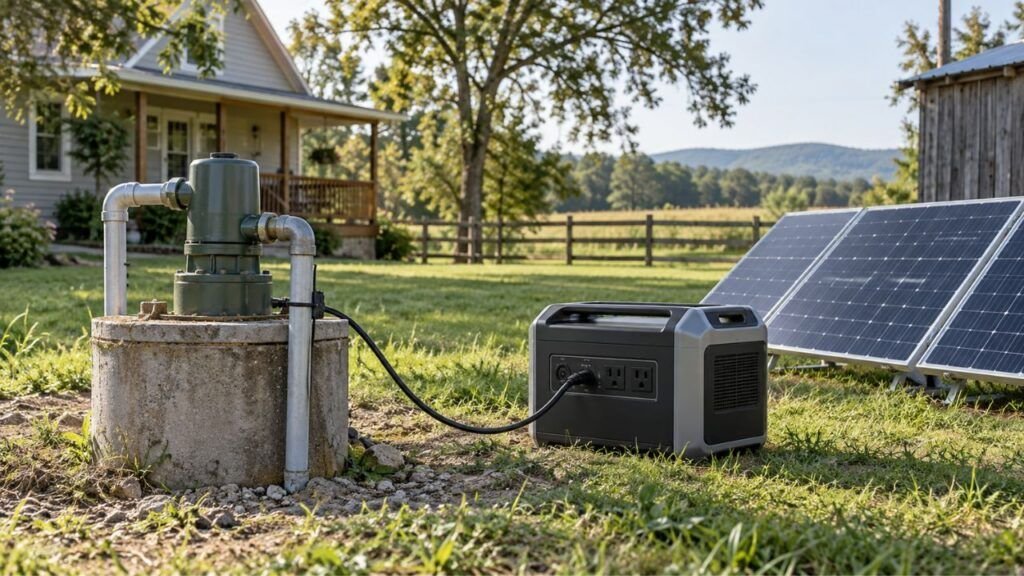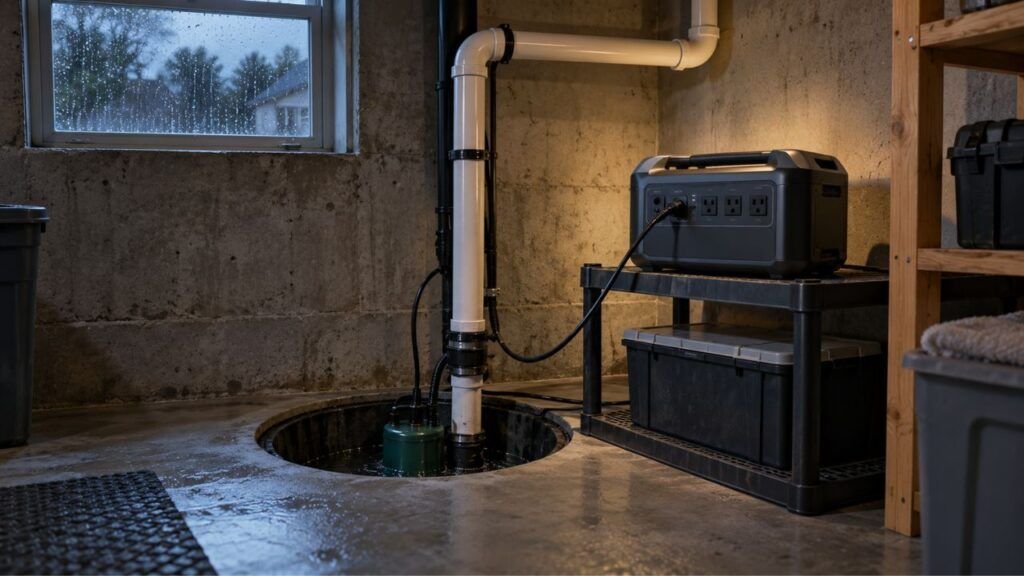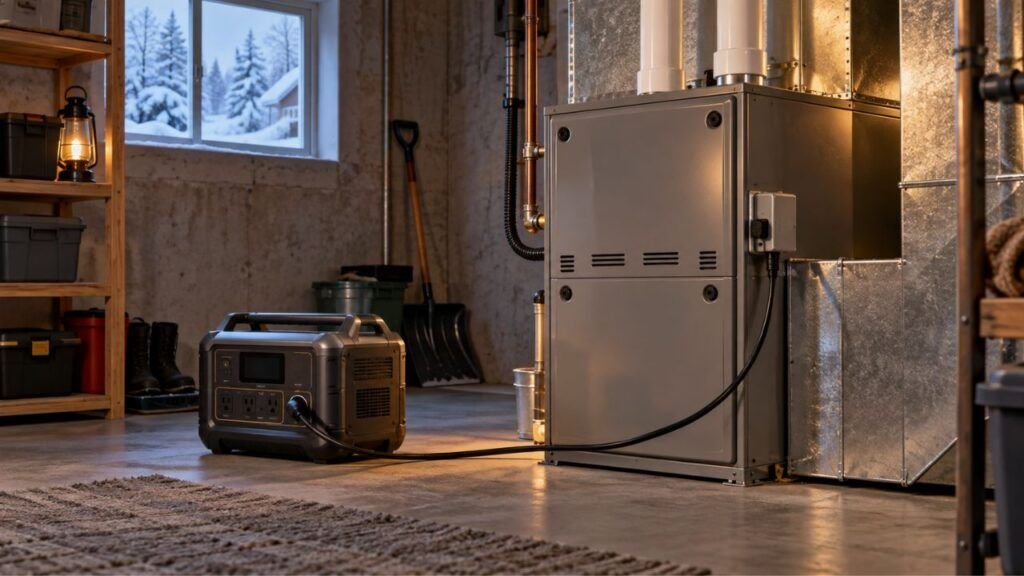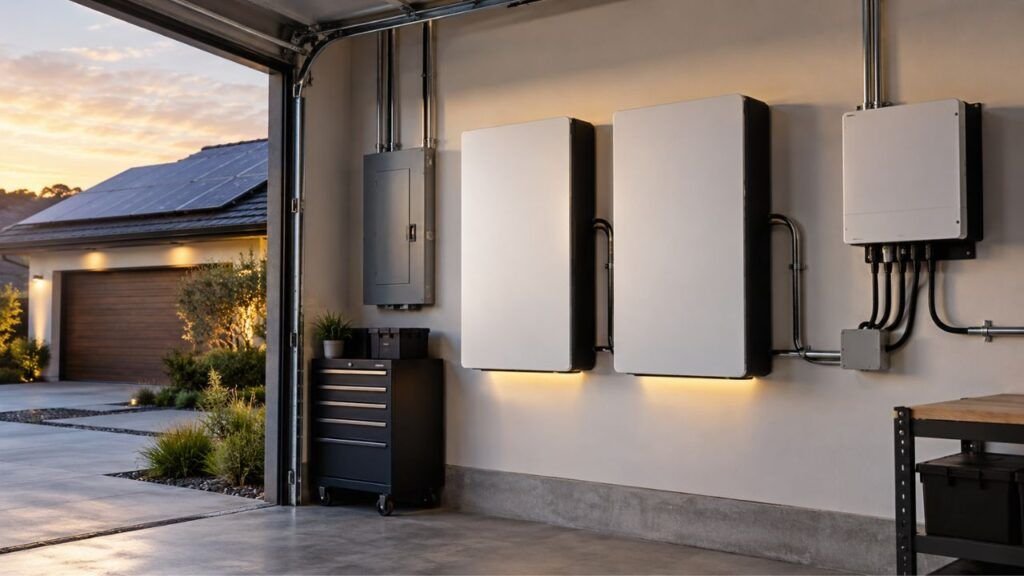
If you are looking for the best portable solar generators for home backup, choosing the right battery capacity and power output matters. A reliable solar generator can keep your refrigerator, lights, Wi-Fi, and other essentials running when the power goes out.
The Jackery HomePower 3000 offers balanced home backup, while the BLUETTI Solar Generator Elite 400 provides extra capacity for longer outages. The EF ECOFLOW DELTA Pro 3 Solar Generator handles heavier appliances, the Jackery HomePower 3600 Plus offers expandable storage, and the Anker SOLIX F3800 Plus supports demanding 240V equipment.
After comparing the top portable solar generators for home backup, we’ve selected 12 options. This guide covers their performance, battery capacity, solar charging, and features to help you choose confidently.
We’re reader-supported. When you buy through links on our site, we may earn an affiliate commission. As an Amazon Associate, we earn from qualifying purchases at no extra cost to you.
Best Portable Solar Generators for Home Backup: Our Top Picks
- Best Overall: Jackery HomePower 3000
- Best for Longer Outages: BLUETTI Solar Generator Elite 400
- Best for Heavy-Duty Backup: EF ECOFLOW DELTA Pro 3 Solar Generator
- Best Expandable Option: Jackery HomePower 3600 Plus
- Best for Extended Home Backup: EF ECOFLOW DELTA Pro Ultra
- Best for 240V Appliances: Anker SOLIX F3800 Plus Portable Power Station
- Best Compact 2kWh Option: Jackery Explorer 2000 v2
- Best for Quiet Operation: EF ECOFLOW DELTA 3 Ultra
- Best for Winter Outages: GROWATT HELIOS 3600 Portable Power Station
- Best High-Output Option: Jackery Solar Generator 5000 Plus
- Best Portable 3kWh Option: BLUETTI Solar Generator Elite 300
- Best Value 3.8kWh Option: AFERIY Solar Generator
1. Best Overall: Jackery HomePower 3000

Key Details:
- Battery Capacity: 3,072Wh LiFePO4 battery rated for 4,000 charging cycles.
- Power Output: 3,600W continuous AC output with 7,200W surge power.
- Solar Panels: Includes two 200W SolarSaga panels for solar charging.
- Charging Speed: Fully recharges in 2.2 hours via AC or 1.7 hours with hybrid charging.
- UPS Backup: Automatic switching within 20ms, with AC, USB-C, USB-A, DC, and TT-30 outlets.
If you’re looking for a reliable portable solar generator for home backup, the Jackery HomePower 3000 is an excellent all-around option. Its 3,072Wh battery and 3,600W output can run refrigerators, fans, lights, Wi-Fi routers, and other essential household appliances during unexpected power outages.
What we like about the Jackery HomePower 3000 is its balance of power, charging speed, and portability. The 7,200W surge capacity helps start appliances with higher initial power demands. Its compact cell-to-body design also makes storing and moving this home backup generator more convenient.
Another useful feature is its 20ms UPS switching, which helps keep compatible electronics powered during sudden blackouts. You also get two 200W solar panels for recharging when grid power is unavailable. With AC and hybrid charging options, preparing the battery before a storm is relatively straightforward.
However, the included 400W solar setup takes around nine hours to reach 80% under the manufacturer’s stated conditions. You’ll also need to manage electricity consumption during longer outages. Still, its practical capacity, versatile outlets, and fast charging make it a well-rounded choice for everyday home backup.
Pros:
- Powerful 3,600W output supports multiple essential household appliances.
- Compact 3kWh design makes storage and transportation convenient.
- Fast AC and hybrid charging help prepare for unexpected outages.
- Includes two solar panels and multiple charging connections.
Cons:
- Included 400W solar setup requires lengthy recharging.
- High-wattage appliances can drain the battery relatively quickly.
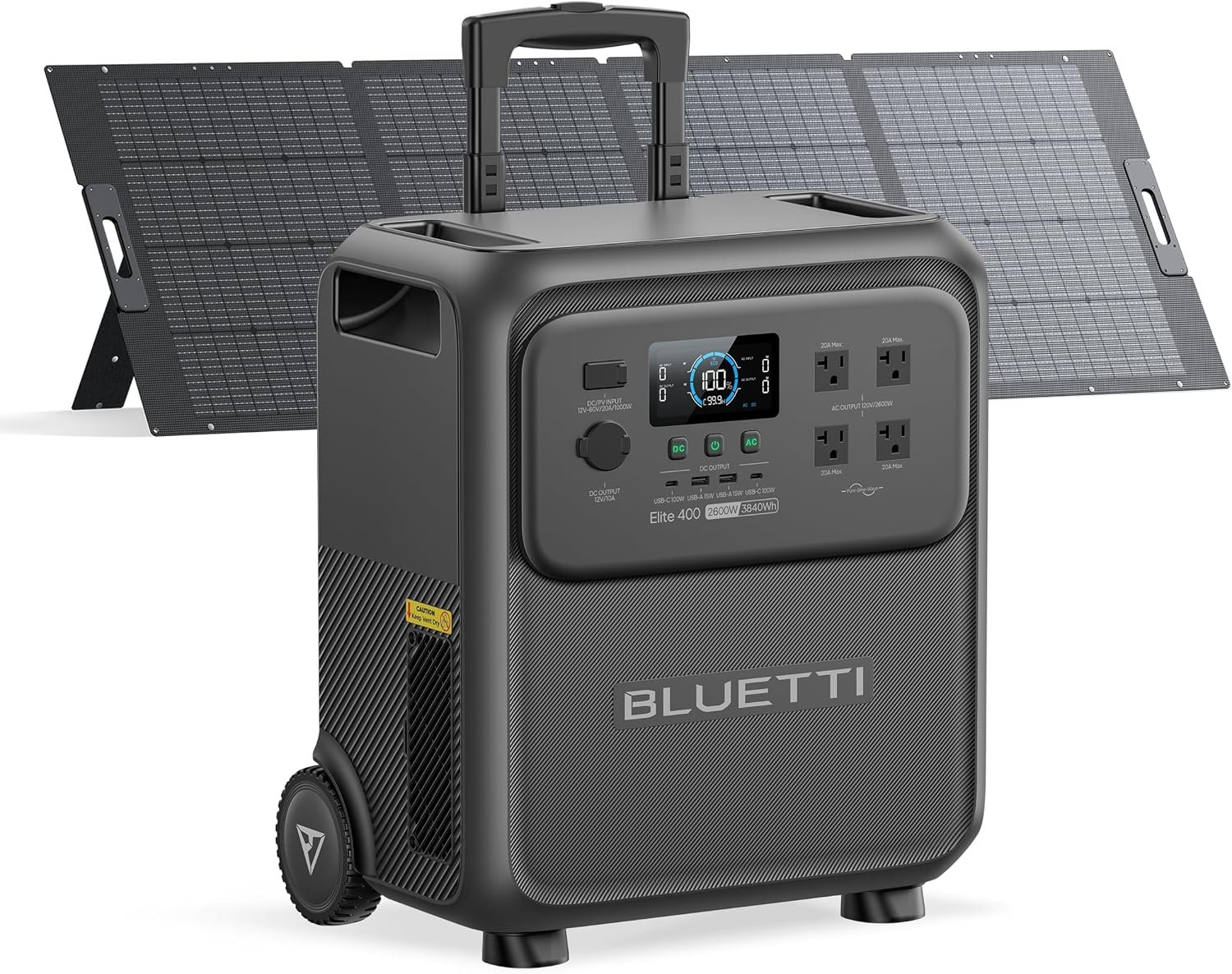
2. Best for Longer Outages: BLUETTI Solar Generator Elite 400
Key Details:
- Battery Capacity: 3,840Wh LiFePO4 battery rated for over 3,000 cycles.
- Power Output: 2,600W continuous AC output with 3,900W Power Lifting mode.
- Solar Panel: Includes one 350W solar panel for off-grid charging.
- Charging Speed: Reaches 80% in approximately 70 minutes under maximum supported charging.
- Backup Features: Nine output ports, rolling trolley, and 15ms UPS switching.
When your home loses power for an extended period, battery capacity becomes especially important. The BLUETTI Elite 400 offers 3,840Wh of stored electricity, making it suitable for refrigerators, fans, lights, routers, and other household essentials that need to stay powered during an outage.
The BLUETTI Elite 400 also features a 2,600W inverter for running multiple appliances within its rated output. We particularly like its rolling trolley system, which makes moving this 86-pound power station around the house easier than carrying it between rooms.
For emergency home backup, the 15ms UPS function is another practical addition. It automatically switches compatible connected equipment to battery power when electricity fails. With nine available ports, you can keep several important devices connected without constantly changing cables or unplugging appliances.
One limitation is solar charging speed. The included 350W panel takes approximately 11 to 22 hours for a full recharge under the stated conditions. However, if your priority is longer runtime for essential household devices, its larger battery offers an advantage over smaller portable solar generators.
Pros:
- Large 3,840Wh battery supports longer household backup needs.
- Rolling trolley makes moving the power station more convenient.
- Fast UPS switching helps maintain compatible essential electronics.
- Nine output ports accommodate several household devices.
Cons:
- The 86-pound weight makes lifting and carrying difficult.
- Included solar panel takes considerable time to recharge the battery.
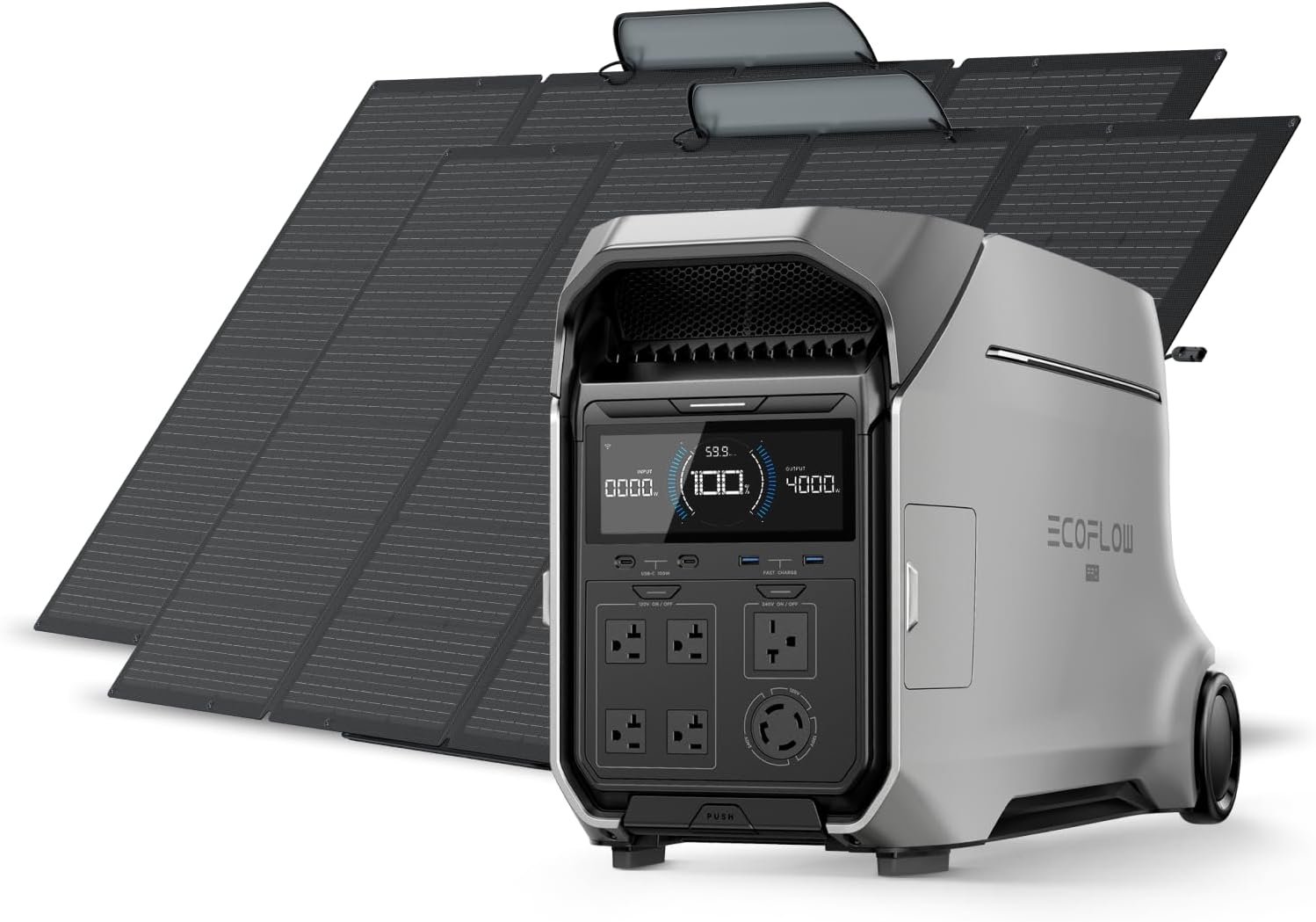
3. Best for Heavy-Duty Backup: EF ECOFLOW DELTA Pro 3 Solar Generator
Key Details:
- Battery Capacity: 4,096Wh LiFePO4 battery, expandable up to 48kWh in supported configurations.
- Power Output: 4,000W continuous AC output with X-Boost support for certain higher-rated loads.
- Voltage Support: Native 120V/240V output for compatible household appliances.
- Solar Panels: Includes two 400W solar panels for renewable charging.
- UPS Backup: 10ms transfer capability with operating noise as low as 30dB under specified conditions.
If your household needs more power than a basic backup battery can provide, the EF ECOFLOW DELTA Pro 3 is worth considering. Its 4,096Wh capacity and 4,000W output can support refrigerators, water pumps, microwaves, and other demanding appliances during power outages.
What makes the EF ECOFLOW DELTA Pro 3 particularly useful is its 120V/240V compatibility. You can connect a wider range of household equipment without relying on a separate unit for 240V output. Its expandable battery system also gives you flexibility when preparing for longer blackouts.
We also like the included 800W solar panel setup and flexible charging options. Whether you recharge through solar panels, a wall outlet, or another compatible source, this generator offers several ways to replenish its battery. The 10ms backup switching also helps maintain power to compatible electronics.
At approximately 115 pounds, portability is its biggest compromise. It’s more convenient to move occasionally than carry frequently. However, if you need strong AC output, expandable storage, and support for larger home appliances, this portable solar generator offers substantial emergency backup capability.
Pros:
- Strong 4,000W output supports demanding household appliances.
- Native 120V/240V compatibility provides greater backup flexibility.
- Expandable battery capacity accommodates longer power outages.
- Includes 800W of solar panels and multiple charging methods.
Cons:
- Heavy construction makes frequent transportation less convenient.
- High-power appliances can exhaust the base battery quickly.
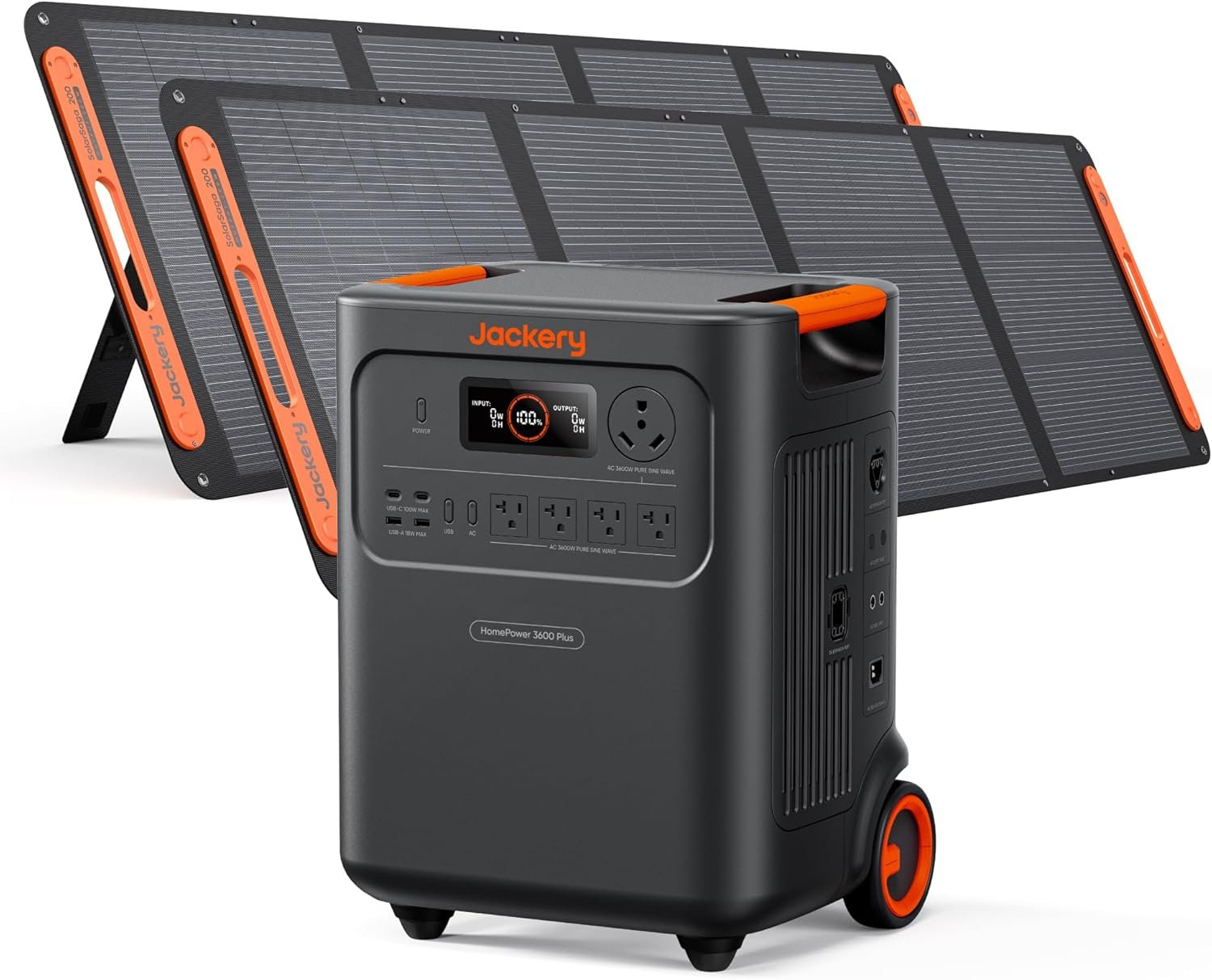
4. Best Expandable Option: Jackery HomePower 3600 Plus
Key Details:
- Battery Capacity: 3,584Wh, expandable up to approximately 21kWh per unit.
- Power Output: 3,600W continuous AC output, increasing to 7,200W with supported parallel operation.
- Solar Panels: Includes two 200W solar panels for off-grid charging.
- Battery Lifespan: Rated for 6,000 cycles with high-temperature-resistant battery technology.
- Charging and Portability: Full AC recharge in approximately 2.5 hours, with wheels and a telescopic handle.
If you want a portable solar generator that can handle growing home backup needs, the Jackery HomePower 3600 Plus offers excellent flexibility. Its 3,584Wh battery and 3,600W output provide useful emergency power for refrigerators, lighting, fans, and other essential household appliances.
The biggest advantage of the Jackery HomePower 3600 Plus is its expandable storage. You can increase capacity to approximately 21kWh per unit, while supported multiple-unit configurations provide additional power. This makes it particularly appealing when planning for extended outages or larger household loads.
Another feature we appreciate is its luggage-style design. The integrated wheels and telescopic handle make moving the generator between rooms more convenient. AC charging takes approximately 2.5 hours, while compatible hybrid charging offers another way to prepare your battery before severe weather.
For home electrical integration, compatible manual transfer equipment can power selected circuits when properly installed. However, 240V operation requires a supported parallel setup, and the included 400W solar panels charge more slowly than higher-capacity arrays. Overall, its expandability makes it a practical long-term backup solution.
Pros:
- Expandable storage accommodates increasing household power needs.
- Supports higher output and 240V operation with compatible parallel equipment.
- Wheeled design makes relocation and storage more convenient.
- Long-cycle battery and fast AC charging suit home backup preparation.
Cons:
- Expanded output and 240V support require additional equipment.
- Included 400W solar panels limit charging speed during outages.
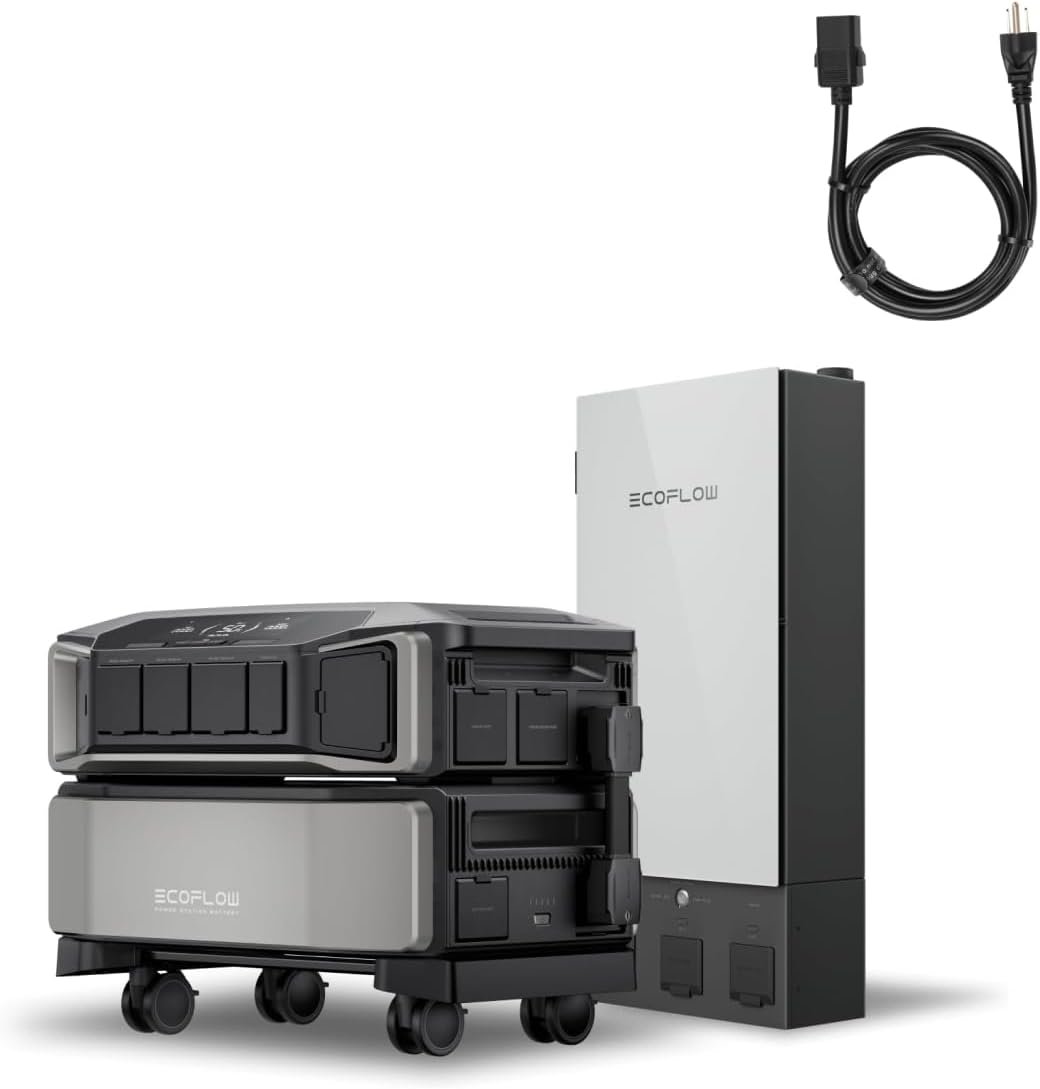
5. Best for Extended Home Backup: EF ECOFLOW DELTA Pro Ultra
Key Details:
- Battery Capacity: 12,288Wh with two 6,144Wh batteries, expandable up to 90kWh.
- Power Output: 7,200W continuous AC output, expandable to 21,600W with three inverters.
- Voltage Support: Native 120V/240V output for major household appliances.
- Charging Speed: One 6,144Wh battery can recharge in approximately 2 hours using supported charging.
- Backup Features: Online UPS with 0ms transfer time and app-based energy management.
For homeowners who experience prolonged power outages, the EF ECOFLOW DELTA Pro Ultra offers substantial backup capacity. This configuration combines 12,288Wh of battery storage with 7,200W output, allowing you to operate refrigerators, pumps, kitchen appliances, and other essential household equipment during extended blackouts.
What we particularly like about the EF ECOFLOW DELTA Pro Ultra is its expandable design. You can increase storage up to 90kWh in supported configurations, making it suitable for multi-day home backup. Its 120V/240V output also supports demanding appliances that smaller portable solar generators cannot handle.
Another advantage is its intelligent energy management. With compatible home integration equipment, you can prioritize essential circuits and monitor electricity consumption through the EcoFlow app. Its online UPS functionality also provides continuous power delivery for supported electronics when utility electricity becomes unavailable.
However, this isn’t a lightweight portable power station. The listed configuration weighs approximately 294 pounds, making it more suitable for a designated backup location. Solar panels also need to be purchased separately. Still, its modular construction and enormous expansion potential make it attractive for serious home backup planning.
Pros:
- Massive 12,288Wh battery capacity supports extended household backup.
- Expandable storage accommodates demanding power requirements.
- Powerful 7,200W inverter supports 120V and 240V appliances.
- Smart energy management helps prioritize essential household circuits.
Cons:
- Heavy modular construction limits convenient transportation.
- Solar panels and certain home integration accessories are sold separately.
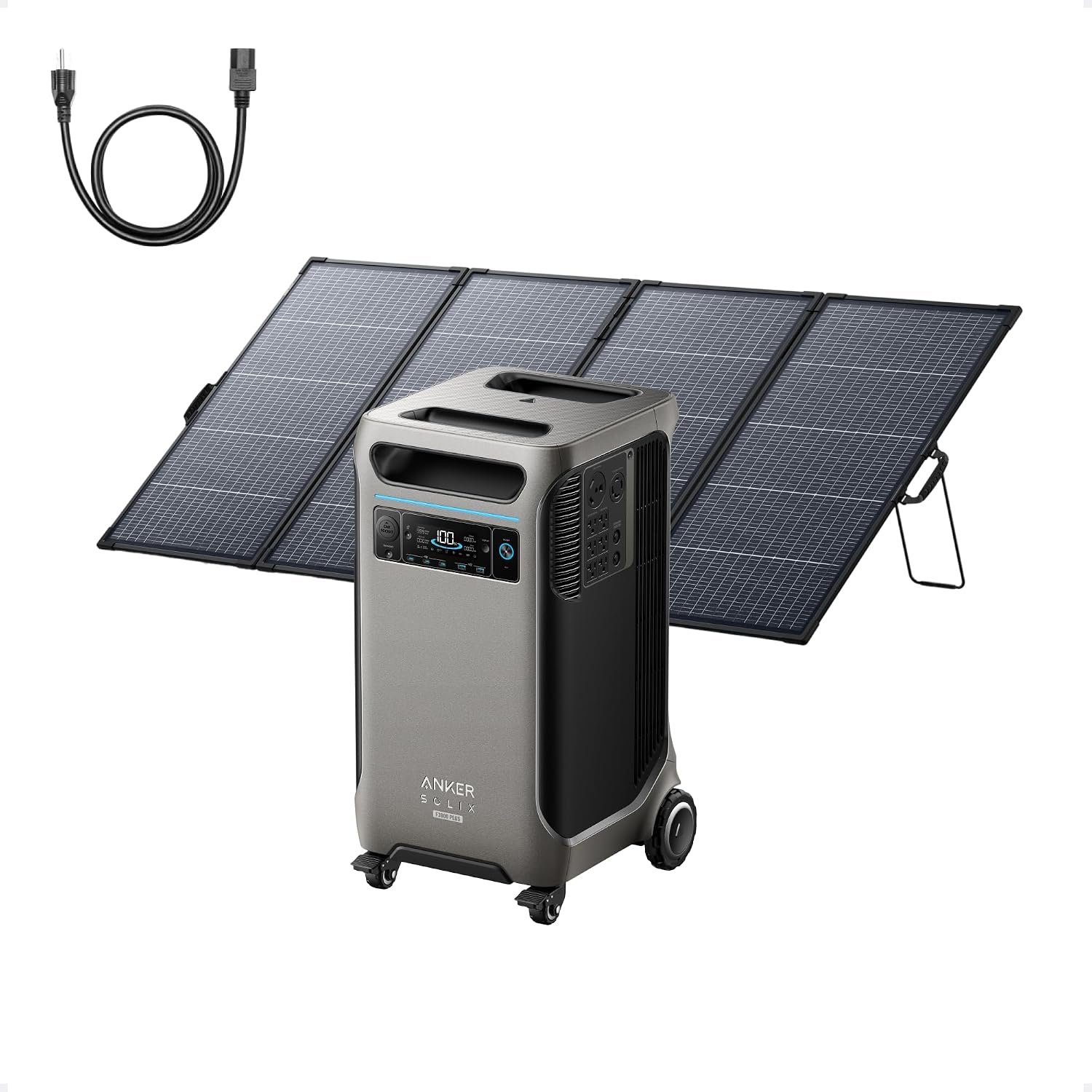
6. Best for 240V Appliances: Anker SOLIX F3800 Plus Portable Power Station
Key Details:
- Battery Capacity: 3,840Wh LiFePO4 battery, expandable up to 26.9kWh per unit.
- Power Output: 6,000W continuous AC output, with up to 12,000W using two units.
- Voltage Support: Native 120V/240V output for compatible household equipment.
- Solar Charging: Includes a 400W bifacial panel and supports up to 3,200W solar input.
- Portability: Approximately 146.4 pounds with a wheeled design.
If your home relies on larger appliances during outages, the Anker SOLIX F3800 Plus is a capable portable solar generator to consider. Its 6,000W inverter supports both 120V and 240V equipment, including compatible refrigerators, well pumps, and other demanding household appliances.
What stands out about the Anker SOLIX F3800 Plus is its combination of high output and expandable storage. The 3,840Wh base battery provides backup for essential loads, while additional batteries can extend runtime. Connecting two supported units also increases available power for larger household requirements.
We also appreciate its flexible solar charging capability. The included 400W bifacial panel provides renewable energy, while the system supports up to 3,200W of solar input with compatible panels. Gas generator charging is another useful option when cloudy weather makes solar recharging difficult.
One thing to consider is the difference between inverter output and battery capacity. Although it can deliver 6,000W, sustained heavy loads will quickly drain the base battery. If you need to operate several major appliances for extended periods, extra batteries may be necessary.
Pros:
- Powerful 6,000W output supports demanding household equipment.
- Native 120V/240V output increases appliance compatibility.
- Expandable battery storage supports longer backup requirements.
- Supports high solar input and multiple charging methods.
Cons:
- Base battery capacity is limited relative to its high inverter output.
- Heavy construction makes moving between locations less convenient.
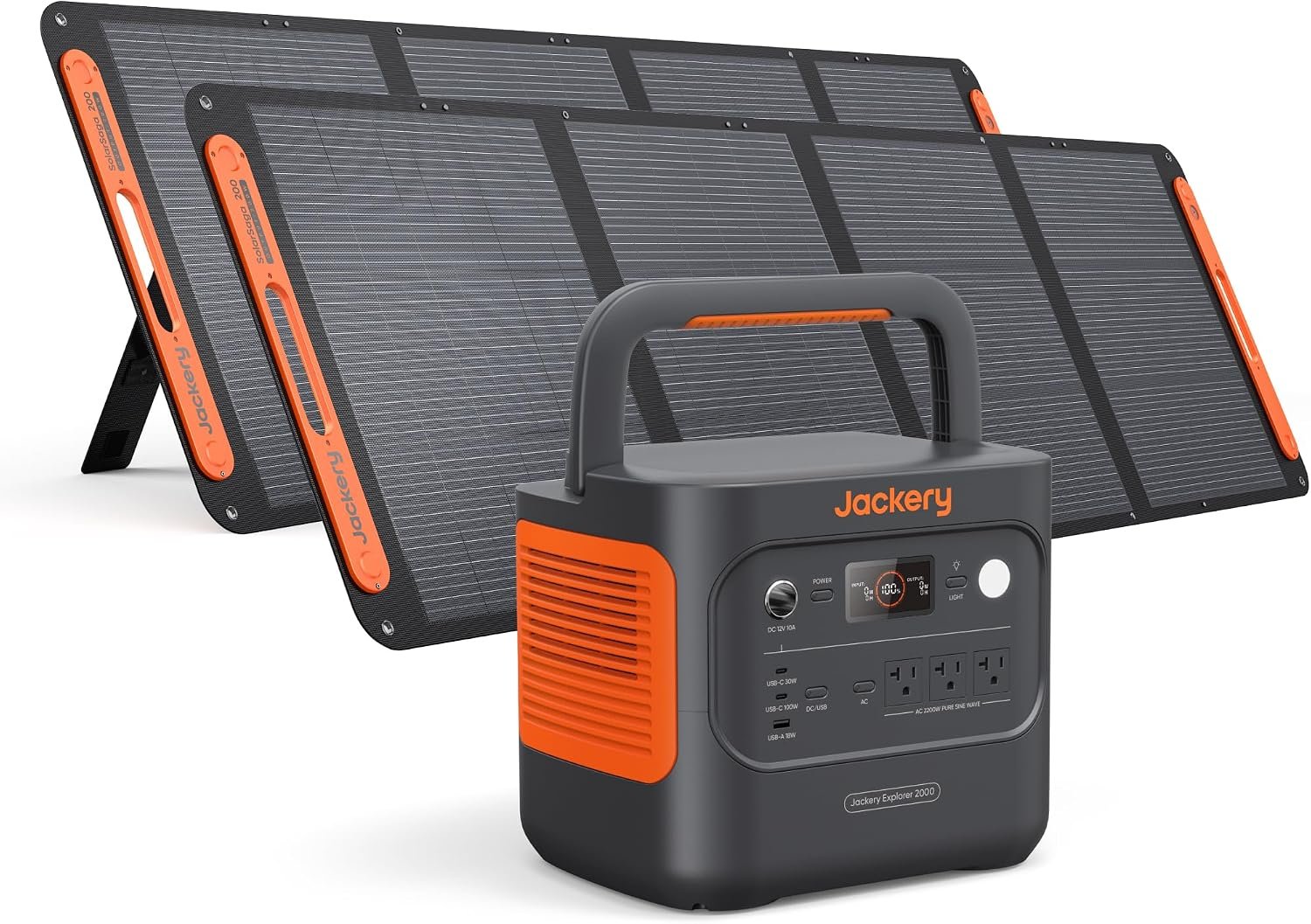
7. Best Compact 2kWh Option: Jackery Explorer 2000 v2
Key Details:
- Battery Capacity: 2,042Wh LiFePO4 battery for household backup.
- Power Output: 2,200W continuous AC output with three AC outlets.
- Solar Panels: Includes two 200W solar panels for renewable charging.
- Charging Speed: Reaches 80% in approximately 66 minutes using AC charging.
- Portability and UPS: Power station weighs 39.5 pounds, with 20ms UPS switching.
Not every household needs a large backup power station. If you mainly want to keep essential appliances operating during shorter outages, the Jackery Explorer 2000 v2 offers a convenient solution. Its 2,042Wh battery and 2,200W output can power refrigerators, televisions, fans, routers, and smaller household electronics.
What we like about the Jackery Explorer 2000 v2 is its compact construction. The power station weighs approximately 39.5 pounds, making it easier to carry and store than many higher-capacity models. Its cell-to-body design also helps maximize battery storage without requiring a bulky enclosure.
Charging performance is another advantage. You can reach 80% capacity in approximately 66 minutes using AC charging, while the included 400W solar panels allow recharging during daylight hours. Its 20ms UPS switching also helps keep compatible connected electronics running when electricity unexpectedly fails.
However, the smaller battery means you’ll need to manage appliance usage carefully. Running heaters, microwaves, or other high-wattage equipment can quickly reduce available runtime. Still, for basic home backup and households with limited storage space, this portable solar generator offers a practical balance.
Pros:
- Lightweight 39.5-pound power station is relatively easy to transport.
- 2,200W output supports common essential household appliances.
- Fast AC charging helps restore battery capacity quickly.
- Includes 400W solar panels and 20ms UPS functionality.
Cons:
- Smaller battery limits backup runtime during extended outages.
- Does not directly support 240V household appliances.
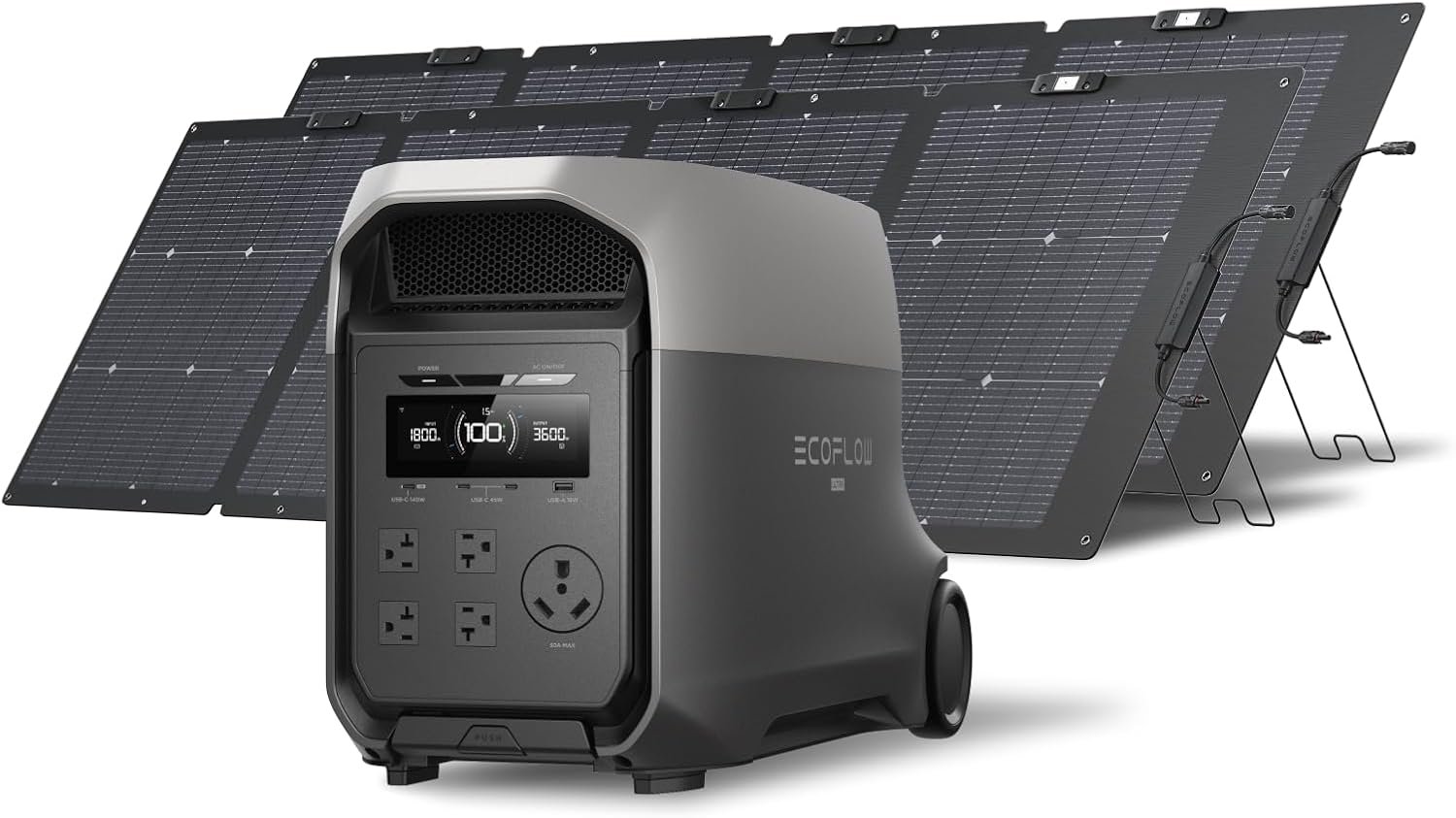
8. Best for Quiet Operation: EF ECOFLOW DELTA 3 Ultra
Key Details:
- Battery Capacity: 3,072Wh LiFePO4 battery for residential backup.
- Power Output: 3,600W continuous AC output with 7,200W surge power.
- Solar Panels: Includes two 220W solar panels for renewable charging.
- UPS Backup: Automatic switching to battery power in under 10ms.
- Noise and Weight: Noise as low as 25dB under specified conditions, weighing 72.1 pounds.
When electricity goes out overnight, a quiet backup system can make your home more comfortable. The EF ECOFLOW DELTA 3 Ultra provides 3,072Wh of battery capacity and 3,600W output, making it suitable for refrigerators, fans, lights, Wi-Fi routers, and other essential household appliances.
One thing we particularly like about the EF ECOFLOW DELTA 3 Ultra is its quiet operating design. With manufacturer-reported noise levels as low as 25dB under specific conditions, it suits indoor environments where excessive fan noise can become distracting.
Its under-10ms UPS switching is another useful feature for home emergencies. Compatible devices can transition to battery power automatically when grid electricity fails. You also get multiple recharging methods, including wall outlets, solar panels, car charging, and supported EcoFlow generator equipment.
The included two 220W solar panels provide a convenient way to replenish the battery during daylight hours. However, charging a 3kWh system with 440W of solar capacity requires favorable sunlight and adequate time. For homeowners prioritizing quiet operation and substantial AC output, this is a well-balanced backup option.
Pros:
- Quiet operating design suits bedrooms and residential spaces.
- Strong 3,600W output supports multiple essential appliances.
- Fast UPS switching helps maintain compatible electronics.
- Includes two 220W solar panels and flexible charging options.
Cons:
- Included solar panels provide relatively modest charging power.
- Continuous high-wattage loads can significantly reduce runtime.
9. Best for Winter Outages: GROWATT HELIOS 3600 Portable Power Station
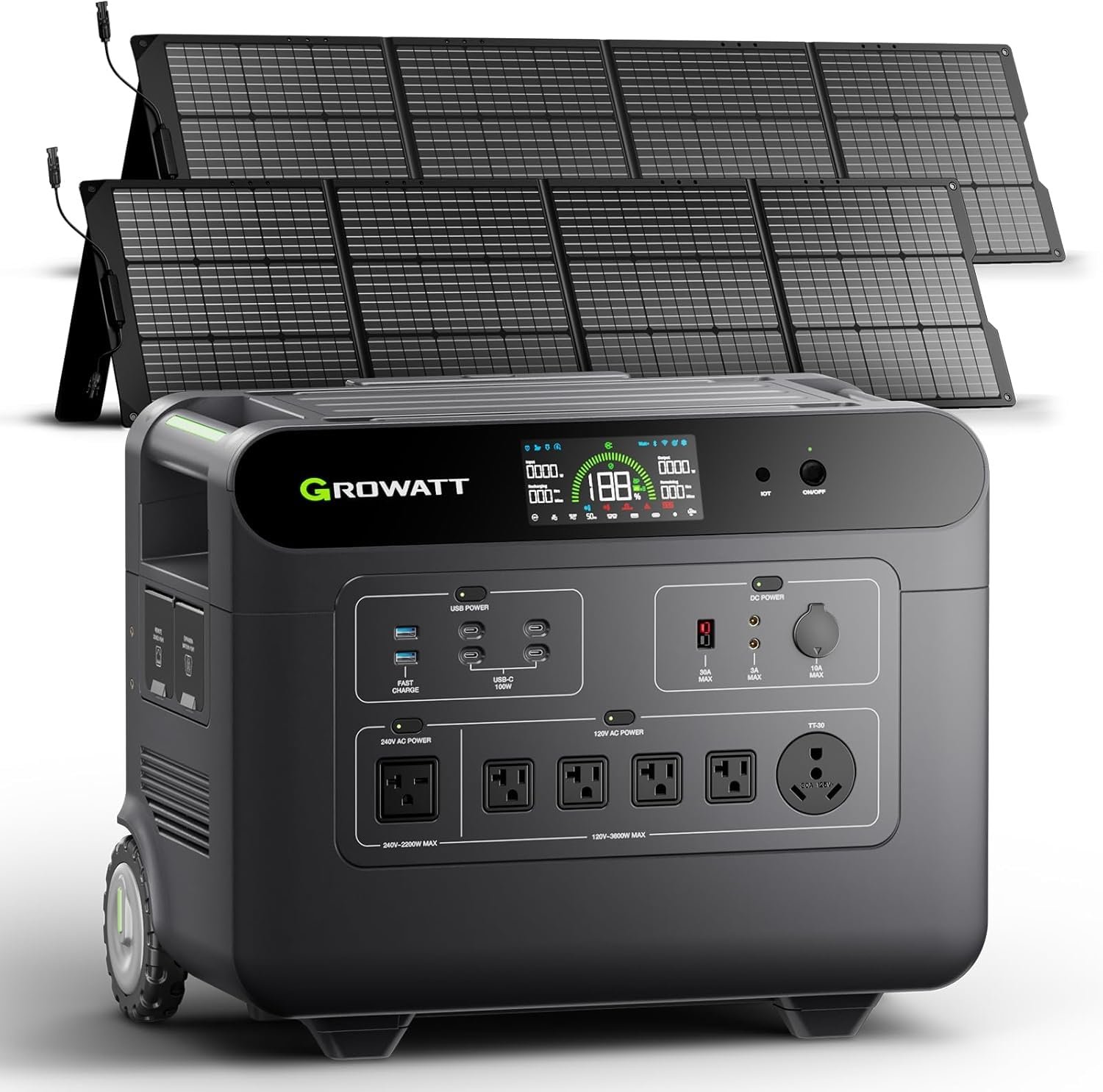
Key Details:
- Battery Capacity: 3,600Wh LiFePO4 battery, expandable up to 36kWh.
- Power Output: 3,600W continuous AC output, expandable to 7,200W with two units.
- Solar Charging: Includes two 200W panels and supports up to 2,000W solar input.
- Battery Lifespan: Rated for 4,000 cycles while retaining 80% capacity.
- Backup Features: 15ms EPS switching, cold-start capability, and app-based controls.
If winter storms frequently interrupt your electricity, the GROWATT HELIOS 3600 offers several useful home backup features. Its 3,600Wh battery and 3,600W inverter can support refrigerators, lighting, communication devices, and other important household appliances when the grid goes down.
What makes the GROWATT HELIOS 3600 interesting is its cold-start capability. The manufacturer specifies support for temperatures as low as -22°F under certain conditions. This can be useful during winter emergencies, although battery charging and operating temperature limits still need to be followed.
We also like its expandable design and solar charging capability. Two compatible units can provide 7,200W output with 240V support, while additional batteries can increase total storage. Its maximum 2,000W solar input also provides faster charging potential when paired with a suitable solar array.
The 15ms EPS switching and smart app controls add convenience when managing household backup power. However, its approximately 149-pound weight makes frequent transportation challenging. If you need a portable solar generator for winter preparedness with room for future expansion, this model is worth considering.
Pros:
- Cold-start capability supports emergency preparedness in winter.
- Expandable battery storage accommodates longer outages.
- Supports up to 2,000W solar input with compatible panels.
- App-based management helps monitor household electricity consumption.
Cons:
- Heavy 149-pound construction limits convenient transportation.
- 240V operation requires a supported two-unit configuration.
10. Best High-Output Option: Jackery Solar Generator 5000 Plus
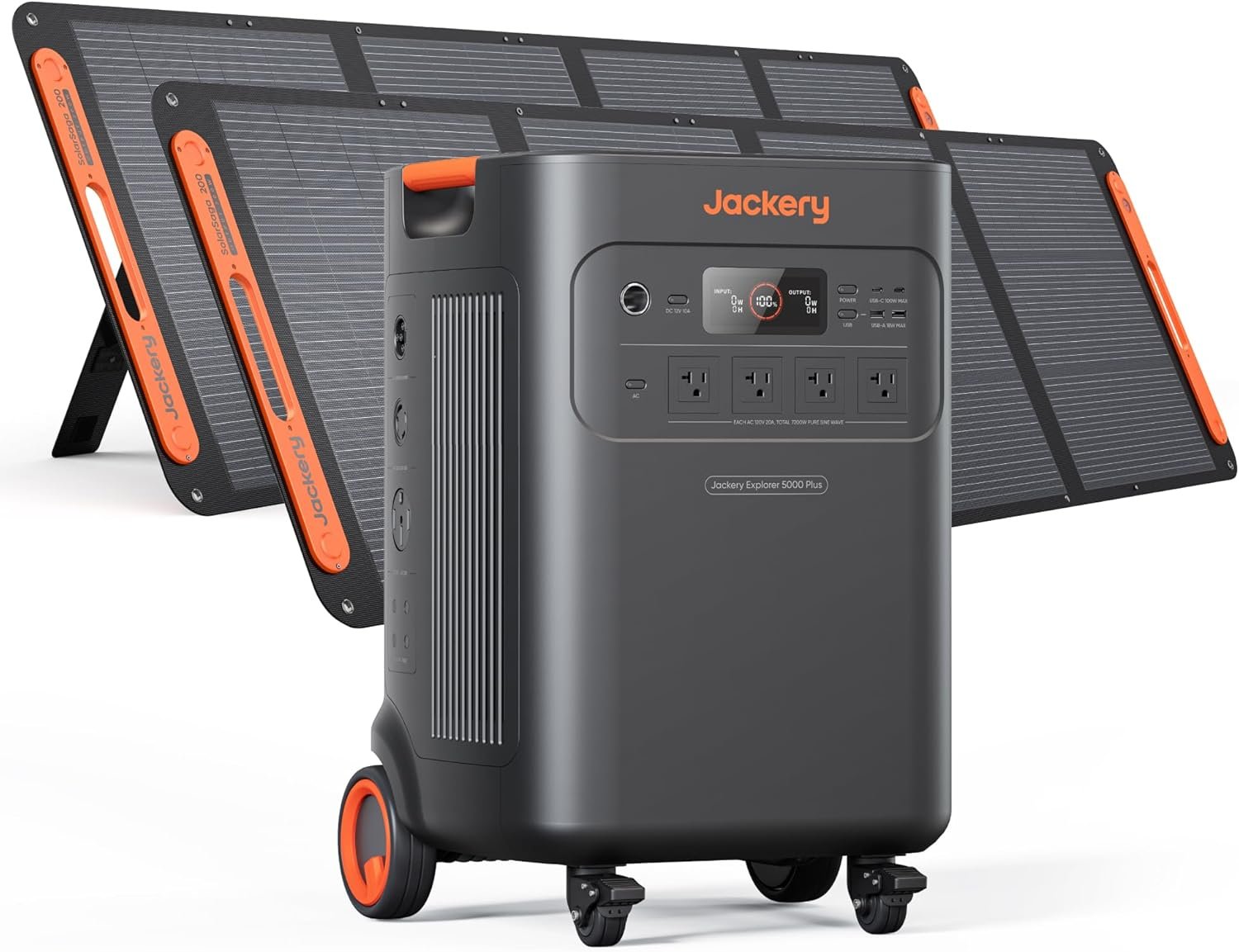
Key Details:
- Battery Capacity: 5,040Wh LiFePO4 battery, expandable up to 60kWh.
- Power Output: 7,200W continuous AC output with 14,400W surge power.
- Voltage Support: Native 120V/240V output for compatible household appliances.
- Solar Charging: Includes two 200W panels and supports up to 4,000W solar input.
- Home Integration: Compatible with Jackery’s 60A Smart Transfer Switch.
For homeowners with demanding backup requirements, the Jackery Solar Generator 5000 Plus delivers substantial power in a movable battery system. Its 5,040Wh capacity and 7,200W inverter can operate refrigerators, water pumps, kitchen appliances, and other household equipment within the generator’s electrical limits.
The Jackery Solar Generator 5000 Plus stands out for its high AC output and 120V/240V compatibility. The 14,400W surge rating also helps accommodate compatible appliances with demanding startup requirements. This makes it useful when a smaller portable solar generator cannot support the equipment your home needs.
Another advantage is its expandable battery system. Storage can increase up to 60kWh in supported configurations, giving homeowners flexibility for longer outages. With the compatible 60A Smart Transfer Switch, it can also supply selected household circuits through a properly installed electrical connection.
We also appreciate its maximum 4,000W solar input, which supports faster charging with a suitable panel array. However, the included 400W panels are relatively small for a 5,040Wh battery. If you need high-output home backup, additional solar capacity may be worth considering.
Pros:
- Powerful 7,200W inverter supports demanding household appliances.
- Native 120V/240V output provides broad appliance compatibility.
- Expandable battery storage supports extended backup requirements.
- Supports smart transfer equipment and up to 4,000W solar input.
Cons:
- Included 400W solar panels are limited for its large battery.
- Heavy 134.5-pound construction reduces everyday portability.
11. Best Portable 3kWh Option: BLUETTI Solar Generator Elite 300
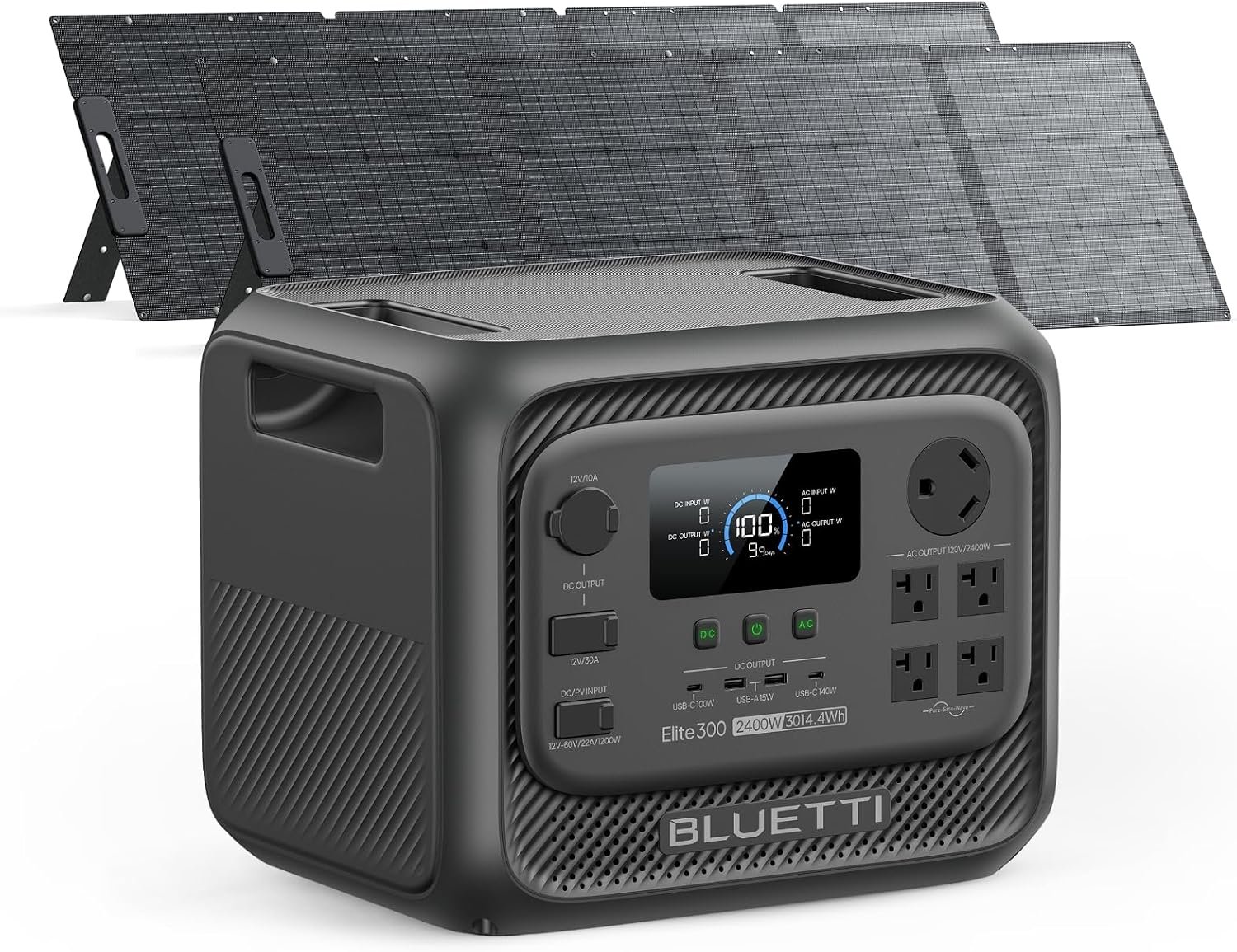
Key Details:
- Battery Capacity: 3,014.4Wh LiFePO4 battery rated for over 6,000 cycles.
- Power Output: 2,400W continuous AC output with 4,800W surge power.
- Solar Panels: Includes two 200W solar panels for renewable charging.
- Charging Speed: Reaches 80% in approximately 78 minutes using maximum supported charging.
- Portability: Weighs 58 pounds, with TT-30 and 12V/30A DC outlets.
If you want substantial battery storage without a massive power station, the BLUETTI Elite 300 offers a practical middle ground. Its 3,014.4Wh capacity and 2,400W output can keep refrigerators, fans, lights, routers, televisions, and other essential appliances operating during household power outages.
What we like about the BLUETTI Elite 300 is its relatively compact design. Weighing approximately 58 pounds, it’s easier to relocate than many larger 3kWh and 4kWh models. Its 4,800W surge rating also provides additional starting power for compatible appliances.
Another advantage is its long-cycle LiFePO4 battery, rated for more than 6,000 charging cycles. You also get two 200W solar panels, allowing renewable charging when grid power is unavailable. Additional TT-30 and DC outlets offer more flexibility for different backup applications.
However, the 2,400W inverter may not support several high-power appliances simultaneously. The included solar panels also take approximately seven to fifteen hours for a full recharge under the stated conditions. Still, its battery capacity, manageable design, and versatile outlets make it a useful home backup generator.
Pros:
- Compact 3kWh design balances capacity and portability.
- Long-life LiFePO4 battery is rated for over 6,000 cycles.
- 2,400W output supports common household essentials.
- Includes two solar panels and versatile power connections.
Cons:
- Continuous output limits simultaneous high-wattage appliance use.
- Included solar setup requires extended recharging time.
12. Best Value 3.8kWh Option: AFERIY Solar Generator
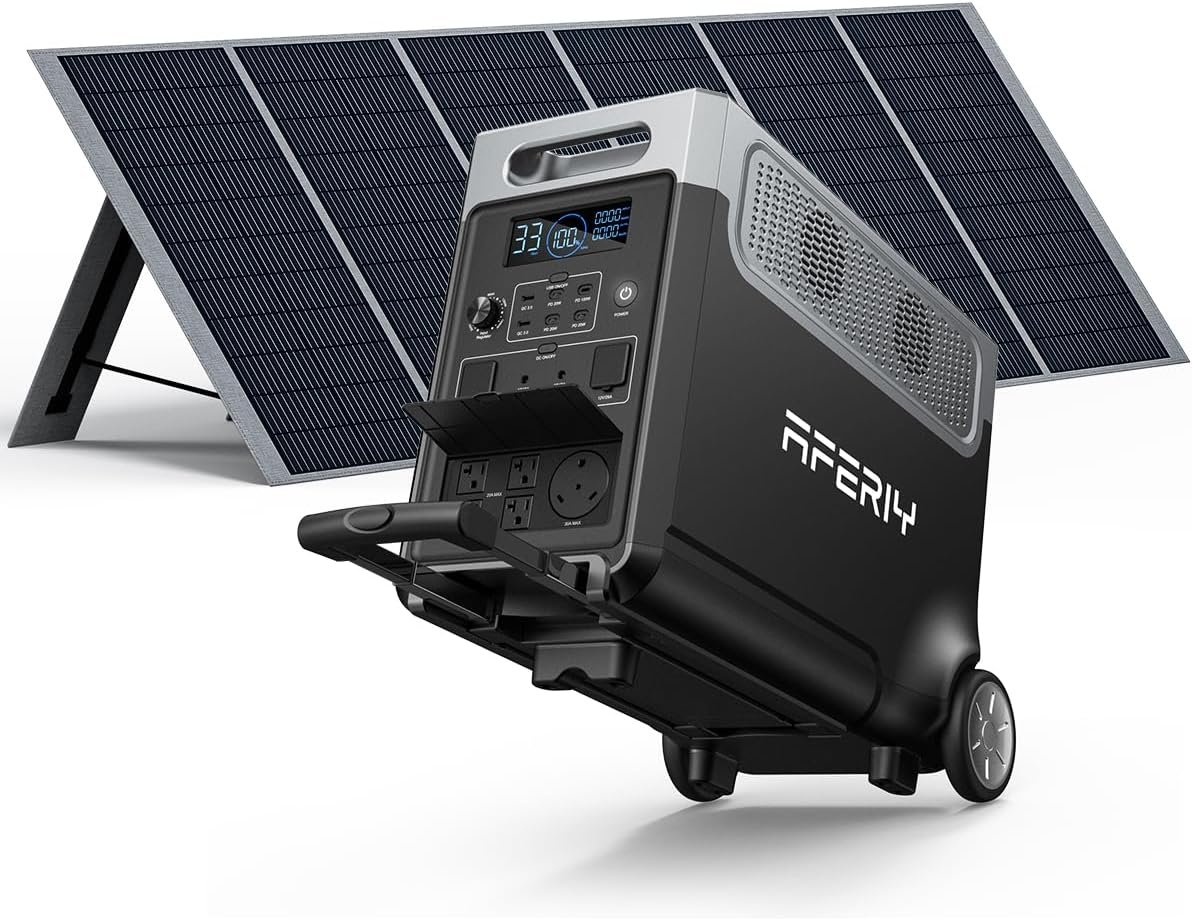
Key Details:
- Battery Capacity: 3,840Wh LiFePO4 battery for household backup.
- Power Output: 3,600W continuous pure sine wave AC output.
- Solar Panel: Includes a 400W monocrystalline panel with IP67-rated protection.
- Charging Speed: Full recharge in as little as 1.5 hours under supported charging conditions.
- UPS Backup: Automatic switching in under 10ms, with AC, solar, car, and hybrid charging options.
If you’re looking for a high-capacity portable solar generator for home backup, the AFERIY Solar Generator 3840Wh provides a practical combination of battery storage and AC power. Its 3,840Wh battery and 3,600W inverter can support refrigerators, lighting, fans, routers, and other household appliances during outages.
What we like about the AFERIY Solar Generator 3840Wh is its substantial storage capacity paired with a pure sine wave inverter. The system provides suitable AC power for compatible household electronics, while the under-10ms UPS switching helps maintain electricity to supported devices when grid power fails.
Its included 400W monocrystalline solar panel is another useful addition. The panel features IP67 protection and ETFE construction for outdoor durability. You can also recharge the power station through AC, solar, car input, or combined charging methods, providing flexibility during different emergency situations.
One consideration is solar recharge time. The included 400W panel won’t replenish the battery nearly as quickly as the fastest supported charging mode. Its approximately 131.6-pound listed weight also makes transportation less convenient. However, its large battery and strong inverter make it a worthwhile option for household backup needs.
Pros:
- Large 3,840Wh battery supports extended essential appliance operation.
- Powerful 3,600W pure sine wave inverter handles multiple household devices.
- Fast UPS switching helps maintain compatible essential electronics.
- Includes a weather-resistant solar panel and flexible charging methods.
Cons:
- Included 400W solar panel requires significant recharging time.
- Heavy construction makes frequent relocation challenging.
What Is a Portable Solar Generator for Home Backup?
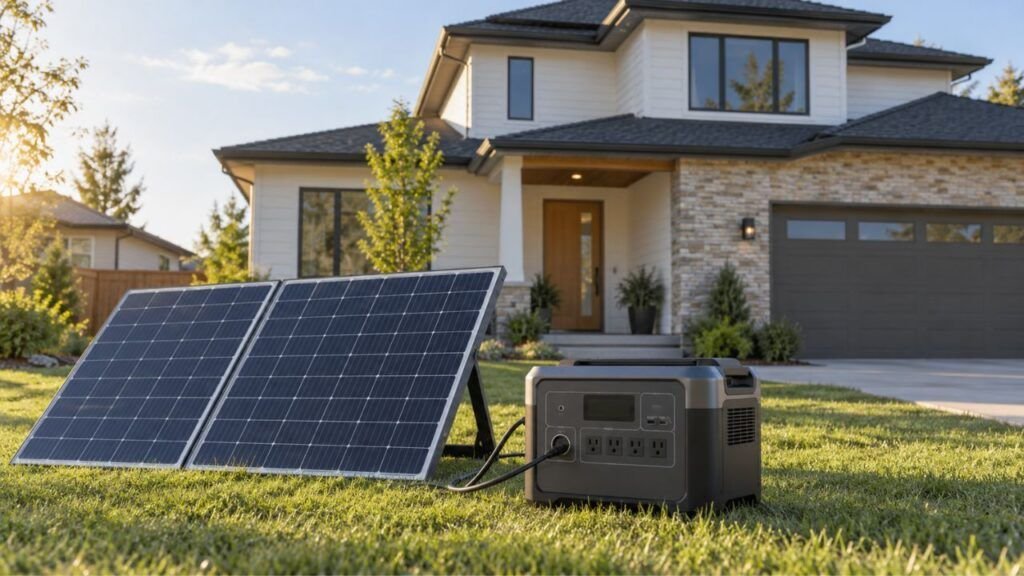
A portable solar generator for home backup is a rechargeable battery-powered system that supplies electricity during power outages. It combines a battery, inverter, and charging controller to power essential household appliances without burning gasoline or producing exhaust fumes.
Unlike traditional fuel-powered generators, portable solar generators store electricity and convert it into usable AC power. You can recharge them using solar panels, wall outlets, or other supported charging sources. Most modern models use LiFePO4 batteries for long cycle life and improved thermal stability.
These backup systems are useful for running refrigerators, lights, Wi-Fi routers, fans, and small appliances during blackouts. However, their runtime depends on battery capacity and electricity consumption. Larger models can also support selected home circuits through compatible transfer equipment.
What Can a Portable Solar Generator Power During an Outage?
A portable solar generator can run many essential household appliances, provided its AC output supports their combined wattage. The table below shows typical running power requirements to help you plan your emergency backup setup.
| Household Appliance | Typical Running Power | Backup Consideration |
| LED Lights | 8-15W each | Very low power consumption |
| Wi-Fi Router | 10-25W | Suitable for continuous backup |
| Laptop | 40-100W | Easy to support with most models |
| Television | 60-150W | Suitable for everyday backup |
| Electric Fan | 30-100W | Useful during summer outages |
| Refrigerator | 100-250W | Requires additional startup power |
| CPAP Machine | 30-100W | Depends on settings and humidifier |
| Microwave | 1,000-1,800W | High power consumption during use |
| Window Air Conditioner | 500-1,500W | Requires sufficient output and surge capacity |
| Sump Pump | 500-1,500W | Starting surge can be considerably higher |
These are approximate figures. Actual wattage varies by appliance, and refrigerators cycle on and off. Always check your equipment’s power rating before connecting multiple devices.
How to Choose the Best Portable Solar Generator for Home Backup
Choosing the right portable solar generator depends on your household’s electricity needs, expected outage duration, and available charging options. Here are the important factors to consider before buying.
Battery Capacity and Backup Runtime
Battery capacity determines how long your solar generator can power connected appliances. It’s measured in watt-hours (Wh) or kilowatt-hours (kWh). A 1,000Wh battery stores one kilowatt-hour of electricity.
For basic backup, a 1,000-2,000Wh system can support lights, routers, and smaller devices. If you need refrigerator backup and multiple appliances, consider 3,000-5,000Wh or more. Expandable batteries are useful for longer outages.
Remember that actual runtime depends on your average load and inverter losses. A 3,000Wh battery supplying a continuous 200W load could last approximately 12-13 hours, assuming 85% usable energy.
Continuous Power Output and Surge Capacity
AC output determines which appliances your portable battery generator can operate. For example, a 3,600W inverter can supply up to 3,600W of continuous power across its supported outputs.
However, appliances with motors, such as refrigerators, pumps, and air conditioners, may require additional power when starting. That’s where surge capacity matters.
If you plan to operate multiple household appliances, add their running wattages and check their startup requirements. Choose a generator with enough output for both.
Solar Charging Capacity and Efficiency
Solar charging becomes especially important during extended outages when grid electricity isn’t available. Look at the generator’s maximum solar input, compatible panel specifications, and charging efficiency.
For example, a power station supporting 2,000W solar input can potentially recharge faster than one limited to 400W, provided you connect enough compatible panels and have sufficient sunlight.
Remember that actual solar production depends on weather, sunlight hours, panel positioning, and charging losses. Also, check whether solar panels are included or sold separately.
Battery Type and Lifespan
Most modern portable solar generators use lithium iron phosphate (LiFePO4 or LFP) batteries. These batteries offer long cycle life, good thermal stability, and suitability for repeated charging.
When comparing models, check the manufacturer’s rated charging cycles and remaining battery capacity at that rating. Some LFP batteries offer 3,000-6,000 cycles or more, depending on their design and operating conditions.
For long-term emergency preparedness, battery lifespan matters just as much as initial capacity.
120V and 240V Appliance Compatibility
Most smaller portable solar generators provide standard 120V AC outlets. These work well for refrigerators, televisions, fans, and common household electronics in North American homes.
However, larger appliances such as electric dryers, certain well pumps, and central air conditioning systems may require 240V power.
If you need to operate 240V equipment, choose a generator with compatible dual-voltage output. Some models provide this directly, while others require multiple connected units.
Charging Speed and Backup Features
Fast charging helps prepare your battery generator before a storm or restore its capacity when grid electricity returns. Compare AC charging time, solar charging capability, and supported hybrid charging methods.
A UPS or EPS function can also be useful when sudden outages occur. Compatible systems automatically switch connected devices to battery power, often within 10-20 milliseconds.
However, not every UPS-equipped generator supports every sensitive electronic device. Check the transfer time and compatibility requirements before relying on it for critical equipment.
Portability, Outlets, and Expandability
A portable solar generator should be manageable enough for your intended setup. Smaller models often have carrying handles, while larger units may include wheels and telescopic handles.
Check the available AC outlets, USB ports, DC connections, and display controls. Having multiple outputs makes powering household essentials more convenient.
Also, consider future expansion. If outages become longer or your power needs increase, a model supporting additional batteries may provide better long-term flexibility.
Portable Solar Generator vs. Whole-Home Battery Backup System
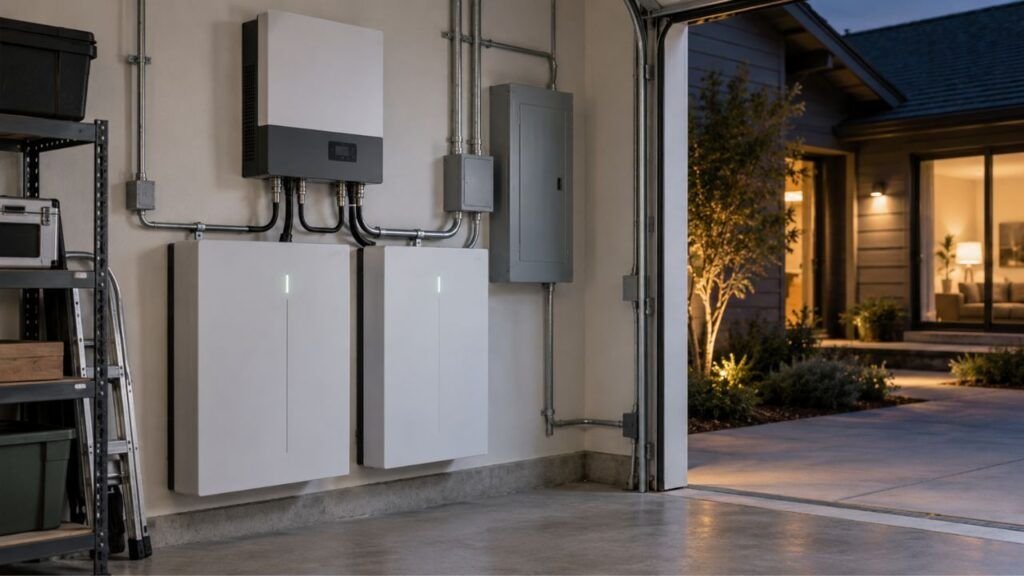
Both systems store electricity for power outages, but they serve different household needs. Portable solar generators offer flexible, movable backup power, while whole-home battery systems generally provide larger storage and permanent electrical integration.
| Features | Portable Solar Generator | Whole-Home Battery Backup |
| Installation | Usually plug-and-play for individual appliances | Requires professional installation |
| Portability | Movable between locations | Permanently installed |
| Battery Capacity | Commonly 1-5kWh, with larger expandable options | Often 10kWh or more per system |
| Power Coverage | Individual appliances or selected circuits | Selected circuits or broader household loads |
| Solar Charging | Compatible portable or fixed solar panels | Typically integrated with rooftop solar |
| Automatic Backup | Available on selected models | Common with compatible backup controls |
| Expandability | Model-dependent battery expansion | Additional battery modules may be supported |
| Initial Cost | Generally lower for smaller systems | Typically higher due to equipment and installation |
| Suitable For | Essential loads and flexible emergency backup | Integrated, long-duration household backup |
For most homeowners who need occasional emergency electricity, a portable solar generator is a practical starting point. However, if you’re planning extensive automatic home backup, a professionally installed battery system may be more suitable.
Safety Tips for Using a Portable Solar Generator at Home
Portable solar generators are generally convenient for indoor backup because they don’t produce combustion exhaust during battery operation. However, proper handling, electrical connections, and battery care remain important.
- Avoid Overloading: Keep connected appliances within the generator’s continuous output and surge limits.
- Use Proper Ventilation: Maintain the manufacturer’s recommended clearance around cooling vents to prevent overheating.
- Keep the Unit Dry: Protect the power station from rain, water spills, and excessive moisture.
- Check Electrical Connections: Use compatible charging cables, solar connectors, and appropriately rated extension cords.
- Never Backfeed Your Home: Do not connect a generator to a household wall outlet. Use approved transfer equipment installed by a qualified electrician.
- Monitor Battery Temperature: Avoid charging or operating the battery outside its specified temperature range.
- Inspect Before Use: Check power cables, outlets, and battery condition before an emergency.
- Follow Storage Guidelines: Maintain the manufacturer’s recommended charge level during extended storage.
- Test Your Backup Setup: Confirm that important appliances operate correctly before an actual outage.
Final Words
A portable solar generator can make power outages easier by keeping essential household appliances running. However, choosing the right model depends on battery capacity, inverter output, solar charging, and expected backup duration.
The Jackery HomePower 3000 offers a balanced solution for everyday home backup. The EF ECOFLOW DELTA Pro 3 Solar Generator provides stronger output for demanding appliances, while the Anker SOLIX F3800 Plus stands out for 240V compatibility and expandable storage.
Before choosing, calculate your essential appliances’ power requirements and consider how long outages typically last. A properly sized solar generator can provide dependable emergency electricity without unnecessary capacity or complexity.
Related FAQs
Can a Portable Solar Generator Power an Entire House?
Some high-capacity solar generators can power selected household circuits or substantial home loads. However, powering an entire house depends on inverter output, battery capacity, appliance demand, and compatible electrical connections.
What Size Solar Generator Do I Need for Home Backup?
A 1,000-2,000Wh generator can support basic electronics and smaller loads. For refrigerators and multiple essential appliances, consider 3,000-5,000Wh or more, depending on your required runtime.
Can a Portable Solar Generator Run a Refrigerator Overnight?
Yes. Many 2,000Wh or larger solar generators can operate an efficient refrigerator overnight. Actual runtime depends on refrigerator consumption, compressor cycling, and available battery energy.
How Long Will a 3,000Wh Solar Generator Last?
A 3,000Wh battery could supply a continuous 200W load for approximately 12-13 hours after accounting for typical conversion losses. Higher power consumption reduces runtime.
Can You Use a Portable Solar Generator While Charging It?
Yes, many portable solar generators support simultaneous charging and appliance operation. However, charging limits and available AC output vary by model.
Do Portable Solar Generators Work Without Sunlight?
Yes. Portable solar generators use stored battery electricity, so they work at night and during cloudy weather. However, recharging through solar panels requires sufficient sunlight.
Can a Portable Solar Generator Run an Air Conditioner?
Yes, provided the generator supports the air conditioner’s running wattage and startup surge. Battery capacity also determines how long cooling can continue.
Are Portable Solar Generators Safe to Use Indoors?
Battery-powered solar generators can generally operate indoors without combustion exhaust. Follow the manufacturer’s ventilation, temperature, charging, and electrical safety instructions.
Can You Connect a Portable Solar Generator to a Home Electrical Panel?
Yes, certain models support home panel connections through compatible transfer switches or smart backup equipment. A qualified electrician should install the necessary electrical connections.
Are Portable Solar Generators Worth It for Home Backup?
They can be worthwhile if you experience outages and need quiet, rechargeable backup electricity. Their value depends on your essential power needs, outage duration, and charging options.

Austin Parker writes practical generator how-to guides, troubleshooting advice, and buying guides for solar, portable, and fuel-powered generators. His focus is helping readers solve common power problems, understand their options, and choose dependable equipment for real-world use.