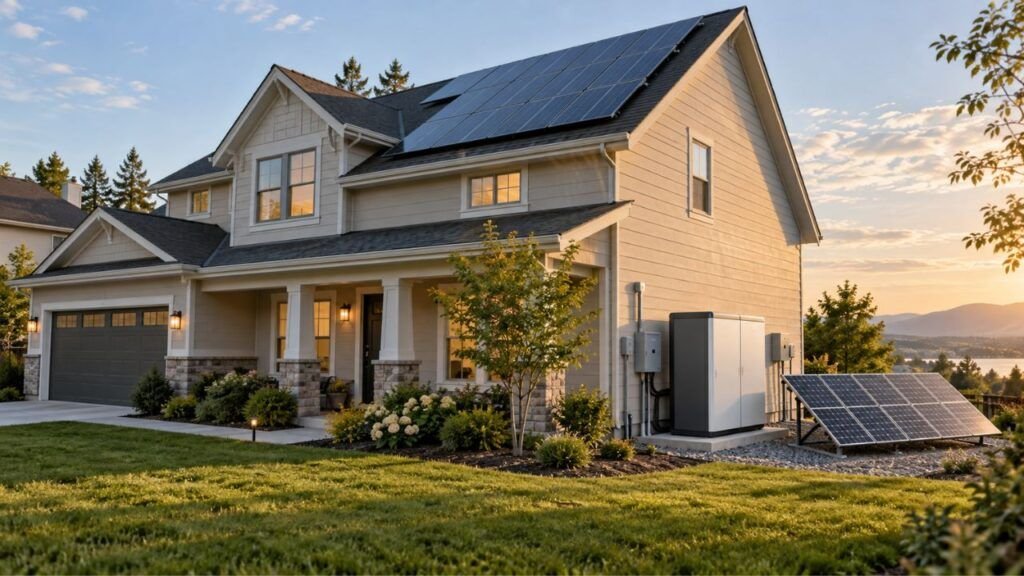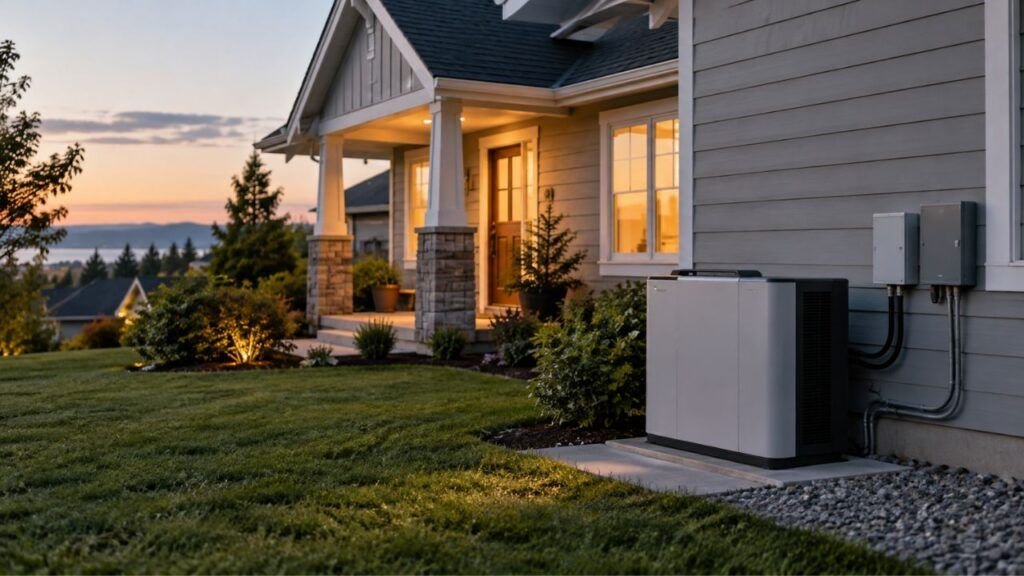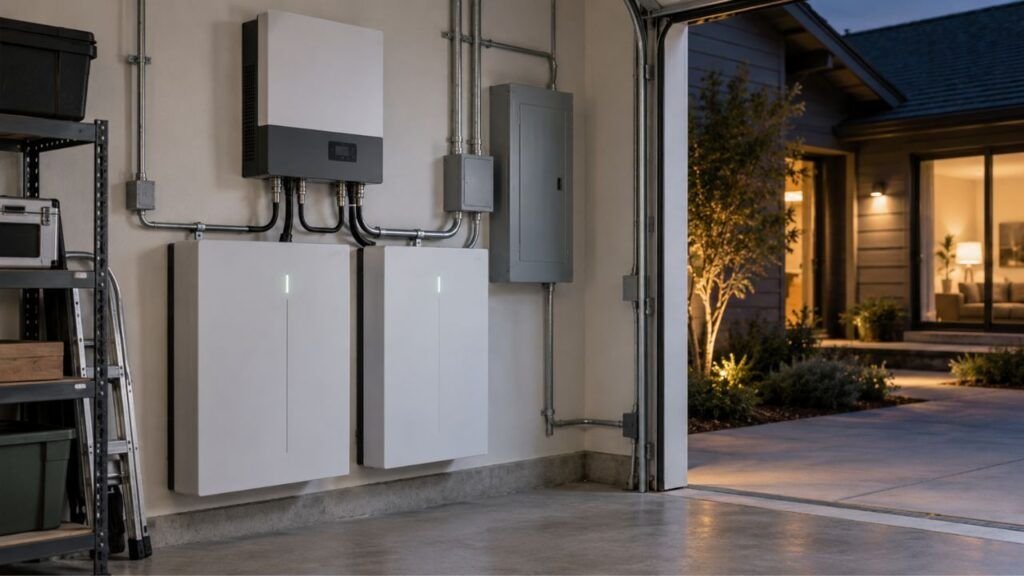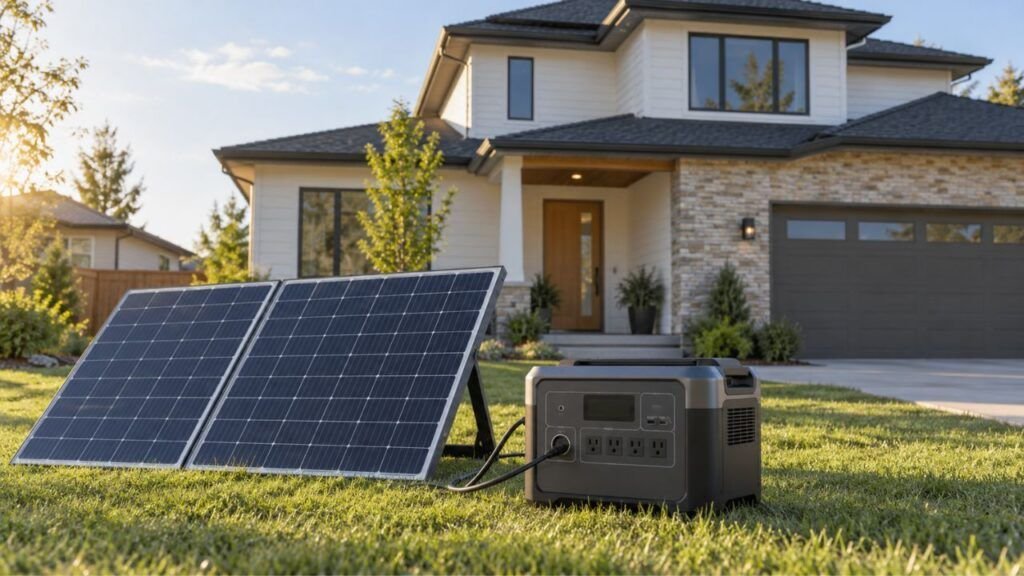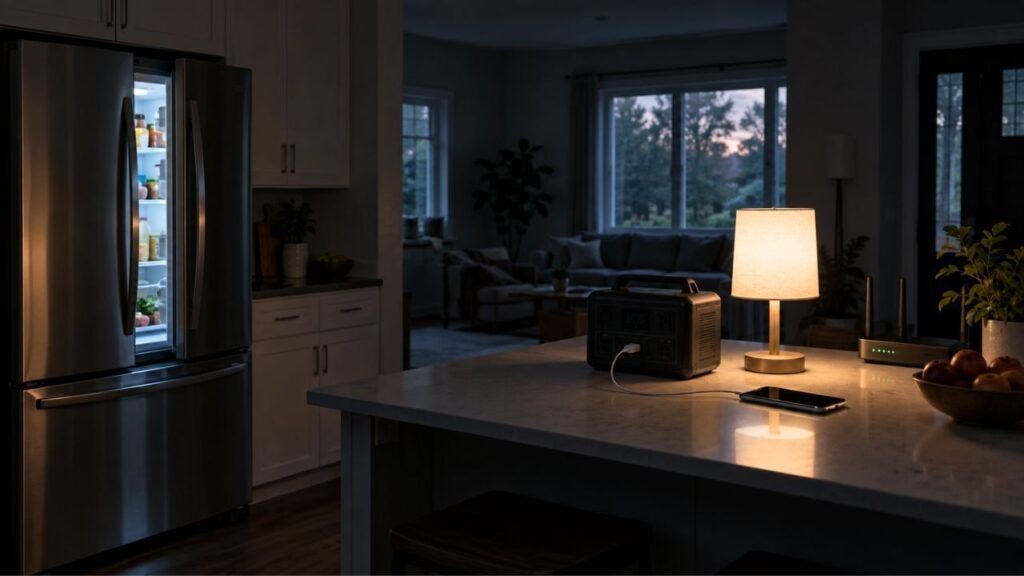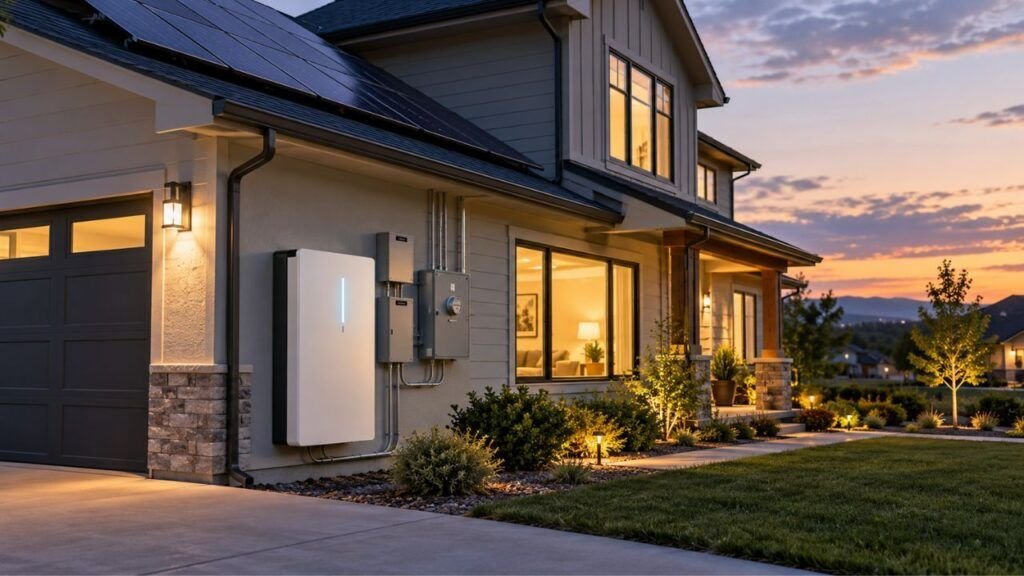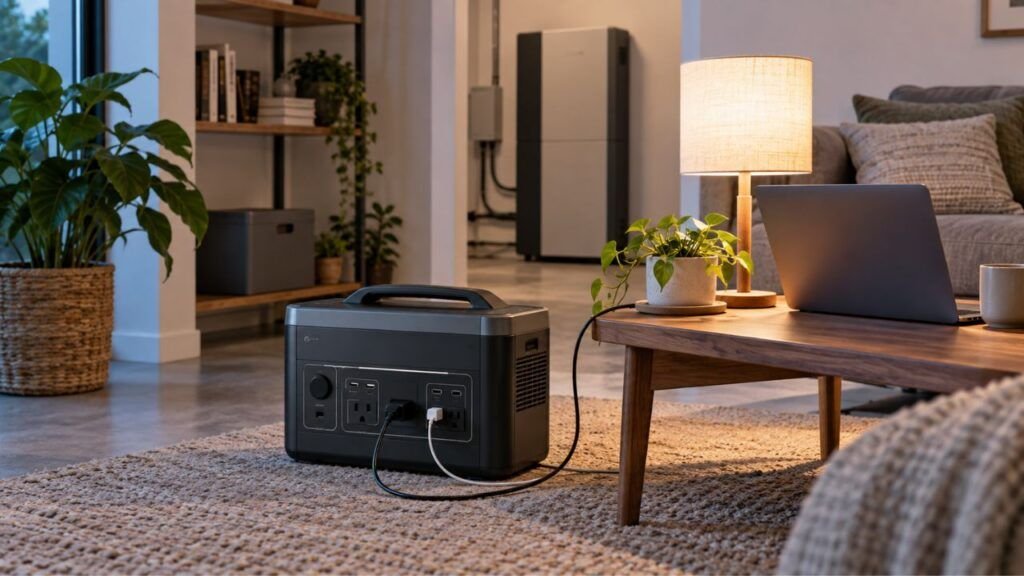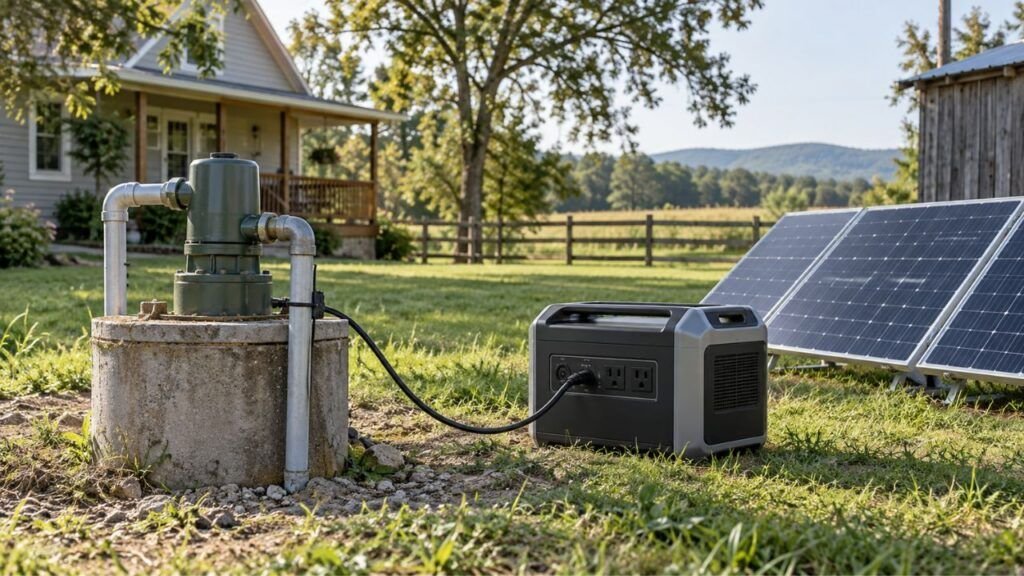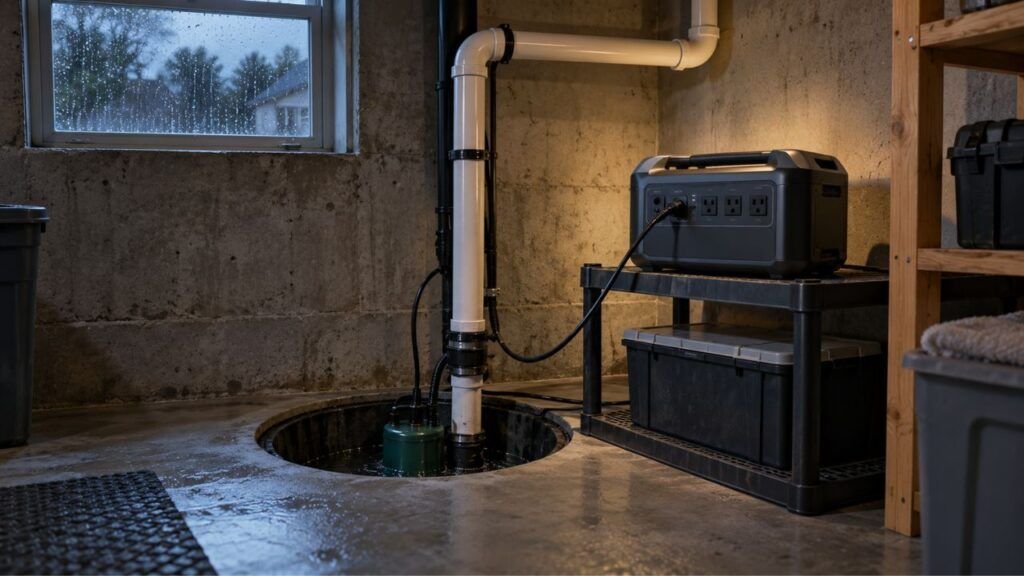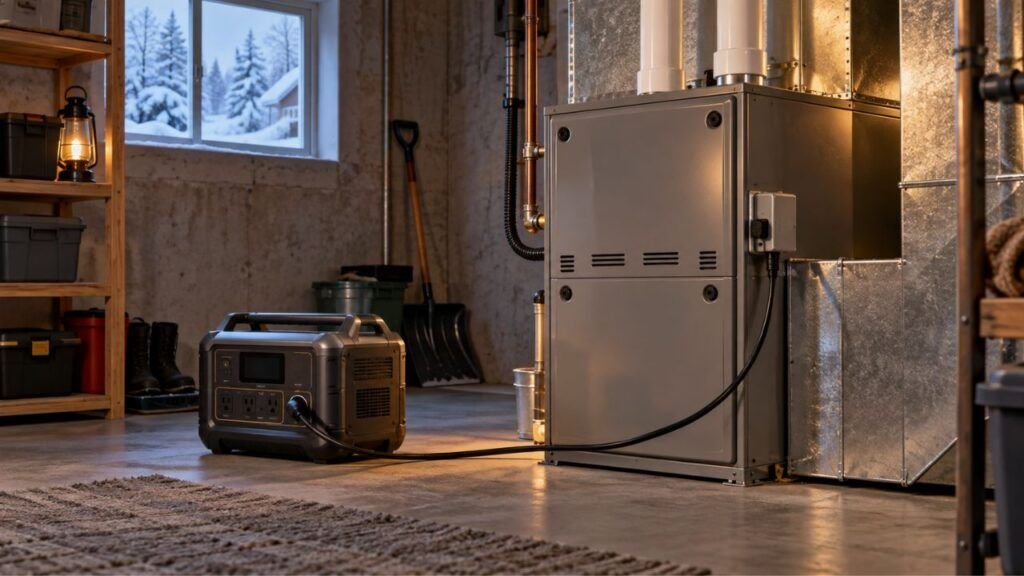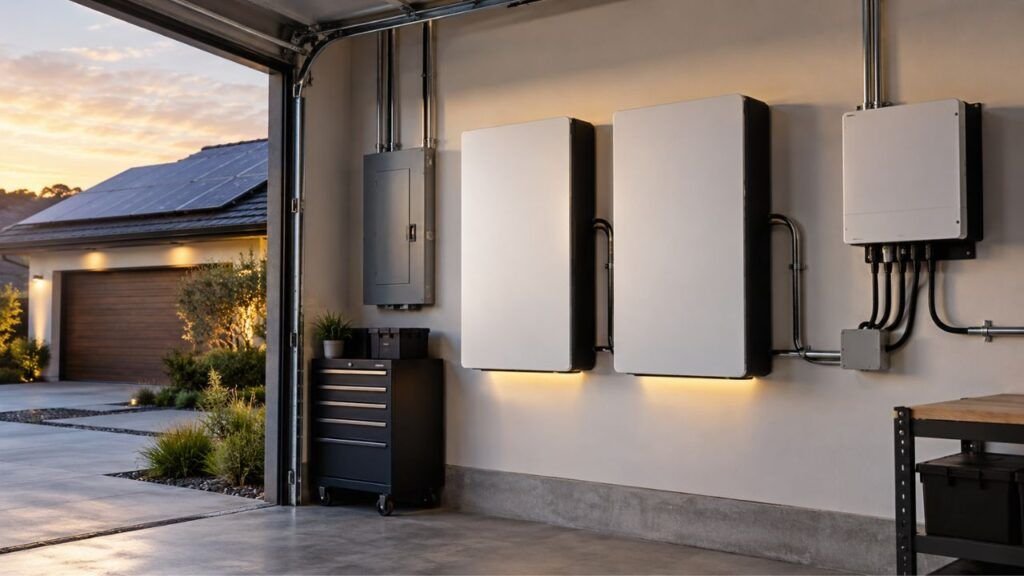
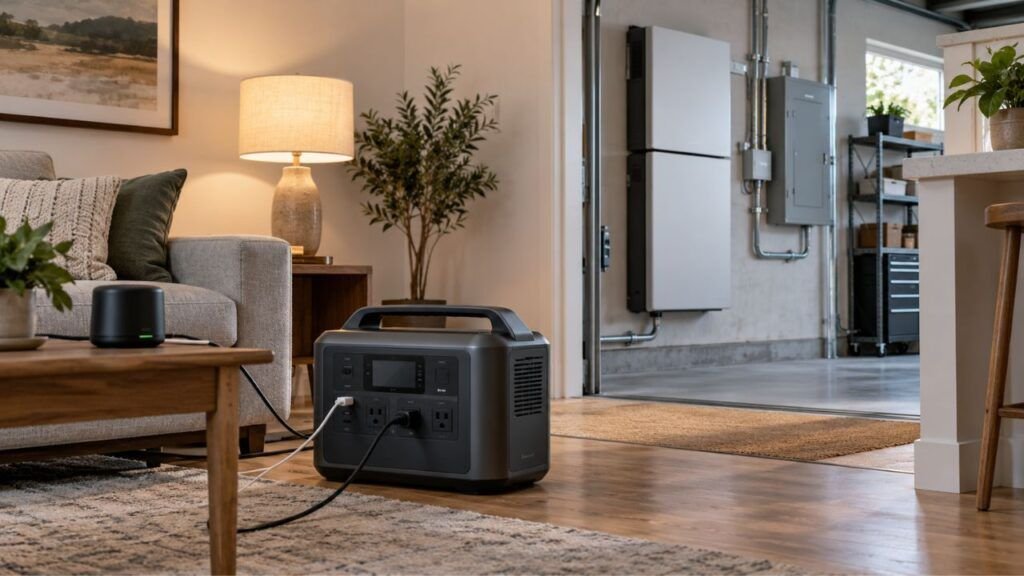
A portable power station is usually better for affordable, flexible backup of essential devices, while a home battery backup is better for automatic, panel-connected household power. Portable units need little setup and can move anywhere. Home batteries cost more but can protect multiple circuits without extension cords or manual switching.
The best choice still depends on what you need powered. Below, I’ll compare capacity, output, runtime, installation, 120V and 240V loads, solar charging, costs, and real-world outage situations.
Key Takeaways
- Portable power stations work best for essential devices and shorter outages.
- Home batteries provide broader coverage and automatic outage protection.
- Battery capacity determines runtime, while inverter output determines usable appliances.
- Some larger portable systems can support selected 120V and 240V circuits.
- A home battery does not automatically mean whole-house backup.
- Portable systems usually cost much less and require minimal installation.
- Home batteries make more sense when seamless backup matters most.
- Solar can recharge either system when compatible equipment is installed.
- Your required loads matter more than your home’s square footage.
- Always compare complete system costs instead of battery prices alone.
Portable Power Station vs Home Battery Backup at a Glance
Both systems store electricity inside rechargeable batteries, but they serve different needs. This quick comparison shows where each option fits best.
| Feature | Portable Power Station | Home Battery Backup |
| Main purpose | Essential and mobile backup | Integrated household backup |
| Installation | Usually plug-and-play | Professional installation |
| Electrical panel connection | Optional on select systems | Normally included |
| Outage switching | Usually manual | Usually automatic |
| Capacity | Small to expandable | Usually several to dozens of kWh |
| Power output | Model dependent | Generally higher system-level output |
| 120V appliances | Yes | Yes |
| 240V appliances | Select larger models | Common when properly sized |
| Hardwired loads | Requires compatible integration | Can support selected circuits |
| Solar charging | Available | Common |
| Expansion batteries | Available on many models | Common |
| Portability | High to moderate | None |
| Permits | Usually unnecessary standalone | Often required |
| Upfront cost | Lower | Significantly higher |
| Best for | Essentials, renters, occasional outages | Homeowners wanting seamless backup |
The biggest mistake is comparing these systems only by battery size. How electricity reaches your appliances matters just as much.
What Is a Portable Power Station?
A portable power station is a rechargeable battery with a built-in inverter. It normally includes regular AC outlets, USB ports, and DC connections.
You charge the battery before an outage and plug devices directly into it. Most models recharge from a wall outlet, solar panels, or both.
This makes a power station simple to use. You can move it between rooms, take it camping, or store it until needed.
Smaller units mainly handle phones, laptops, lights, routers, and similar devices. Larger models can run refrigerators, microwaves, pumps, power tools, and other demanding equipment.
The category has also changed considerably in recent years.
Some expandable power stations now accept several additional batteries. Others provide 240V output or connect to selected household circuits through compatible transfer equipment.
So, portable power stations should not automatically be treated as camping batteries. Some have become serious home-backup systems while remaining removable.
What Is a Home Battery Backup System?
A home battery backup is permanently connected to your home’s electrical system. It stores electricity and supplies selected circuits when grid power disappears.
The system normally includes batteries, an inverter, monitoring controls, and transfer equipment. Depending on the installation, it may protect essential circuits or most household loads.
Home batteries can usually charge from the electrical grid. Many systems also work with rooftop solar panels.
Their biggest advantage is integration.
When utility power fails, a properly configured battery system detects the outage. It isolates the backed-up electrical system from the utility grid and begins supplying power automatically.
You normally do not need extension cords or manual appliance connections.
However, installing one battery does not automatically provide unlimited whole-house power. Capacity, inverter output, circuit selection, and household demand still determine what works.
A smaller installation may protect only essentials. Larger multi-battery systems can support much broader household use.
The Three Types of Battery Backup Most Homeowners Are Actually Choosing Between
The market is no longer divided into only portable batteries and whole-home systems. You now have a useful middle option between those two extremes.
Portable Plug-In Backup
This is the simplest approach.
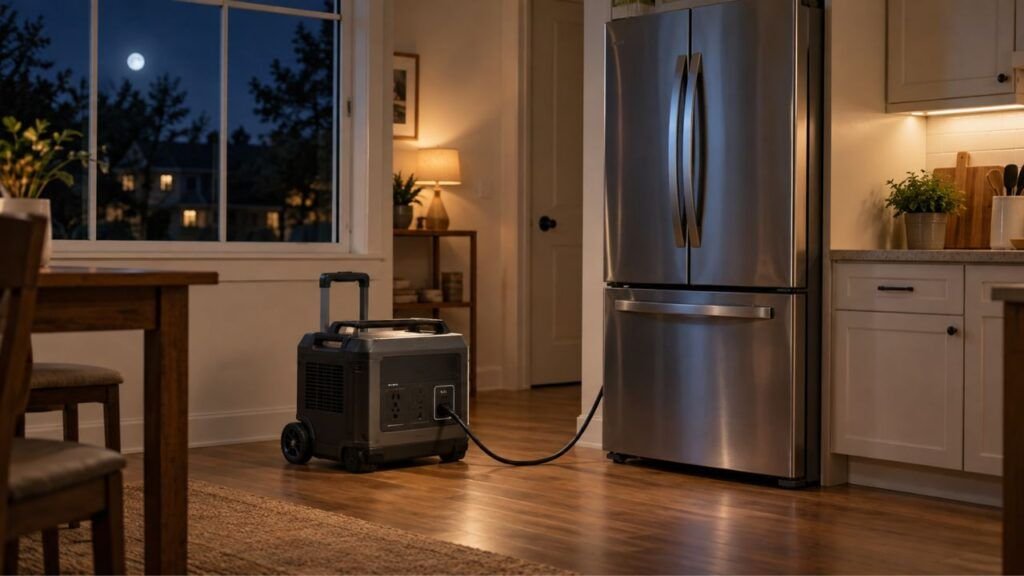
You charge the power station and keep it ready. During an outage, you connect important devices directly to its outlets.
Common loads include:
- Refrigerator
- Wi-Fi router
- Phones
- Laptop
- LED lights
- Television
- Fan
- CPAP machine
- Small kitchen appliances
You control exactly where the stored energy goes.
The downside is manual setup. Your refrigerator normally must be unplugged from the wall and connected to the station.
Long extension cords can also become inconvenient around the house.
This approach makes the most sense when your emergency load list is short.
Essential-Circuit Power Station Backup
Large expandable power stations create a middle ground.
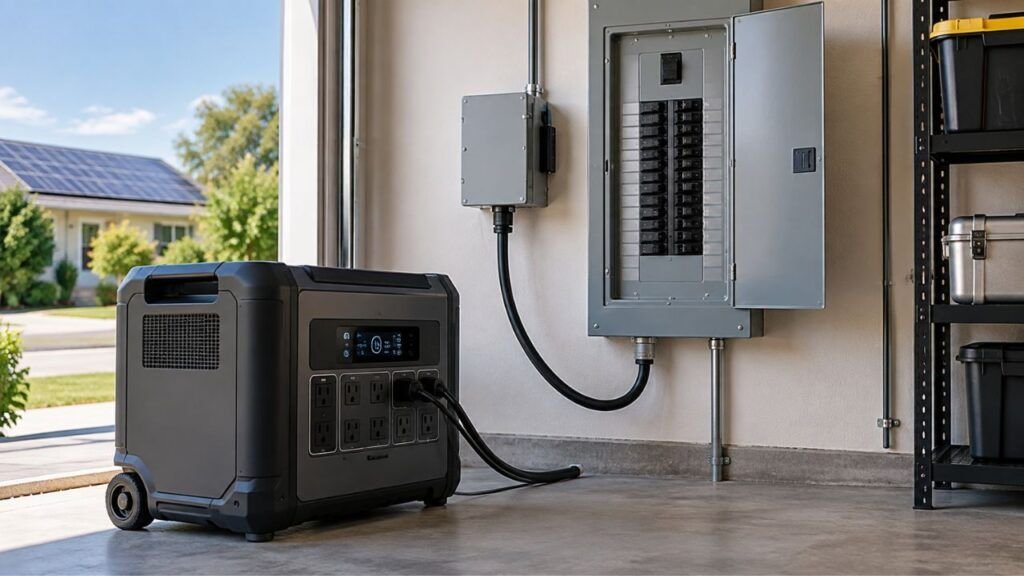
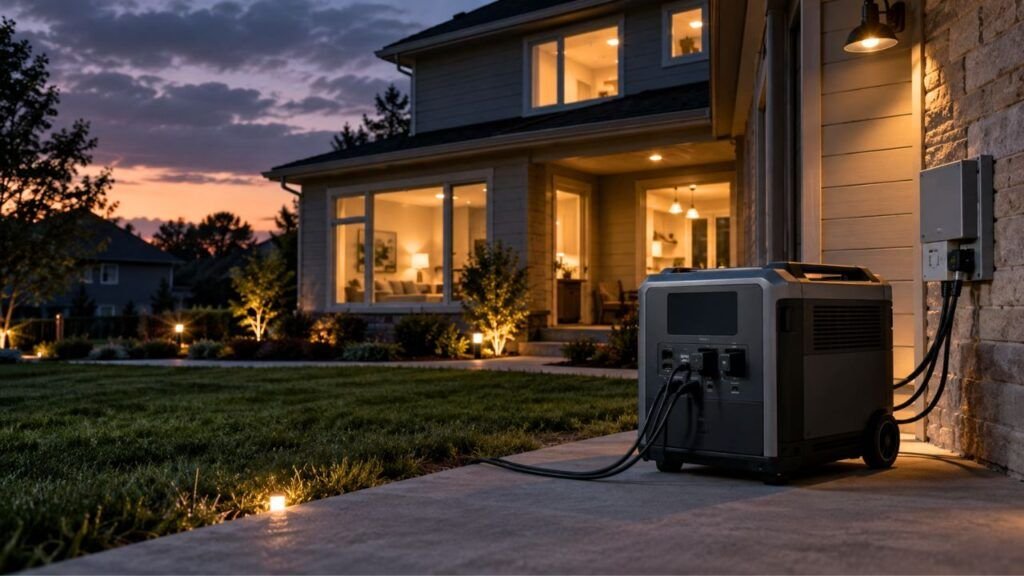
Instead of running extension cords everywhere, compatible systems can supply selected household circuits through approved transfer equipment.
Your refrigerator, lighting, outlets, furnace blower, or other essential circuits may stay connected to their normal wiring.
Some systems can also provide 240V output.
That does not mean every portable station can connect to a panel. The power station, cables, inlet, transfer equipment, voltage, and electrical installation must all be compatible.
This setup is useful when you want more convenience without committing to a permanently installed battery system.
Permanently Installed Home Battery Backup
A home battery becomes part of your house.
Its inverter and transfer equipment connect directly to the electrical system. When utility power fails, backup operation can begin automatically.
The system might protect a dedicated group of critical circuits. A larger installation could support nearly the entire electrical panel.
This is usually the strongest option for frequent outages.
It also suits households where someone cannot manually move cables or reconnect appliances during an emergency.
The tradeoff is higher cost and more complicated installation.
Capacity vs Power Output: The Difference That Determines What You Can Actually Run
Battery advertisements often display several large numbers. Two matter especially when planning backup: battery capacity and inverter output.
Battery Capacity: Wh and kWh
Battery capacity tells you how much energy the battery stores.
Small portable stations usually display capacity in watt-hours, or Wh. Larger systems normally use kilowatt-hours, or kWh.
One kilowatt-hour equals 1,000 watt-hours.
Imagine you have a 2 kWh power station. That means the battery stores roughly 2,000 Wh of energy before accounting for reserve settings and conversion losses.
More capacity generally means longer runtime.
However, capacity alone does not tell you whether an appliance can run.
Continuous Output: Watts and Kilowatts
Output tells you how much electrical power the inverter can deliver at once.
Suppose a battery stores plenty of energy but only provides 1,800 watts continuously. You cannot expect it to run several appliances totaling 3,000 watts simultaneously.
Installed home batteries often provide substantially higher output.
Large portable systems are also improving quickly, though. Some can supply several kilowatts and support demanding household equipment.
Always compare both numbers.
Capacity tells you how long you can run things. Output tells you what you can run at the same time.
Starting or Surge Power
Some appliances briefly need much more power when starting.
Motors and compressors are common examples.
You may encounter starting surges with:
- Refrigerators
- Freezers
- Sump pumps
- Well pumps
- Air conditioners
- Power tools
A battery might handle an appliance’s normal running wattage but fail during startup.
That is why I recommend checking continuous output and surge capability before purchasing.
120V vs 240V: Why It Matters for Home Backup
Most regular U.S. wall outlets supply 120V power. Many portable stations are designed mainly around these loads.
That works well for refrigerators, televisions, routers, lamps, laptops, and many kitchen appliances.
However, larger household equipment often uses 240V.
Common examples include:
- Central air conditioners
- Electric ranges
- Electric clothes dryers
- Some well pumps
- Electric water heaters
- EV chargers
A basic 120V power station cannot directly operate these appliances.
This is one reason home batteries traditionally offered more complete household backup.
However, that difference is becoming less absolute.
Some high-capacity expandable power stations now support 120/240V split-phase output through compatible equipment.
If 240V loads matter to you, check the exact configuration carefully. Do not assume every large battery supports them.
Also consider whether running the appliance is practical.
An electric dryer might technically operate from a powerful battery system. It could still consume more stored energy than you want during an outage.
Which Appliances Can Each Backup System Run?
Appliance compatibility depends on inverter output, surge capacity, voltage, and battery size. Think of this table as a planning guide rather than a guarantee.
| Household Load | Portable Plug-In Station | Large Integrated Power Station | Installed Home Battery |
| Phones and tablets | Usually easy | Yes | Yes |
| Router and modem | Usually easy | Yes | Yes |
| LED lighting | Usually easy | Yes | Yes |
| Refrigerator | Often | Yes | Yes |
| Freezer | Often | Yes | Yes |
| CPAP | Often | Yes | Yes |
| Television | Often | Yes | Yes |
| Microwave | Model dependent | Usually | Usually |
| Sump pump | Depends on starting surge | Often possible | Possible when included |
| Furnace blower | Requires proper connection | Often possible | Possible when included |
| Well pump | Difficult for smaller units | Configuration dependent | Possible when sized correctly |
| Window AC | Larger models | Usually possible | Usually possible |
| Central AC | Rarely practical | Select systems | Possible when properly sized |
| Electric range | Generally impractical | Select systems | Possible with adequate capacity |
| Electric dryer | Generally impractical | Select systems | Possible with adequate capacity |
| EV charging | Usually impractical | Limited | Possible but energy intensive |
I recommend building your backup plan around essentials first.
Keeping food cold, internet working, lights available, and medical equipment powered usually matters more than operating every appliance normally.
How Long Will Each System Last During a Power Outage?
Runtime depends on stored energy and how quickly your appliances consume it. Instead of trusting vague claims about “days of backup,” calculate your expected load.
How to Estimate Battery Runtime
A simple starting formula is:
Estimated runtime = usable battery energy ÷ average electrical load
Suppose a battery provides about 1,800 Wh of usable energy.
If your connected equipment averages 300 watts:
1,800 Wh ÷ 300 W = about 6 hours
Your real runtime can differ because of:
- Inverter conversion losses
- Battery reserve settings
- Appliance cycling
- Standby consumption
- Temperature
- Battery age
- Changing household demand
A refrigerator also does not pull its maximum wattage continuously. Its compressor cycles throughout the day.
That means daily energy use gives you a better estimate than nameplate wattage alone.
Example: Essential-Load Backup
Imagine you want to protect only:
- Refrigerator
- Router
- Several LED lights
- Phones
- One laptop
This is a reasonable portable-power-station scenario.
You may be able to stretch battery runtime significantly by switching lights off, charging electronics only when needed, and avoiding heating appliances.
Adding a coffee maker for several minutes is manageable.
Running a space heater continuously is a completely different situation.
Example: Whole-Home Backup
Whole-home use adds much heavier energy loads.
Central air conditioning, electric heating, water heating, electric cooking, clothes drying, and EV charging can quickly consume stored energy.
This is why one battery might comfortably protect essentials but provide surprisingly short whole-house runtime.
If you want normal household operation during a long outage, you may need multiple batteries plus a recharging method.
How to Size a Portable Power Station or Home Battery
Choosing battery size becomes much easier when you work backward from your actual needs. I recommend following these steps before comparing products.
Step 1: List What Must Stay Powered
Start with emergency needs rather than every household appliance.
Separate them into three groups.
Critical loads might include your refrigerator, medical equipment, internet connection, phones, sump pump, and essential lighting.
Useful loads could include televisions, laptops, fans, microwaves, or small cooking appliances.
Deferrable loads usually include electric dryers, EV charging, large electric heaters, and other power-hungry equipment.
Protect critical loads first.
Step 2: Add Running Wattage
Calculate how much power your essential equipment might need simultaneously.
This determines the inverter output you need.
Do not simply buy the largest battery capacity you can afford. The inverter must also handle your real-time demand.
Step 3: Check Startup Surge
Look for appliances containing motors or compressors.
Their startup demand can exceed normal running power.
Check manufacturer specifications whenever possible.
This is particularly important for pumps and air conditioners.
Step 4: Estimate Daily Energy Consumption
Now calculate how many watt-hours or kilowatt-hours your appliances use daily.
For each device:
Wattage × hours used = watt-hours
If an appliance cycles, use realistic daily energy consumption instead.
Add the totals together.
That gives you a much stronger estimate of required battery capacity.
Step 5: Choose Your Required Backup Time
Ask yourself how long outages normally last in your area.
Do you need:
- Four hours?
- Eight hours?
- Overnight backup?
- One full day?
- Several days?
Longer protection requires more storage or dependable recharging.
Step 6: Consider Recharging During the Outage
You may not need enough stored energy for the entire outage.
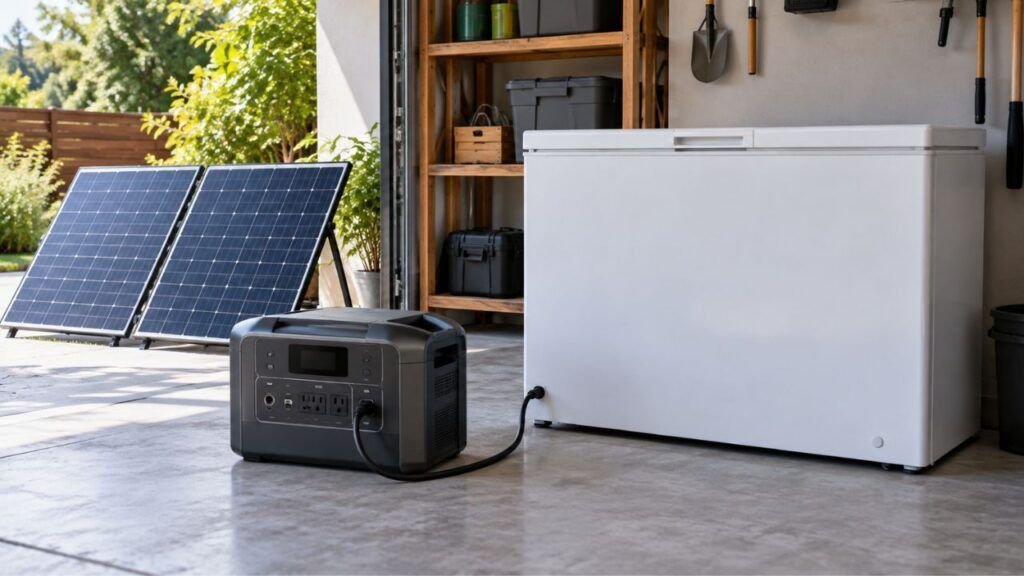
Compatible solar panels can replenish some battery power during daylight.
Some systems can also integrate with generators.
However, never assume solar will completely recharge your battery every day. Weather, season, panel orientation, shading, and solar-input limits affect production.
Installation and Outage Switching: Manual vs Automatic Backup
Installation creates one of the clearest differences between these systems. It also affects convenience when the outage actually happens.
Portable Plug-In Setup
A basic portable station requires almost no installation.
Charge it beforehand and connect appliances when needed.
That simplicity benefits renters and anyone avoiding permanent electrical work.
However, you become the transfer system.
When power fails, you must decide what gets plugged into the battery.
That can become inconvenient during nighttime outages or severe weather.
Transfer Switch, Inlet, or Smart-Panel Integration
Some large power stations can feed selected home circuits through compatible equipment.
This gives you the convenience of using normal wall outlets and hardwired circuits.
The electrical connection must be designed for that purpose.
Never try feeding your home’s wiring through an ordinary wall outlet. Improvised backfeeding can create serious electrical hazards.
When a power station connects to home circuits, use approved equipment and qualified electrical installation.
Automatic Home Battery Backup
Installed home batteries handle this transition differently.
When grid electricity disappears, transfer equipment detects the problem. The backed-up portion of the home becomes isolated from utility power.
The battery then starts supplying those circuits.
In a properly designed system, you may notice little interruption.
That automatic operation becomes especially valuable when nobody is home.
Your refrigerator, sump pump, security system, and other selected loads can remain protected without someone connecting cables.
Portable Power Station vs Home Battery Backup Cost
Portable stations almost always win on entry price. However, comparing hardware prices alone can give you the wrong impression.
| Cost Factor | Portable Power Station | Installed Home Battery |
| Battery hardware | Required | Required |
| Inverter | Built in | Included or integrated |
| Professional installation | Usually unnecessary | Usually required |
| Permit | Usually unnecessary standalone | Often required |
| Transfer equipment | Optional | Usually part of project |
| Panel modifications | Sometimes | Sometimes |
| Expansion batteries | Optional | Optional |
| Solar panels | Optional | Optional |
| Electrical labor | Low or none standalone | Significant |
| Moving system later | Easy | Difficult |
A small portable unit may cost several hundred dollars.
High-capacity expandable systems can reach several thousand dollars once you add batteries, solar panels, transfer hardware, and accessories.
Installed home battery projects often enter five-figure territory.
The final price depends on battery size, electrical work, permits, equipment, location, and installation complexity.
Here is the comparison I suggest making:
Portable system price + everything required for your intended coverage
versus
Installed battery price + everything required for the same coverage
That is much fairer than comparing a portable battery sitting on a store shelf with a completely installed home-energy project.
Does a Home Battery Save Money When There Is No Outage?
A home battery can sometimes reduce electricity costs, but savings are not guaranteed.
Some utilities charge different electricity prices depending on the time of day.
In that situation, a battery may charge when electricity is cheaper and supply your house during expensive periods.
Solar owners may also store excess daytime production instead of exporting it immediately.
However, financial results depend on your utility.
A homeowner with flat electricity pricing and favorable solar export compensation may save much less from battery arbitrage.
Other locations may offer:
- Time-of-use rates
- Demand-response programs
- Virtual power plant payments
- Battery rebates
- Solar-storage incentives
Think of outage protection as the primary benefit unless your local electricity rates create a clear savings opportunity.
I would not buy a home battery based only on claims that it will automatically lower your electric bill.
Do You Need Solar Panels With Either Option?
No. You can use both portable power stations and home batteries without solar panels.
Portable stations normally charge from regular household electricity.
Many also support solar panels and vehicle charging.
Home batteries can also charge from the grid.
Solar simply gives you another energy source.
That becomes especially helpful during an extended outage because sunlight may replace part of the energy you used overnight.
However, solar backup requires compatible equipment.
A regular grid-tied solar installation does not automatically keep powering your home when utility electricity disappears.
The system must be designed for safe backup operation.
What Happens on Cloudy Days or During a Multi-Day Outage?
Every battery eventually runs out if energy keeps leaving and nothing replaces it.
That applies to portable stations and installed home batteries.
Cloudy weather can reduce solar production, sometimes significantly. This becomes important when an outage continues for several days.
During longer emergencies, you can stretch runtime by:
- Prioritizing refrigeration and medical loads
- Turning off unused circuits
- Reducing heating and cooling demand
- Avoiding electric dryers and ovens
- Delaying EV charging
- Charging devices during strong solar production
- Maintaining a battery reserve
- Adding compatible battery capacity
- Using another approved backup source when needed
This is why I recommend planning around an energy budget.
A large battery helps, but good load management can be just as valuable.
Portable Power Station vs Home Battery Backup for Renters
For most renters, a portable power station is the practical choice.
You do not own the electrical system, so permanent battery installation usually requires landlord approval and electrical work.
A portable unit avoids that problem.
You can keep your refrigerator, router, lights, phones, laptop, and other plug-in essentials running without modifying the building.
You can also take the battery with you when moving.
Apartment dwellers should still think carefully about battery size.
Large expandable stations can become heavy even when marketed as portable.
Make sure you have a safe, dry location with adequate ventilation around the equipment.
If you expect only occasional outages, I would normally start with your essential loads and size the station around them.
Portable Power Station vs Home Battery Backup for Homeowners
Homeowners have more flexibility because permanent electrical modifications are possible. Your best option depends on how much convenience and coverage you want.
A portable or expandable power station may fit better when:
- Outages happen only occasionally.
- You mainly need refrigeration and communication.
- Manual setup does not bother you.
- You want the lowest practical upfront cost.
- You also want portable power outdoors.
- You might move within a few years.
- You do not need many hardwired appliances.
An installed home battery may fit better when:
- Power outages happen regularly.
- Automatic backup matters to you.
- Nobody may be home during an outage.
- You depend on a sump or well pump.
- You want broader circuit coverage.
- You already have rooftop solar.
- You plan to add solar later.
- You want a permanent energy-management system.
There is no reason to pay for whole-home capability when five essential loads solve your problem.
At the same time, buying an undersized portable unit can become frustrating if you really want automatic household backup.
Which Option Is Better for Short vs Long Power Outages?
Outage duration changes the value of each system. Think about how long you realistically need independent power.
| Outage Situation | Better Starting Point | Why |
| Brief outage | Portable power station | Simple and affordable |
| Several hours | Portable station | Essentials need little stored energy |
| Overnight | Larger portable station | Good for controlled essential loads |
| Around one day | Expandable station or home battery | Load size becomes more important |
| Frequent outages | Installed battery | Automatic backup adds convenience |
| Multi-day outage | Battery plus recharging strategy | Stored energy alone eventually runs out |
| Broad whole-home use | Installed multi-battery system | Higher output and capacity are needed |
A portable station can actually be excellent during a long outage if your energy use remains tiny and solar conditions are good.
A home battery can also drain quickly if you keep central air, electric heating, and other major loads running.
Battery type matters, but your lifestyle during the outage matters too.
Safety, Electrical Codes, and Installation Requirements
Battery storage avoids the combustion exhaust associated with fuel generators, but electrical and battery safety still matter. Follow manufacturer instructions and local electrical requirements.
Never Backfeed Your Home Through a Regular Outlet
Do not connect a power source to a regular household receptacle hoping to energize the home’s wiring.
That can energize circuits in dangerous and unintended ways.
If you want a portable power station connected to home circuits, use compatible transfer equipment designed for the purpose.
Have the installation handled properly.
Home Battery Certification and Installation
Stationary home batteries must meet applicable installation and safety requirements.
When comparing equipment, you may encounter standards including UL 9540 and testing related to UL 9540A.
Local requirements can also involve electrical codes, fire codes, equipment clearances, battery placement, and permitting.
The exact rules depend on your location and system design.
A qualified installer should verify those requirements before installation.
Portable Power Station Safety
Portable stations are simpler, but they still contain powerful batteries and inverters.
Use sensible precautions:
- Keep the station dry.
- Do not block cooling vents.
- Avoid damaged charging cables.
- Use properly rated extension cords.
- Do not exceed outlet limits.
- Keep the unit away from excessive heat.
- Follow manufacturer temperature limits.
- Stop using visibly damaged battery equipment.
- Keep connectors clean and protected.
- Use only compatible expansion batteries.
Indoor battery use should always follow the manufacturer’s placement instructions.
Are Home Batteries Still Eligible for a Federal Tax Credit in 2026?
For systems placed in service after December 31, 2025, the previous federal Residential Clean Energy Credit is no longer available under current rules.
That makes old battery-buying articles especially easy to misread.
You may still find older pages saying qualifying battery storage receives a 30% federal credit. Those recommendations can be outdated for a system entering service in 2026.
However, this does not mean every incentive disappeared.
Depending on where you live, you may still find:
- State incentives
- Local incentives
- Utility rebates
- Demand-response payments
- Virtual power plant programs
- Solar-and-storage programs
Check current rules before calculating your final project cost.
Incentives can change quickly, so I would never choose a battery based on an outdated rebate estimate.
Portable Power Station vs Home Battery Backup: Pros and Cons
Neither system wins every category. This table makes the tradeoffs easier to see without repeating everything we already covered.
| Option | Main Advantages | Main Limitations | Best Fit |
| Portable power station | Lower cost, movable, simple, versatile | Manual setup, smaller base capacity | Essentials and occasional outages |
| Expandable home-backup station | Scalable, some 240V support, panel options | Compatibility and setup become more complex | Middle-ground home backup |
| Installed home battery | Automatic, integrated, high capacity, solar-friendly | Expensive and permanent | Frequent outages and broad coverage |
The expandable middle category deserves special attention.
It can be a smart compromise if a basic station feels too limited but a permanent battery feels excessive.
Which One Should You Choose?
The right answer becomes clearer when you stop asking which battery is “better.” Instead, decide how you want your home to behave during an outage.
Choose a Portable Power Station If…
A portable station is likely your best fit when:
- You mainly want refrigerator and internet backup.
- You experience occasional short outages.
- You are comfortable connecting appliances manually.
- You rent your home.
- You want backup power for camping too.
- Your budget is limited.
- Most important loads use 120V.
- You want something you can move or resell easily.
For many households, this is all the emergency backup they genuinely need.
Choose an Expandable Home Backup Power Station If…
Consider the middle option when:
- A regular portable station feels too small.
- You want several kilowatt-hours of storage.
- You want expansion batteries later.
- Selected household circuits need backup.
- You want fewer extension cords.
- Some 240V loads matter.
- You still value removable equipment.
- A fully installed home battery exceeds your budget.
Pay close attention to compatibility.
Not every expansion battery, cable, panel, or transfer accessory works across different products.
Choose a Permanently Installed Home Battery If…
A home battery becomes more appealing when:
- You want automatic outage protection.
- You need unattended backup.
- Your household has frequent outages.
- You want to protect several circuits.
- Hardwired appliances must remain available.
- You have rooftop solar.
- You need substantial stored energy.
- Long-term home integration matters more than portability.
This is the most seamless option, but it is also the biggest commitment.
Consider Combining Backup Technologies If…
You do not necessarily need one solution to handle every emergency.
For example, a home battery can handle everyday outages while solar replenishes it during daylight.
Some homeowners also maintain a generator for unusually long emergencies where sunlight and stored energy are insufficient.
Others use a portable power station for appliances and a small dedicated UPS for sensitive computers or networking equipment.
The goal is reliability, not owning the largest possible battery.
A Simple 5-Question Decision Checklist
If you still cannot decide, answer these five questions before shopping.
- What absolutely must stay powered? Write down your refrigerator, medical devices, internet equipment, lighting, pumps, or other essentials.
- What is your highest simultaneous electrical demand? This determines how much inverter output you need.
- How long do you want those loads running? Longer backup requires more stored energy or dependable recharging.
- Do you need automatic operation? If yes, a properly integrated system becomes much more valuable.
- Do you have essential hardwired or 240V appliances? If yes, verify voltage and panel-integration capability carefully.
Your answers usually point toward one of three paths:
A few plug-in essentials: Start with a portable power station.
Selected household circuits: Consider an expandable, integrated power station.
Automatic broad home protection: Look toward a permanently installed home battery.
Conclusion
For most people, the portable power station vs home battery backup decision comes down to how much of the house needs electricity and how much involvement you want during an outage.
A portable power station makes sense when you want affordable backup for refrigerators, internet equipment, lights, electronics, and other essentials. It is especially practical for renters, occasional outages, and households that value portability.
An expandable power station is worth considering when you need more. These systems can bridge the gap between extension-cord backup and permanently installed storage.
A home battery is the stronger choice when automatic operation matters most. It also makes sense for broader circuit coverage, hardwired loads, rooftop solar integration, and households experiencing frequent outages.
I would not choose based on battery capacity alone.
Start with the appliances you actually need. Calculate their power and daily energy use. Decide how long they must operate. Then choose the least complicated system that meets those requirements comfortably.
That approach usually saves money and prevents you from buying either too little backup or far more than you really need.
Related FAQs
Is a Portable Power Station the Same as a Home Battery Backup?
No. A portable power station is normally a standalone battery that powers devices directly, while a home battery connects permanently to household wiring. Larger expandable stations can blur that difference when paired with compatible home-integration equipment.
Can a Portable Power Station Power a House?
Some large power stations can supply selected household circuits through compatible transfer equipment. Smaller models are better for individual appliances. Whether one can meaningfully power your house depends on inverter output, battery capacity, voltage support, and your electrical loads.
Can a Portable Power Station Be Connected to a Home Electrical Panel?
Some models can, but only through compatible equipment designed for home integration. Never connect a power station to household wiring through an ordinary wall outlet. A proper transfer method prevents dangerous backfeeding and protects both your home and utility workers.
Can a Portable Power Station Run a Refrigerator Overnight?
Yes, many properly sized power stations can run a refrigerator overnight. Actual runtime depends on battery capacity, refrigerator energy consumption, compressor cycling, inverter losses, and other connected devices. Check daily energy use rather than relying only on refrigerator wattage.
Can a Portable Power Station Run a Central Air Conditioner?
Small portable stations generally cannot. Some larger 120/240V systems can run certain central air conditioners when their continuous and startup output is sufficient. Air conditioning consumes substantial energy, so battery runtime may still be relatively short.
How Many kWh of Battery Backup Does a House Need?
There is no universal number. Essential-load backup may require only several kilowatt-hours, while broad whole-home coverage can require tens of kilowatt-hours. Calculate the daily energy consumption of the appliances you want running and multiply it by your desired backup duration.
Is 10 kWh Enough for Home Backup?
A 10 kWh battery can provide useful partial-home backup for many households, especially when large electric loads remain off. It may not support normal whole-home consumption for long periods. Your actual result depends on usable capacity and household demand.
How Long Will a 10 kWh Home Battery Last?
Runtime depends entirely on average electrical load. A low 500-watt load could theoretically last many hours longer than a home continuously drawing several kilowatts. Conversion losses, battery reserves, appliance cycling, and changing demand also reduce simple mathematical estimates.
Do Home Batteries Work Automatically During a Power Outage?
Most properly configured home battery systems can detect grid failure and begin supplying designated circuits automatically. The exact transfer behavior varies by equipment and installation. Confirm backup configuration with your installer because some batteries can operate in non-backup configurations too.
Can a Home Battery Work Without Solar Panels?
Yes. A home battery can charge from the electrical grid and provide stored energy during an outage. Solar panels are optional, although they can help replenish the battery during extended outages when the system supports solar operation while disconnected from the grid.
Can Solar Panels Recharge a Battery During a Power Outage?
Yes, but only when the solar and battery system is designed for outage operation. A normal grid-tied solar system often shuts down when the grid fails. Proper backup equipment allows solar production to continue safely and recharge compatible battery storage.
Can a Home Battery Run 240V Appliances?
Many home battery systems can support 240V appliances when the inverter output, circuit configuration, and battery capacity are sufficient. Large loads such as central air conditioners, electric dryers, ranges, and EV chargers can consume stored energy quickly.
Are Portable Power Stations Safe to Use Indoors?
Portable battery power stations do not produce combustion exhaust like gasoline generators. However, you should still follow the manufacturer’s indoor-use, ventilation, temperature, moisture, charging, and clearance instructions. Never use damaged batteries, connectors, or charging cables.
Does a Home Battery Need a Transfer Switch?
A backup system needs a safe method to isolate backed-up circuits from the utility grid. The necessary transfer function may be provided by a separate switch, gateway, smart panel, or integrated equipment depending on the specific battery system.
Is a Home Battery Worth the Cost in 2026?
It can be worthwhile if you experience frequent outages, need automatic backup, already have solar, or place high value on household resilience. For occasional short outages involving only a few appliances, a portable or expandable power station may deliver better value.

Austin Parker writes practical generator how-to guides, troubleshooting advice, and buying guides for solar, portable, and fuel-powered generators. His focus is helping readers solve common power problems, understand their options, and choose dependable equipment for real-world use.