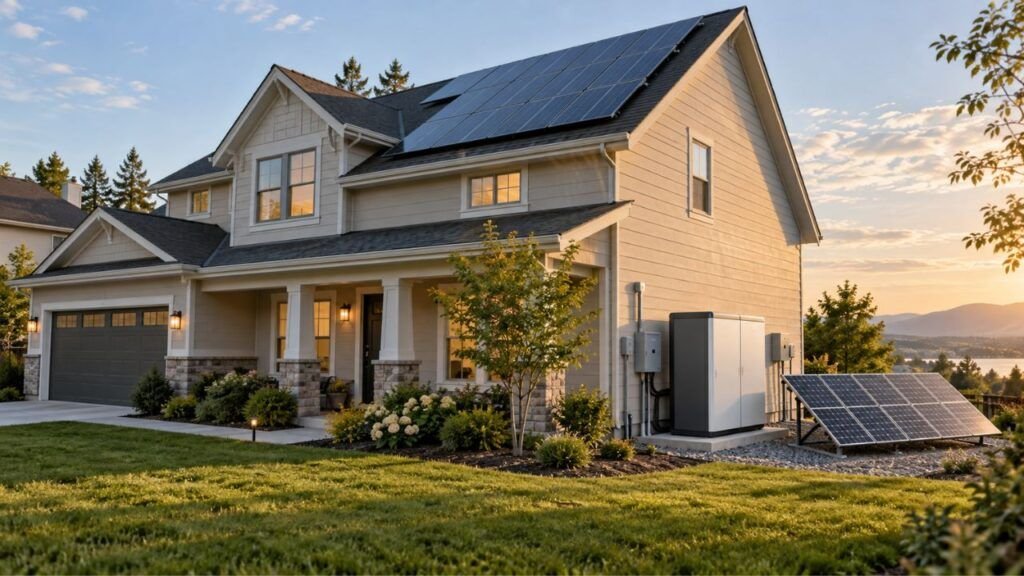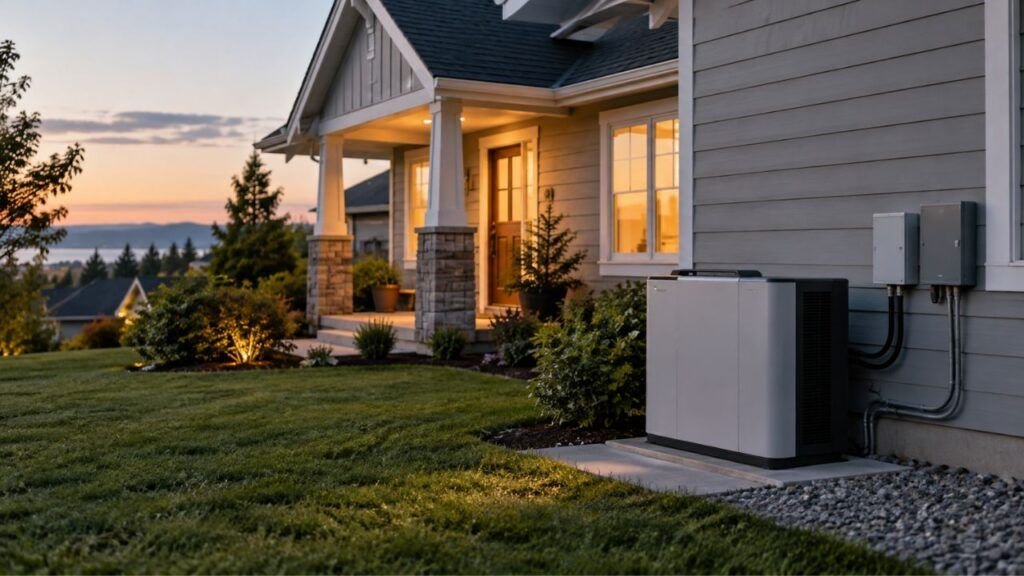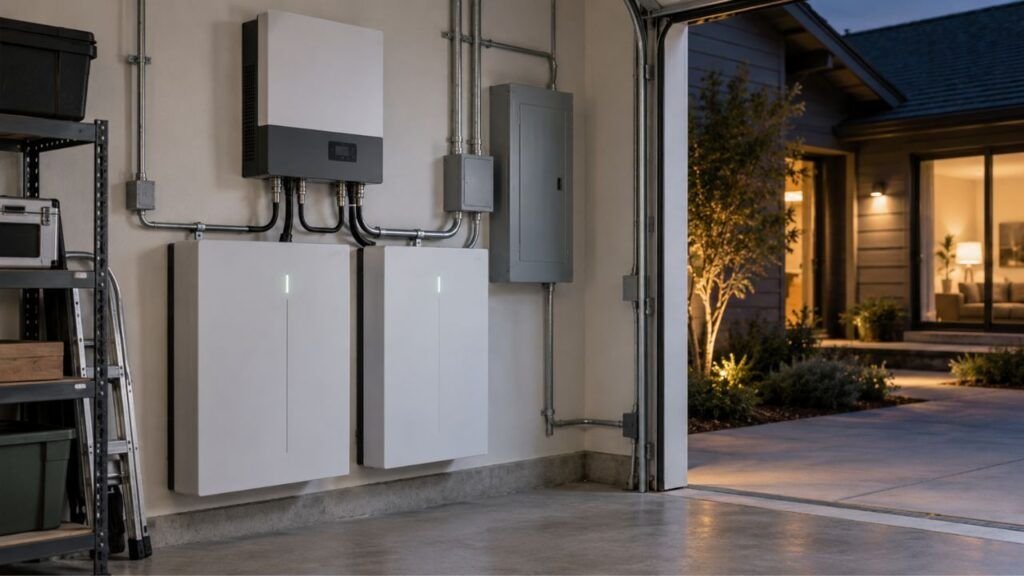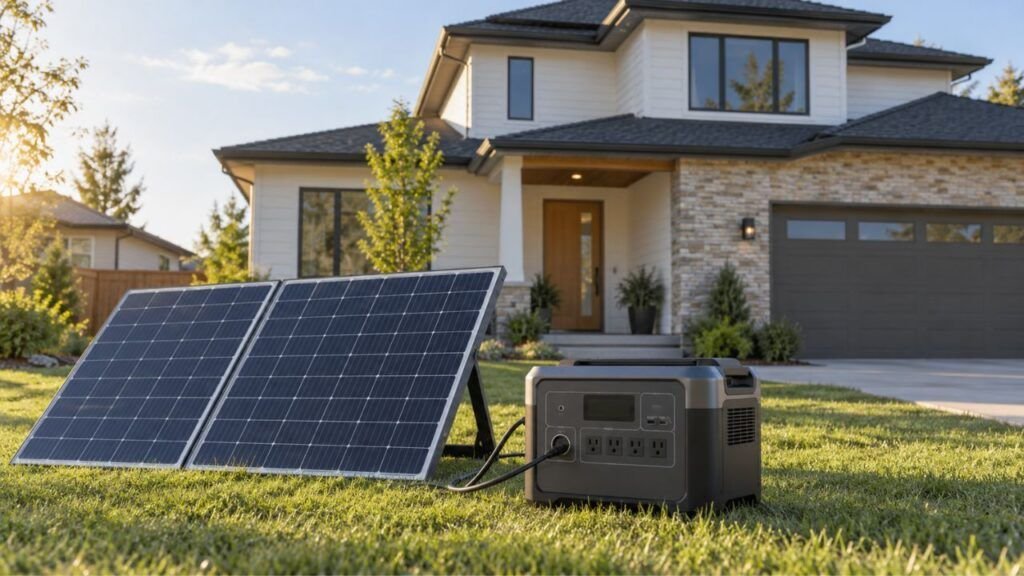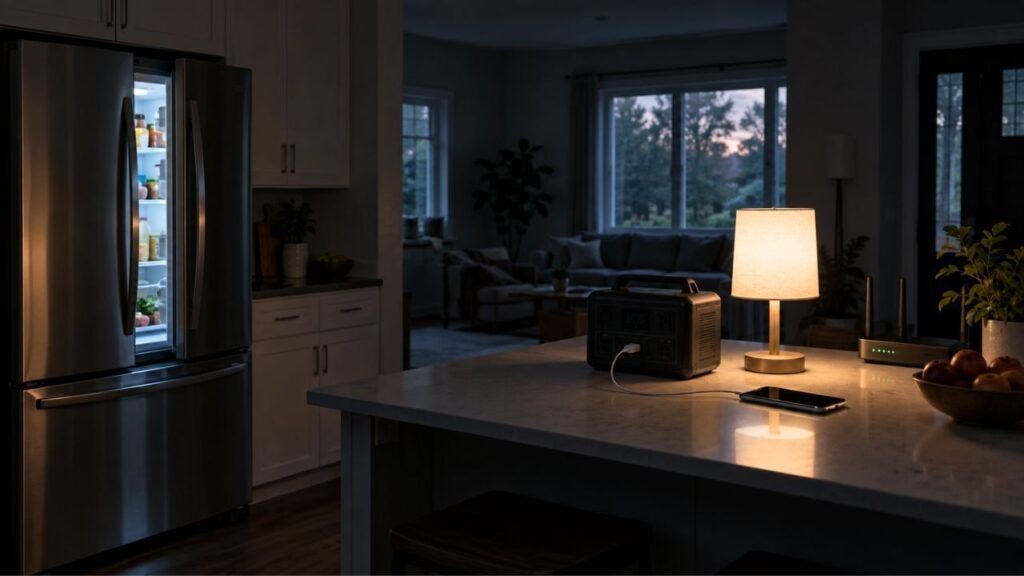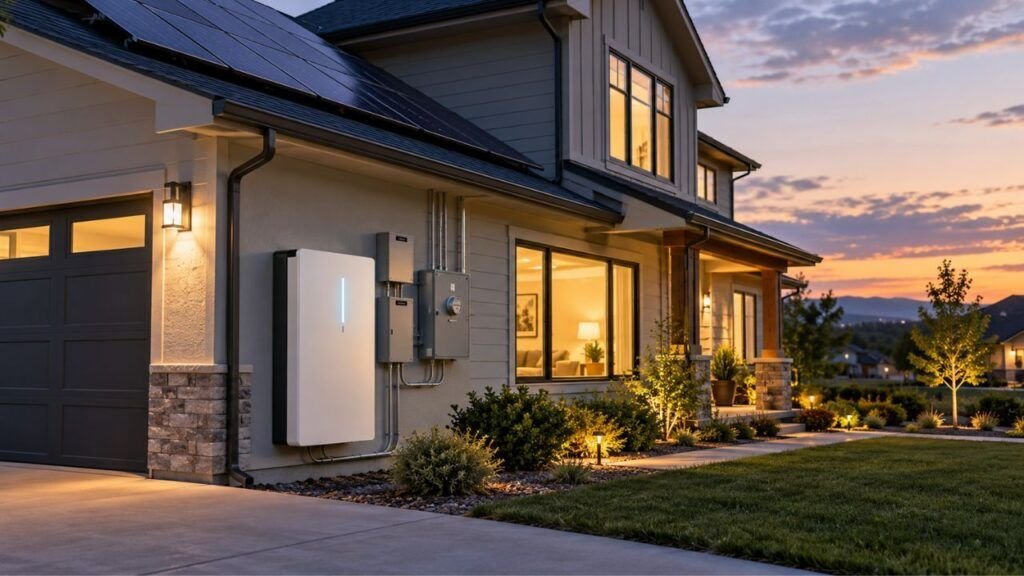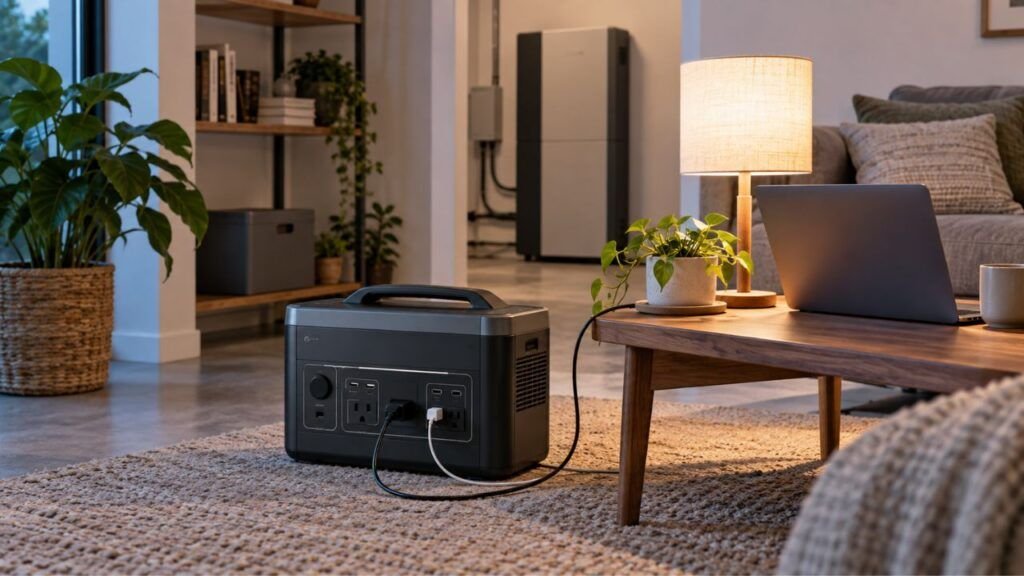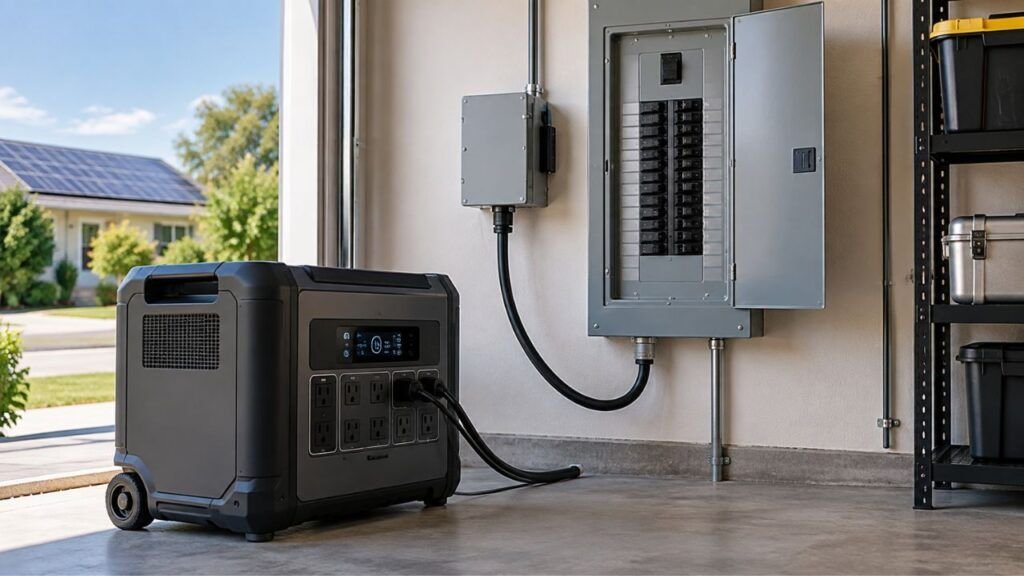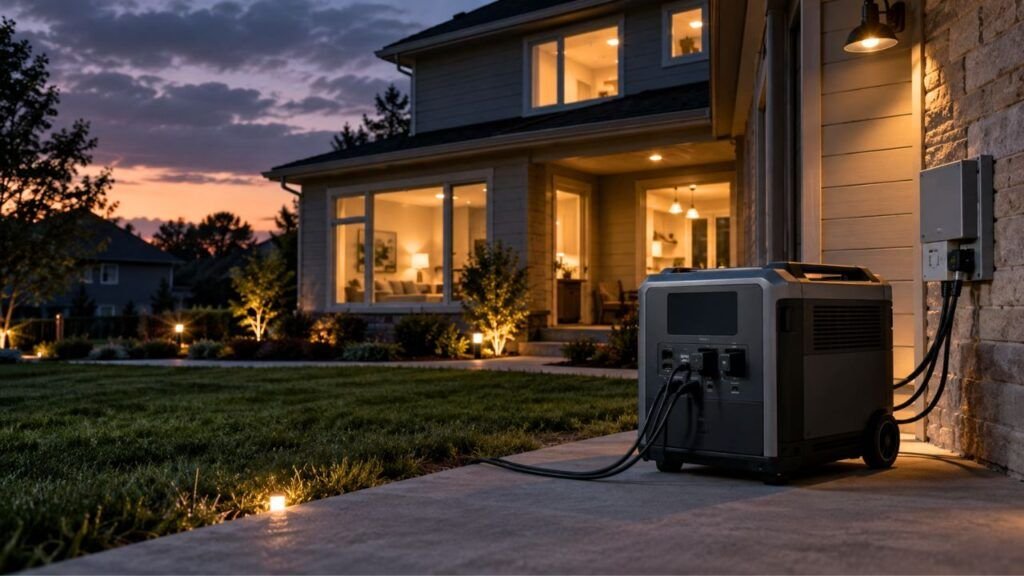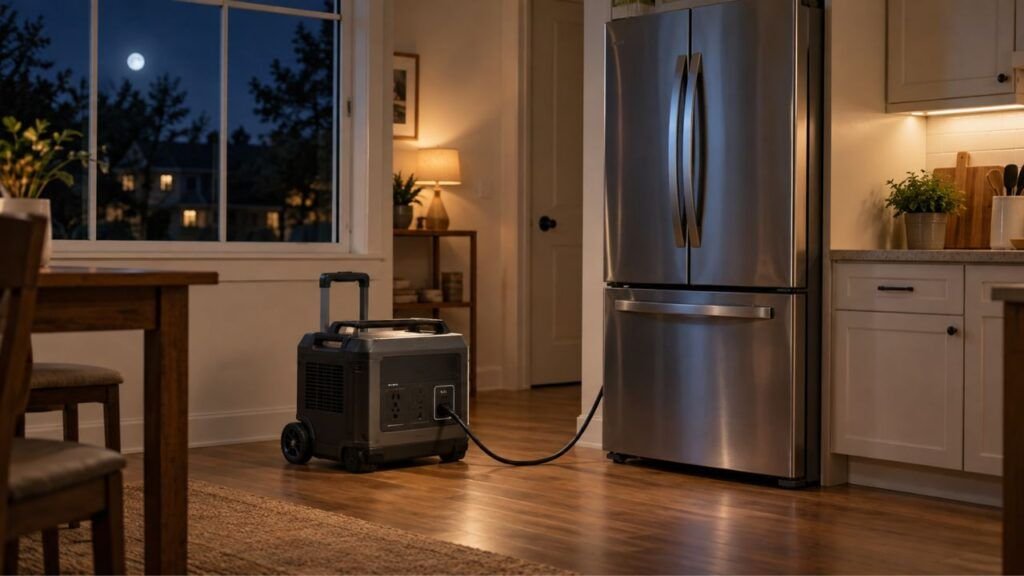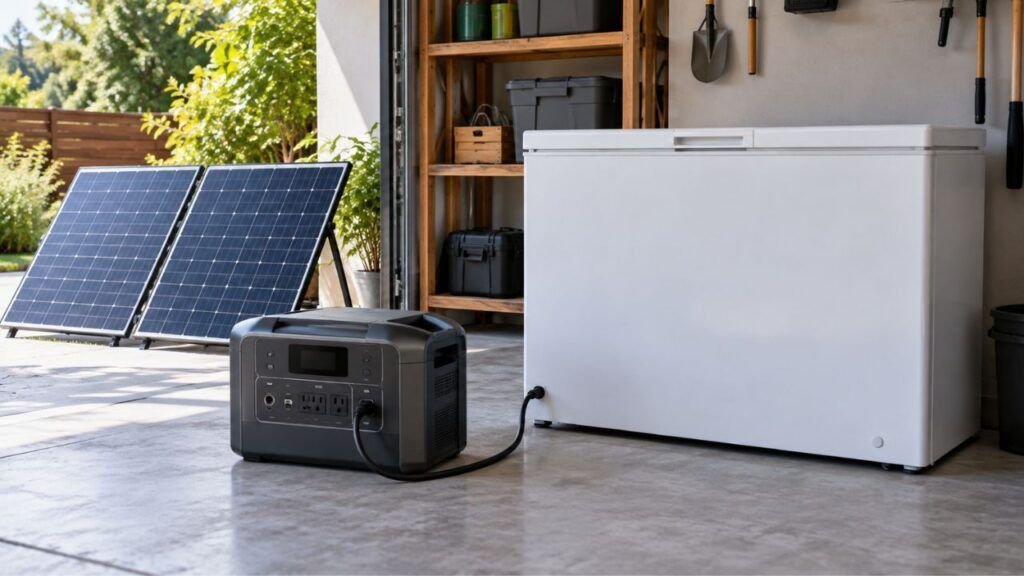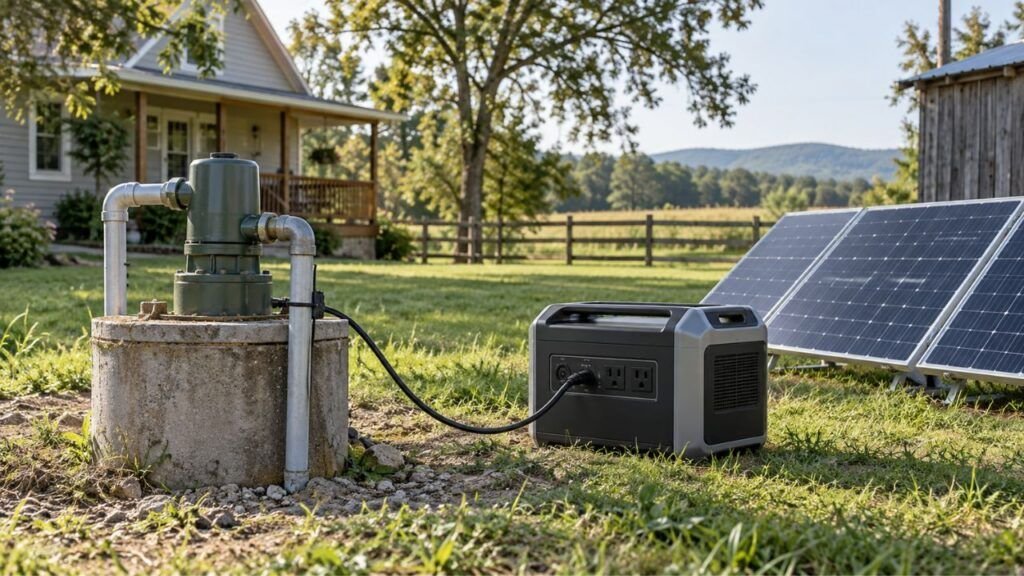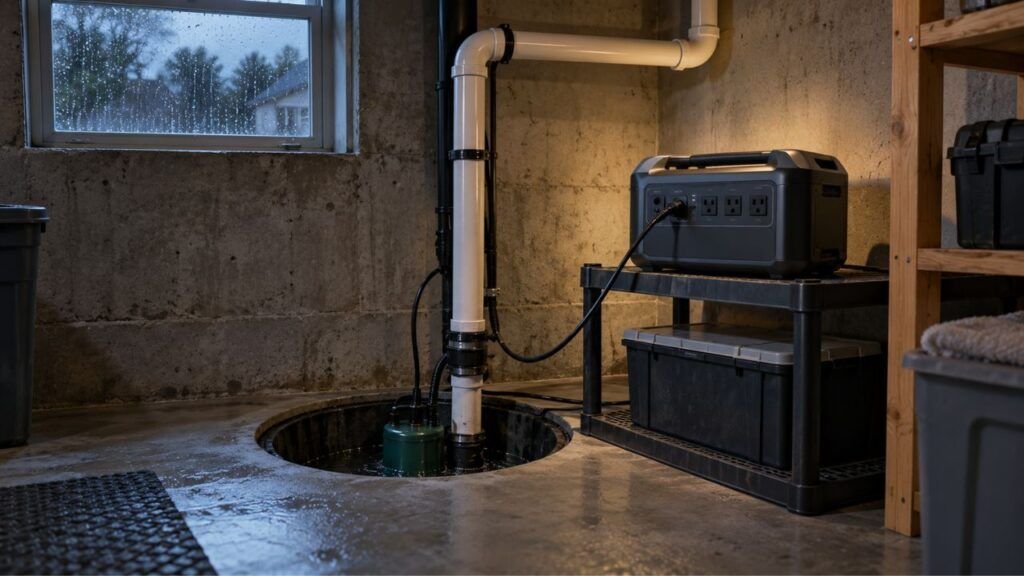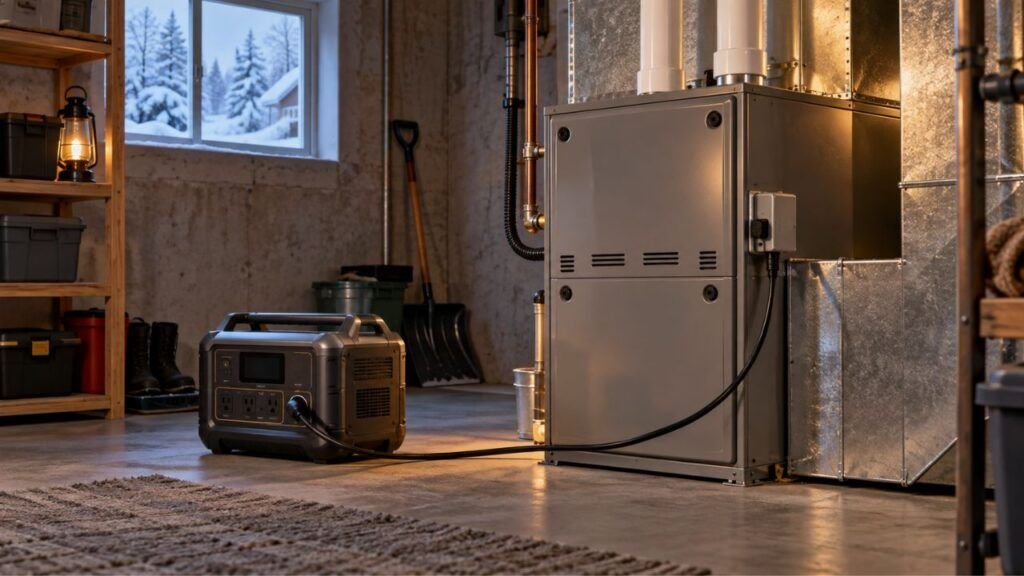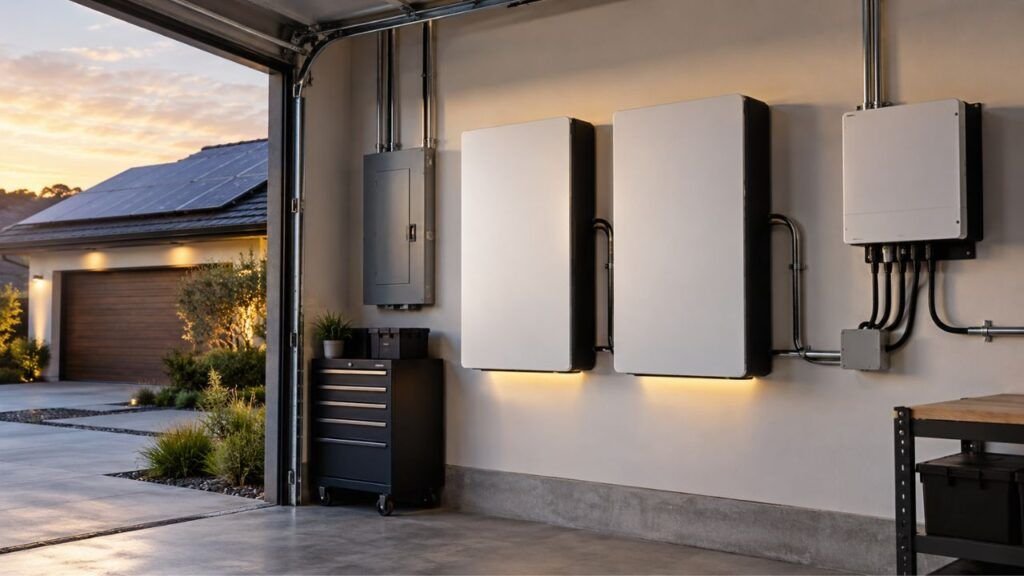
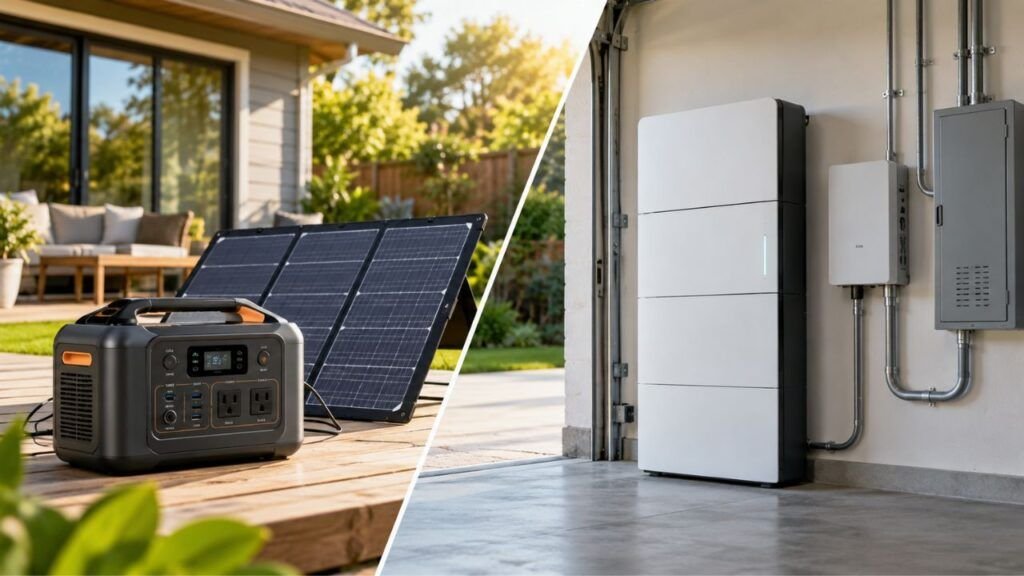
A portable solar generator is usually better for affordable, flexible backup of selected appliances. A whole-house battery system is better for automatic, panel-connected backup across multiple home circuits. However, today’s larger portable systems can blur that line considerably.
In this guide, I’ll help you compare power, runtime, cost, installation, solar charging, and home compatibility. By the end, you should know which backup approach fits your home better.
Key Takeaways
- Portable solar generators cost less and usually need no permanent installation.
- Whole-house batteries connect directly to your home’s electrical system.
- Battery capacity determines runtime, while inverter output determines appliance compatibility.
- Some modern portable systems now support 120V and 240V appliances.
- Whole-house batteries provide better automatic backup and solar integration.
- Both systems eventually need recharging during extended power outages.
- Your essential loads matter more than your home’s square footage.
- Large portable systems can sometimes handle partial-home backup surprisingly well.
Portable Solar Generator vs Whole-House Battery System: Quick Comparison
The biggest difference is how each system interacts with your home. A portable unit normally powers selected appliances, while a whole-house system becomes part of your home’s electrical infrastructure.
| Feature | Portable Solar Generator | Whole-House Battery System |
| Basic design | Self-contained battery and inverter | Permanently installed energy storage |
| Installation | Usually plug-and-play | Professional installation required |
| Portability | Yes | No |
| Electrical panel connection | Optional on compatible systems | Normally integrated |
| Backup target | Selected appliances or circuits | Multiple circuits or whole home |
| 120V support | Common | Yes |
| 240V support | Available on larger models | Common when properly configured |
| Automatic outage transfer | Limited or model-dependent | Common |
| Storage capacity | Small to highly expandable | Usually larger and modular |
| Solar charging | Portable or fixed panels | Usually rooftop solar |
| Heavy appliances | Depends on system size | Better suited when sized correctly |
| Daily energy management | Limited on basic models | Often supported |
| Installation cost | Low to moderate | High |
| Best for | Renters, emergencies, flexible use | Integrated home backup |
The table gives you the basic picture. However, battery capacity alone does not tell the whole story.
A large portable unit may outperform a small home battery. Likewise, a large battery can still struggle if its inverter cannot handle your appliances.
What Is a Portable Solar Generator?
A portable solar generator combines a rechargeable battery, inverter, charging system, and electrical outlets. You can recharge it from solar panels, a wall outlet, or other supported charging sources.
How a Portable Solar Generator Works
A portable solar generator stores electricity inside its battery. The inverter then converts stored DC electricity into AC power.
Most units include several basic components:
- Rechargeable lithium battery
- AC inverter
- Solar charge controller
- AC wall outlets
- USB charging ports
- DC outputs
- Solar input
- Wall charging input
When solar panels are connected, the charge controller regulates incoming power. That electricity charges the battery instead of directly powering everything continuously.
You can then plug appliances directly into the unit.
This makes portable systems very easy to use during outages.
What “Portable” Means Today
Portable solar generators are no longer limited to small camping batteries. The category now includes everything from lightweight power stations to large expandable backup systems.
You generally see three types:
- Small carryable power stations
- Larger wheeled expandable power stations
- Modular systems capable of substantial home backup
Some larger models can provide both 120V and 240V output. Others can connect to compatible transfer equipment or smart electrical panels.
That means a portable system can sometimes power much more than refrigerators and phones.
However, 240V output does not automatically make something a whole-house battery.
Electrical integration, automatic transfer, certification, installation, and load management still matter.
What Is a Whole-House Battery System?
A whole-house battery is a stationary energy-storage system connected to your home’s electrical infrastructure. It can supply power to selected circuits or most household circuits when utility power fails.
How a Whole-House Battery Works
A permanent home battery usually works with an inverter, controller, gateway, or transfer equipment.
Electricity may come from:
- The utility grid
- Rooftop solar panels
- The battery itself
During normal operation, the battery can charge from solar or the grid.
When the grid fails, the system detects the outage. Properly configured equipment then isolates your house from the utility grid.
The battery begins supplying electricity to approved household circuits.
You usually do not need to run extension cords everywhere.
Whole-House Backup vs Critical-Loads Backup
These two terms are often treated like the same thing. They are not.
A critical-load system protects selected electrical circuits.
Those circuits may include:
- Refrigerator
- Freezer
- Wi-Fi
- Lighting
- Furnace controls
- Sump pump
- Medical equipment
- Selected outlets
Whole-house backup is designed to energize much more of your electrical panel.
However, “whole-house” does not mean unlimited electricity.
You still have limits based on battery capacity and inverter output.
Running central AC, an electric range, clothes dryer, and water heater simultaneously can overwhelm smaller systems.
That is why load planning matters so much.
The Biggest Differences Between Portable and Whole-House Battery Backup
The easiest way to compare these systems is to separate storage from power. You need enough energy to last and enough output to run your appliances.
Battery Capacity: Wh and kWh
Battery capacity tells you how much energy the system stores.
Small batteries often use watt-hours, or Wh.
Larger systems usually use kilowatt-hours, or kWh.
One kilowatt-hour equals 1,000 watt-hours.
For example, a 2 kWh battery stores about 2,000 Wh.
A 10 kWh battery stores five times more energy.
Capacity mainly affects how long your appliances can keep running.
However, advertised capacity is not always fully usable.
Some systems reserve a portion of the battery for protection. Energy conversion also creates small losses during operation.
Power Output: Watts and Kilowatts
Power output tells you how much electricity the inverter can provide at once.
This is different from battery capacity.
Imagine having a large water tank with a narrow pipe.
The tank may contain plenty of water. However, the pipe limits how quickly that water can flow.
Battery systems work similarly.
A large battery can store plenty of energy. Yet a smaller inverter may prevent high-wattage appliances from starting.
You should check:
- Continuous output
- Peak or surge output
- Simultaneous appliance demand
- Motor startup requirements
Refrigerators, pumps, and air conditioners can briefly require extra power when starting.
120V vs 240V Appliance Support
Most small household electronics in the USA operate on 120V.
Examples include:
- Lamps
- TVs
- Computers
- Routers
- Refrigerators
- Small kitchen appliances
Many larger household loads use 240V.
These can include:
- Central air conditioners
- Well pumps
- Clothes dryers
- Electric ranges
- Electric water heaters
- Some EV chargers
Smaller portable solar generators commonly provide only 120V output.
Larger models may provide 240V support.
Whole-house battery systems are generally better suited for 240V loads when properly configured.
Still, voltage alone is not enough.
You must also check running wattage and startup demand.
Home Electrical Panel Integration
Portable solar generators normally power appliances through their own outlets.
You may connect:
- Refrigerator directly
- Wi-Fi directly
- Lamps directly
- Extension cords to selected devices
Larger compatible systems can sometimes connect to home circuits through proper transfer equipment.
A whole-house battery is designed around electrical-panel integration from the beginning.
This is a major practical difference.
Never improvise a connection between a portable generator and household wiring.
Unsafe backfeeding can endanger your home, utility workers, and nearby equipment.
Use approved equipment whenever power enters home wiring.
Automatic vs Manual Backup
Basic portable power stations usually require manual setup.
You may need to:
- Bring the unit into position.
- Connect appliances.
- Turn specific outputs on.
- Monitor remaining battery capacity.
Some portable systems provide UPS or EPS functions for connected devices.
Large systems may also support automatic home integration through compatible equipment.
Whole-house batteries usually handle outages more smoothly.
The system can detect utility failure and begin supplying backup electricity automatically.
That is particularly useful when nobody is home.
Portability and Flexibility
This is where portable systems clearly win.
You can use one in:
- Your house
- Garage
- RV
- Campsite
- Workshop
- Backyard
- Jobsite
You can also take it when moving homes.
Permanent batteries stay attached to the property.
That is usually fine for homeowners planning to remain there long-term.
Renters may find portable systems much more practical.
What Can Each System Actually Power During an Outage?
Appliance compatibility depends on inverter output, battery capacity, voltage, and startup demand. The following table gives you a practical general comparison.
| Appliance or Load | Standard Portable Solar Generator | Large 120/240V Portable System | Whole-House Battery |
| Phones and tablets | Excellent | Excellent | Excellent |
| Wi-Fi router | Excellent | Excellent | Excellent |
| Laptop | Excellent | Excellent | Excellent |
| Refrigerator | Usually practical | Practical | Practical |
| Freezer | Usually practical | Practical | Practical |
| LED lighting | Practical | Practical | Practical |
| Furnace blower | Model-dependent | Usually practical | Usually practical |
| Sump pump | Surge-dependent | Usually practical | Usually practical |
| Microwave | Output-dependent | Practical | Practical |
| Window AC | Model-dependent | Practical | Practical |
| Well pump | Often difficult | Possible with proper 240V support | Common when properly sized |
| Central AC | Usually impractical | Possible on selected systems | Possible when properly sized |
| Electric water heater | Usually impractical | Very demanding | System-dependent |
| Clothes dryer | Usually impractical | Very demanding | System-dependent |
| EV charging | Limited | Possible at reduced rates | Possible but energy-intensive |
Always remember that simultaneous loads matter.
A system may run each appliance separately but struggle when several operate together.
For example, your refrigerator may start while your microwave and pump already operate.
That short power spike can exceed the inverter’s limit.
How Long Will a Portable Solar Generator or Whole-House Battery Last?
Runtime depends mainly on usable battery capacity and your average electrical load.
A simple estimate looks like this:
Estimated runtime = usable battery capacity in kWh ÷ average load in kW
Suppose you have a usable 2 kWh battery.
If your average load is 200 watts, or 0.2 kW:
2 kWh ÷ 0.2 kW = about 10 hours
Real-world runtime will usually be somewhat lower.
That happens because of:
- Inverter losses
- Standby consumption
- Battery reserve settings
- Temperature
- Battery age
- Appliance cycling
- Conversion efficiency
Imagine three common outage situations.
If you only run phones, Wi-Fi, and a few lights, consumption stays low.
Add a refrigerator, freezer, television, and fans, and usage rises.
Start operating air conditioning, pumps, cooking appliances, or electric heating, and battery consumption increases dramatically.
This is why asking “How long does a battery last?” has no universal answer.
You need to know what you are powering first.
Solar Recharging During an Outage: Which System Has the Advantage?
Both systems can recharge from sunlight, but their charging abilities can differ significantly. Solar array size and charging limits determine how quickly your battery recovers.
Portable Solar Panel Charging
Portable generators usually accept solar electricity through a built-in charge controller.
Every unit has solar input limits.
Those limits may include:
- Maximum solar wattage
- Maximum voltage
- Maximum current
- Supported connector type
- MPPT operating range
You cannot simply keep adding panels indefinitely.
For example, connecting 1,200 watts of panels to a 500-watt solar input does not magically provide 1,200 watts of charging.
The power station still controls how much it can accept.
Sunlight conditions also matter.
Cloud cover, panel angle, temperature, shading, and season all affect production.
That is why real-world solar charging often takes longer than perfect laboratory estimates.
Rooftop Solar With a Whole-House Battery
Permanent home batteries can work with much larger rooftop solar arrays.
This can be a major advantage during long outages.
During daylight, solar production may:
- Power household loads
- Recharge the battery
- Reduce stored energy consumption
At night, the battery takes over again.
A properly sized system can repeat this cycle for several days.
However, weather still matters.
Several cloudy days can reduce solar production significantly.
You should never assume solar creates unlimited backup electricity.
Why Rooftop Solar Alone Usually Does Not Work During an Outage
This surprises many homeowners.
Standard grid-tied solar panels usually shut down when utility power fails.
The shutdown protects utility workers from unexpected electricity entering damaged power lines.
A compatible battery and inverter system can create an isolated home electrical system during outages.
This process allows properly configured solar panels to continue operating safely.
So, rooftop solar alone does not automatically provide blackout protection.
The entire system must support backup operation.
Portable Solar Generator vs Whole-House Battery Cost
Portable systems generally have the lower entry cost. Whole-house systems cost more because you’re paying for batteries, electrical integration, labor, safety equipment, and installation.
Portable Solar Generator Costs
Small portable power stations may cost several hundred dollars.
Larger systems can cost several thousand dollars.
Your total price can increase with:
- Expansion batteries
- Portable solar panels
- Fixed solar panels
- Extra charging accessories
- 240V accessories
- Transfer equipment
- Smart home integration
One advantage is flexibility.
You can start with one battery and expand later.
That makes portable systems easier to approach with a limited budget.
Whole-House Battery System Costs
A permanent home battery installation can easily reach five figures.
Larger whole-home systems may cost considerably more.
The total price can include:
- Battery modules
- Inverter equipment
- Transfer gateway
- Electrical labor
- Backup subpanel
- Main-panel upgrades
- Permits
- Inspection
- Monitoring equipment
- Solar integration
A system designed only for essential circuits costs less than one designed for large whole-home loads.
Central air conditioning and electric heating can significantly increase required system size.
Federal, State, and Utility Incentives
Battery incentives have changed over time, so avoid relying on older articles.
Federal homeowner incentives available in previous years may not apply to newly installed systems today.
However, your state or local utility may still offer:
- Battery rebates
- Solar incentives
- Demand-response programs
- Virtual power plant programs
- Time-of-use savings opportunities
Check current local programs before calculating your final cost.
Incentive availability can vary significantly by state and utility territory.
Which Option Can Save More on Electricity Bills?
A portable solar generator normally provides the most value during emergencies. It usually does not operate as part of your home’s daily electricity strategy.
A whole-house battery may provide additional everyday benefits.
Depending on your utility plan, it may help you:
- Store excess solar production
- Increase solar self-consumption
- Avoid expensive time-of-use periods
- Charge during cheaper hours
- Participate in selected utility programs
Still, a battery does not automatically pay for itself.
Savings depend on electricity rates, solar production, system price, usage habits, and local programs.
Backup reliability may be the main reason you buy it.
Treat electricity savings as an additional factor instead of a guaranteed return.
Installation, Electrical Codes, and Safety
Portable systems are simpler, but connecting any battery to household wiring changes the situation. Permanent home systems require proper planning, approved equipment, and qualified installation.
Portable Solar Generator Setup
Basic portable use is straightforward.
Charge the power station, then connect supported appliances to its outlets.
You generally do not need:
- Major electrical work
- Permanent installation
- Home remodeling
- Utility coordination
However, connecting a power station to home circuits is different.
Use only proper transfer equipment and manufacturer-approved methods.
Never create makeshift adapters for backfeeding household circuits.
That can create serious shock and fire hazards.
Whole-House Battery Installation
Permanent battery systems generally require professional electrical work.
Installation may involve:
- Electrical permits
- Utility requirements
- Main-panel evaluation
- Backup circuit planning
- Battery placement
- Fire clearances
- Transfer equipment
- System commissioning
Local rules can vary.
That is why experienced installers normally evaluate your house before final sizing.
An installer should also examine existing solar equipment if you already have panels.
Battery Safety Standards to Look For
Residential energy-storage equipment should meet applicable safety requirements.
Important standards and codes can include:
- UL 9540
- UL 9540A testing
- NFPA 855
- National electrical requirements
- Local building and fire codes
You do not need to become an electrical-code expert.
However, certification and proper installation should be part of your buying decision.
Do not compare batteries only by price and capacity.
Safety matters just as much.
Maintenance, Battery Life, and Warranty Differences
Modern lithium battery systems require relatively little routine maintenance. Still, you should compare warranties and long-term performance carefully.
Important factors include:
- Battery chemistry
- Expected cycle life
- Calendar aging
- Operating temperature limits
- Warranty length
- Warranty throughput limits
- Guaranteed remaining capacity
- Storage recommendations
- Software support
- Replacement battery availability
- Expansion battery compatibility
Many newer systems use lithium iron phosphate, commonly called LiFePO4 or LFP.
LFP batteries are popular for backup systems because of their cycle life and thermal stability.
However, chemistry alone does not determine system quality.
A good battery management system also matters.
When comparing warranties, look beyond the number of years.
Check how much capacity the manufacturer guarantees after normal use.
Advantages and Disadvantages of a Portable Solar Generator
Portable solar generators are attractive because they provide backup without committing to permanent installation. However, that flexibility comes with practical limits.
Advantages
- Lower initial cost
- Minimal setup
- Easy to relocate
- Useful for camping
- Useful in an RV
- Solar charging capability
- Quiet operation
- No combustion exhaust
- Suitable for renters
- Expandable options available
- Easy emergency deployment
- No permanent home modification
Disadvantages
- Limited runtime without recharging
- Smaller solar-input limits
- Manual setup on many systems
- Extension cords can become inconvenient
- Smaller models cannot handle 240V loads
- High-wattage appliances require expensive systems
- Panel integration adds complexity
- Daily electricity savings are usually limited
Advantages and Disadvantages of a Whole-House Battery System
A whole-house battery offers a cleaner and more integrated backup experience. The tradeoff is higher cost and less flexibility.
Advantages
- Automatic outage protection
- Direct home electrical integration
- Larger storage options
- Better rooftop solar integration
- Stronger support for 240V loads
- No extension cords throughout the house
- Better daily energy management
- Expandable configurations available
- Centralized monitoring
- Cleaner long-term installation
Disadvantages
- Higher purchase cost
- Professional installation required
- Permits may be necessary
- Permanently attached to property
- Battery energy is still limited
- Larger homes may need multiple batteries
- HVAC can drain storage quickly
- Electrical upgrades may increase installation cost
Portable Solar Generator vs Whole-House Battery for Different Homes
The right backup solution depends heavily on how you live. Your housing situation, appliances, outage frequency, and solar plans can change the answer.
For Renters and Apartment Residents
A portable solar generator usually makes more sense.
You can use it without modifying the property.
You can also take the system when moving.
Focus on backup power for refrigerators, electronics, lighting, communications, and medical devices.
Large electrical appliances may not be practical.
For Homeowners With Occasional Short Outages
A portable system may provide everything you need.
If outages last only several hours, keeping essentials online may be enough.
You may not need an expensive permanent battery.
Start by identifying your five most important outage loads.
Then size a portable system around those appliances.
For Homes With Frequent Power Outages
Frequent outages make automatic battery backup much more attractive.
A permanent system can switch over without requiring manual setup.
This becomes especially useful during:
- Overnight outages
- Storms
- Vacations
- Workdays
- Extreme temperatures
You should also think about solar recharging if outages commonly last several days.
For Homes With Rooftop Solar
A whole-house battery becomes especially attractive when rooftop solar already exists.
The battery can capture solar energy instead of sending everything elsewhere.
During compatible outage operation, solar can also help recharge the battery.
Still, compatibility must be checked carefully.
Not every existing solar inverter works with every battery.
For Homes With Central AC or Well Pumps
These homes need more careful system sizing.
Central AC and well pumps may require:
- 240V output
- High startup surge capability
- Larger inverter capacity
- Load-management equipment
Do not buy based on battery capacity alone.
Check the appliance data plate and startup requirements first.
For Multi-Day Outages
Long outages change the calculation completely.
A very large battery can eventually run empty.
For multi-day resilience, think about:
- Daily electricity consumption
- Solar production
- Cloudy weather
- Battery capacity
- Load shedding
- Recharge speed
- Alternative backup sources
Reducing electricity use during an outage can dramatically extend runtime.
Sometimes the best backup strategy is not powering everything.
Can a Large Portable Solar Generator Replace a Whole-House Battery?
Sometimes, especially if your goal is emergency backup rather than complete home energy management.
Today’s larger portable systems can provide serious power.
Depending on the model, they may offer:
- Expandable battery capacity
- 240V output
- Large inverter output
- Multiple expansion batteries
- Home backup accessories
- Solar charging
- Smart-panel compatibility
That can make them suitable for selected household circuits.
Some homeowners may find that approach provides enough backup without installing a traditional wall-mounted battery.
However, permanent systems still have important advantages.
They are generally better suited for:
- Seamless automatic operation
- Large rooftop solar arrays
- Daily energy optimization
- Integrated monitoring
- Permanent electrical infrastructure
- Larger multi-circuit backup designs
Think of high-end portable systems as a middle category.
They can overlap with home batteries without being identical.
How to Choose Between a Portable Solar Generator and Whole-House Battery
Choosing becomes much easier once you focus on your actual loads. Work through these steps before comparing specific battery models.
- List your essential appliances.
Write down everything you want running during an outage. - Calculate simultaneous running wattage.
Add the wattage of appliances likely to operate together. - Check startup surge requirements.
Motors and compressors may need extra power when starting. - Identify your 240V appliances.
This quickly eliminates many smaller portable systems. - Estimate daily energy consumption.
Calculate how many kWh you expect to use each day. - Choose your desired outage duration.
Decide whether you need hours or several days. - Estimate available solar charging.
Consider panel wattage, sunlight, and charging limits. - Decide whether automatic backup matters.
Some homeowners want zero manual setup during outages. - Consider daily energy management.
Permanent batteries can offer value outside emergency situations. - Compare complete system costs.
Include panels, batteries, installation, transfer equipment, and accessories. - Consider whether you rent or own.
Permanent systems usually make less sense for renters. - Check expansion options.
A system that grows later can reduce today’s upfront cost.
Portable Solar Generator vs Whole-House Battery: Which Should You Choose?
There is no universal winner here. The better choice depends on your expected loads, budget, housing situation, and desired level of automation.
Choose a Portable Solar Generator If You…
- Mainly need essential appliances
- Experience short outages
- Rent your home
- Want a lower entry cost
- Need portable power elsewhere
- Prefer plug-and-play equipment
- Do not need automatic whole-home backup
- Want to expand gradually
A portable unit is often enough when your goal is simple emergency power.
You do not necessarily need to back up every circuit.
Choose a Whole-House Battery System If You…
- Own your home
- Want automatic backup
- Need multiple circuits protected
- Have rooftop solar
- Want better 240V support
- Experience frequent outages
- Need larger energy storage
- Want electricity-rate optimization
- Prefer permanent electrical integration
A whole-house battery is the stronger choice when backup becomes part of your home’s infrastructure.
Is There a Middle Ground Between the Two?
Yes, and this category is becoming increasingly important.
Large expandable portable systems can sit between basic power stations and traditional whole-house batteries.
A setup may include:
- Large portable battery
- Expansion batteries
- 120V and 240V output
- Transfer switch
- Smart electrical panel
- Portable solar panels
- Roof-mounted solar panels
This approach lets you start smaller and expand later.
You may also retain some portability.
For homeowners wanting more than extension-cord backup without committing immediately to a traditional stationary system, this can be very appealing.
Just remember that electrical-panel connections still require proper equipment and installation.
Once your battery begins powering home wiring, treat it like a real electrical project.
Final Verdict
A portable solar generator is the better choice for flexibility, lower upfront cost, and essential-appliance backup. It works especially well for renters, short outages, smaller electrical loads, and homeowners who want portable power for other uses.
A whole-house battery system is better when you want seamless automatic backup, permanent electrical integration, rooftop solar support, and the ability to protect several household circuits.
Large modern portable systems have narrowed the gap significantly. Some can now handle 240V appliances and provide substantial expandable storage.
Still, do not choose based only on battery size. Calculate both peak power in kW and required backup energy in kWh. Those two numbers will tell you far more than the words “portable” or “whole-house.”
Related FAQs
Can a Portable Solar Generator Power an Entire House?
A large portable solar generator can power many household loads, but powering an entire house depends on inverter output, battery capacity, 240V support, and simultaneous appliance demand. Smaller units are usually better for essential appliances.
How Big of a Battery Do I Need to Back Up My House?
Start by calculating your home’s critical daily energy use in kWh. A household using 10 kWh of backup electricity daily needs roughly that amount of usable storage for one day before considering solar recharging and system losses.
Is a Whole-House Battery Worth the Cost?
A whole-house battery may be worthwhile if you experience frequent outages, already have rooftop solar, want automatic backup, or can benefit from time-of-use electricity management. Its value depends on your local electricity rates and backup needs.
Can a Whole-House Battery Work Without Solar Panels?
Yes. A whole-house battery can charge from the utility grid and provide backup without solar panels. However, without solar, you cannot normally replenish the battery during a prolonged outage after stored energy runs low.
Can You Connect a Portable Power Station to a Home Electrical Panel?
Some portable power stations can connect to household circuits through compatible transfer switches, power inlets, or smart panels. The connection should use approved equipment and proper electrical installation rather than improvised backfeeding methods.
Can a Portable Solar Generator Run Central Air Conditioning?
Some larger 240V portable systems can run selected central air conditioners if their inverter handles both running power and startup surge. Smaller portable generators usually cannot support central AC reliably.
Can a Whole-House Battery Run Central AC?
Yes, a properly sized whole-house battery can run central air conditioning. You need enough inverter output, startup capacity, and battery storage, and some systems may use soft-start or load-management equipment.
How Long Will a 10 kWh Battery Power a House?
Runtime depends on electricity use. A 10 kWh battery could theoretically support a 1 kW average load for roughly ten hours, although actual runtime will be lower because of reserve settings and system losses.
What Is the Difference Between kW and kWh in Home Battery Backup?
Kilowatts measure how much power your system can deliver at one time. Kilowatt-hours measure how much energy the battery stores. You need sufficient kW for appliances and sufficient kWh for runtime.
Do Solar Panels Recharge a Home Battery During a Power Outage?
They can if your solar and battery system is specifically designed for outage operation. Standard grid-tied solar normally shuts down during outages unless compatible battery, inverter, and isolation equipment allow safe islanded operation.
Does a Whole-House Battery Automatically Turn On During an Outage?
Most properly configured permanent home battery systems can detect utility failure and switch to backup automatically. Exact transfer behavior and response time depend on the battery, inverter, gateway, and installation design.
Are Whole-House Batteries Eligible for a Federal Tax Credit in 2026?
The federal residential clean-energy incentives available for many battery installations in previous years changed after 2025. Homeowners installing batteries in 2026 should check current federal rules and available state or utility programs before estimating incentives.

Austin Parker writes practical generator how-to guides, troubleshooting advice, and buying guides for solar, portable, and fuel-powered generators. His focus is helping readers solve common power problems, understand their options, and choose dependable equipment for real-world use.