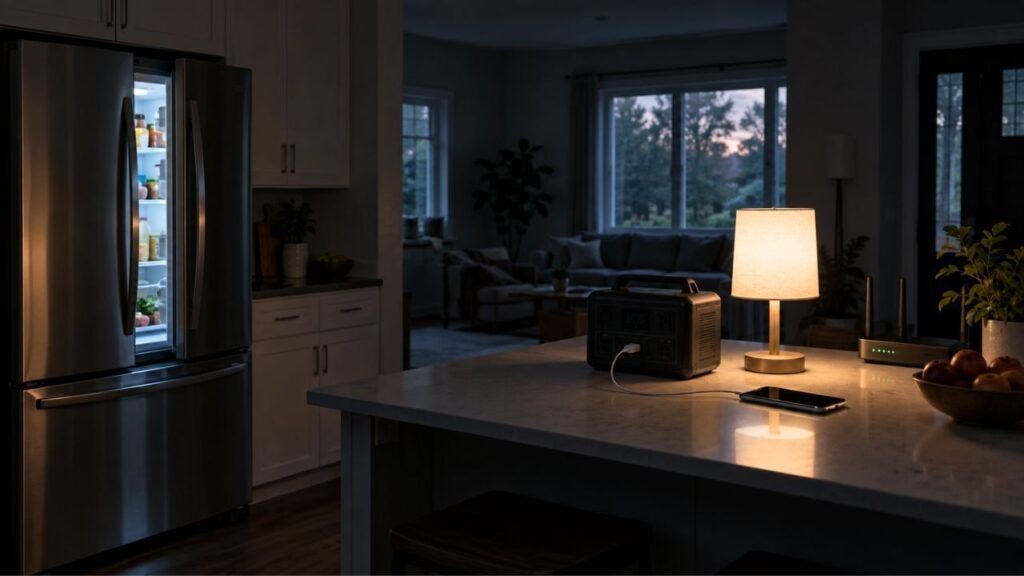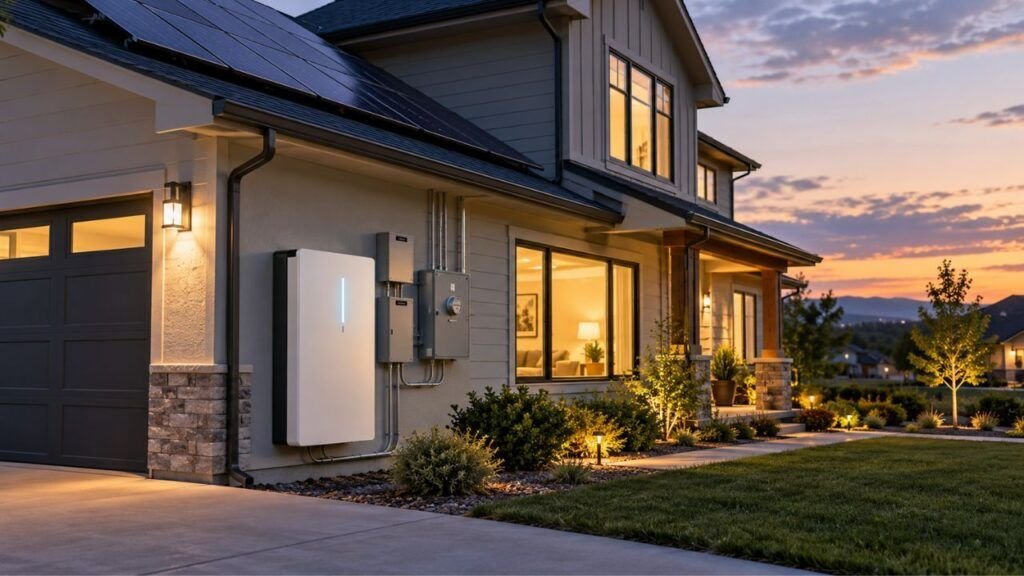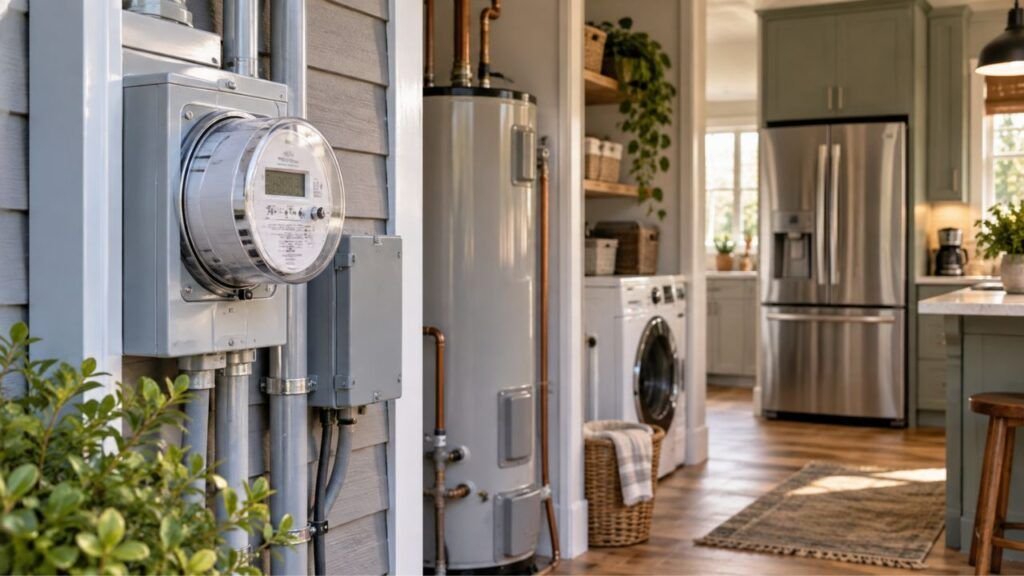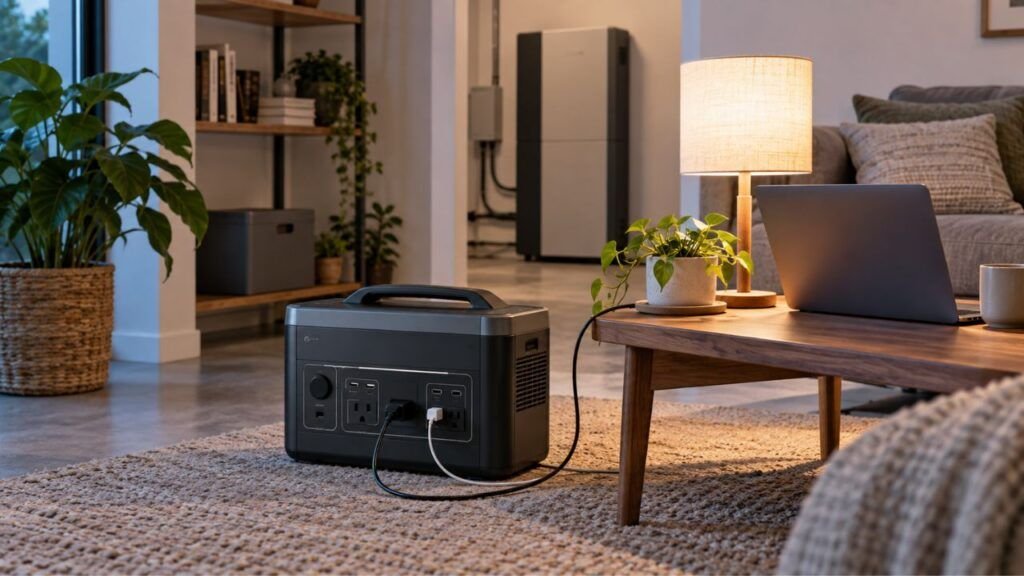
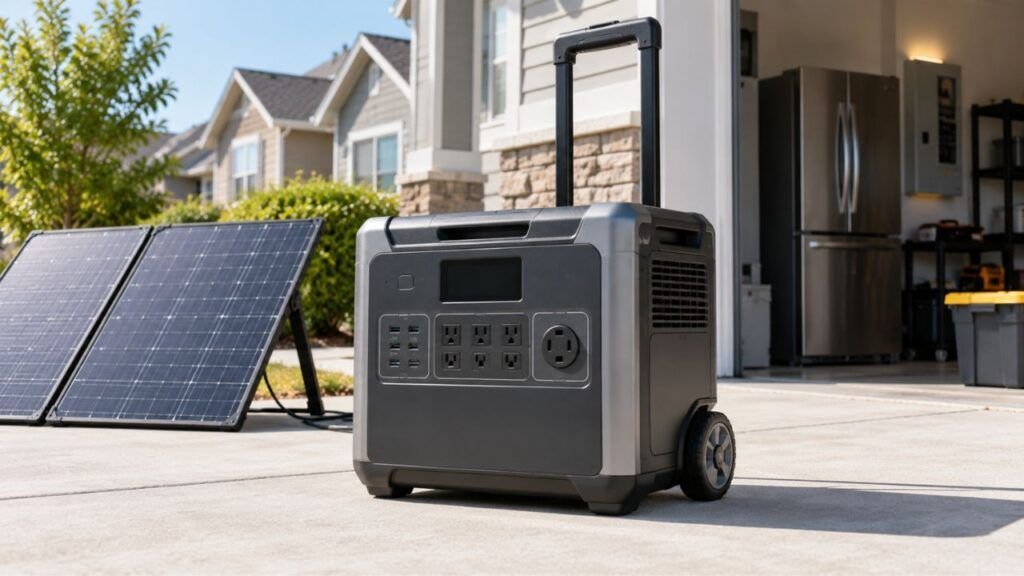
Yes, a solar generator can power both 120V and 240V loads, but only when it supports true 120/240V split-phase output. Most portable solar generators provide 120V only. A larger battery or higher wattage rating cannot turn a 120V-only unit into a 240V power source.
If you need to run a refrigerator, well pump, air conditioner, dryer, or other household equipment, voltage is only the first thing to check. I’ll show you how to confirm voltage, running watts, startup surge, outlets, battery capacity, and safe connection options.
Key Takeaways
- Most small and midsize solar generators provide only 120V AC.
- True split-phase models can provide both 120V and 240V power.
- A large battery does not automatically mean 240V capability.
- A simple plug adapter cannot convert 120V into 240V power.
- Running watts and startup surge must stay within generator limits.
- Some systems limit how much power each 120V leg can provide.
- Home-panel connections require compatible transfer or isolation equipment.
- Always check the appliance nameplate before assuming its voltage.
Can a Solar Generator Supply 120V and 240V at the Same Time?
Yes, some solar generators can supply 120V and 240V loads simultaneously. The generator must specifically support that type of output configuration.
A true 120/240V split-phase solar generator creates two 120V AC legs. Each leg supplies about 120V relative to neutral. When the two hot legs are used together, they provide about 240V.
That means the same system may power ordinary 120V devices while also running compatible 240V equipment.
However, this does not mean every 240V solar generator works identically.
Some models provide native split-phase output from one power station. Others need two compatible units connected through manufacturer-approved equipment.
You also need to check the total output limit. Running several 120V appliances alongside a large 240V appliance can still overload the inverter.
How 120V and 240V Power Work in a U.S. Home
Most U.S. homes receive both 120V and 240V electrical service. Knowing the basic difference makes solar generator compatibility much easier to understand.
What Is a 120V Load?
Most everyday plug-in appliances in American homes operate on approximately 120V.
Common examples include:
- Refrigerators
- Televisions
- Wi-Fi routers
- Lamps
- Computers
- Microwaves
- Coffee makers
- Fans
- Many window air conditioners
- Smaller power tools
These devices normally plug into standard household receptacles.
However, do not assume every appliance in these categories uses 120V. Always check the voltage printed on the appliance nameplate.
What Is a 240V Load?
Larger household equipment often operates at approximately 240V.
Common examples include:
- Central air conditioners
- Electric clothes dryers
- Electric ranges
- Electric water heaters
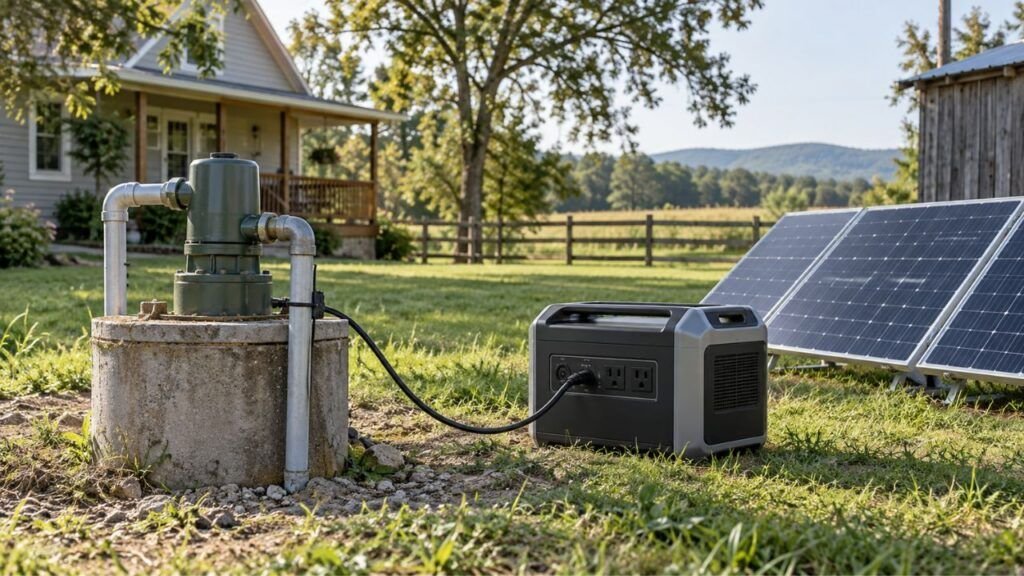
- Deep-well pumps
- Large air compressors
- Some workshop tools
- Level 2 EV charging equipment
These loads normally require both hot legs from a split-phase system.
Some appliances use only 240V internally. Others require both 240V and 120V because different components operate at different voltages.
What Does 120/240V Split-Phase Mean?
A typical U.S. split-phase electrical system has two hot legs and a neutral.
The basic arrangement looks like this:
- Hot leg 1 to neutral provides about 120V.
- Hot leg 2 to neutral provides about 120V.
- Hot leg 1 to hot leg 2 provides about 240V.
A true split-phase solar generator needs to reproduce this arrangement correctly.
That is different from simply having a powerful 120V inverter.
120V vs 240V Solar Generator Loads
The voltage requirement depends on the appliance itself. The examples below show common situations, but your appliance nameplate should always be the final reference.
| Load Example | Typical Voltage | Main Challenge | What the Solar Generator Needs |
| Refrigerator | 120V | Compressor startup surge | 120V output with enough surge capacity |
| Microwave | 120V | High running wattage | Adequate continuous 120V output |
| Window AC | Often 120V | Compressor startup | Enough running and surge wattage |
| Deep-well pump | Often 240V | High motor starting surge | True 240V output and strong surge capacity |
| Electric dryer | Usually 120/240V | Heating element and controls | Compatible split-phase output |
| Electric water heater | Commonly 240V | High continuous demand | 240V output with enough running watts |
| Central AC | Commonly 240V | Large compressor surge | Strong 240V inverter and adequate surge |
| Level 2 EV charging | 240V | Sustained high power draw | Adequate 240V output and battery capacity |
Voltage tells you whether the equipment is electrically compatible. Wattage tells you whether the inverter can actually handle the load.
Why a High-Wattage 120V Solar Generator Cannot Run a 240V Appliance
One of the biggest misunderstandings involves wattage and voltage.
Imagine you have a solar generator with these specifications:
- 5,000Wh battery capacity
- 3,600W continuous AC output
- 7,200W surge output
- 120V AC output only
Those numbers may look impressive.
However, it still cannot directly provide normal 240V split-phase power.
The problem is not battery size. The problem is voltage configuration.
Think about the specifications separately.
Voltage determines electrical compatibility.
A 240V appliance generally needs a compatible 240V supply.
Watts determine how much power the inverter can deliver.
The inverter must handle the appliance’s running and startup requirements.
Watt-hours determine how long the battery can provide energy.
A larger battery increases runtime. It does not change the AC voltage.
This distinction makes choosing a solar generator much easier.
How to Tell Whether Your Solar Generator Supports 240V
Product names can be confusing, so check the technical specifications instead. Look for several details before connecting any 240V equipment.
- Look for 120/240V, 120V/240V, or split-phase output.
- Check the continuous wattage available at 240V.
- Check the 240V surge or peak rating.
- Confirm whether 120V and 240V work simultaneously.
- Check maximum amperage at the 240V outlet.
- Confirm whether one or two power stations are required.
- Look for a dedicated 240V-compatible receptacle.
- Check whether neutral is available when your appliance requires it.
- Review any restrictions on individual 120V legs.
- Check whether the system supports home-panel backup.
- Read the manufacturer’s manual before relying on marketing claims.
A 240V-looking outlet is useful evidence, but it is not enough alone.
The generator specifications should clearly state the supported voltage configuration.
Can Two 120V Solar Generators Be Combined to Make 240V?
Some solar generator systems can combine two power stations for 240V operation. However, this only works when the manufacturer specifically designs the units for that purpose.
When Two Units Can Produce 240V
Certain portable power station systems allow two matching units to work together.
They normally require a manufacturer-approved accessory or synchronization device.
The equipment controls the relationship between both AC outputs so they create a proper split-phase supply.
This arrangement may increase both available voltage and total power capacity.
However, compatibility is usually limited to specific models.
Never assume two units from the same brand automatically support this feature.
Why You Cannot Combine Any Two 120V Power Stations
Two ordinary 120V AC outlets do not automatically create usable 240V power.
Their inverter outputs need the correct phase relationship.
Simply connecting two unrelated power stations together does not guarantee that relationship.
Improvised wiring can also create serious shock, equipment, or fire risks.
If a manufacturer does not specifically approve a dual-unit 240V configuration, do not attempt to create one yourself.
Use a solar generator designed for true 240V output instead.
Can a 120V-to-240V Adapter Power a 240V Appliance?
No. A simple plug adapter cannot turn a 120V solar generator into a true 240V power source.
A plug adapter mainly changes the physical connector.
It does not create another 120V hot leg. It also does not automatically double the voltage.
This distinction matters because many large appliances have completely different receptacles.
Finding an adapter that physically fits does not prove electrical compatibility.
There are electrical transformers capable of changing voltage in specific applications. However, transformers introduce additional sizing, grounding, startup, efficiency, and safety considerations.
For normal backup use, the safer approach is simple.
Use equipment that provides the correct voltage natively or through a manufacturer-approved configuration.
Voltage Is Only the First Requirement: Check Running and Surge Watts
Finding a solar generator with the correct voltage is only step one. You also need enough inverter output for normal operation and startup.
Continuous or Running Wattage
Running wattage describes how much power an appliance needs during normal operation.
The basic electrical relationship is:
Watts = Volts × Amps
For example, a 240V load drawing 10 amps uses approximately:
240 × 10 = 2,400 watts
Your solar generator needs enough continuous output to support that load.
You should also leave some operating headroom rather than continuously running the inverter at its absolute limit.
Startup or Surge Wattage
Motor-driven appliances often need much more power when they start.
Common examples include:
- Well pumps
- Air conditioners
- Refrigerators
- Freezers
- Air compressors
- Large power tools
A pump might run comfortably once started but briefly demand much more power during startup.
If the generator cannot provide that short surge, the appliance may fail to start.
The generator may also display an overload warning or shut down.
This is why checking only running wattage can produce disappointing results.
Check the 240V-Specific Output Rating
Do not assume the largest wattage printed on the product page applies equally to every output.
A power station may have one overall inverter rating but different limits depending on voltage, outlet, or operating mode.
For example, the total 240V output may be higher than the available output from one individual 120V leg.
Individual receptacles may also have their own current limits.
Always check the detailed AC output specifications for the exact mode you plan to use.
Can You Run 120V and 240V Loads Together Without Overloading the Generator?
Yes, compatible split-phase solar generators may run both types of loads together. However, every connected device still contributes to the total inverter load.
Suppose you are running a 240V well pump.
At the same time, you might also have:
- A 120V refrigerator
- A Wi-Fi router
- Several lights
- A television
- Phone chargers
- A microwave
The system needs enough capacity for everything operating simultaneously.
Check these limits before combining loads:
- Total inverter wattage
- 240V running wattage
- Startup surge demand
- Individual outlet limits
- Output available from each 120V leg
- Maximum current
- Battery discharge capability
Load balancing can also matter on some split-phase systems.
For example, several heavy 120V appliances connected to one leg can create a limitation even when total generator wattage appears sufficient.
Follow the manufacturer’s specified load limits for each output.
How Long Will a Solar Generator Run a 240V Appliance?
Voltage alone does not determine runtime.
The appliance’s energy consumption and battery capacity matter much more.
A simple starting formula is:
Estimated runtime = usable battery watt-hours ÷ appliance watts
Imagine your battery stores 4,000Wh.
If a 240V appliance continuously consumes 2,000W:
4,000Wh ÷ 2,000W = about 2 hours theoretically
Actual runtime will normally be lower because energy is lost during conversion.
Other connected loads also shorten runtime.
Real-world runtime depends on:
- Inverter efficiency
- Battery state of charge
- Battery temperature
- Appliance cycling
- Startup events
- Battery age
- Simultaneous loads
- Power station reserve settings
High-wattage 240V appliances can drain portable batteries surprisingly quickly.
That is why a generator may technically start an appliance but still provide disappointing runtime.
What Happens If You Connect the Wrong Voltage?
Connecting equipment to an incompatible supply can cause several problems.
- The appliance may not start correctly.
- A motor may stall or overheat.
- The generator may enter overload protection.
- Performance may become unstable.
- Appliance electronics can potentially become damaged.
- Wiring or connectors may overheat.
- Improper connections can create shock hazards.
Never judge compatibility only by whether you can physically connect the plug.
Check voltage first.
Then confirm wattage, surge, current, receptacle, and connection requirements.
Can a 120/240V Solar Generator Power Home Circuits?
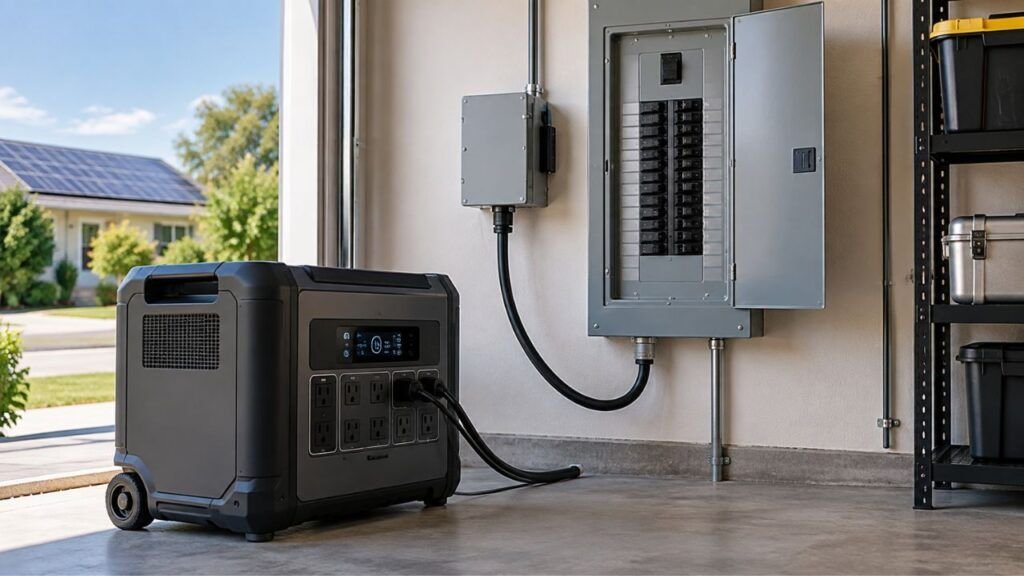
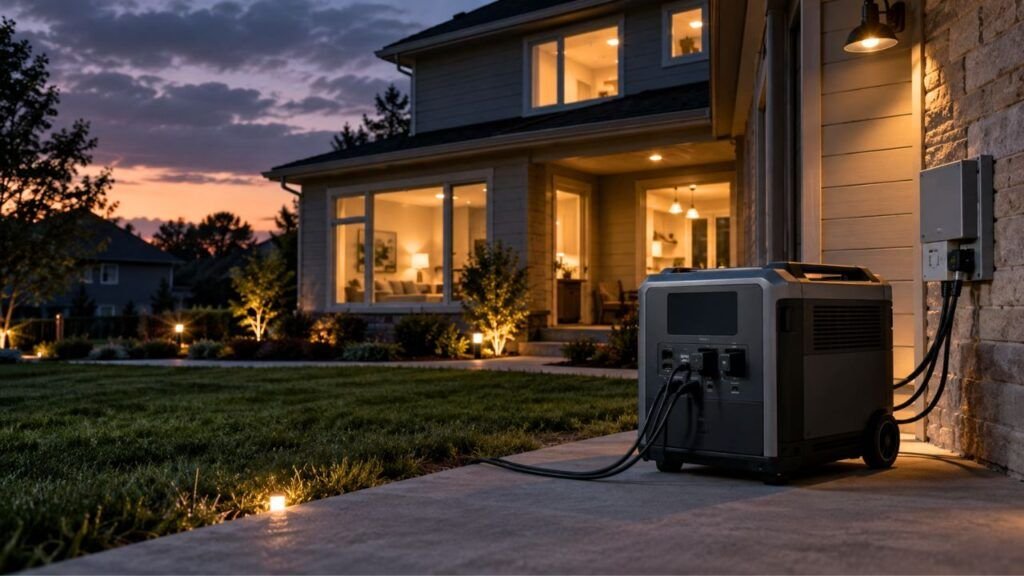
Some 120/240V solar generators can supply selected home circuits or larger backup systems. How you connect the system matters just as much as its output rating.
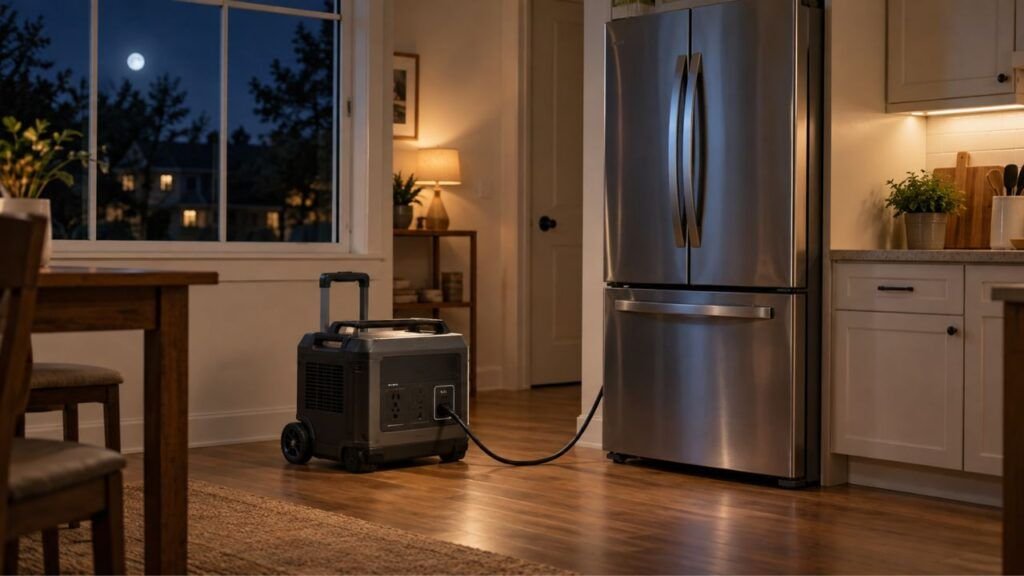
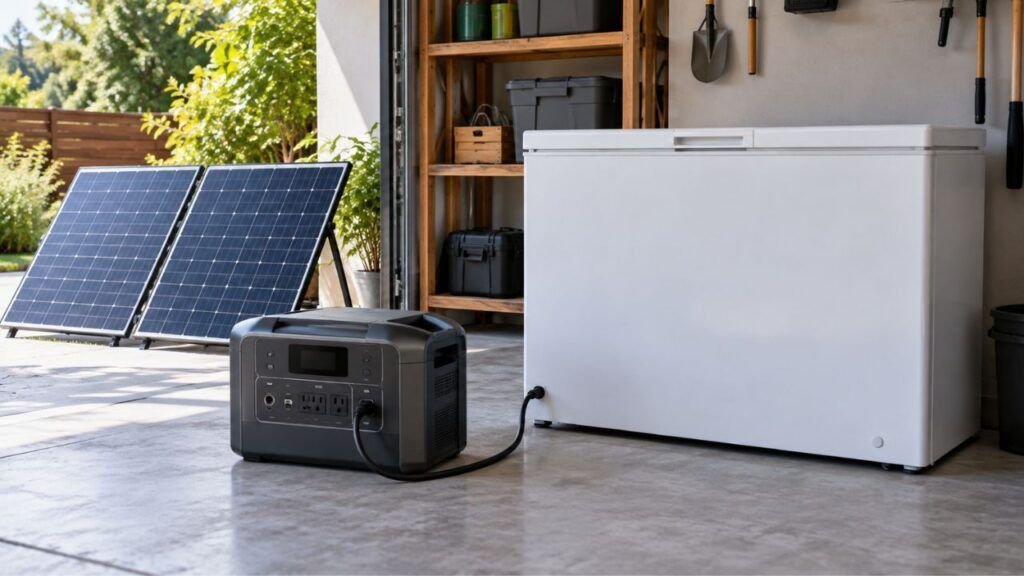
Plugging Appliances Directly Into the Generator
Direct connection is the simplest approach.
You plug compatible appliances directly into the power station’s outlets.
This can work well for devices such as:
- Refrigerators
- Freezers
- Lights
- Routers
- Computers
- Televisions
- Portable cooking appliances
- Some compatible 240V equipment
The appliance voltage and power demand must still match the generator.
Direct connection also avoids modifying your home’s electrical system.
Powering Circuits Through the Electrical Panel
Powering household circuits through the breaker panel requires a different setup.
The generator must provide a compatible electrical output.
Your home also needs proper transfer or isolation equipment.
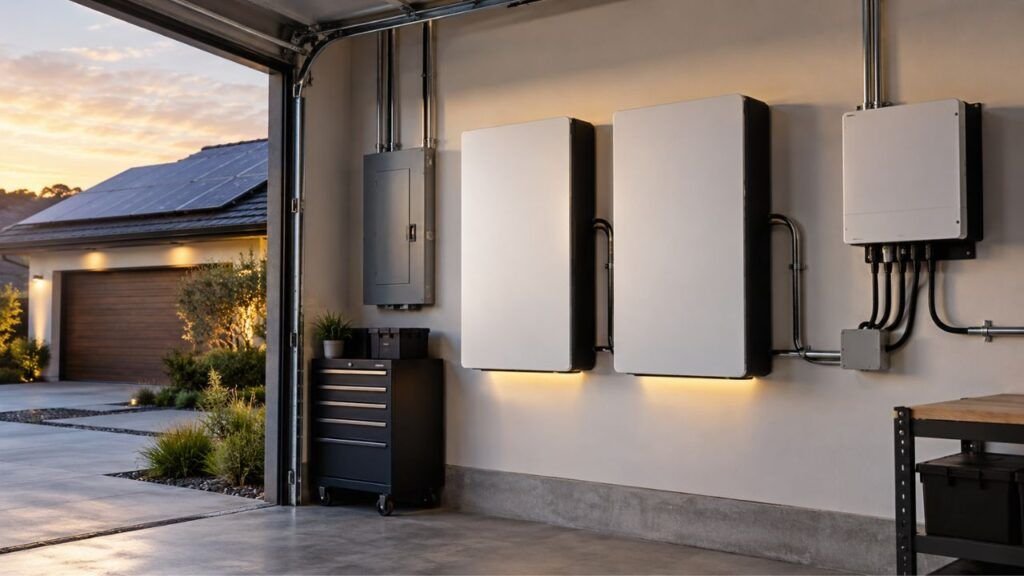
Depending on the system, this could involve a transfer switch, approved interlock arrangement, dedicated inlet, smart panel, or manufacturer-specific home backup equipment.
These components prevent dangerous interaction between generator power and utility power.
For panel-connected setups, having a qualified electrician evaluate compatibility is the safer approach.
Never Backfeed Through a Wall Outlet
Do not plug a solar generator into a household wall receptacle to energize other circuits.
That is commonly called backfeeding.
A normal wall outlet is not an approved generator connection point.
Improper backfeeding can energize wiring unexpectedly and create serious electrical hazards.
Use approved transfer equipment whenever the electrical panel is involved.
How to Check Whether Your Appliance and Solar Generator Are Compatible
Compatibility becomes much easier when you check everything in the correct order. Follow these steps before connecting an unfamiliar appliance.
- Check the appliance voltage: Look at the nameplate, manual, or manufacturer specifications.
- Determine whether it needs 120V or 240V: Never guess from appliance size alone.
- Check the solar generator’s AC voltage: Look specifically for 120V, 240V, or 120/240V split-phase output.
- Confirm true split-phase capability when needed: High wattage alone does not provide split-phase power.
- Check the connection type: Make sure the generator has an appropriate outlet or approved connection method.
- Find the appliance’s running wattage: The generator needs enough continuous inverter output.
- Check startup surge: This is especially important for motors and compressors.
- Review the generator’s 240V output limits: Do not rely only on its headline inverter wattage.
- Add your other simultaneous loads: A generator powers the combined demand, not each device independently.
- Check individual leg and outlet limits: This matters when mixing several 120V loads with 240V equipment.
- Estimate battery runtime: Confirm that the battery holds enough energy for your planned usage.
- Review the manufacturer’s manual: Verify any unusual or high-power configuration before use.
- Use proper equipment for panel connections: Have home wiring and transfer equipment installed correctly.
Following this order prevents most compatibility mistakes.
Do You Actually Need a 240V Solar Generator?
Many homeowners do not need 240V backup power.
If your goal is keeping basic essentials running during an outage, a standard 120V solar generator may be enough.
Common 120V backup loads include:
- Refrigerator
- Freezer
- Wi-Fi equipment
- Phones
- Laptops
- CPAP machine
- Lights
- Fans
- Television
- Coffee maker
- Microwave
- Many small appliances
- Some portable and window air conditioners
A 120/240V solar generator becomes more important when your backup plan includes larger equipment.
You may need 240V for:
- Deep-well pumps
- Central air conditioning
- Electric water heaters
- Electric clothes dryers
- Electric ranges
- Large workshop machines
- Some large compressors
- Level 2 EV charging
Even then, you should ask another question.
Do you actually need that appliance during an outage?
Running a refrigerator and lights may require relatively little energy. Running an electric dryer or central HVAC system can consume battery capacity much faster.
Prioritizing essential loads can reduce the battery size and cost you need.
Final Verdict
A solar generator can power both 120V and 240V loads when it provides true 120/240V split-phase output and enough inverter capacity. Some modern high-capacity systems are specifically designed for this purpose.
However, most ordinary portable solar generators still provide only 120V AC. A larger battery, higher surge number, or different plug adapter does not change that limitation.
When checking compatibility, start with voltage. Then check running watts, startup surge, outlet limits, and battery capacity.
For 240V motors, HVAC equipment, well pumps, dryers, or panel-connected loads, pay extra attention to the manufacturer’s specifications. If home wiring is involved, use properly installed transfer or isolation equipment rather than improvising a connection.
Related FAQs
The questions below cover several common problems readers encounter when comparing 120V and 240V solar generator systems.
Can a 120V Solar Generator Run a 240V Appliance?
No, a standard 120V-only solar generator cannot directly power an appliance requiring true 240V split-phase electricity. Higher wattage or larger battery capacity does not change the output voltage.
Does a 240V Solar Generator Also Provide 120V?
Many true 120/240V split-phase solar generators can provide both voltages. However, you should confirm the manufacturer’s specifications because available outlets, wattage limits, and simultaneous-use capabilities vary between models.
Can a Solar Generator Run a 240V Well Pump?
Yes, a sufficiently powerful 240V solar generator can run some well pumps. The inverter must support the pump’s voltage, continuous wattage, and high motor startup surge.
Can a Solar Generator Run a 240V Air Conditioner?
Some large split-phase solar generators can run compatible 240V air conditioners. Central AC compressors may have very high startup demand, so both continuous output and surge capacity must be checked carefully.
Can a Solar Generator Power an Electric Dryer?
A sufficiently large 120/240V solar generator may power certain electric dryers. However, electric dryers often consume several thousand watts, so they can drain portable battery storage quickly.
Can You Get 240V From Two 120V Power Stations?
Only when the manufacturer specifically designs compatible units to create synchronized 240V split-phase power. You should never connect two unrelated 120V power stations together in an attempt to create 240V.
Does a 120V-to-240V Adapter Actually Increase Voltage?
No. A basic plug adapter only changes the physical connection. It cannot create a second AC leg or convert normal 120V output into true 240V split-phase electricity.
Does a 240V Appliance Use More Electricity Than a 120V Appliance?
Not necessarily. Voltage alone does not determine energy consumption. A 2,000W appliance uses about 2,000 watts whether its operating voltage is 120V or 240V. Runtime depends mainly on wattage and usage time.

Austin Parker writes practical generator how-to guides, troubleshooting advice, and buying guides for solar, portable, and fuel-powered generators. His focus is helping readers solve common power problems, understand their options, and choose dependable equipment for real-world use.