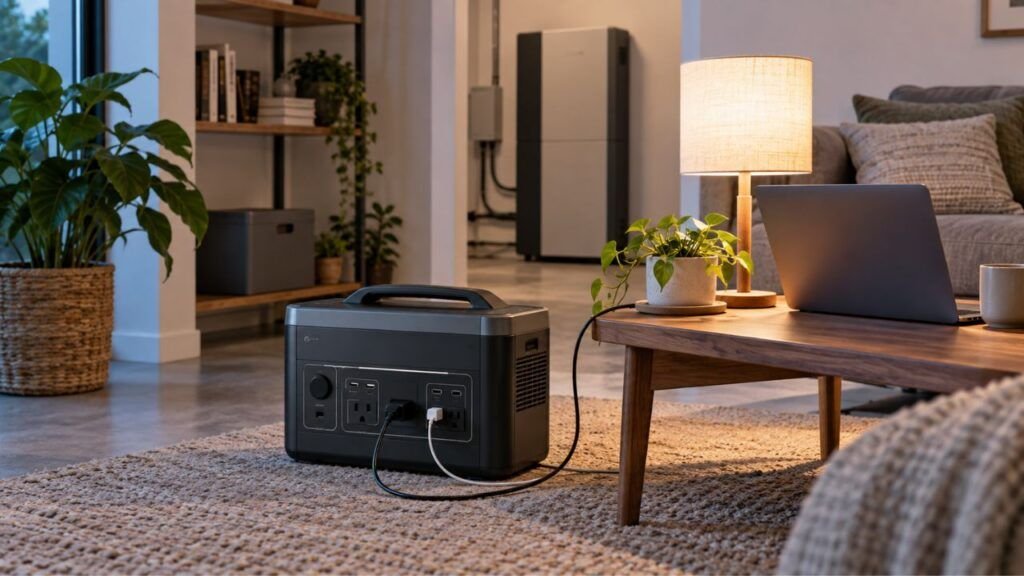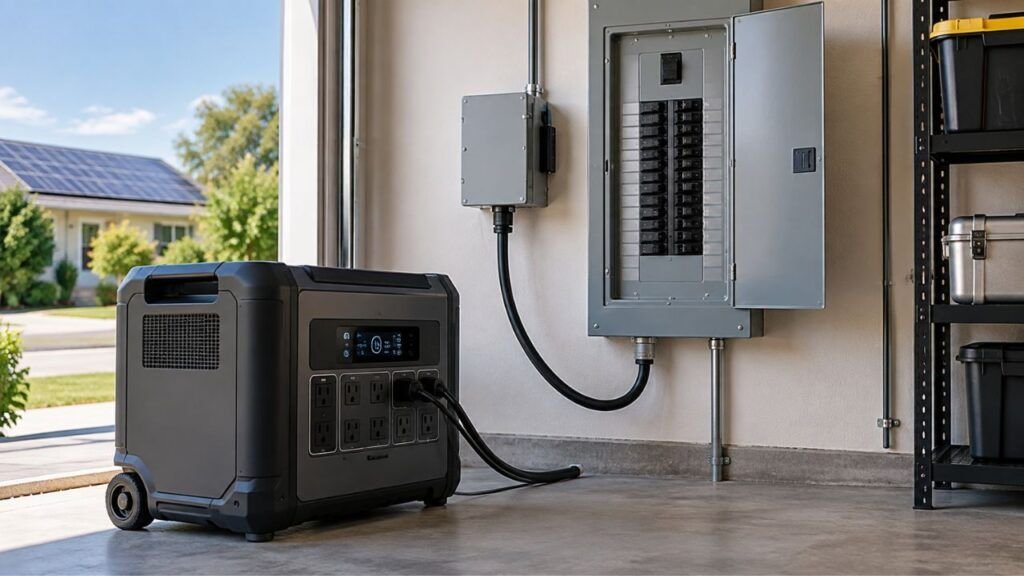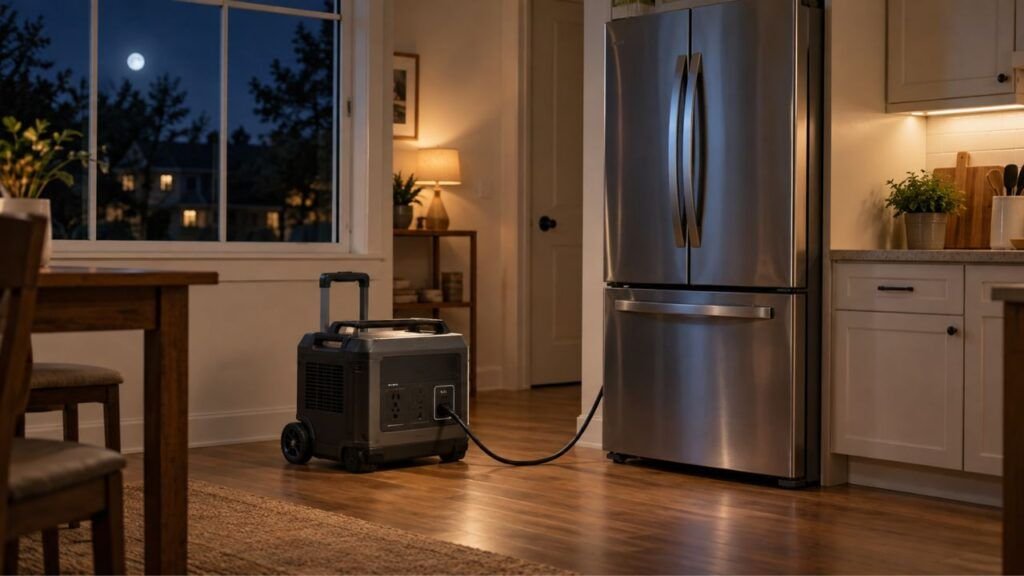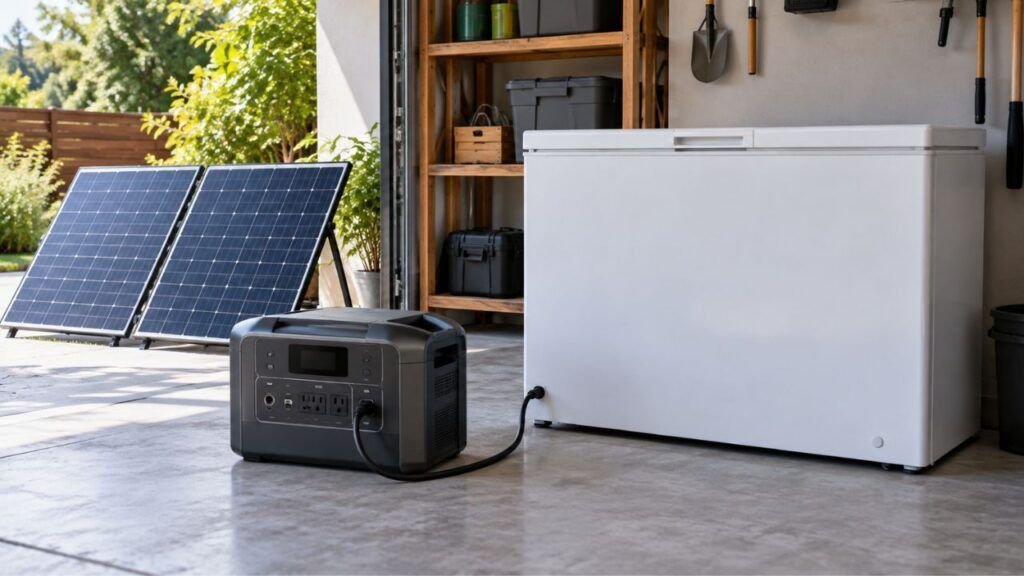
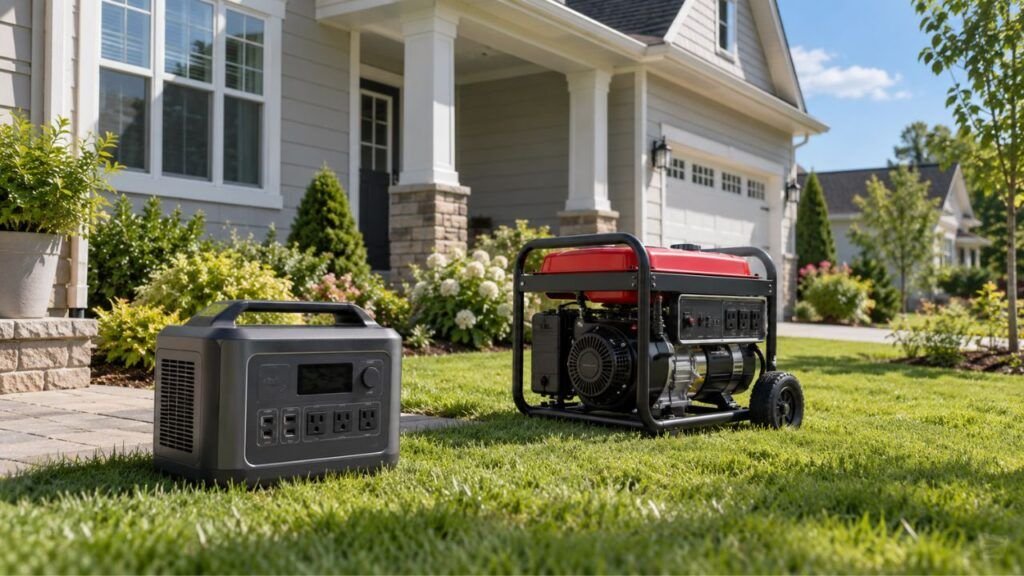
The safest way to avoid backfeeding the utility grid is to keep your backup power source electrically isolated from utility power. If a solar generator or portable generator powers home circuits, use an approved transfer switch, compatible interlock kit, or another properly installed transfer device. Never use a wall, dryer, or range outlet to feed generator power into your home.
In this guide, I’ll show you how backfeeding happens, how to prevent it, and which connection methods are safer. I’ll also explain how solar generators, transfer switches, interlocks, and grid-tied solar systems fit into the picture.
Key Takeaways
- Backfeeding happens when backup power reaches utility lines unintentionally.
- A transfer switch isolates your home from the utility supply.
- A compatible interlock can also prevent simultaneous power connections.
- Never feed generator power through a wall or dryer outlet.
- Directly powering appliances from a solar generator avoids grid backfeed.
- Grid-connected solar and batteries need approved interconnection equipment.
- Panel-connected backup systems should be installed by a qualified electrician.
Disclaimer: We are not professionals, and this information is provided for general educational purposes only. Please consult a qualified expert for advice specific to your situation.
What Is Backfeeding the Utility Grid?
Backfeeding happens when electricity flows from your home toward the utility system instead of only flowing into your home.
During a normal outage, utility lines near your property may be de-energized. However, an improperly connected generator or battery system can send electricity back through your electrical service.
That electricity may travel beyond your home and reach utility equipment.
This creates a serious hazard because repair crews may expect those lines to be dead.
The voltage can also pass through utility transformers. That means a relatively small household generator connection can create dangerous conditions outside your property.
Backfeeding is not only a problem for gasoline generators. A solar generator, battery system, or inverter can also create problems when connected incorrectly to household wiring.
The important issue is not the type of generator.
The important issue is whether your backup source is properly isolated from utility power.
How Do You Avoid Backfeeding the Utility Grid?
The basic rule is simple: your backup power source and utility supply should never energize the same household wiring unintentionally. Several approved connection methods can provide that isolation.
Use a Manual or Automatic Transfer Switch
A transfer switch is one of the most reliable ways to prevent backfeeding.
It changes your home’s electrical supply from one source to another.
With a manual transfer switch, you physically select either utility power or generator power. The equipment prevents both sources from supplying the selected circuits at the same time.
An automatic transfer switch performs a similar job automatically.
These are commonly used with permanently installed standby generators. Some battery backup systems also use automatic transfer equipment.
A transfer switch is especially helpful when you want a clear, dedicated backup setup.
You do not need to remember several breaker positions during an outage.
The transfer equipment handles the separation between the two power sources.
Use an Approved Generator Interlock Kit
A generator interlock can provide another safe way to prevent backfeeding.
The interlock works with your electrical panel’s main breaker and generator breaker.
Its mechanical design prevents both breakers from being switched on together.
When generator power is supplying the panel, the utility main must remain off. When utility power returns, the generator breaker must be turned off before the main can be restored.
The important word here is compatible.
Interlock kits are designed for specific electrical panels and breaker layouts.
Do not assume a generic kit will work correctly with your panel.
Local electrical rules can also vary. An electrician can confirm whether an interlock is acceptable where you live.
Use a Proper Generator Inlet
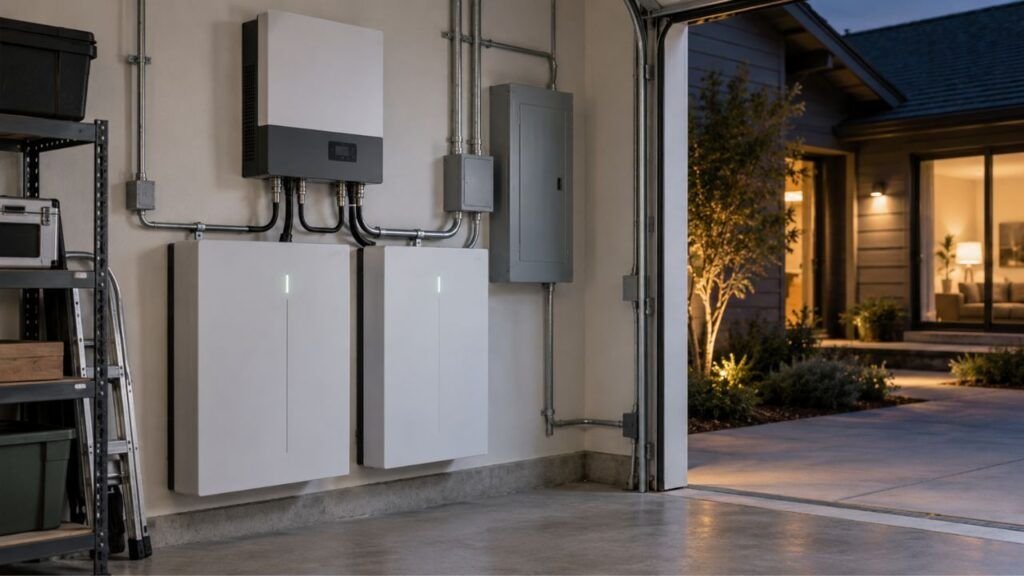
A generator inlet gives your backup power source a proper connection point outside or near your home.
It replaces the dangerous practice of trying to send power through a household outlet.
However, the inlet itself does not prevent backfeeding.
It must work together with an approved transfer switch, interlock, or similar isolation equipment.
Think of the inlet as the connection point.
The transfer equipment is what controls where the electricity can travel.
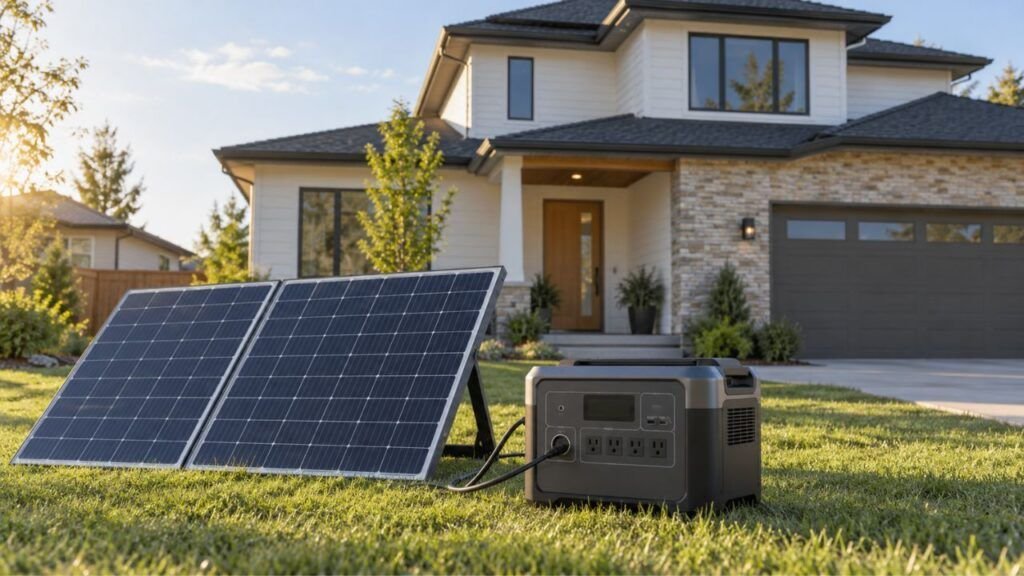
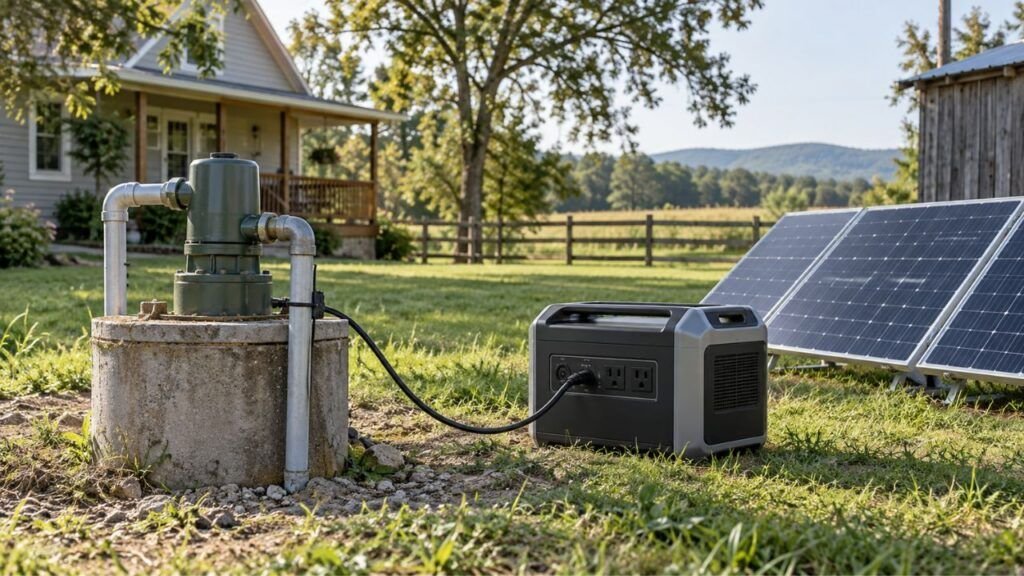
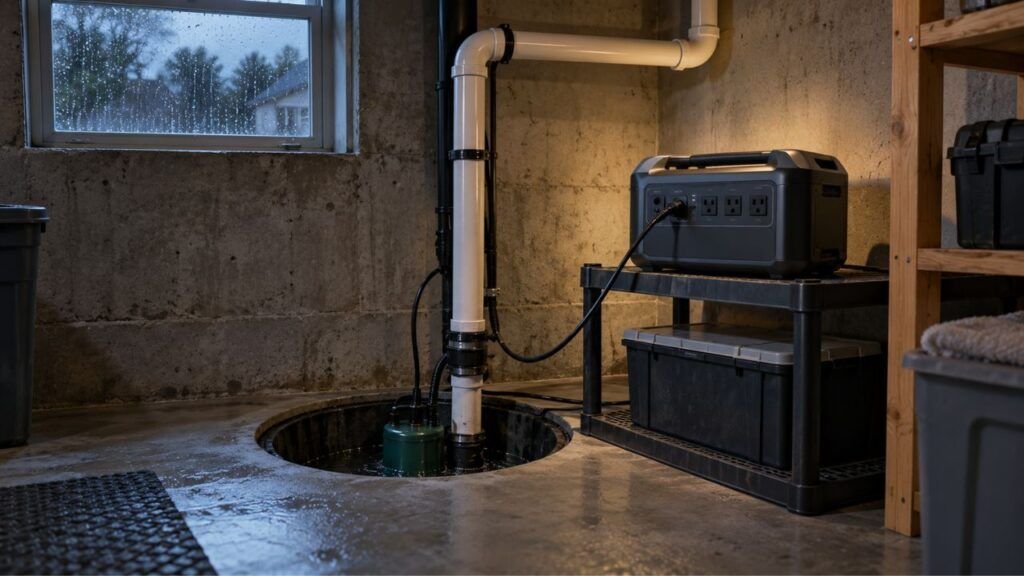
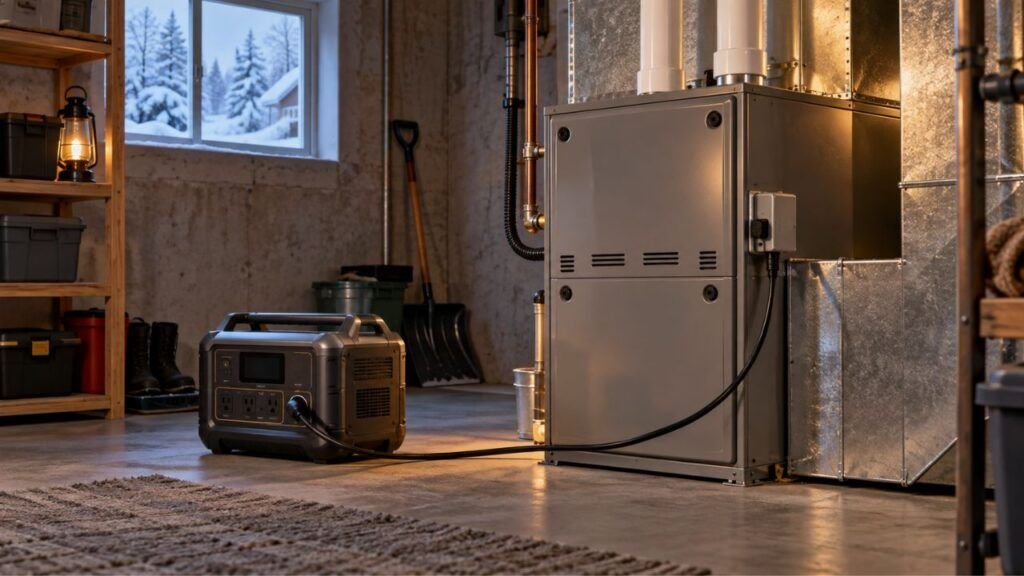
Power Appliances Directly From the Solar Generator
If you only need a few essential appliances, this is often the simplest approach.
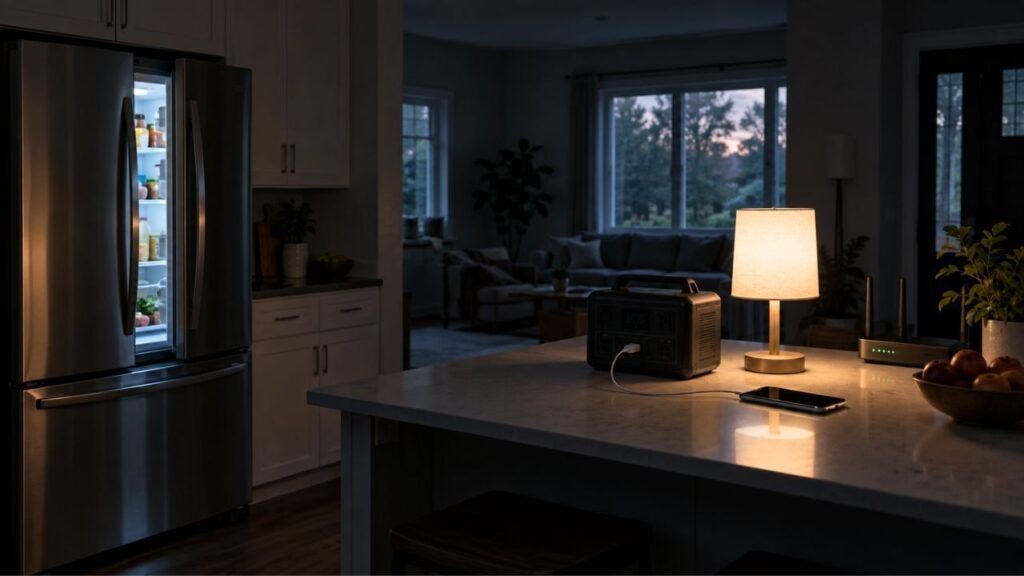
Plug the appliance directly into your solar generator’s built-in outlet.
For example, you may power:
- A refrigerator
- A Wi-Fi router
- Phone chargers
- Lamps
- A television
- A CPAP machine
- Small electronics
In this setup, the solar generator remains separate from your home’s breaker panel.
Because it is not connected to household wiring, electricity has no normal path back toward the utility grid.
This approach also avoids the cost and complexity of panel integration.
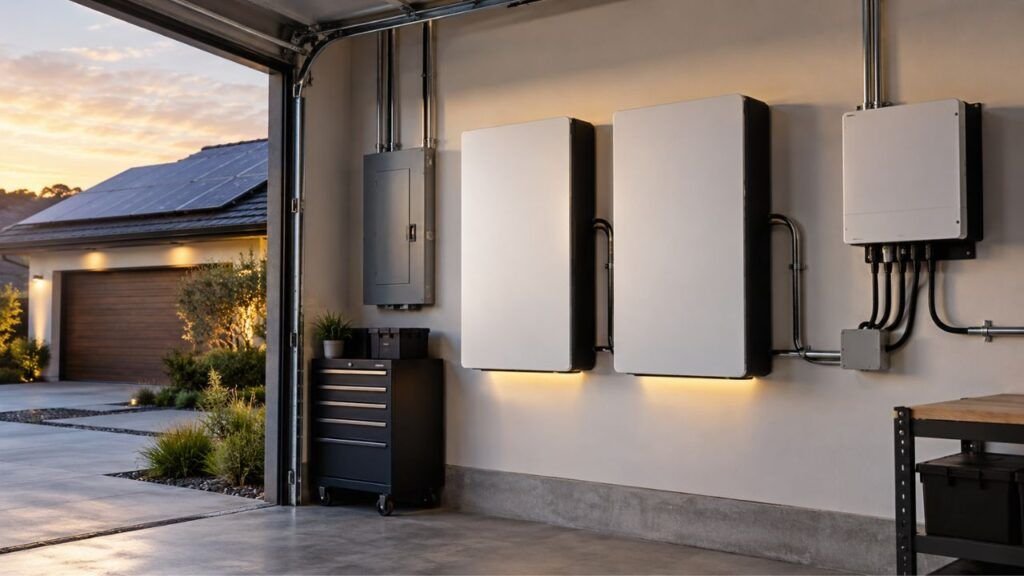
Use Approved Grid-Interactive Equipment for Solar and Batteries
Permanently installed solar and battery systems work differently from portable solar generators.
A grid-connected solar inverter is intentionally connected to the utility system.
However, that connection uses approved controls and safety features.
During an outage, a standard grid-tied solar system normally stops sending power toward the utility.
Backup-capable systems can continue powering selected home circuits, but only after creating a properly isolated electrical system.
This controlled separation is often called islanding.
The system isolates your home from the utility before backup power continues operating.
If your home has solar panels, battery storage, and generator backup together, professional system design becomes especially important.
Backfeed Prevention Methods Compared
Several methods can prevent backfeeding, but they are designed for different situations. This comparison can help you understand which setup generally fits each type of backup system.
| Backup Method | Connected to Home Panel? | Backfeed Protection | Best Use | Professional Installation? |
| Direct appliance connection | No | No grid connection exists | Small solar generators | Usually no |
| Manual transfer switch | Yes | Isolates utility and backup sources | Portable generators and power stations | Yes |
| Generator interlock | Yes | Prevents main and generator breakers operating together | Portable home backup | Yes |
| Automatic transfer switch | Yes | Automatically isolates power sources | Standby generators | Yes |
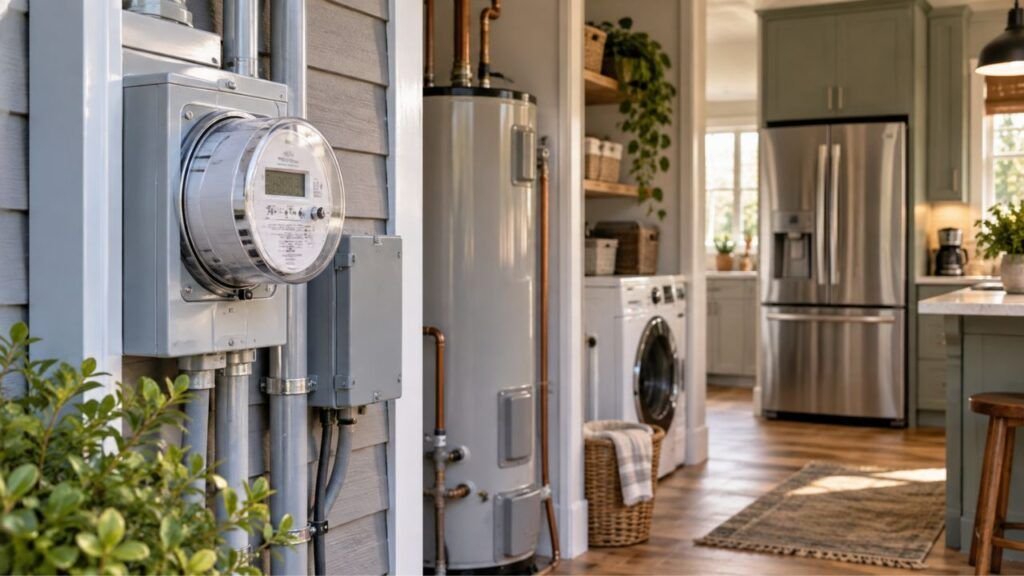
| Meter-mounted transfer device | Yes | Separates utility and backup supply | Certain home backup systems | Usually |
| Grid-interactive inverter | Yes | Uses approved isolation and interconnection controls | Solar and battery systems | Yes |
The right choice depends on your electrical panel, generator output, local rules, and how many home circuits you want to power.
Why Is Backfeeding So Dangerous?
Backfeeding can create problems both inside and outside your home. The biggest concern is that electricity may appear where workers or equipment operators expect no power.
- Lineworker electrocution risk: Utility workers may encounter an energized line during outage repairs.
- Unexpected utility voltage: Backup electricity can travel beyond your property’s electrical system.
- Electrical fire risk: Improper connections can overload wiring or connection points.
- Generator damage: Utility power returning can expose backup equipment to dangerous electrical conditions.
- Appliance damage: Unstable or improperly connected power can affect sensitive equipment.
- Panel damage: Incorrect generator connections may damage breakers, bus bars, or wiring.
- Inspection problems: Improvised connections may fail electrical inspections.
- Insurance concerns: Unsafe electrical modifications can create complications after property damage.
This is why backfeed protection should never depend on memory alone.
A physical or electrical isolation system provides much stronger protection.
What Connections Can Cause Dangerous Backfeeding?
Several unsafe connection methods can accidentally energize household wiring and utility lines.
- Plugging a generator into a regular wall outlet
- Connecting a generator through a dryer receptacle
- Connecting through a range receptacle
- Using a male-to-male generator cord
- Connecting directly to a breaker without approved transfer equipment
- Defeating or bypassing an existing interlock
- Improperly combining solar, battery, and generator sources
- Modifying a transfer switch incorrectly
- Using equipment not designed for your electrical panel
A generator should never be connected to home wiring through an improvised outlet connection.
Even if someone remembers to turn off the main breaker, the setup still lacks dependable mechanical protection.
Is Turning Off the Main Breaker Enough to Prevent Backfeeding?
Turning off the main breaker can disconnect utility power under normal conditions, but relying on that action alone is not the preferred way to build a safe backup system.
The biggest problem is human error.
Someone could accidentally switch the main breaker back on while the generator is operating.
Another family member may not understand the setup.
You may also forget the proper switching order during a stressful outage.
Approved transfer equipment removes much of that risk.
A transfer switch or compatible interlock creates a physical system that prevents both power sources from being connected improperly.
For a permanent panel-connected backup system, I would not rely solely on remembering to turn the main breaker off.
Have proper transfer equipment installed instead.
Transfer Switch vs. Interlock Kit for Preventing Backfeed
Both systems can prevent generator power from reaching utility lines, but they work differently. Your panel design, backup needs, and local requirements usually determine which option makes more sense.
Transfer Switch
A transfer switch creates a dedicated method for choosing between utility power and backup power.
Some transfer switches power only selected essential circuits.
Others can support larger portions of the home, depending on their design.
Manual switches require you to change the power source yourself.
Automatic switches can detect an outage and transfer power automatically.
A transfer switch is often a good choice when you want straightforward operation and clearly defined backup circuits.
Generator Interlock
An interlock works directly with breakers inside the main electrical panel.
It mechanically prevents the utility main breaker and generator breaker from being on together.
One advantage is flexibility.
You can often choose which household circuits to operate during the outage.
However, you still need to manage electrical loads carefully.
Turning on too many circuits can overload your generator or solar generator.
The interlock must also match your exact electrical panel.
Which Is Better?
Neither option is universally better.
A transfer switch can be easier for homeowners who want a simple group of backup circuits.
An interlock can provide more flexibility because you can select circuits from the main panel.
An automatic transfer switch is usually more appropriate for permanently installed standby systems.
Your electrician should consider your panel, generator capacity, local code requirements, and backup goals before recommending one.
Can a Solar Generator Backfeed the Grid?
A solar generator does not normally backfeed the grid when you use it as a standalone power source. The risk changes when you connect that power source to household electrical wiring.
When You Plug Appliances Directly Into It
Direct appliance use is the simplest situation.
You plug the appliance into the solar generator.
The solar generator powers the appliance through its own outlets.
There is no electrical connection between the power station and your home’s utility service.
Because of that separation, your solar generator cannot normally energize utility lines through household wiring.
When You Connect It to the Home Electrical Panel
The situation changes once the solar generator supplies your home electrical panel.
Now the backup source is connected to wiring that is also normally supplied by the utility.
That is why approved transfer equipment becomes necessary.
The solar generator, panel equipment, transfer device, voltage, and neutral configuration must all be compatible.
Do not improvise this connection.
Some portable power stations have dedicated home-integration systems designed specifically for this purpose.
When You Have Grid-Tied Solar or Battery Storage
Grid-tied solar systems are intentionally connected to utility power.
During normal operation, the system may send excess solar electricity into the grid.
That is different from dangerous accidental generator backfeeding.
A properly designed solar inverter monitors utility conditions.
If grid power disappears, a conventional grid-tied system stops exporting electricity.
Backup-capable battery systems can continue operating only after isolating the protected home circuits from the utility.
That isolation protects both your home and utility workers.
Backfeeding vs. Normal Solar Export: What Is the Difference?
Normal solar export and dangerous backfeeding may sound similar, but they are very different.
A properly installed grid-tied solar system can intentionally send excess electricity to the utility.
That connection is designed, approved, monitored, and controlled.
Dangerous backfeeding happens when an unapproved or improperly connected backup source energizes utility wiring.
For example, connecting a portable generator to a dryer outlet is not the same as exporting rooftop solar energy through a grid-approved inverter.
One is a designed electrical interconnection.
The other can create an uncontrolled safety hazard.
So, when people warn about generator backfeeding, they are usually talking about unintended power reaching utility lines.
What Happens When Utility Power Comes Back On?
Improper generator connections become especially dangerous when utility service is restored.
Your backup source may still be supplying household wiring when utility voltage returns.
Now two independent power sources may interact unexpectedly.
That can damage equipment, create arcing, trip breakers, or produce other dangerous electrical conditions.
A transfer switch or interlock prevents this situation.
Before utility power reconnects to the home, the backup source must be isolated correctly.
Automatic transfer systems manage this process without homeowner involvement.
Manual systems require proper switching, but their design still prevents both sources from being connected together.
How to Set Up a Solar Generator for Home Backup Without Backfeeding
A safe setup starts with deciding how much of your home actually needs backup power. You may not need panel integration if you only want to operate a few essential appliances.
- Decide which appliances or circuits you really need.
- Use direct appliance connections for simple backup needs.
- Choose compatible home-integration equipment for panel backup.
- Use a proper generator inlet instead of household outlets.
- Install an approved transfer switch or compatible interlock.
- Confirm the solar generator can support your required voltage.
- Check both continuous and surge output limits.
- Have neutral and grounding arrangements professionally evaluated.
- Label generator and transfer equipment clearly.
- Learn the correct operating sequence before an outage.
- Avoid energizing unnecessary high-demand circuits.
- Test the backup system under controlled conditions.
- Follow your power station manufacturer’s instructions.
- Check local permit and inspection requirements.
If your backup source connects to the electrical panel, professional installation is the safest choice.
You are dealing with equipment that can remain energized even during an outage.
Does a Solar Generator Need a Transfer Switch to Avoid Backfeeding?
A solar generator usually does not need a transfer switch when you plug individual appliances directly into it.
The unit remains separate from your home’s utility-connected wiring.
A transfer switch or similar approved isolation equipment becomes important when the solar generator supplies household circuits through your electrical panel.
For example, powering a refrigerator through the solar generator’s AC outlet is very different from supplying the refrigerator circuit through your breaker panel.
The second arrangement connects your backup source to the home’s electrical distribution system.
That connection needs proper isolation from the utility.
Do U.S. Electrical Codes Require Backfeed Protection?
U.S. electrical rules generally require backup power systems to prevent unintended connections between utility power and alternate power sources.
The exact requirements can vary because local jurisdictions may adopt different electrical code editions and amendments.
Several factors may affect your installation:
- Your electrical panel type
- Transfer equipment design
- Generator output
- Solar or battery integration
- Local permitting requirements
- Utility requirements
- Inspection rules
- Grounding and bonding configuration
This is one reason I would avoid buying electrical transfer equipment based only on online photos or panel appearance.
Have the exact panel model and electrical setup checked first.
When Should You Call an Electrician?
You should involve a qualified electrician whenever backup power connects to permanent household wiring.
Professional help is especially important when:
- Adding a generator inlet
- Installing a transfer switch
- Installing an interlock kit
- Connecting a solar generator to a breaker panel
- Connecting a portable generator to home circuits
- Combining solar, battery, and generator backup
- Installing 120/240V backup equipment
- Changing grounding or neutral arrangements
- Adding a subpanel
- Modifying service equipment
- Determining panel compatibility
- Checking permits and inspection requirements
Directly powering ordinary plug-in appliances from a portable power station is much simpler.
Once the electrical panel becomes involved, the risk and complexity increase significantly.
Common Backfeeding Mistakes to Avoid
Most dangerous situations come from shortcuts rather than properly designed systems.
- Relying only on the main breaker
- Feeding generator power through a dryer outlet
- Feeding power through a household receptacle
- Using a male-to-male cord
- Buying a generic interlock without checking panel compatibility
- Assuming a generator inlet prevents backfeeding by itself
- Defeating an installed interlock
- Turning on too many panel circuits
- Ignoring generator voltage compatibility
- Assuming every solar generator supports home panel backup
- Ignoring grounding and neutral requirements
- Assuming grid-tied solar automatically works during outages
- Modifying transfer equipment without electrical training
- Skipping local permits or inspection requirements
A safe backup system should be difficult to operate incorrectly.
That is the real advantage of proper transfer equipment.
Final Verdict
The best way to avoid backfeeding the utility grid is to keep utility power and backup power physically or electrically isolated.
If you only need to run a few appliances, plugging them directly into your solar generator is the simplest solution.
If you want to power home circuits, use an approved transfer switch, compatible interlock, or properly designed home-integration system.
Never use a wall outlet, dryer outlet, range receptacle, or improvised connection to energize your home.
Backfeeding is one of those electrical risks you should prevent by design rather than relying on memory. A properly installed isolation system protects your equipment, your home, and utility workers repairing the grid.
Related FAQs
Can You Backfeed the Grid With a Solar Generator?
Yes, a solar generator can create a backfeeding risk if it is improperly connected to household wiring without approved isolation equipment. Directly plugging appliances into the solar generator normally does not create a grid connection.
Does a Transfer Switch Completely Prevent Backfeeding?
A properly selected and installed transfer switch prevents utility power and backup power from being connected to the same circuits unintentionally, which prevents normal generator backfeeding.
Does an Interlock Kit Prevent Backfeeding?
Yes, a compatible and properly installed generator interlock prevents the utility main breaker and generator breaker from being switched on together, helping keep generator power isolated from the grid.
Can I Just Turn Off the Main Breaker Before Running My Generator?
You should not rely solely on manually turning off the main breaker for a permanent panel-connected backup system. Approved transfer or interlock equipment provides dependable physical protection against accidental reconnection.
Can You Plug a Generator Into a Dryer Outlet?
No. You should never use a dryer, range, or ordinary household outlet as an improvised generator connection because it can energize home wiring and create dangerous utility backfeeding.
Do I Need a Transfer Switch If I Only Plug Appliances Into My Solar Generator?
Usually not. If appliances plug directly into the solar generator, the unit remains separate from the home’s electrical panel and utility connection.
Do Grid-Tied Solar Panels Backfeed During a Power Outage?
A properly installed conventional grid-tied solar system normally stops exporting electricity when utility power fails. Backup-capable systems use approved isolation equipment before continuing to power protected household circuits.
Can Utility Power Damage a Generator When Power Comes Back?
Yes, an improperly connected generator can face dangerous electrical conditions when utility power returns. Proper transfer equipment keeps the two power sources from being unintentionally connected.
Can a Generator Inlet Prevent Backfeeding by Itself?
No. A generator inlet only provides a proper connection point. It still needs an approved transfer switch, interlock, or another isolation method to prevent electricity from reaching the utility.
Is a Transfer Switch Better Than an Interlock for a Solar Generator?
Neither option is always better. A transfer switch can simplify dedicated backup circuits, while an approved interlock may provide greater panel flexibility. Compatibility, local requirements, and your backup needs should guide the choice.

Austin Parker writes practical generator how-to guides, troubleshooting advice, and buying guides for solar, portable, and fuel-powered generators. His focus is helping readers solve common power problems, understand their options, and choose dependable equipment for real-world use.