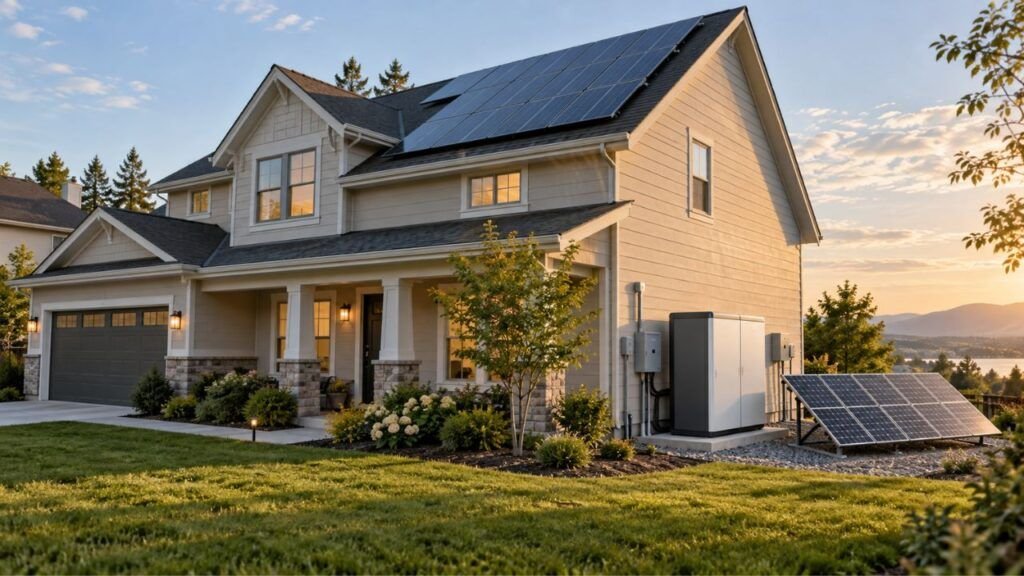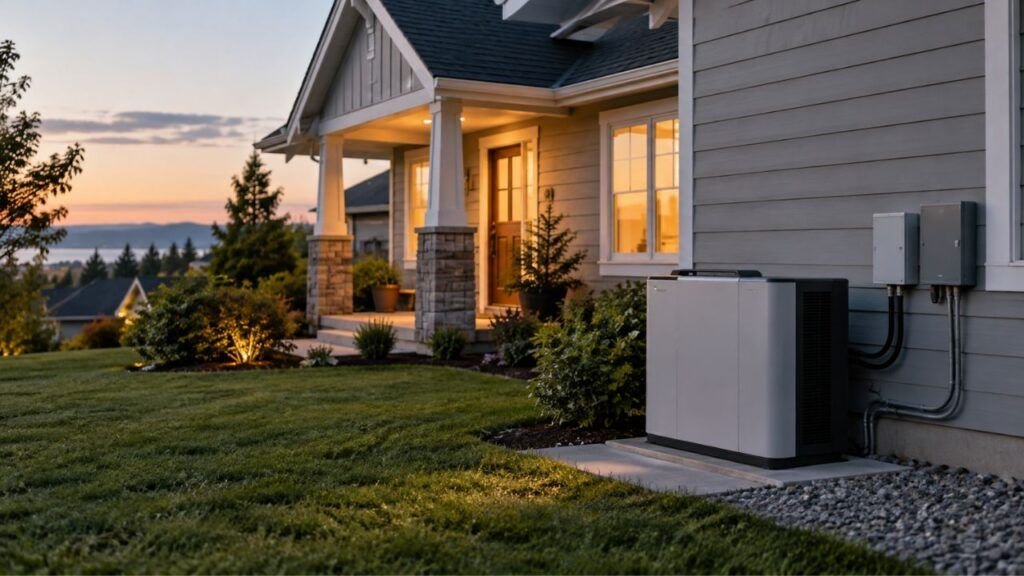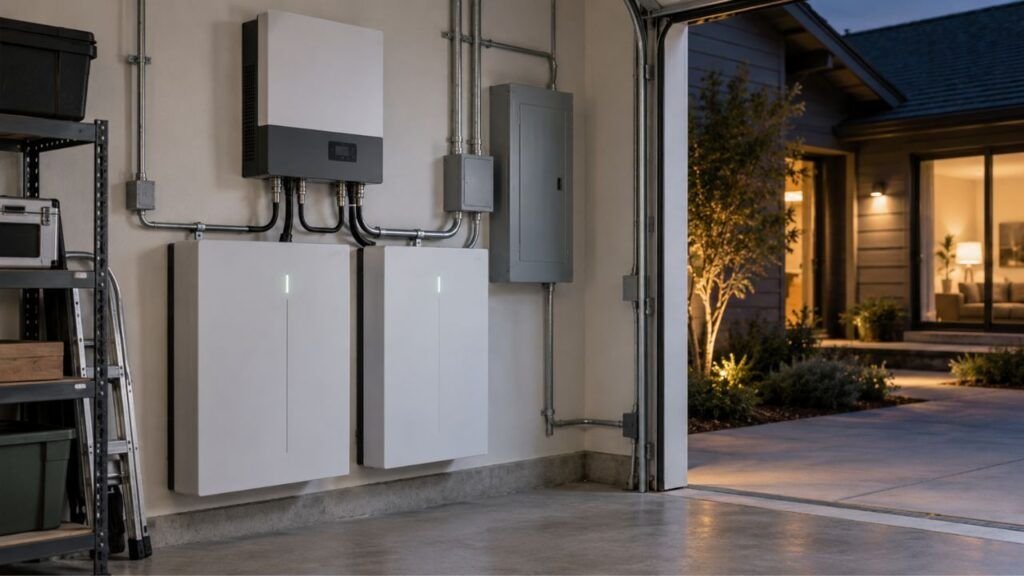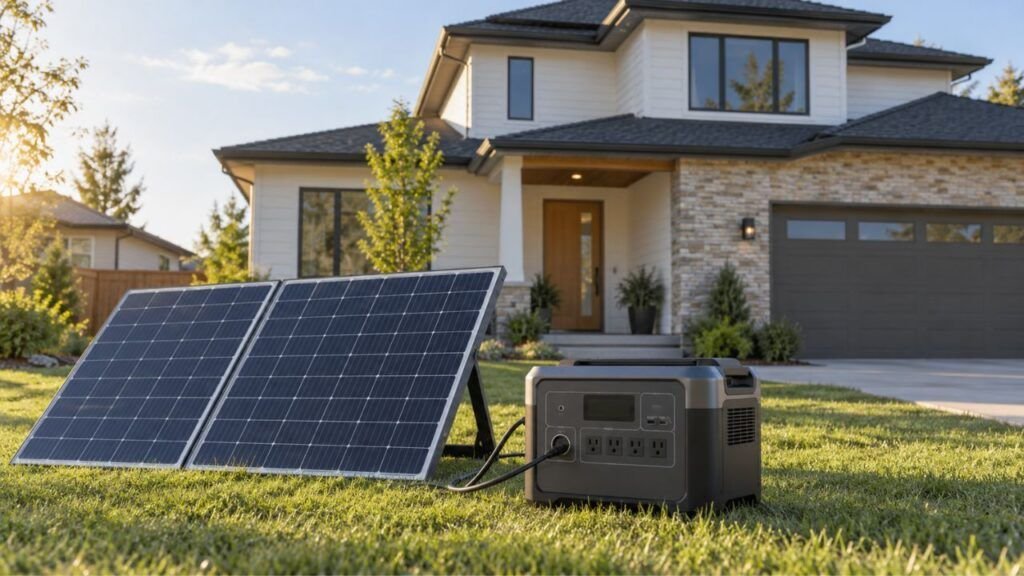
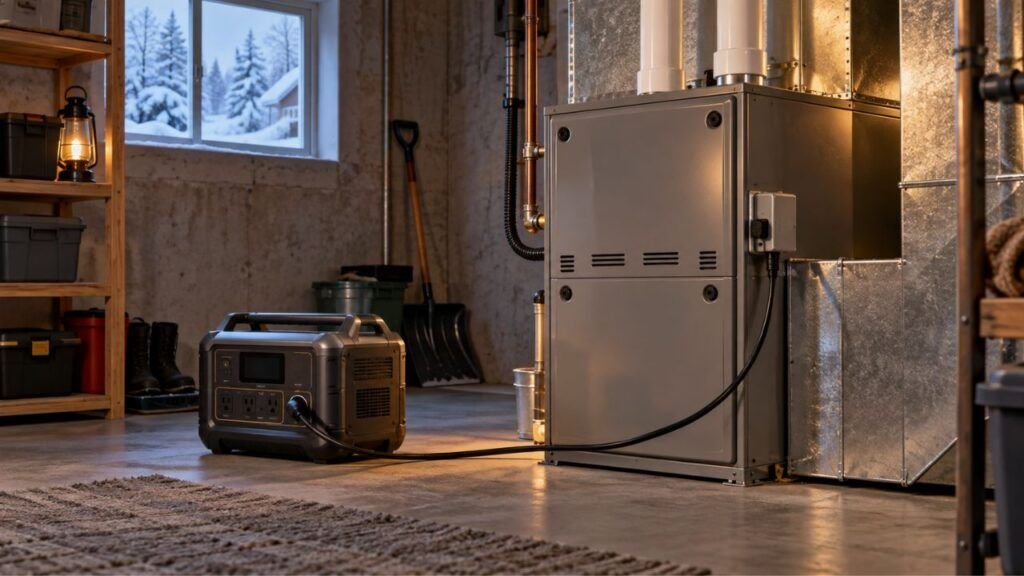
Yes, a solar generator can power many residential gas furnaces. The furnace burns natural gas or propane for heat, while electricity runs the blower, igniter, control board, inducer motor, and safety systems. The solar generator must provide enough running power, startup capacity, battery storage, and compatible AC power.
In this guide, I’ll help you size the system properly. We’ll cover furnace wattage, startup demand, runtime, solar charging, grounding concerns, and safe ways to connect backup power.
Key Takeaways
- A gas furnace still needs electricity even though gas creates the heat.
- Many residential furnaces use several hundred watts while actively heating.
- Furnace electrical demand can vary greatly between different models.
- Startup demand can temporarily exceed normal running wattage.
- Inverter wattage determines whether the furnace can run.
- Battery watt-hours determine how long the furnace can keep running.
- Hardwired furnaces need a safe, approved backup-power connection.
- Grounding, polarity, frequency, and power quality can affect furnace operation.
- A neutral-ground bonding plug is not a universal furnace solution.
- Winter solar charging may be limited during cloudy or snowy weather.
Can a Solar Generator Really Run a Gas Furnace?
A properly sized solar generator can run many gas furnaces during an outage.
The important point is that electricity does not create the heat. Your natural gas or propane supply continues doing that job.
The solar generator only replaces electricity normally supplied by the grid.
That electricity operates several important furnace components. These may include the blower motor, draft inducer, electronic igniter, control board, gas valve, flame sensor, thermostat, and safety switches.
Some high-efficiency systems may also use a condensate pump or accessories.
Without electricity, these components cannot complete the normal heating cycle. That is why your gas service can remain available while your furnace stays completely silent.
This also makes gas furnaces much easier to support with battery power than electric furnaces.
An electric resistance furnace creates heat directly from electricity. That usually requires far more electrical power than a portable solar generator can comfortably provide.
Why Does a Gas Furnace Need Electricity?
Your furnace goes through several electrical steps before warm air reaches the rooms. Understanding that sequence helps explain why backup electricity matters so much.
Draft Inducer Starts the Heating Cycle
When your thermostat requests heat, the furnace begins a safety sequence.
The draft inducer motor usually starts before the burner ignites. It helps establish proper airflow through the combustion system.
If the inducer cannot operate, the furnace will normally stop the heating sequence.
Ignition and Safety Controls Allow Gas to Burn
Modern furnaces generally use electronic controls rather than standing pilot lights.
The control board checks safety switches before allowing ignition. The igniter then lights the gas when operating conditions are correct.
Flame-sensing equipment confirms that combustion started properly.
If these electrical controls lose power, gas should not simply continue flowing.
The Blower Moves Heat Through Your Home
Once the heat exchanger warms sufficiently, the blower starts moving air.
This blower pushes heated air through your duct system and into rooms.
The blower is often one of the furnace’s largest electrical loads.
Without it, the furnace cannot safely distribute heat throughout your home.
How Many Watts Does a Gas Furnace Use?
There is no single wattage that applies to every gas furnace. Your actual electrical load depends on the furnace design, blower motor, airflow settings, ductwork, and operating stage.
Running Watts
Many residential gas furnaces operate within the several-hundred-watt range.
You may commonly see planning estimates around 300 to 800 watts. Some furnaces can use less, while others may use more.
Several factors affect the actual number:
- Furnace size
- Blower motor type
- Blower speed
- Heating stage
- Duct resistance
- Filter condition
- External static pressure
- Connected accessories
- Thermostat configuration
This is why I would never size a solar generator using one internet estimate.
Use generic numbers to create a starting point. Then verify the electrical requirements of your actual furnace.
Startup Watts
The furnace may briefly demand more electricity when motors start.
The blower motor and inducer motor can create short startup loads.
A solar generator could therefore handle the normal running wattage but still shut down during startup.
You may sometimes see claims that startup power is twice or three times running wattage.
That can happen with some motors, but it is not universal.
The safer approach is to check manufacturer information or measure actual startup demand.
ECM vs. PSC Blower Motors
Older furnaces often use permanent split capacitor, or PSC, blower motors.
Many newer furnaces use electronically commutated motors, commonly called ECM motors.
ECM blowers can adjust speed according to airflow requirements.
Their electrical consumption can therefore change significantly during different operating conditions.
A variable-speed furnace might use relatively little power at one airflow setting and considerably more at another.
That is another reason average wattage charts should remain planning tools only.
Typical Gas Furnace Electrical Loads for Planning
| Furnace Situation | Approximate Planning Load | What You Should Verify |
| Lower electrical-demand furnace | Around 300-500W | Actual running and startup watts |
| Moderate electrical-demand furnace | Around 500-700W | Whole-furnace operating demand |
| Higher electrical-demand furnace | Around 700-1,000W+ | Measured electrical requirements |
| Motor startup | May exceed normal running load | Highest startup demand |
These figures are only rough planning ranges. Your furnace label, manual, or actual measurements should guide the final decision.
What Size Solar Generator Do You Need for a Gas Furnace?
Choosing the right solar generator requires more than checking one wattage number. You need enough inverter output, startup capability, battery capacity, and compatible AC power.
Continuous AC Output
The solar generator’s continuous output must exceed your furnace’s operating demand.
I also recommend leaving reasonable headroom rather than operating near the inverter’s absolute limit.
For example, imagine your furnace regularly uses 600 watts.
A 600-watt inverter would be an unnecessarily tight choice.
A larger inverter gives you room for startup changes and unexpected load variations.
Surge or Starting Output
Startup capacity tells you how much short-term power the inverter can provide.
This matters whenever a motor starts.
Your furnace might run comfortably at 500 watts after starting but briefly need substantially more power during startup.
If that temporary demand exceeds the inverter’s capability, the power station may shut down.
This is why battery size alone cannot tell you whether a furnace will run.
Battery Capacity
Battery capacity is measured in watt-hours, commonly written as Wh.
This determines approximately how long your furnace can operate.
Think of it this way:
Watts tell you how much power the system can deliver.
Watt-hours tell you how much energy the battery stores.
You need enough of both.
A 3,000Wh battery with a weak inverter might not start your furnace.
A powerful inverter with a small battery might start it easily but run it briefly.
Voltage, Frequency, and Power Quality
Many residential gas furnaces in the United States use 120V AC power.
However, checking voltage alone is not enough.
Modern furnace controls can also depend on proper frequency, polarity, grounding, and clean electrical power.
Some furnace manufacturers specify requirements for generator-supplied electricity.
These may include:
- Proper 120V AC supply
- Approximately 60Hz frequency
- Correct hot and neutral polarity
- Proper equipment grounding
- Low waveform distortion
Check the manual for your exact furnace before depending on backup power.
Solar Generator Sizing Checklist
| Specification | What to Check | Why It Matters |
| AC voltage | Match furnace requirements | Wrong voltage prevents safe operation |
| Continuous watts | Exceed furnace running load | Prevents inverter overload |
| Startup capability | Handle highest motor demand | Allows proper startup |
| Battery capacity | Enough Wh for needed runtime | Determines outage duration |
| Frequency | Match furnace requirements | Supports proper controls |
| Waveform quality | Follow furnace specifications | Important for electronic controls |
| Grounding and polarity | Compatible with installation | May affect ignition and safety systems |
| Connection method | Approved backup arrangement | Prevents unsafe wiring |
Is a 1,500W or 2,000W Solar Generator Enough for a Gas Furnace?
A 1,500W or 2,000W solar generator can power many gas furnaces, but those numbers should not be treated as universal requirements.
Suppose your furnace normally consumes 450 watts and starts comfortably below 1,000 watts.
A quality 1,500W inverter could provide plenty of operating margin.
Now imagine another furnace using 900 watts with a much larger starting demand.
That furnace may need considerably more inverter headroom.
The battery capacity also matters.
Two solar generators can both provide 2,000W output while having completely different battery sizes.
One may have 1,000Wh of storage. Another could hold 3,000Wh.
Both might start the furnace, but their runtimes would be very different.
So instead of asking only whether 1,500W or 2,000W is enough, check:
- Furnace voltage
- Actual running watts
- Highest startup demand
- Solar generator continuous output
- Surge capability
- Battery capacity
- Power quality
- Grounding and polarity requirements
- Safe connection method
That gives you a much more reliable answer.
How to Find Your Furnace’s Actual Power Requirements
The most reliable solar generator sizing starts with your own furnace. Manufacturer information and safe measurements are far more useful than guessing from averages.
Check the Furnace Rating Plate and Manual
Start by locating your furnace model number and documentation.
Look for information about:
- Voltage
- Frequency
- Motor ratings
- Electrical input
- Minimum circuit requirements
- Maximum overcurrent protection
- Generator or alternate-power requirements
Be careful with circuit ratings.
A furnace installed on a 15-amp circuit does not necessarily consume 15 amps during normal operation.
The circuit provides safe capacity. It does not show real-time electrical consumption.
Measure a Plug-Connected Furnace
Some furnaces use an approved cord-and-receptacle installation.
If yours does, an appropriate wattage meter may help measure real consumption.
Observe the furnace through several complete heating cycles.
Ideally, check what happens during:
- Initial call for heat
- Inducer startup
- Ignition
- Burner operation
- Blower startup
- Normal heating
- Blower shutdown
One quick measurement may miss the highest demand.
Have a Hardwired Furnace Measured Professionally
Many residential gas furnaces are hardwired.
Do not open energized furnace wiring just to measure wattage.
An electrician or qualified HVAC technician can check the electrical load safely.
They can also evaluate the best backup connection for your installation.
Do Not Size From the Breaker Alone
This mistake can dramatically oversize your backup system.
For example:
15 amps × 120 volts = 1,800 watts.
That calculation tells you the theoretical wattage associated with 15 amps.
It does not prove your furnace continuously consumes 1,800 watts.
Actual furnace consumption can be much lower.
Use the breaker rating for electrical protection information, not runtime estimates.
How Long Will a Solar Generator Run a Gas Furnace?
Runtime mainly depends on battery capacity and furnace consumption. A simple calculation gives you a useful starting estimate before considering furnace cycling.
A practical planning formula is:
Estimated continuous runtime = Battery capacity in Wh × 0.85 ÷ Furnace running watts
The 0.85 factor allows some room for inverter and system losses.
Real efficiency varies between solar generators and operating conditions.
Example Continuous Furnace Runtime
| Battery Capacity | 400W Furnace | 600W Furnace | 800W Furnace |
| 1,000Wh | About 2.1 hours | About 1.4 hours | About 1.1 hours |
| 2,000Wh | About 4.3 hours | About 2.8 hours | About 2.1 hours |
| 3,000Wh | About 6.4 hours | About 4.3 hours | About 3.2 hours |
These estimates assume the furnace draws that power continuously.
Your furnace normally does not run continuously.
It cycles on and off according to indoor temperature and thermostat settings.
That means elapsed clock time can be longer than the table suggests.
Can a Solar Generator Run a Gas Furnace Overnight?
Yes, it can, but overnight runtime depends heavily on furnace duty cycle. A larger battery becomes especially important during very cold weather.
Furnace Duty Cycle Changes the Calculation
Imagine your furnace consumes 600 watts while actively heating.
If it ran continuously for eight hours, it would require:
600W × 8 hours = 4,800Wh
But a furnace usually cycles.
Suppose it actively runs only 50% of an eight-hour night.
That equals four hours of actual furnace operation.
Your energy requirement becomes:
600W × 4 hours = 2,400Wh
Allowing for system losses, you would want around:
2,400Wh ÷ 0.85 = about 2,824Wh
That makes a roughly 3,000Wh battery a reasonable planning starting point for this example.
Your own home could require more or less.
Why Very Cold Nights Need More Battery
Outdoor temperature directly affects how often the furnace operates.
A well-insulated home on a mild winter night might need relatively little heating.
During severe cold, that same furnace could run much more frequently.
Runtime can also change because of:
- Thermostat setting
- Home insulation
- Air leakage
- Window quality
- Furnace capacity
- Duct leakage
- Blower settings
- Filter condition
- Wind exposure
- Extra electrical loads
When planning emergency heating, I prefer sizing for colder conditions rather than an average fall evening.
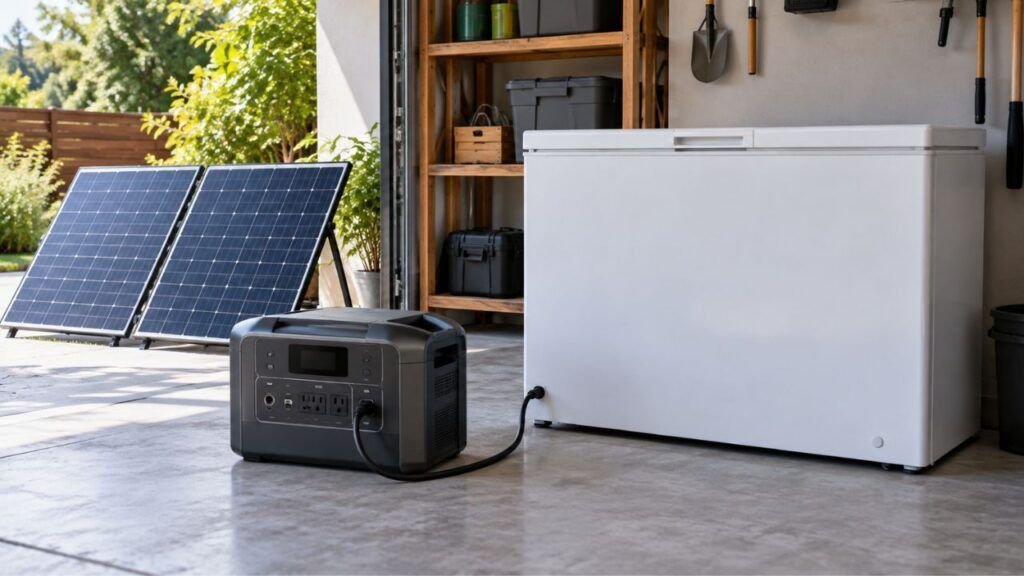
Can Solar Panels Keep the Furnace Running During a Long Outage?
Solar panels can extend furnace backup time by recharging the battery. However, winter sunlight conditions can make daily solar production less predictable.
Solar Panels Recharge the Battery
The solar panels generally recharge the solar generator.
The battery and inverter then supply stable AC power to the furnace.
During strong sunlight, incoming solar energy may replace some electricity the furnace consumes.
If solar production exceeds your average daily furnace consumption, you may maintain the battery much longer.
If production remains lower, the battery will gradually discharge.
Estimate Daily Solar Energy
A basic planning formula is:
Daily solar energy = Solar panel watts × peak sun hours × system efficiency
For example, 800 watts of panels receiving four strong equivalent sun hours theoretically produces:
800W × 4 hours = 3,200Wh
Actual usable energy will normally be lower because of system losses and imperfect conditions.
Your location also matters greatly.
Winter solar conditions in Arizona differ significantly from conditions in Michigan.
Winter Solar Output Can Be Limited
Power outages often happen during bad weather.
Unfortunately, that is also when solar charging may perform poorly.
Winter output can drop because of:
- Shorter daylight hours
- Heavy clouds
- Snow-covered panels
- Low sun angle
- Trees or nearby buildings
- Storm conditions
- Panel temperature and orientation
Cold weather can also affect battery charging.
Many lithium batteries restrict or stop charging below certain temperatures.
Always check your solar generator’s charging-temperature limits.
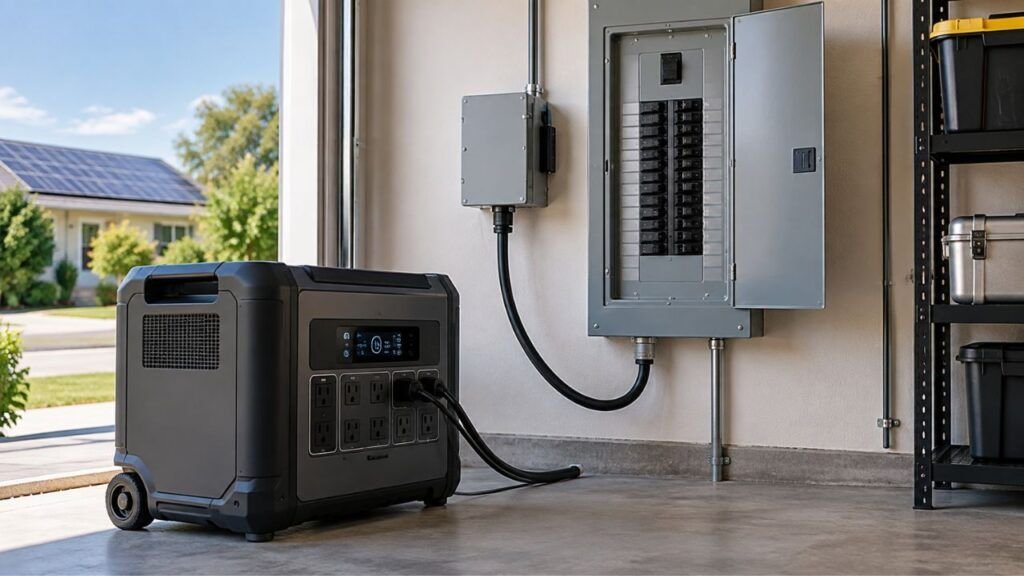
How to Connect a Solar Generator to a Gas Furnace Safely
How you connect backup power matters just as much as generator size. Some furnaces are easy to power, while hardwired systems need a proper transfer arrangement.
If the Furnace Already Has an Approved Plug
Some furnaces have an approved cord-and-plug installation.
If yours does, backup operation can be comparatively straightforward.
You still need to confirm:
- Correct voltage
- Adequate inverter output
- Enough startup capacity
- Compatible grounding
- Correct polarity
- Proper furnace operation
Run several complete heating cycles before relying on the setup during winter.
If the Furnace Is Hardwired
Many U.S. gas furnaces connect directly to household wiring.
Do not cut wires and attach a temporary plug during an outage.
Do not make a homemade connection into the electrical panel.
A licensed electrician can install an appropriate backup-power arrangement.
Depending on the installation, this may involve an approved transfer device, disconnect arrangement, inlet, or other code-compliant method.
Never Backfeed a Wall Outlet
Never connect a solar generator to household wiring through a normal wall receptacle.
Backfeeding creates serious electrical hazards.
It can energize circuits unexpectedly and endanger utility workers.
The safe approach is always an approved transfer method designed for backup power.
Why Won’t My Furnace Run Even Though the Solar Generator Has Enough Watts?
If your furnace will not operate from battery power, insufficient wattage is only one possible cause. Modern furnaces can be sensitive to several electrical conditions.
Grounding or Neutral Compatibility
Portable power stations can use different neutral and grounding arrangements.
Some provide a floating neutral.
Other backup configurations may use a bonded neutral.
Your furnace may expect an electrical arrangement that differs from the portable power source.
That can cause ignition problems or safety lockouts even when plenty of watts remain available.
Hot and Neutral Polarity
Modern furnace electronics may depend on correct line polarity.
A furnace could therefore behave differently if polarity is incorrect.
Symptoms might include:
- Burner fails to ignite
- Flame will not remain established
- Furnace enters lockout
- Error codes appear
- Blower operates without normal heating
Do not bypass safety systems if this happens.
Power Quality or THD
Modern control boards depend on reasonably clean AC power.
Pure sine wave inverters are generally the appropriate choice for furnaces.
However, the words “pure sine wave” do not guarantee universal compatibility.
Some furnace manufacturers specify maximum total harmonic distortion, voltage ranges, or frequency limits.
Check the actual requirements for your model.
Startup Overload
Your power station could display only 500 watts after startup.
That does not prove startup demand remained below 500 watts.
A brief motor surge might exceed the inverter limit before your display updates.
If the inverter shuts down exactly when the blower starts, startup demand deserves attention.
Other Furnace Accessories
Your furnace may not be the only device using electricity.
Additional equipment can include:
- Condensate pumps
- Humidifiers
- Electronic air cleaners
- Powered dampers
- Smart thermostats
- Zone-control boards
- Ventilation systems
Include these loads when sizing your backup system.
Should You Use a Neutral-Ground Bonding Plug With a Furnace?
A neutral-ground bonding plug should not be treated as a universal fix for furnace problems.
Some furnace controls may fail to operate correctly when connected to a portable power source with a different neutral-ground arrangement.
That does not mean every situation should be solved by adding a bonding adapter.
The correct grounding and bonding arrangement depends on the power source, transfer equipment, wiring method, and electrical system.
Using the wrong configuration can create safety problems.
If your furnace works on utility power but fails on the solar generator, stop experimenting with improvised adapters.
Have an electrician or HVAC technician identify the actual electrical issue.
That is much safer than assuming grounding is always the problem.
Gas Furnace vs. Electric Furnace on a Solar Generator
Gas and electric furnaces may look similar inside the home, but their backup-power requirements are completely different.
| Factor | Gas Furnace | Electric Resistance Furnace |
| Main heat source | Natural gas or propane | Electricity |
| Battery powers | Motors, ignition, controls | Heating elements and blower |
| Electrical demand | Usually moderate | Usually very high |
| Common furnace supply | Often 120V | Commonly 240V |
| Portable solar generator use | Often practical | Usually difficult |
| Battery runtime | Can be useful | Often short without large storage |
A typical portable solar generator is far more practical for gas heat.
The battery only needs to support the electrical parts of the furnace.
An electric furnace requires electricity to create the heat itself.
That can mean many thousands of watts.
Solar Generator vs. Fuel Generator for a Gas Furnace
Both backup methods can keep a gas furnace operating. The better choice depends on outage length, noise concerns, fuel availability, and your preferred setup.
| Factor | Solar Generator | Fuel Generator |
| Noise | Very low | Engine noise |
| Exhaust | No combustion exhaust from inverter | Produces dangerous exhaust |
| Fuel storage | Battery energy | Gasoline, propane, or other fuel |
| Indoor operation | Follow battery manufacturer guidance | Portable fuel generator stays outdoors |
| Runtime | Limited by battery capacity | Can continue while fuel remains |
| Recharging | Solar, grid, supported charging | Refueling |
| Maintenance | Usually low | Engine maintenance required |
| Short outages | Very convenient | Effective but less convenient |
| Multi-day outages | Depends on recharge availability | Strong option with adequate fuel |
A solar generator is especially appealing for quiet overnight furnace operation.
A fuel generator may be easier during very long outages if sunlight is poor.
Some homeowners use both systems for additional resilience.
Common Mistakes When Powering a Furnace With a Solar Generator
These mistakes can cause disappointing runtime or prevent the furnace from starting completely:
- Choosing a generator from running watts alone
- Assuming every gas furnace has similar power requirements
- Treating breaker size as real furnace consumption
- Ignoring blower or inducer startup demand
- Buying a large battery with an undersized inverter
- Buying a powerful inverter with insufficient battery capacity
- Assuming pure sine wave guarantees furnace compatibility
- Ignoring hot and neutral polarity
- Ignoring grounding requirements
- Using an improvised neutral-ground bonding adapter
- Backfeeding household wiring
- Forgetting furnace accessories
- Assuming continuous runtime equals overnight runtime
- Expecting perfect solar charging during winter storms
- Waiting until an outage to test the system
The best furnace backup system is one you verify before bad weather arrives.
How to Prepare Your Furnace for a Winter Power Outage
A little preparation can prevent most furnace backup surprises. Test everything before winter instead of discovering problems during a freezing outage.
Before Winter
- Find your furnace model and owner documentation.
- Confirm voltage and frequency requirements.
- Determine actual furnace power consumption.
- Check startup demand when possible.
- Confirm the solar generator’s inverter rating.
- Calculate the battery capacity you need.
- Arrange a safe connection for hardwired equipment.
- Inspect or replace a dirty furnace filter.
- Fully charge the solar generator.
- Check solar panels and charging cables.
- Test several complete furnace heating cycles.
- Verify smoke and carbon monoxide alarms.
- Learn the battery’s cold-temperature limits.
During the Outage
- Use only the backup connection you already tested.
- Keep unnecessary high-watt appliances turned off.
- Watch the remaining battery percentage.
- Reduce heat loss by keeping exterior doors closed.
- Close curtains or blinds during very cold periods.
- Consider lowering the thermostat slightly.
- Keep vents and returns unobstructed.
- Watch for furnace fault codes.
- Never bypass furnace safety controls.
- Recharge the solar generator whenever safe power becomes available.
Final Verdict
Yes, a solar generator can power many residential gas furnaces.
In fact, a gas furnace is one of the more practical heating systems to support with battery backup because natural gas or propane still produces the heat.
The solar generator mainly powers the blower, inducer, ignition system, controls, and safety equipment.
But I would not choose your solar generator using one generic wattage recommendation.
First verify your furnace’s actual requirements.
You want to confirm seven things:
Voltage, running watts, startup demand, battery capacity, power quality, grounding and polarity, and the connection method.
Once those factors are compatible, a properly sized solar generator can provide quiet and practical furnace backup during winter outages.
Solar panels can also extend runtime when sunlight is available.
Just remember that winter weather can reduce charging performance.
Plan conservatively, test the complete setup before an emergency, and have a professional handle hardwired electrical connections when needed.
Related FAQs
Can a 1,000-Watt Solar Generator Run a Gas Furnace?
A 1,000W solar generator may run a lower-demand gas furnace if the furnace’s normal load and startup demand remain within the inverter limits. However, you should verify the actual electrical requirements instead of assuming 1,000 watts is enough.
Can a 1,500-Watt Solar Generator Run a Gas Furnace?
Yes, a 1,500W solar generator can run many residential gas furnaces. It still needs enough surge capability for startup and enough battery capacity for your desired runtime.
Can a 2,000-Watt Solar Generator Run a Gas Furnace?
A 2,000W solar generator provides useful inverter headroom for many gas furnaces. However, furnace compatibility also depends on startup demand, voltage, power quality, grounding, polarity, and battery capacity.
How Many Watts Does a Gas Furnace Need to Run?
Many gas furnaces use several hundred watts while operating, but electrical demand varies significantly. Motor type, blower speed, duct resistance, furnace size, and accessories can all affect consumption.
How Many Starting Watts Does a Gas Furnace Need?
There is no universal starting-watt requirement for gas furnaces. Motor startup can briefly exceed normal running demand, so check manufacturer information or measure your furnace before choosing an inverter.
How Long Will a 1,000Wh Battery Run a Gas Furnace?
Using an 85% planning allowance, a 1,000Wh battery provides roughly 850Wh of usable AC energy. That equals about 2.1 hours at 400W or 1.4 hours at 600W of continuous operation.
How Long Will a 2,000Wh Solar Generator Run a Furnace?
A 2,000Wh battery could provide roughly 1,700Wh after allowing for common system losses. That works out to about 4.3 hours at 400W or 2.8 hours at 600W continuously.
Can a Portable Power Station Run a Gas Furnace?
Yes, many portable power stations can run gas furnaces when their inverter output, startup capacity, voltage, power quality, and battery size match the furnace requirements.
Will a Gas Furnace Work During a Power Outage?
Normally, no. Modern gas furnaces still require electricity for the blower, inducer, ignition system, control board, gas valve controls, and safety equipment.
Does a Gas Furnace Need a Pure Sine Wave Inverter?
A pure sine wave inverter is generally the appropriate choice for a modern gas furnace. However, you should also verify voltage, frequency, grounding, polarity, and any power-quality requirements listed by the furnace manufacturer.
Why Won’t My Furnace Ignite on a Portable Power Station?
Possible causes include insufficient startup capacity, incorrect polarity, grounding or neutral differences, unsuitable power quality, or another furnace fault. If the problem continues, have an HVAC technician or electrician evaluate the setup.
Does a Gas Furnace Need a Neutral-Ground Bond?
That depends on the furnace, power source, wiring, and transfer configuration. Do not assume a bonding plug is required or safe without checking the electrical design with a qualified professional.
Can I Plug My Furnace Directly Into a Solar Generator?
You may be able to if the furnace already has an approved cord-and-plug connection. A hardwired furnace needs an appropriate backup connection rather than an improvised extension cord or wiring modification.
Can I Connect a Solar Generator to a Furnace Transfer Switch?
Possibly, but the solar generator and transfer equipment must be electrically compatible. A licensed electrician should evaluate and install the connection when dealing with hardwired household circuits.
Can a Solar Generator Run a Furnace and Refrigerator Together?
Yes, if the combined running and startup loads remain within the solar generator’s limits. Running both appliances will also increase battery consumption and shorten overall runtime.
Can Solar Panels Run a Gas Furnace All Day?
They can help support furnace operation by recharging the solar generator during daylight. Whether they can sustain it all day depends on panel size, furnace consumption, battery capacity, sunlight, and weather.
Can a Solar Generator Run an Electric Furnace?
Most portable solar generators are not practical for standard electric resistance furnaces because those systems often require high-wattage 240V power. Gas furnaces normally require far less electrical energy.

Austin Parker writes practical generator how-to guides, troubleshooting advice, and buying guides for solar, portable, and fuel-powered generators. His focus is helping readers solve common power problems, understand their options, and choose dependable equipment for real-world use.