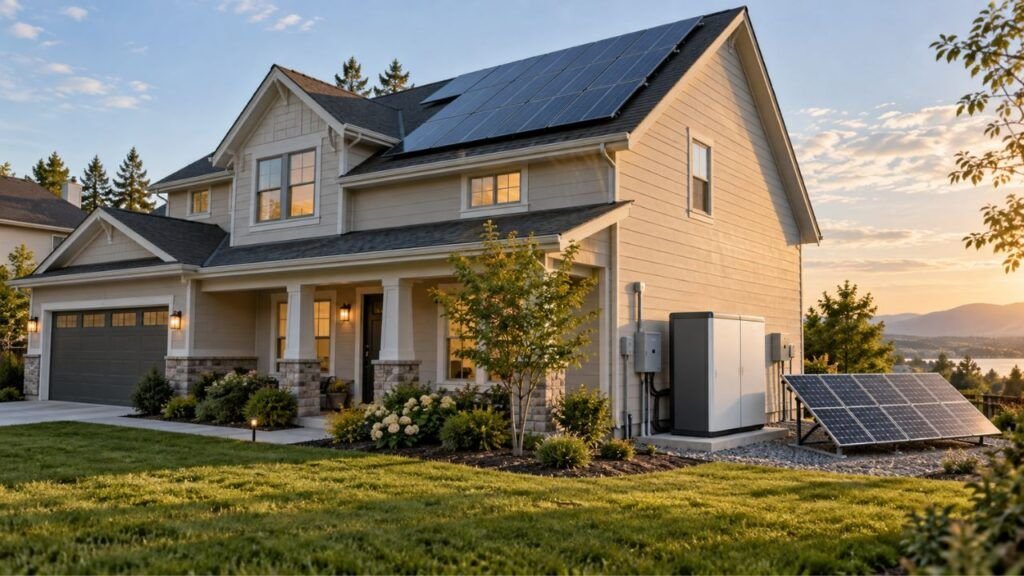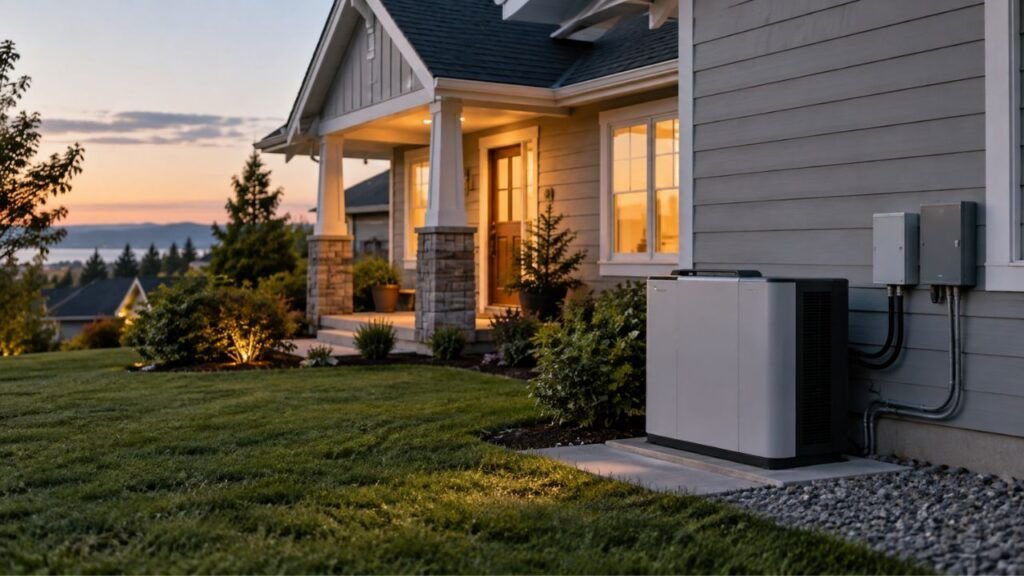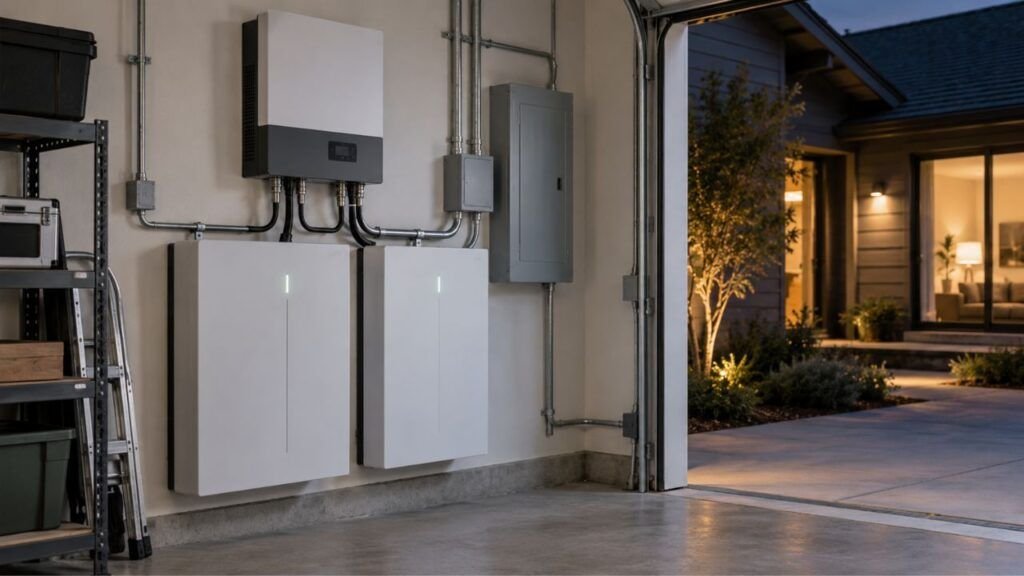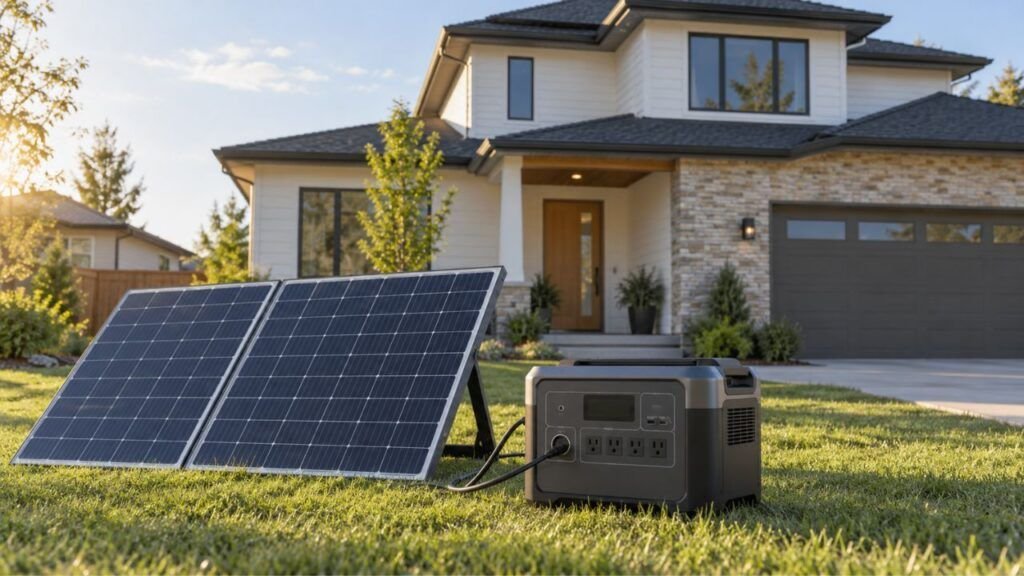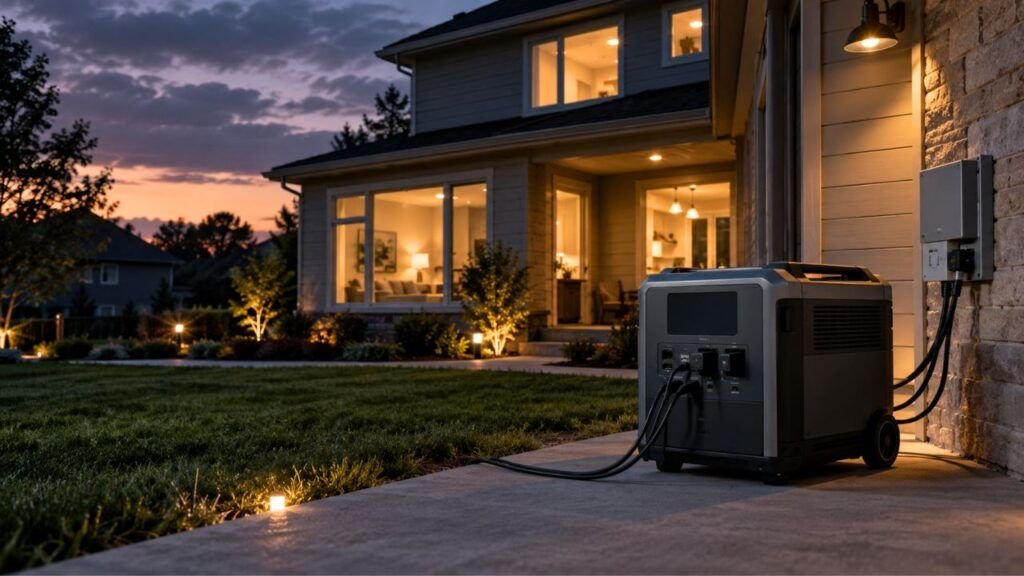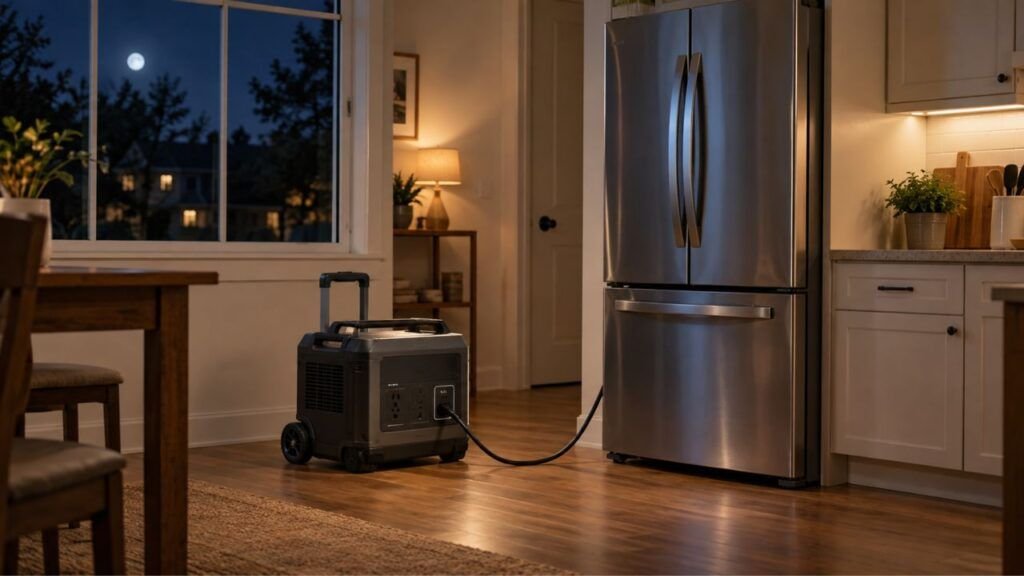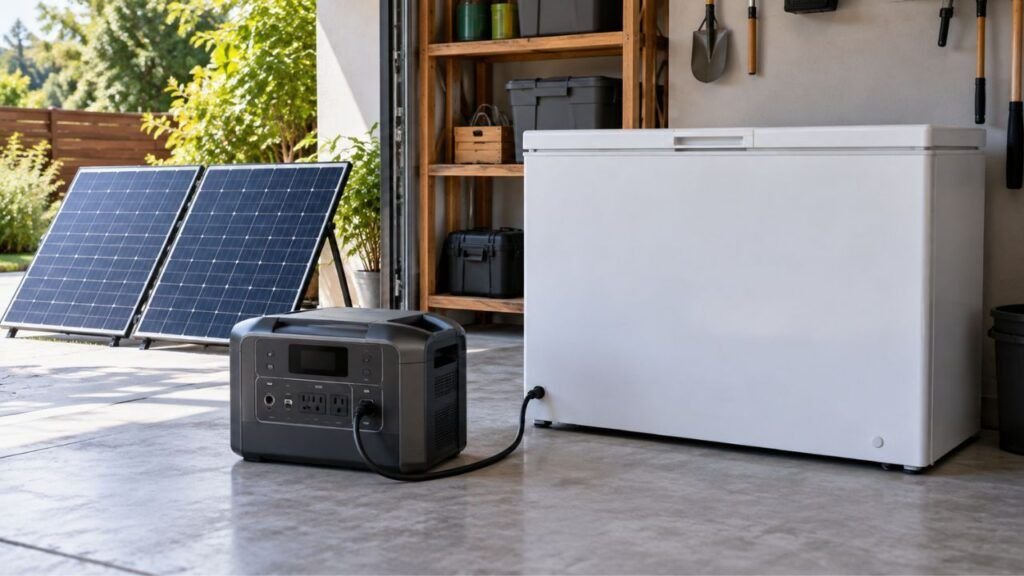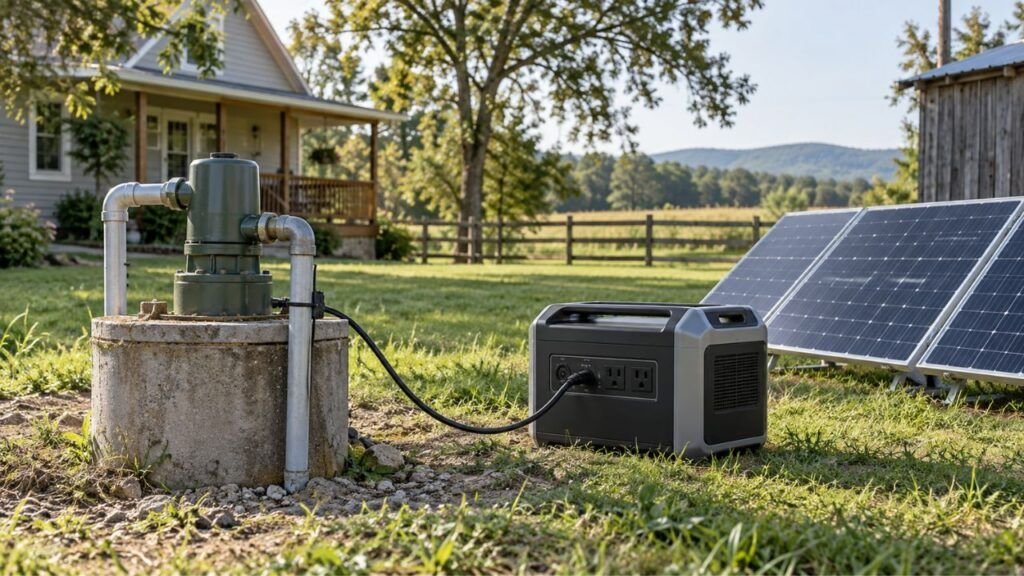
Yes, one powerful solar generator can run an entire breaker panel. However, it must provide enough output, suitable 120/240V power, and proper panel integration. Powering the panel also does not mean every appliance can run simultaneously.
In this guide, I’ll explain what your solar generator actually needs. We’ll cover wattage, battery capacity, 240V loads, runtime, load management, and safe panel connections.
Key Takeaways
- One solar generator can supply an entire breaker panel.
- Powering the panel does not mean running everything simultaneously.
- Native 120/240V split-phase output provides greater whole-panel flexibility.
- Continuous watts determine how many loads can run together.
- Surge watts determine whether motors and compressors can start.
- Battery capacity determines how long your backup power lasts.
- High-draw appliances may need to remain switched off.
- Proper transfer equipment must prevent utility-grid backfeeding.
- Panel installation should be handled by a qualified electrician.
Can One Solar Generator Really Power an Entire Breaker Panel?
A large enough solar generator can supply power through your home’s breaker panel. The important part is understanding what “powering the panel” actually means.
Your breaker panel simply distributes electricity to different household circuits.
Those circuits might include your:
- refrigerator
- lights
- furnace
- outlets
- microwave
- well pump
- air conditioner
- water heater
- dryer
Connecting a solar generator to the panel can make those circuits available.
However, your generator still has a fixed inverter output.
Suppose your solar generator provides 7,200 watts continuously. Your home’s electrical panel might be rated for 200 amps. That does not mean the generator suddenly has the power of a 200-amp utility service.
You still have only 7,200 watts available.
Therefore, you might run your refrigerator, lights, furnace, and well pump. However, adding an electric dryer and large central AC could overload the generator.
This distinction is extremely important.
Powering the breaker panel means providing electricity to its circuits. It does not automatically mean every connected appliance can operate together.
What Does Running the Entire Panel Actually Mean?
There are several ways homeowners use the phrase “whole-panel backup.” Understanding the difference helps you size your system correctly.
Energizing the Entire Breaker Panel
An appropriately configured backup system can make most panel circuits available.
You can then decide which breakers remain active during an outage.
For example, your refrigerator, outlets, lights, furnace, and well pump might remain available. Your EV charger and electric dryer could stay switched off.
This setup provides flexibility without requiring enormous inverter capacity.
Running Every Appliance at the Same Time
This is a completely different requirement.
Running every normal household load simultaneously could require considerable power.
An all-electric home might include:
- central air conditioning
- electric water heating
- electric cooking
- clothes dryer
- heat pump
- well pump
- EV charger
Trying to operate everything together could exceed even powerful solar generators.
You would also drain the battery extremely quickly.
Powering Only Selected Circuits
Another approach is backing up only essential circuits.
You might choose your:
- refrigerator
- freezer
- furnace
- kitchen outlets
- internet equipment
- bedroom lights
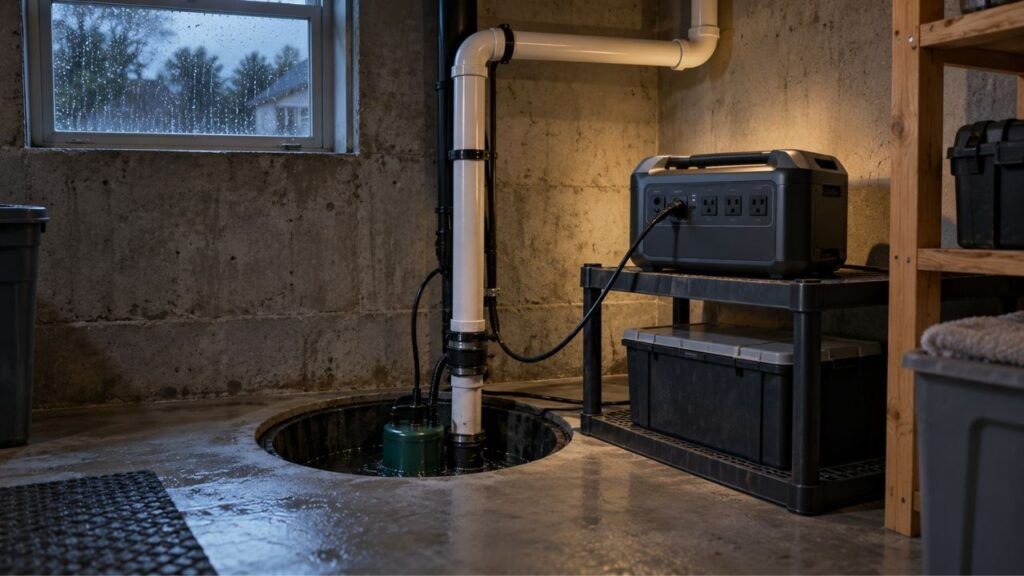
- sump pump
This approach reduces both inverter and battery requirements.
It also makes load management much easier during extended outages.
What Does a Solar Generator Need to Run a Breaker Panel?
Several specifications matter when connecting backup power to a household panel. Looking only at advertised wattage can lead to poor sizing decisions.
120/240V Split-Phase Output
Most U.S. homes receive 120/240V split-phase electrical service.
Normal wall outlets usually operate at 120 volts.
Larger appliances often use 240 volts, including some:
- well pumps
- central air conditioners
- dryers
- electric ranges
- water heaters
- heat pumps
A solar generator with native 120/240V split-phase output offers better panel compatibility.
It can support both sides of a typical residential electrical system.
A 120V-only generator is much more limited for whole-panel use.
It may support selected 120V circuits through compatible equipment. However, it cannot normally operate genuine 240V appliances.
Enough Continuous Output
Continuous wattage tells you how much power the inverter can provide steadily.
Your generator’s continuous rating must exceed the loads operating simultaneously.
As a broad planning reference:
- 2,000-3,000W supports smaller essential-load setups.
- 3,000-5,000W handles more household essentials.
- 5,000-8,000W provides stronger whole-panel backup flexibility.
- 8,000-12,000W+ can handle significantly heavier simultaneous loads.
These ranges are only planning references.
Your actual requirements depend on the appliances you intend to operate.
Enough Surge Output
Some appliances briefly require much more power when starting.
This is called startup or surge demand.
Common examples include:
- refrigerators
- freezers
- well pumps
- sump pumps
- air conditioners
- furnace blowers
A refrigerator might only consume modest power while running. Its compressor can require considerably more during startup.
Your solar generator must handle that temporary demand.
Otherwise, its inverter may overload or shut down.
Enough Battery Capacity
Output wattage tells you how much equipment can operate.
Battery capacity tells you how long it can operate.
Battery capacity is commonly measured in watt-hours or kilowatt-hours.
For example:
- 5,000Wh equals 5kWh.
- 10,000Wh equals 10kWh.
- 20,000Wh equals 20kWh.
A powerful inverter paired with a small battery can still provide short runtime.
This becomes especially noticeable with air conditioners and electric heaters.
Compatible Home-Integration Equipment
A solar generator also needs a safe method of supplying household circuits.
Depending on the system, this may involve:
- manual transfer equipment
- compatible panel interlocks
- generator inlet equipment
- critical-load panels
- smart transfer systems
Compatibility matters more than simply matching connector shapes.
The generator, panel, transfer equipment, and grounding arrangement must work together correctly.
120V vs. 240V Solar Generator for a Breaker Panel
Voltage becomes especially important when you want broader panel coverage. Here’s the practical difference for a typical U.S. home.
| Feature | 120V Solar Generator | 120/240V Split-Phase Solar Generator |
| Standard 120V circuits | Yes | Yes |
| Broad whole-panel compatibility | Limited | Better |
| 240V well pump | No | Potentially |
| Electric dryer | No | Potentially |
| Central HVAC | Usually limited | Potentially |
| Electric water heater | No | Potentially |
| Both panel legs | Setup dependent | Normally supported |
| Best use | Selected essential loads | Larger whole-panel backup |
A 240V output does not guarantee enough power for every 240V appliance.
Voltage only tells you that the generator can provide the required electrical configuration.
You still need sufficient continuous and surge wattage.
For example, your generator might provide 240V output but only 5,000 watts.
That could operate certain 240V loads perfectly well.
It might still struggle with large HVAC equipment running alongside other appliances.
How Much Solar Generator Output Does an Entire Panel Need?
There is no single wattage that works for every house. The correct size depends on what you plan to run simultaneously.
Start With Simultaneous Running Watts
Begin by listing the appliances you need during an outage.
Then find their operating wattage.
Add the appliances that might run at the same time.
Your basic calculation looks like this:
Required continuous generator output ≥ combined simultaneous running watts
Suppose your active loads include:
- refrigerator: 200W
- freezer: 200W
- furnace blower: 600W
- lights: 200W
- internet equipment: 50W
- microwave: 1,500W
Your combined running load would be around 2,750 watts.
A 3,000W generator technically looks close.
However, that leaves very little headroom for startup surges.
Then Account for Startup Surge
Motor-driven equipment can briefly consume additional power.
Instead of simply adding every possible startup rating together, consider which major load could start while the others are already running.
A useful planning concept is:
Peak requirement = existing running load + major starting demand
For example, your house might already be consuming 2,000 watts.
Then your well pump starts.
If that pump briefly requires another 3,000 watts, your inverter needs enough peak capability for roughly 5,000 watts during that moment.
Actual starting requirements should come from appliance specifications whenever possible.
Leave Some Operating Headroom
Avoid planning to run your inverter at its absolute limit constantly.
Some headroom helps manage:
- unexpected appliance cycling
- motor startups
- added phone chargers
- temporary kitchen loads
- battery and inverter temperature
- measurement differences
A comfortable margin makes your backup system easier to live with.
Example: Sizing One Solar Generator for a Home Breaker Panel
Let’s look at a simplified household example. Actual appliance wattage can vary significantly, so check nameplates whenever possible.
| Household Load | Example Running Watts | Possible Starting Demand |
| Refrigerator | 150W | 600-1,200W |
| Freezer | 150W | 600-1,200W |
| Furnace blower | 600W | 1,200-2,000W |
| LED lighting | 300W | 300W |
| Router and electronics | 100W | 100W |
| Well pump | 1,000W | 2,000-4,000W |
| Microwave | 1,500W | Around running demand |
You probably would not operate every appliance constantly.
That’s where load management becomes useful.
Imagine your refrigerator, freezer, furnace, lights, and router consume around 1,300 watts together.
Then your well pump starts.
The generator must handle the pump’s startup demand alongside that existing load.
After the pressure tank fills, the well pump turns off.
You could then use the microwave without creating the same peak load.
This type of scheduling can make a moderate-sized generator feel much more capable.
Does a 200-Amp Breaker Panel Require a 200-Amp Solar Generator?
No. A 200-amp electrical panel does not mean your solar generator must supply 200 amps.
The panel rating shows how much electrical service the system is designed to accommodate.
It does not represent your home’s continuous consumption.
Most homes use only a fraction of their maximum service capacity most of the time.
Your backup generator only needs to supply the loads you actually operate.
For example, your 200-amp home might need only 2,000-5,000 watts during a carefully managed outage.
You could keep essential appliances operating while leaving heavy loads switched off.
This is why whole-panel access can work with much smaller backup systems.
The generator does not have to duplicate your full utility service.
Which Breaker Panel Loads Can One Solar Generator Realistically Run?
Different household loads place very different demands on a battery backup system. Here’s how common appliances compare.
Refrigerator, Freezer, Lights, and Electronics
These are usually among the easiest loads to support.
Modern LED lighting uses relatively little electricity.
Routers, televisions, laptops, and phone chargers also have modest requirements.
Refrigerators and freezers create startup surges, but their average consumption remains manageable.
These loads often form the foundation of an outage backup plan.
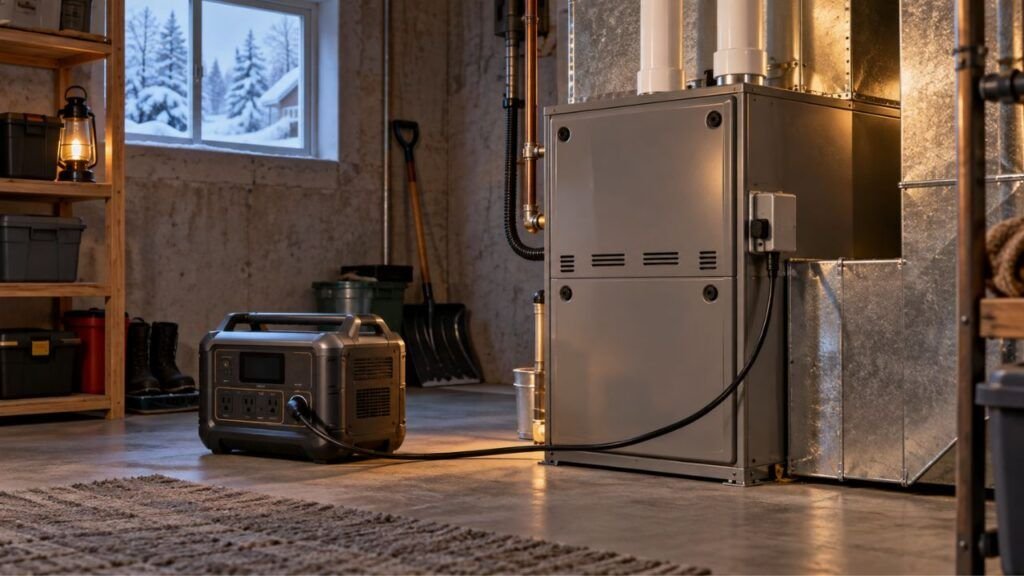
Furnace and Boiler Equipment
A gas furnace still needs electricity.
The blower motor, controls, and ignition system require electrical power.
Boilers may also use pumps and control electronics.
Their electrical demand is often manageable for larger portable power systems.
However, hardwired equipment must be integrated correctly with the backup system.
Well and Sump Pumps
Pumps deserve extra attention because motors can have substantial startup demand.
Some well pumps also require 240V power.
Your generator therefore needs both:
- the correct output voltage
- enough startup capability
A system that comfortably runs lights and refrigerators could still struggle with a large well pump.
Central Air Conditioner or Heat Pump
Central cooling can become one of your largest backup loads.
The compressor may require substantial power during startup.
Once running, it can also consume significant continuous energy.
Certain properly sized backup systems can operate central HVAC equipment.
However, you need to evaluate:
- running wattage
- startup demand
- voltage
- battery capacity
- other simultaneous loads
A compatible soft-start device may reduce startup demand on certain systems.
It should still be selected and installed appropriately.
Electric Water Heater
Traditional electric resistance water heaters can consume several thousand watts.
They usually lack the large startup surge associated with compressors.
However, their steady demand can drain batteries quickly.
Many homeowners therefore disable electric water heating during outages.
Electric Dryer and Range
Electric dryers and ranges may be technically possible with powerful 240V systems.
However, both can consume large amounts of energy.
Operating them during an extended outage may not be the best battery strategy.
A microwave, countertop cooker, or other smaller appliance could use much less energy.
EV Charger
An EV charger can become one of your home’s largest continuous loads.
Charging an electric vehicle from your emergency battery means moving stored energy between two batteries.
That can drastically shorten home backup runtime.
Unless you have substantial storage, EV charging is usually worth postponing.
How Long Can One Solar Generator Power the Breaker Panel?
Your breaker panel itself barely determines runtime. The appliances pulling electricity through it determine how quickly the battery drains.
A simple starting formula is:
Runtime = usable battery capacity ÷ average load
Here are some theoretical examples.
| Usable Battery Capacity | Average Load | Approximate Runtime |
| 5kWh | 500W | 10 hours |
| 5kWh | 1,000W | 5 hours |
| 10kWh | 500W | 20 hours |
| 10kWh | 1,000W | 10 hours |
| 10kWh | 2,000W | 5 hours |
| 20kWh | 1,000W | 20 hours |
| 20kWh | 2,000W | 10 hours |
These are simplified theoretical calculations.
Actual runtime will usually be lower because of:
- inverter losses
- standby consumption
- battery reserve limits
- changing household loads
- temperature
- appliance cycling
Your average load also matters far more than occasional short peaks.
A well pump might draw significant power, but only for short periods.
Meanwhile, an electric heater can consume several thousand watts continuously.
Why Battery Capacity Matters More Than Panel Size for Runtime
A large breaker panel does not automatically consume more electricity.
Your appliances determine battery usage.
Think about three different homes using the same 200-amp panel.
One homeowner might maintain an average backup load of only 500 watts.
Another might average 2,000 watts.
A third might operate HVAC equipment and average 5,000 watts.
Those homes will get dramatically different runtimes from the same battery.
For example, consider a theoretical 10kWh usable battery.
At a 500W average load:
10,000Wh ÷ 500W = 20 hours
At a 2,000W average load:
10,000Wh ÷ 2,000W = 5 hours
At a 5,000W average load:
10,000Wh ÷ 5,000W = 2 hours
Real runtime would be somewhat lower after system losses.
This is why load reduction can sometimes help more than buying another inverter.
How Solar Recharging Changes Whole-Panel Backup
Solar input can dramatically extend outage runtime. However, you need realistic expectations about how much energy the panels produce.
Solar Input vs. Household Consumption
Suppose your solar panels are producing 1,500 watts.
Your house is consuming 800 watts at that moment.
In a compatible system, solar energy can help support that load.
Any remaining available power may contribute toward charging the battery.
But if your house consumes 2,500 watts while solar produces 1,500 watts, the battery must supply the difference.
Daytime Load Sharing
Daytime is often the best time for energy-intensive tasks.
You might use strong solar production for:
- pumping water
- cooking
- running laundry equipment
- cooling the house
- charging electronics
Then you can reduce loads overnight.
This approach preserves more battery capacity for nighttime essentials.
Multi-Day Outages
Multi-day backup requires more than simply having a large battery.
You should compare your daily energy use against realistic daily solar production.
Suppose you consume 12kWh daily during an outage.
If your solar array restores only 5kWh daily, the battery loses net energy each day.
Eventually, your stored energy runs out.
Good whole-home backup planning therefore considers both storage and recharge capability.
How Do You Safely Connect One Solar Generator to a Breaker Panel?
There are several legitimate approaches to home backup integration. The best option depends on your generator, panel, loads, and local electrical requirements.
Manual Transfer Switch
A manual transfer switch lets you select circuits powered by backup electricity.
This approach is common for essential-load systems.
You might transfer circuits serving:
- refrigerator
- furnace
- lights
- kitchen outlets
- sump pump
The system keeps utility power and generator power appropriately separated.
Its main advantage is controlled load selection.
You are less likely to accidentally overwhelm the generator with heavy appliances.
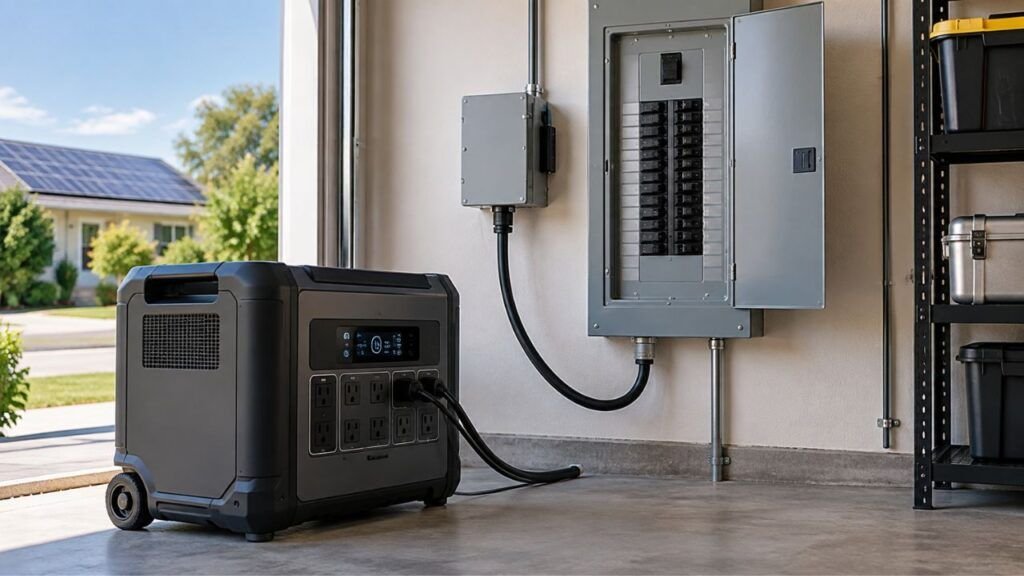
Breaker Interlock and Generator Inlet
A compatible panel interlock provides another whole-panel approach.
The mechanism prevents the utility main breaker and generator breaker from operating together.
This means backup power can energize the panel while the utility connection remains isolated.
The homeowner then manages loads through individual breakers.
Heavy circuits can remain switched off.
This approach provides flexibility because you can choose different circuits during different outages.
However, the interlock must be specifically appropriate for the electrical panel.
Smart or Automatic Transfer Equipment
Some larger battery systems support smart or automatic transfer equipment.
These systems may detect an outage and switch the home to battery power automatically.
More advanced systems can also manage specific circuits.
For example, they may prioritize important loads and temporarily disconnect heavy ones.
This can reduce the amount of manual load management required.
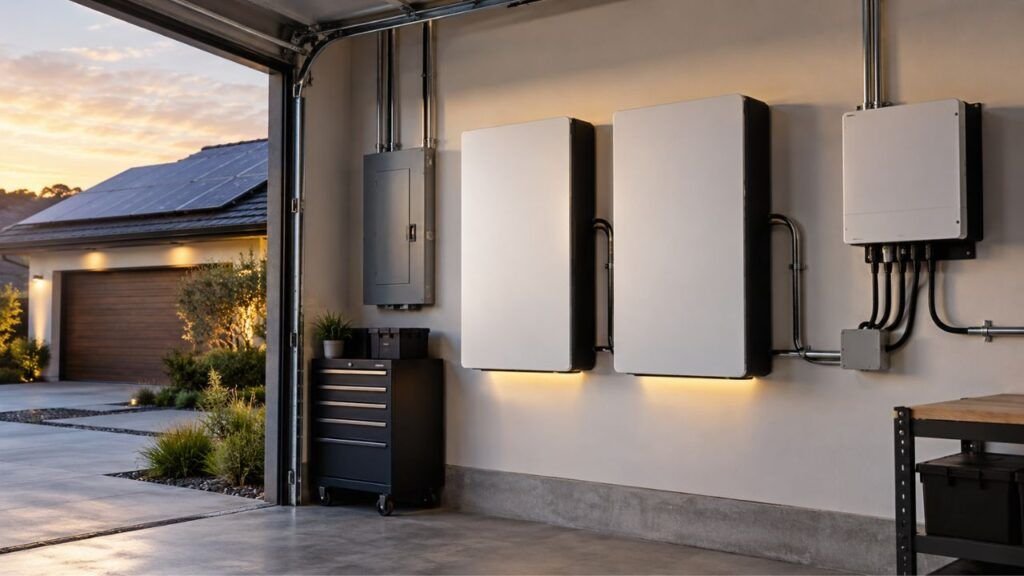
Critical-Loads Subpanel
A critical-load panel contains only the circuits you want backed up.
Common choices include:
- refrigerator
- freezer
- furnace
- kitchen outlets
- lights
- internet
- medical equipment
This approach works especially well when your generator cannot support the entire home’s typical demand.
Interlock vs. Transfer Switch for a Solar Generator
Both approaches can provide safe backup integration when properly designed. The better choice depends on how much control and flexibility you want.
| Feature | Panel Interlock | Manual Transfer Switch | Smart/Automatic Transfer |
| Manual operation | Yes | Yes | Usually automatic |
| Whole-panel flexibility | High | Usually lower | System dependent |
| Selected circuits | Manually controlled | Usually predetermined | Often configurable |
| Load management needed | Yes | Yes | Sometimes automatic |
| Prevents utility backfeed | Yes, when properly installed | Yes | Yes |
| Installation complexity | Moderate | Moderate | Higher |
| Best use | Flexible panel backup | Essential circuits | Integrated home backup |
An interlock can provide more flexibility.
However, that flexibility requires careful manual load management.
A transfer switch with selected circuits can be easier for smaller systems.
Smart transfer equipment offers greater automation but usually costs more.
Whichever method you use, equipment compatibility is essential.
What Happens If the Solar Generator Is Too Small?
An undersized generator usually makes itself obvious during an outage.
You may experience:
- inverter overload warnings
- automatic shutdowns
- breaker trips
- failed motor startups
- compressor startup problems
- voltage instability
- rapid battery drain
- interrupted appliance operation
The most common issue occurs when another large appliance starts unexpectedly.
For example, your generator may already be supporting several household loads.
Then your refrigerator compressor and well pump start close together.
That combined surge can exceed inverter capability.
Leaving additional operating headroom helps reduce these problems.
The Biggest Loads to Turn Off Before Switching to Generator Power
You can greatly reduce overload risk by disabling unnecessary high-demand circuits.
Common candidates include:
- EV chargers
- electric resistance heaters
- electric water heaters
- clothes dryers
- electric ovens
- electric ranges
- pool heaters
- hot tubs
- secondary HVAC equipment
- workshop machinery
- large central air conditioners
You do not automatically need to disable every load listed here.
A sufficiently powerful system may run some of them easily.
The goal is understanding which appliances consume the most energy.
Then you can decide which ones deserve priority during an outage.
Neutral-Ground Bonding, GFCI, and AFCI Compatibility
Home electrical systems include important grounding and protection requirements. This is one area where generic advice can cause real problems.
Neutral and Ground Configuration
The correct neutral and ground arrangement depends on the equipment.
Solar generators do not all use the same internal configuration.
Transfer devices also differ.
This means there is no universal instruction such as saying every generator must have either a bonded or floating neutral.
Your electrician should review the specific generator documentation.
They should also understand how the transfer equipment handles the neutral conductor.
GFCI and AFCI Circuits
Modern homes frequently contain GFCI and AFCI protection.
GFCI protection is common around:
- kitchens
- bathrooms
- garages
- outdoor outlets
AFCI protection is common throughout many living areas.
Backup equipment can sometimes interact with these protections differently than utility power.
Incorrect grounding or neutral arrangements can also cause unwanted trips.
That is another reason generator-specific integration matters.
Give Your Electrician the Generator Specifications
Bring the generator’s manual and electrical specifications before installation begins.
Your electrician should know:
- output voltage
- continuous current rating
- connector type
- neutral configuration
- grounding requirements
- transfer-equipment compatibility
This helps prevent selecting panel hardware based on assumptions.
Does the NEC 120% Rule Apply to a Solar Generator Breaker?
You may see online examples using a “120% rule” for breaker-panel connections.
However, you should not automatically apply that calculation to every portable solar generator installation.
Different electrical-code rules can apply depending on how the backup source operates.
A solar generator used as an isolated standby source is different from a power-production system operating in parallel with utility power.
The backup installation must prevent unintended connection between those power sources.
The exact rules also depend on:
- panel design
- equipment type
- electrical-code edition
- manufacturer instructions
- local permitting requirements
- local inspection requirements
Do not size a generator breaker using a single internet formula.
Have the planned installation reviewed by a qualified electrician.
Can You Backfeed a Solar Generator Through a Dryer Outlet?
No. Do not connect a solar generator to your house through a dryer outlet.
This type of improvised connection can create serious hazards.
Problems can include:
- dangerous utility backfeeding
- exposed energized conductors
- electrocution risk
- equipment damage
- fire hazards
- improper source isolation
A generator should supply household wiring through suitable transfer or interlock equipment.
That equipment ensures the utility source is isolated appropriately.
This protects your household, equipment, and utility workers.
Can One Solar Generator Run Central AC Through the Breaker Panel?
Yes, some powerful solar generators can run central air conditioning.
However, you need to check much more than voltage.
Three numbers matter most:
- AC running demand
- compressor startup demand
- generator continuous and surge output
Battery capacity is equally important.
Suppose your generator can start the air conditioner without difficulty.
That only proves the inverter can handle the startup.
It does not tell you how long the battery will last.
A large AC system can consume several kilowatt-hours within a few hours.
Running it throughout the night might require substantial battery storage.
You also need enough power remaining for refrigerators, lighting, pumps, and other household loads.
Is It Better to Back Up the Whole Panel or Only Critical Circuits?
Both approaches can work well. Your best option depends on generator size, budget, and desired convenience.
| Backup Approach | Main Advantage | Main Limitation | Best For |
| Entire panel with load management | Maximum flexibility | Requires careful load control | Large solar generators |
| Critical-load panel | Easy overload prevention | Fewer available circuits | Moderate systems |
| Smart load-managed backup | More automation | Higher cost and complexity | Advanced home backup |
Whole-panel backup gives you more freedom.
You can choose different household circuits whenever conditions change.
Critical-load backup keeps things simpler.
Your essential circuits remain available while heavy appliances stay outside the backup system.
Neither approach is automatically better.
Choose based on the actual loads you want during an outage.
When One Solar Generator Is Not Enough
One solar generator may become impractical when household demand grows too high.
You may need a larger or expandable system when you have:
- multiple central AC units
- electric resistance heating
- large heat pumps
- electric water heating
- heavy electric cooking
- large well pumps
- simultaneous dryer use
- frequent EV charging
- large workshop equipment
- long multi-day outages
- limited solar recharge potential
Some backup systems allow additional battery modules.
Others allow multiple inverter units to operate together.
That can increase:
- continuous output
- surge capacity
- battery storage
- 240V capability
The important part is designing around your expected outage lifestyle.
You do not necessarily need to recreate normal grid usage.
A Simple Checklist Before Powering Your Breaker Panel
Before planning whole-panel backup, work through these points:
- Confirm your solar generator’s output voltage.
- Check whether it provides native 120/240V split-phase power.
- Calculate your simultaneous running loads.
- Identify large motor startup requirements.
- Compare surge demand with inverter capability.
- Calculate how much battery capacity you need.
- Estimate realistic daily solar recharging.
- Identify every important 240V appliance.
- Decide which heavy loads can remain off.
- Confirm home-integration support from the manufacturer.
- Choose compatible transfer or interlock equipment.
- Have neutral and grounding compatibility checked.
- Review local permit and inspection requirements.
- Have electrical-panel work performed professionally.
Doing this planning first can prevent an expensive undersized system.
It can also help you avoid buying unnecessary capacity.
Final Verdict: Can One Solar Generator Run an Entire Breaker Panel?
Yes, one solar generator can run an entire breaker panel when the system is properly sized and integrated. For broad U.S. household coverage, a unit with native 120/240V split-phase output is usually the most practical option.
The important point is that panel access and whole-house power are different things. Your generator can make many circuits available while still requiring you to limit simultaneous loads. Large appliances like central AC, electric dryers, water heaters, and EV chargers deserve particular attention.
Remember these three measurements:
Continuous watts determine what can run together.
Surge watts determine what can successfully start.
Battery kilowatt-hours determine how long everything can operate.
Once you understand those three numbers, sizing whole-panel solar backup becomes much easier.
Related FAQs
Can a 5,000W Solar Generator Run a Breaker Panel?
Yes, a 5,000W solar generator can support a breaker panel when your simultaneous loads stay within its continuous and surge limits. It works best when high-demand appliances are managed carefully.
Can a 7,200W Solar Generator Power a Whole House?
A 7,200W solar generator can power many household essentials and some larger appliances. However, running central AC, electric heating, dryers, and cooking equipment together may exceed its output.
Can a 120V Solar Generator Power a 240V Breaker Panel?
A 120V generator can potentially supply selected 120V circuits through compatible equipment, but it cannot normally operate true 240V appliances. Native 120/240V output is better for broad panel backup.
Do I Need 240V to Connect a Solar Generator to My House?
Not always. Selected 120V circuits can sometimes be backed up without 240V output. However, you generally need 120/240V capability when you want to operate household 240V appliances.
Can a Solar Generator Power Both Sides of a Breaker Panel?
A compatible 120/240V split-phase solar generator can supply both panel legs through properly designed transfer equipment. A basic 120V-only generator does not provide the same functionality.
Can a Solar Generator Run a 200-Amp Panel?
Yes. The generator does not need to produce 200 amps simply because your panel has a 200-amp rating. It only needs enough output for the loads you operate during the outage.
Does a Solar Generator Need a Transfer Switch?
A solar generator supplying household wiring needs approved equipment that safely isolates backup power from utility power. Depending on the installation, this could involve a transfer switch, interlock arrangement, or compatible integrated system.
Can I Use an Interlock Kit With a Solar Generator?
Potentially, yes. The generator must have suitable output, and the interlock must be compatible with your specific electrical panel. A qualified electrician should verify the complete installation.
Can a Solar Generator Run a Well Pump Through the Panel?
Yes, if the generator provides the correct voltage and sufficient startup power. Many well pumps use 240V and can have substantial motor surge requirements.
Can One Solar Generator Run Central Air Conditioning?
Some high-output solar generators can operate central AC systems. You must check running wattage, compressor startup demand, voltage, battery capacity, and other simultaneous household loads.
How Many kWh of Battery Do I Need for Whole-Panel Backup?
There is no fixed amount. Divide your desired usable energy by your expected average household load. A 10kWh usable battery theoretically supports a 1,000W average load for about ten hours before system losses.
Can Solar Panels Recharge the Generator While It Powers the House?
Many solar generators can accept solar energy while supplying household loads. Whether the battery actually gains charge depends on whether incoming solar power exceeds current household consumption.
Will a Solar Generator Automatically Power the House During an Outage?
Only systems with compatible automatic or smart transfer equipment can switch over without manual action. Basic portable systems normally require manual transfer or switching procedures.
Do I Need an Electrician to Connect a Solar Generator to the Breaker Panel?
Yes, electrical-panel modifications and transfer equipment should be handled by a qualified electrician. Proper installation helps prevent backfeeding, grounding problems, overloaded wiring, and other serious electrical hazards.

Austin Parker writes practical generator how-to guides, troubleshooting advice, and buying guides for solar, portable, and fuel-powered generators. His focus is helping readers solve common power problems, understand their options, and choose dependable equipment for real-world use.