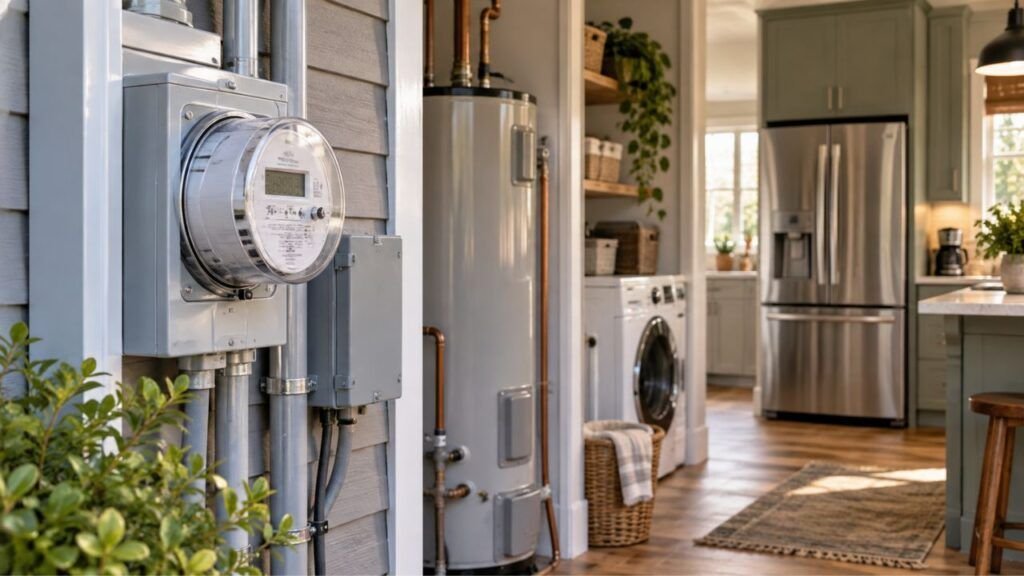
You can calculate daily home energy use by dividing your electricity consumption for a billing period by the actual number of billing days. For individual appliances, use Daily kWh = Watts × Hours Used Per Day ÷ 1,000, then add each appliance’s energy use together.
I’ll show you both methods step by step, including real calculation examples. You’ll also learn how cycling appliances affect estimates and how daily kWh helps with home backup planning.
Key Takeaways
- Daily home energy use is normally measured in kilowatt-hours, or kWh.
- The easiest calculation is billing-period kWh ÷ actual billing days.
- For appliances, use watts × daily operating hours ÷ 1,000.
- Refrigerators, HVAC systems, and water heaters usually cycle on and off.
- Smart-meter or measured data is more accurate than generic wattage estimates.
- An average U.S. residential electricity customer uses roughly 28–29 kWh daily.
- Daily kWh measures energy, while watts measure power at a particular moment.
- Home backup planning should consider both energy capacity and peak power.
- Homes with solar may need additional data beyond grid usage shown on the bill.
What Does Daily Home Energy Use Actually Mean?
Daily home energy use tells you how much electrical energy your household consumes during one day. It is usually expressed in kilowatt-hours, or kWh.
A watt and a kilowatt-hour are not the same measurement.
A watt (W) measures how much electrical power a device needs at a particular moment.
A kilowatt (kW) equals 1,000 watts.
A watt-hour (Wh) measures electrical energy used over time.
A kilowatt-hour (kWh) equals 1,000 watt-hours.
For example:
1,000 W × 1 hour = 1,000 Wh = 1 kWh
You can also consume the same amount of energy with a smaller load running longer:
100 W × 10 hours = 1,000 Wh = 1 kWh
Understanding that difference makes the rest of the calculations much easier.
The Easiest Way to Calculate Your Home’s Daily Energy Use
Your electricity bill is usually the easiest place to start. It shows actual measured electricity use rather than estimates based on appliance wattage.
Find the Total kWh on Your Electricity Bill
Look for the energy usage section of your utility bill.
It may show:
- Total kWh used
- Billing start date
- Billing end date
- Number of billing days
- Previous meter reading
- Current meter reading
- Average daily kWh
Suppose your bill shows:
900 kWh used
Now check how many days that billing period covered.
Divide Total kWh by the Actual Billing Days
Use this formula:
Average Daily Energy Use = Billing-Period kWh ÷ Billing Days
For example:
900 kWh ÷ 30 days = 30 kWh/day
Your home therefore averaged 30 kWh per day.
However, utility billing periods do not always contain exactly 30 days.
Suppose the same 900 kWh covered 32 days.
900 ÷ 32 = 28.125 kWh/day
Rounded:
28.1 kWh/day
Using the actual number of billing days gives you a better estimate than automatically dividing everything by 30.
Use Several Bills for a Better Average
One electricity bill may not represent your normal household consumption.
For example, a summer heat wave can increase air-conditioning use considerably.
A winter month may also be much higher in an all-electric home.
Other temporary changes include:
- Vacations
- House guests
- EV charging
- Extreme weather
- Holiday lighting
- Home renovations
- Pool equipment
- Extra work-from-home hours
If you want a more reliable average, review several months.
For long-term solar or backup planning, looking at a full 12 months is even more useful.
Be Careful If Your Home Has Rooftop Solar
Your electric bill may not always show your home’s complete energy consumption if you have rooftop solar.
Depending on your utility and metering arrangement, the bill may mainly show electricity imported from the grid, or net usage after solar production is considered.
For example, your home might consume:
30 kWh during the day
while your solar panels produce:
12 kWh
If only 18 kWh comes from the grid, your utility data alone may make your household consumption look lower than it really is.
For a solar-equipped home, check:
- Solar inverter data
- Solar monitoring app
- Smart-meter information
- Grid import and export data
- Whole-home energy monitoring
This gives you a better picture of your home’s gross electricity consumption.
How to Calculate Daily Energy Use Appliance by Appliance
The appliance method requires more work, but it shows where your electricity is actually going. It is especially useful for home backup planning and finding large electrical loads.
Step 1: List Your Appliances and Electrical Loads
Start by making a list of everything that regularly consumes electricity.
Common household loads include:
- Refrigerator
- Freezer
- Central air conditioner
- Heat pump
- Electric furnace
- Electric water heater
- Microwave
- Electric range
- Oven
- Dishwasher
- Washer
- Dryer
- Television
- Computers
- Lighting
Do not forget less obvious loads such as:
- Wi-Fi router
- Security equipment
- Garage equipment
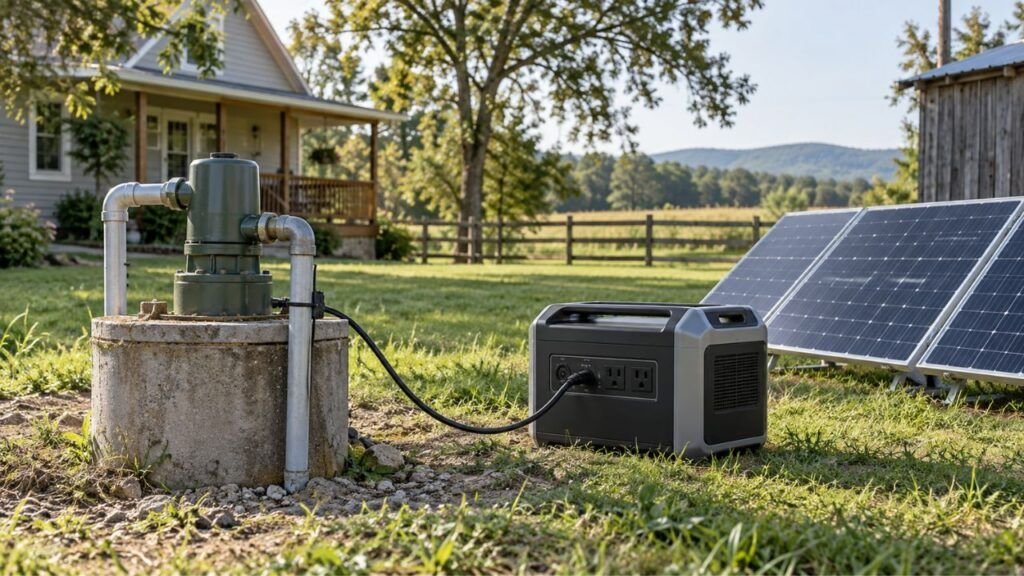
- Well pump
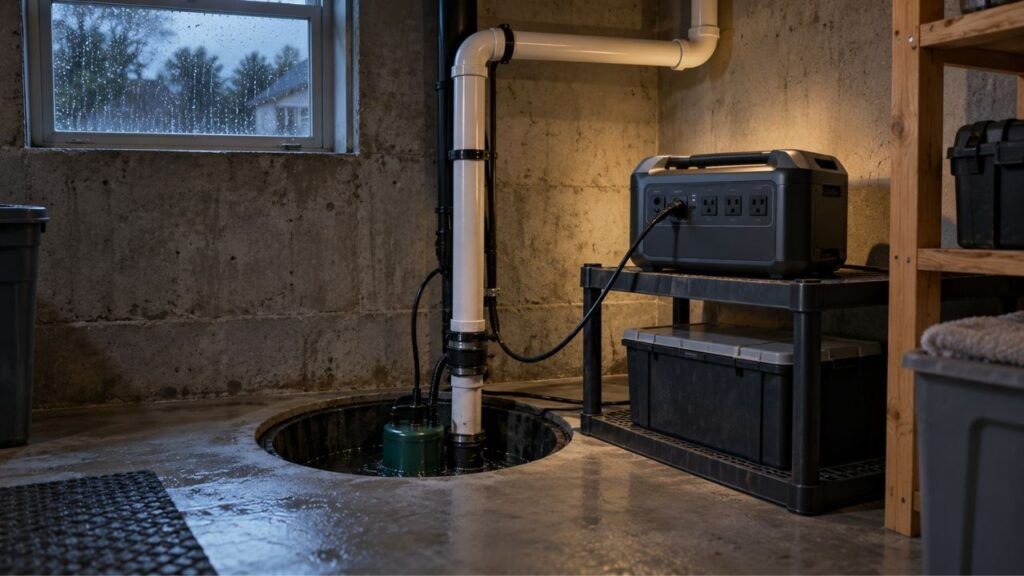
- Sump pump
- Pool pump
- EV charger
- Gaming system
- Second refrigerator
- Standby electronics
Also include hardwired appliances.
Only counting devices plugged into wall outlets can leave a large portion of your household electricity use unaccounted for.
Step 2: Find Each Appliance’s Wattage
Look for the appliance’s label or nameplate.
You may see something such as:
Rated Power: 1,200 W
If wattage is not listed, check the manufacturer’s specifications.
You may also find useful consumption estimates on an EnergyGuide label.
For plug-in appliances, an electricity usage meter can provide a more realistic measurement.
I recommend using generic wattage charts only when you cannot find better information.
Step 3: Estimate the Appliance’s Actual Runtime
This is one of the most important parts of the calculation.
An appliance being connected to electricity for 24 hours does not mean it draws its full rated wattage for 24 hours.
Think about your refrigerator.
It remains plugged in continuously, but its compressor switches on and off throughout the day.
The same principle applies to:
- Freezers
- Air conditioners
- Heat pumps
- Electric water heaters
- Furnaces
- Dehumidifiers
For these appliances, you want to estimate active runtime rather than simply connected time.
Other devices are easier.
If you watch television four hours per day, you can reasonably start with four hours of runtime.
For equipment that cycles frequently, measured energy consumption is usually more reliable.
Step 4: Calculate Watt-Hours Per Day
Use:
Daily Wh = Watts × Hours Used Per Day
Suppose your television draws 100 watts.
You use it five hours daily.
100 W × 5 hours = 500 Wh/day
So the television uses approximately 500 watt-hours each day.
Step 5: Convert Watt-Hours to Kilowatt-Hours
Your electricity bill normally measures energy in kWh.
To convert watt-hours into kilowatt-hours:
Wh ÷ 1,000 = kWh
Using our television example:
500 Wh ÷ 1,000 = 0.5 kWh/day
You can combine the two steps into one formula:
Daily kWh = Watts × Hours Used Per Day ÷ 1,000
This is the main appliance energy formula you will use.
Step 6: Add the Daily kWh for Every Appliance
Once you calculate each load, add them together.
For example:
Whole-Home Daily kWh = Refrigerator + HVAC + Water Heating + Lighting + Electronics + Other Loads
The final number gives you an estimated daily energy requirement.
However, remember that your estimate is only as accurate as the wattage and runtime numbers you entered.
Daily Home Energy Use Calculation Example
Here is a simplified household example. These are illustrative numbers rather than standard values for every U.S. home.
| Appliance or Load | Example Power | Daily Active Use | Estimated Daily Energy |
| Refrigerator | 150 W | 8 hrs equivalent runtime | 1.20 kWh |
| LED TV | 100 W | 4 hrs | 0.40 kWh |
| Laptop | 65 W | 6 hrs | 0.39 kWh |
| Microwave | 1,200 W | 0.25 hr | 0.30 kWh |
| Lighting | 100 W combined | 5 hrs | 0.50 kWh |
| Central AC | 3,000 W | 4 hrs active runtime | 12.00 kWh |
| Electric water heater | 4,500 W | 1.5 hrs active heating | 6.75 kWh |
| Other electronics and loads | — | — | 2.00 kWh |
| Estimated Total | — | — | 23.54 kWh/day |
Let’s verify a few numbers.
For the refrigerator:
150 W × 8 hours ÷ 1,000 = 1.20 kWh
For the microwave:
1,200 W × 0.25 hour ÷ 1,000 = 0.30 kWh
For the air conditioner:
3,000 W × 4 hours ÷ 1,000 = 12 kWh
For the water heater:
4,500 W × 1.5 hours ÷ 1,000 = 6.75 kWh
Adding everything:
1.20 + 0.40 + 0.39 + 0.30 + 0.50 + 12.00 + 6.75 + 2.00 = 23.54 kWh/day
The arithmetic is correct.
However, the active runtime assumptions are only examples.
Your refrigerator, AC, and water heater could run considerably more or less.
How Do You Calculate Daily Use From Monthly kWh?
If you already know your monthly electricity consumption, calculating daily use is simple.
Use:
Monthly or Billing-Period kWh ÷ Number of Days = Average Daily kWh
For example:
750 kWh ÷ 30 days = 25 kWh/day
Another example:
1,200 kWh ÷ 30 days = 40 kWh/day
If your bill covers 31 days:
900 kWh ÷ 31 days = 29.03 kWh/day
Rounded:
29.0 kWh/day
Whenever possible, use the actual number of days covered by your bill.
How Do You Calculate Monthly and Annual Energy Use From Daily kWh?
You can also start with daily consumption and estimate longer periods.
For approximate monthly usage:
Daily kWh × 30 = Estimated Monthly kWh
For example:
25 kWh/day × 30 = 750 kWh/month
For annual energy use:
Daily kWh × 365 = Estimated Annual kWh
For example:
25 kWh/day × 365 = 9,125 kWh/year
The 30-day calculation is only an approximation because calendar months vary in length.
For precise historical consumption, use your actual utility records.
How Much Electricity Does the Average U.S. Home Use Per Day?
A national average gives you a useful reference point, but it should not be treated as a target for every household.
| Period | Approximate Residential Average |
| Daily | 28–29 kWh |
| Monthly | About 865 kWh |
| Annualized | About 10,380 kWh |
The yearly figure above comes from:
865 kWh × 12 months = 10,380 kWh
The equivalent daily figure is roughly 28–29 kWh.
However, your household may legitimately use much less or considerably more.
A home using natural gas for space heating, water heating, and cooking can have much lower electrical consumption than an all-electric home.
Climate also matters.
A home in a hot region may use substantial electricity for air conditioning.
An electrically heated home in a cold region can experience high winter consumption.
So use the national average as a reference rather than a rule.
Why Your Actual Daily Energy Use May Be Higher or Lower
Household energy consumption depends on much more than home size. Several factors can cause two similar homes to have very different daily kWh numbers.
- Home size: Larger homes often require more heating and cooling.
- Number of occupants: More people usually increases appliance use.
- Climate: Extreme heat and cold increase HVAC demand.
- Air-conditioning use: Cooling can become one of the largest loads.
- Heating type: Electric heating can significantly increase consumption.
- Water heating: Electric water heaters can add substantial daily usage.
- Appliance efficiency: Older equipment may consume more electricity.
- Insulation: Poor insulation can increase heating and cooling runtime.
- EV charging: Regular charging can add many kWh to household use.
- Pool equipment: Pumps and heaters can become major loads.
- Work-from-home equipment: Computers increase daytime consumption.
- Seasonal habits: Household usage changes throughout the year.
- Solar panels: Grid consumption may differ from actual total home consumption.
This is why comparing your home directly with another household can be misleading.
Why Rated Wattage Does Not Always Equal Actual Energy Use
The wattage printed on an appliance is useful, but it does not necessarily tell you how much electricity that appliance consumes during an entire day.
Cycling Appliances
Some household appliances automatically turn their major electrical components on and off.
Examples include:
- Refrigerators
- Freezers
- Air conditioners
- Heat pumps
- Electric water heaters
Suppose a refrigerator draws 150 watts while its compressor runs.
Calculating:
150 W × 24 hours = 3.6 kWh/day
would assume the compressor runs continuously for 24 hours.
That may significantly overestimate actual consumption.
Instead, you need its effective runtime or measured daily energy use.
Variable-Power Appliances
Some appliances change their power draw while operating.
Examples include:
- Inverter air conditioners
- Variable-speed heat pumps
- Computers
- TVs
- Chargers
- Variable-speed motors
A device may draw more power during one operating mode and much less during another.
For these loads, measured kWh over time can provide a better estimate.
Appliances Used by the Cycle
Dishwashers, washing machines, and dryers are often easier to estimate by the cycle.
Suppose a dishwasher consumes:
1.2 kWh per cycle
If you run one cycle every day:
1.2 kWh × 1 = 1.2 kWh/day
If you run one cycle every two days, its average daily energy use would be approximately:
1.2 kWh ÷ 2 = 0.6 kWh/day
This can be more accurate than assuming constant wattage for several hours.
What If the Appliance Label Shows Volts and Amps Instead of Watts?
Sometimes an appliance label lists voltage and current but does not provide wattage.
For a simple resistive load, a useful estimate is:
Watts ≈ Volts × Amps
For example, a simple resistive 120-volt load drawing five amps would use approximately:
120 V × 5 A = 600 W
However, you should not assume this formula gives exact watts for every AC appliance.
For many motors and electronic devices:
Volts × Amps = Volt-Amperes (VA)
Actual watts may be lower because power factor can affect the relationship between apparent power and real power.
For more accurate appliance calculations, use:
- Listed watts
- Manufacturer specifications
- Measured wattage
- Measured kWh
- EnergyGuide information
The volts-times-amps shortcut is most reliable for simple resistive loads rather than every household appliance.
How to Measure Home Energy Use More Accurately
Estimating energy use is helpful, but actual measurement is better when you need reliable numbers. Several methods can help you improve accuracy.
Check Your Smart Meter or Utility Account
Many utilities provide online electricity usage information.
Depending on your provider, you may be able to see:
- Daily electricity consumption
- Hourly usage
- Peak-use periods
- Historical consumption
- Seasonal trends
This can be much easier than estimating every appliance individually.
For homes without rooftop solar, utility usage can provide an excellent whole-home baseline.
For homes with solar, make sure the figures represent total consumption rather than only grid imports.
Use a Plug-In Electricity Meter
A plug-in electricity meter sits between an appliance and the wall outlet.
It can measure how much electricity an appliance actually consumes.
These meters are particularly useful for:
- Refrigerators
- Freezers
- TVs
- Computers
- Entertainment equipment
- Window air conditioners
- Dehumidifiers
For cycling appliances, let the meter collect data for several days.
A longer measurement period usually gives you a better daily average.
Use a Whole-Home Energy Monitor
A whole-home energy monitor tracks consumption closer to your electrical panel.
Depending on the system, it can help identify:
- Large electrical loads
- Peak consumption periods
- Unexpected energy use
- Overnight consumption
- Changes in household demand
This approach requires more setup but can provide a much clearer picture of the entire home.
Compare Your Estimate With Actual Measured Usage
After calculating individual appliances, compare the result with real household consumption.
Suppose your appliance estimate equals:
20 kWh/day
but your measured household use averages:
32 kWh/day
That 12-kWh difference tells you something is missing or underestimated.
Possible causes include:
- HVAC runtime
- Electric water heating
- EV charging
- Pool equipment
- Well pumps
- Standby loads
- Cooking appliances
- Incorrect wattage estimates
Your measured whole-home consumption provides an important reality check.
Should You Measure One Day or Calculate an Average?
A single day’s electricity use may not represent normal household consumption.
A mild spring day could require very little heating or cooling.
A hot summer afternoon may produce very different numbers.
Think about your consumption in several ways.
One-day usage shows what happened on one specific day.
Monthly average usage provides a better short-term baseline.
Annual average usage accounts for seasonal changes.
For solar or home backup planning, you should also consider high-use periods.
Sizing everything around your lowest-use day could leave you short of energy when demand increases.
Common Mistakes When Calculating Daily Home Energy Use
Most calculation problems come from a few predictable mistakes. Avoiding them can make your estimate considerably more useful.
- Confusing watts with kilowatt-hours
- Multiplying every appliance’s wattage by 24 hours
- Using connected time instead of active runtime
- Forgetting central HVAC equipment
- Forgetting electric water heating
- Ignoring EV charging
- Overlooking pool and well pumps
- Forgetting standby loads
- Using generic wattage when actual specifications are available
- Dividing every utility bill by exactly 30 days
- Assuming one day’s consumption represents an entire year
- Treating volts × amps as exact watts for every AC appliance
- Adding startup surge watts directly into daily kWh
- Assuming grid consumption equals total consumption in a solar home
- Confusing solar generation with household energy use
Starting watts deserve particular attention.
They affect how much instantaneous power a generator or inverter must provide.
They do not directly determine how many kWh your home consumes during a day.
Daily Energy Use vs. Peak Power: Why the Difference Matters
Daily kWh tells you how much electrical energy you need over time. Generator or inverter wattage tells you how much power must be supplied at one moment.
| Measurement | What It Tells You | Typical Unit |
| Daily energy use | Electricity consumed throughout the day | kWh/day |
| Running load | Power equipment uses while operating | W or kW |
| Peak simultaneous load | Maximum power needed at one time | W or kW |
| Starting or surge load | Brief startup demand from certain appliances | W or kW |
Suppose your home consumes:
25 kWh/day
That does not mean you need a 25,000-watt generator.
Twenty-five kWh describes energy used across an entire day.
Your maximum simultaneous electrical load could be much lower.
For example, a 5,000-watt load running for one hour consumes:
5,000 W × 1 hour ÷ 1,000 = 5 kWh
If it runs for two hours:
5,000 W × 2 hours ÷ 1,000 = 10 kWh
The same appliance can therefore have a fixed power demand but use different amounts of energy depending on runtime.
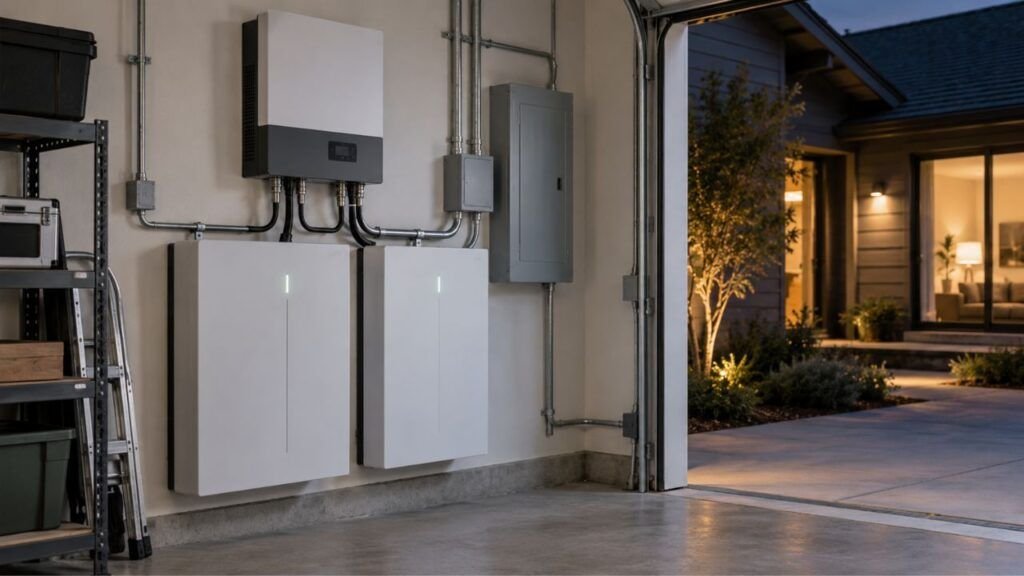
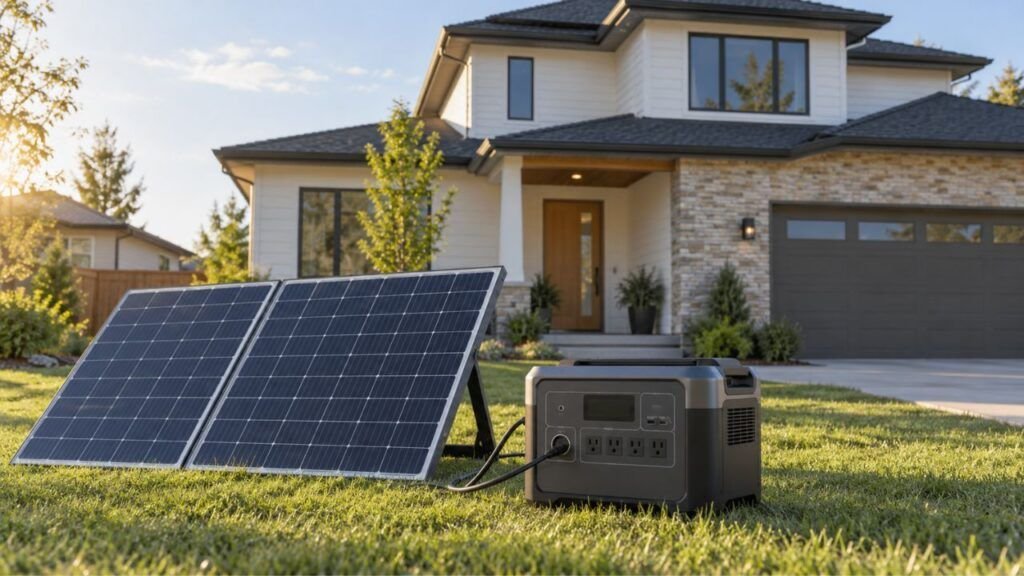
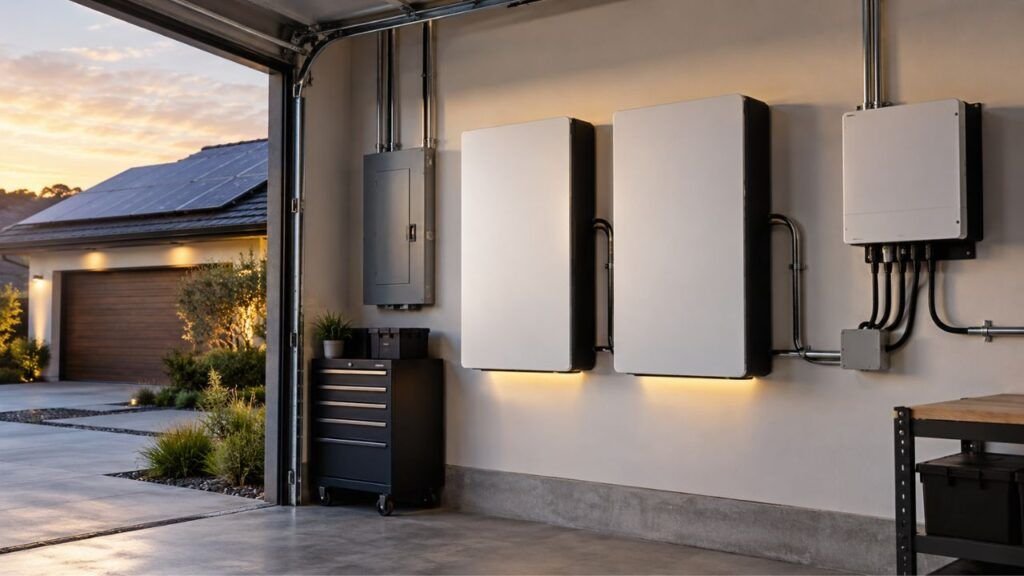
How Daily Home Energy Use Helps You Plan for a Solar Generator or Home Battery
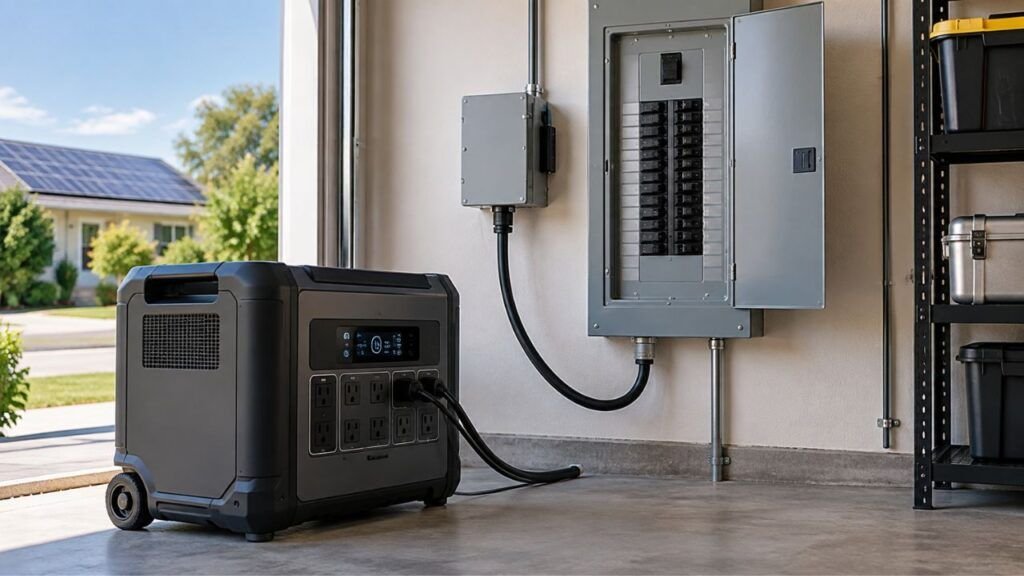
Daily kWh gives you a starting point for backup planning. However, you still need to decide which appliances you actually want to power during an outage.
Calculate the Energy You Actually Want to Back Up
You may not need your full normal household consumption during a blackout.
Suppose your house normally consumes:
30 kWh/day
During an outage, you might only power:
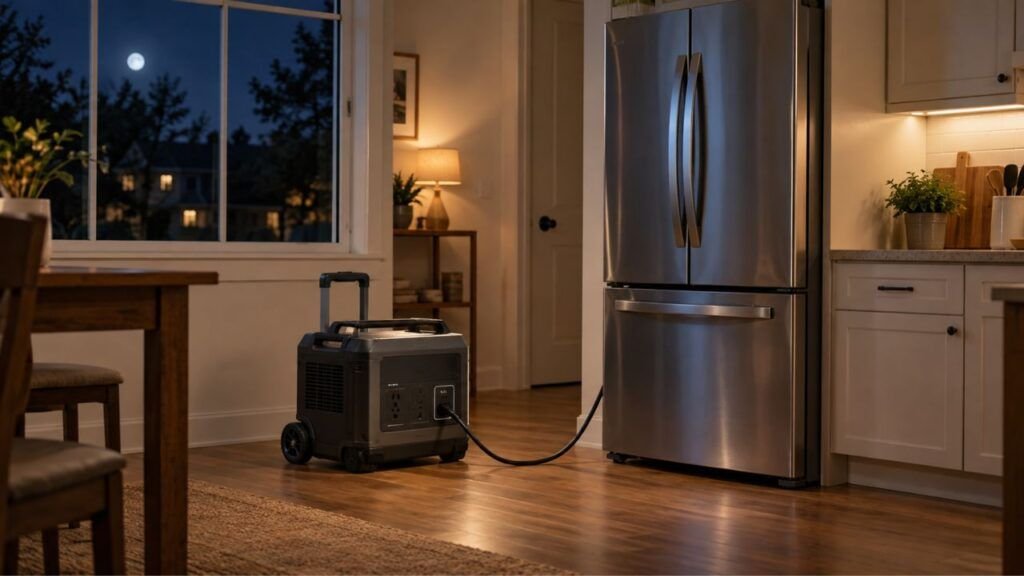
- Refrigerator
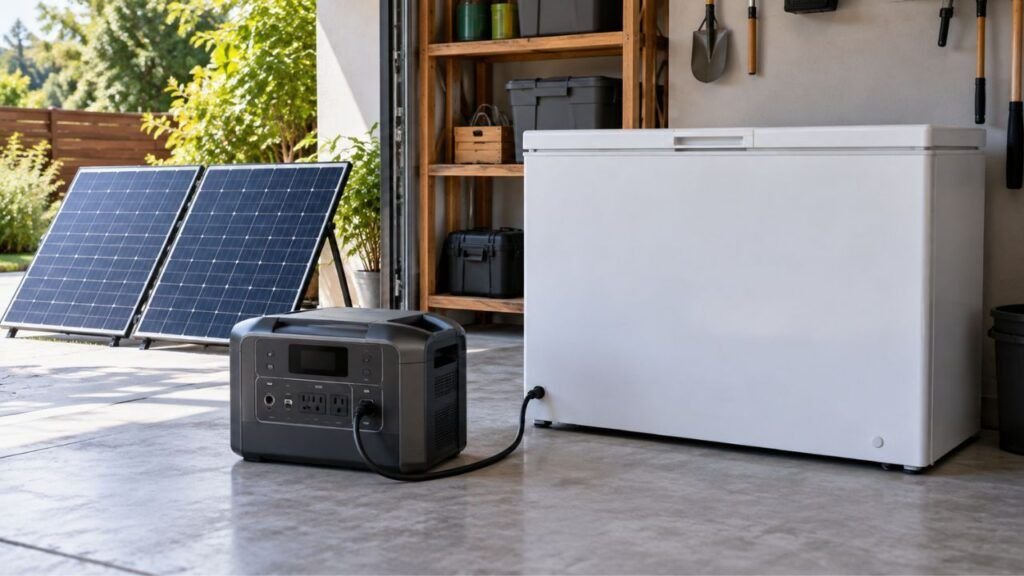
- Freezer
- Wi-Fi equipment
- Several LED lights
- Phone chargers
- Medical equipment
- Television
- Selected outlets
Those critical loads might use much less than your normal 30 kWh.
That can dramatically reduce the battery capacity you need.
Convert Daily kWh to Battery Capacity Carefully
Suppose your essential loads consume:
10 kWh/day
You should not automatically assume that a battery labeled 10 kWh will provide exactly 24 hours of backup.
Real systems experience losses and operating limits.
Usable runtime can be affected by:
- Inverter efficiency
- Battery reserve settings
- Standby consumption
- Battery temperature
- Battery age
- Depth-of-discharge limits
- Recharging during the outage
For example, if your appliances need 10 kWh of AC energy, the battery may need to supply somewhat more than 10 kWh internally because the inverter is not perfectly efficient.
So daily kWh is the foundation of battery sizing, not the entire calculation.
Check Power Output Separately
After calculating energy capacity, check power requirements.
Ask three separate questions.
How many kWh do my loads need?
This helps determine battery capacity.
How many watts could my appliances need simultaneously?
This helps determine inverter output.
Which appliances have startup surges?
This helps determine surge capability.
Keeping these three requirements separate prevents many solar generator sizing mistakes.
A Simple Home Energy Calculation Worksheet
You can use this worksheet to estimate your own daily consumption. Fill in the wattage, quantity, and actual operating time for each load.
| Appliance | Watts | Quantity | Active Hours Per Day | Daily kWh |
| Refrigerator | ||||
| Freezer | ||||
| HVAC | ||||
| Water heater | ||||
| Lighting | ||||
| TV | ||||
| Computers | ||||
| Cooking appliances | ||||
| Washer | ||||
| Dryer | ||||
| EV charger | ||||
| Pool or well equipment | ||||
| Other loads | ||||
| Total |
For each appliance, use:
Daily kWh = Watts × Quantity × Active Hours ÷ 1,000
Then add all the daily kWh values.
Finally, compare your calculated total with measured household consumption.
If the numbers are far apart, review your list for missing or underestimated loads.
Which Daily Energy Calculation Method Should You Use?
Different calculation methods are useful for different purposes. Start with the simplest method that gives you the information you actually need.
| Method | Best For | Accuracy | Effort |
| Utility bill | Whole-home average without solar complications | High | Very low |
| Smart-meter data | Actual day-by-day grid usage | Very high | Low |
| Solar plus utility data | Gross consumption in solar-equipped homes | High | Moderate |
| Appliance calculations | Understanding where electricity goes | Moderate | Moderate |
| Plug-in meter | Measuring individual plug loads | High | Moderate |
| Whole-home monitor | Detailed household consumption tracking | High | Higher |
For most homes without rooftop solar, I recommend starting with the electricity bill.
It gives you an actual measured baseline quickly.
Then calculate or measure individual appliances when you want to identify where the energy is going.
For solar-equipped homes, combine utility and solar-production data when necessary to determine total household consumption.
Final Words
Calculating daily home energy use is easier once you separate power from energy. Start with your actual electricity consumption and divide billing-period kWh by the real number of service days. That gives you a useful whole-home daily average.
For more detail, calculate individual appliances using watts × operating hours ÷ 1,000. Just account for cycling and variable-power appliances carefully. If you are planning backup power, calculate critical-load kWh separately and then check running watts and surge requirements.
Related FAQs
How Do I Calculate My Home’s kWh Per Day?
Divide your total electricity use for the billing period by the actual number of billing days. You can also estimate individual appliances with watts × hours ÷ 1,000 and add their daily kWh together.
How Do I Calculate Daily Electricity Use From My Bill?
Take the total kWh shown for the billing period and divide it by the number of days covered. For example, 900 kWh over 30 days equals an average of 30 kWh per day.
How Many kWh Does the Average U.S. Home Use Per Day?
An average U.S. residential electricity customer uses roughly 28–29 kWh per day, but actual household consumption varies significantly with climate, heating type, home size, occupancy, appliances, and lifestyle.
Is 30 kWh per Day a Lot?
Thirty kWh per day is around the general U.S. residential average range, so it is not necessarily excessive. Whether it is high for your home depends on climate, HVAC equipment, heating fuel, occupancy, and large electrical loads.
How Many kWh Does a 2,000-Square-Foot House Use?
Square footage alone cannot reliably predict electricity consumption. Two 2,000-square-foot homes can have very different usage depending on insulation, climate, HVAC efficiency, heating type, occupancy, appliances, and EV charging.
How Do I Calculate kWh From Watts?
Multiply watts by the number of operating hours and divide by 1,000. For example, a 500-watt device running four hours consumes 500 × 4 ÷ 1,000 = 2 kWh.
How Do I Calculate Energy Use for an Appliance That Runs in Minutes?
Divide the operating minutes by 60 to convert them into hours. Then multiply the appliance wattage by that number and divide by 1,000 to calculate kWh.
Does a Refrigerator Use Its Rated Wattage 24 Hours a Day?
Usually not. A refrigerator remains plugged in continuously, but its compressor cycles on and off, so multiplying its running wattage by 24 hours can significantly overestimate daily consumption.
Can I Calculate Watts by Multiplying Volts and Amps?
For a simple resistive load, volts × amps provides a useful wattage estimate. For many AC motors and electronic devices, volts × amps gives VA, and actual watts can differ because of power factor.
Is Daily kWh the Same as the Watts Needed for a Generator?
No. Daily kWh measures the total energy consumed over time, while generator wattage measures how much power the generator can deliver at a particular moment.
Does My Electric Bill Show Total Home Energy Use If I Have Solar?
Not always. Depending on your utility and net-metering setup, your bill may mainly reflect grid imports or net usage, so you may need solar-production and monitoring data to calculate total household consumption.
Should I Use Average or Maximum Daily kWh for Home Backup Planning?
Start with average consumption, then look at higher-demand days and identify which appliances are truly essential during an outage. Also calculate simultaneous running watts and startup surge separately from daily energy use.

Austin Parker writes practical generator how-to guides, troubleshooting advice, and buying guides for solar, portable, and fuel-powered generators. His focus is helping readers solve common power problems, understand their options, and choose dependable equipment for real-world use.