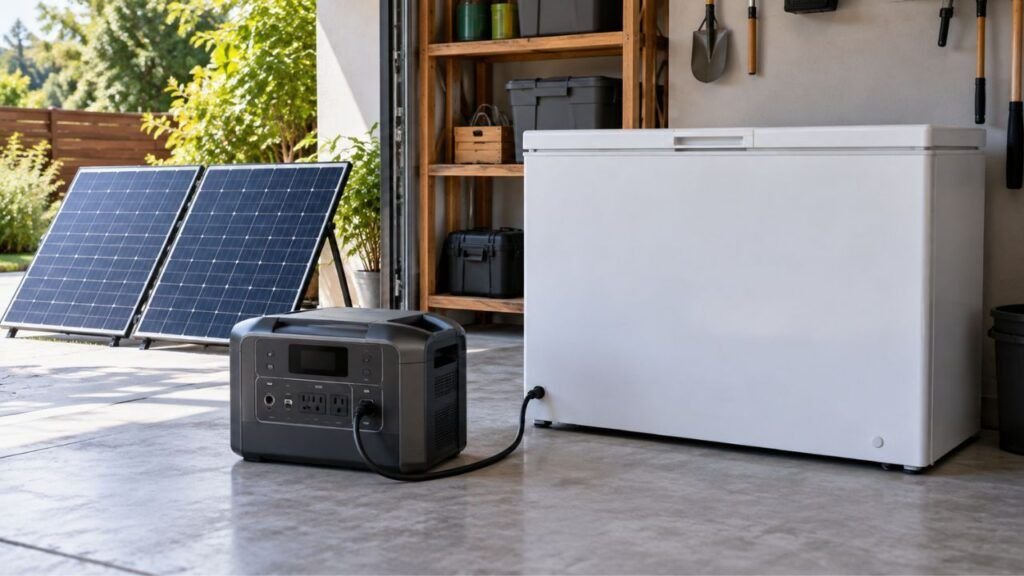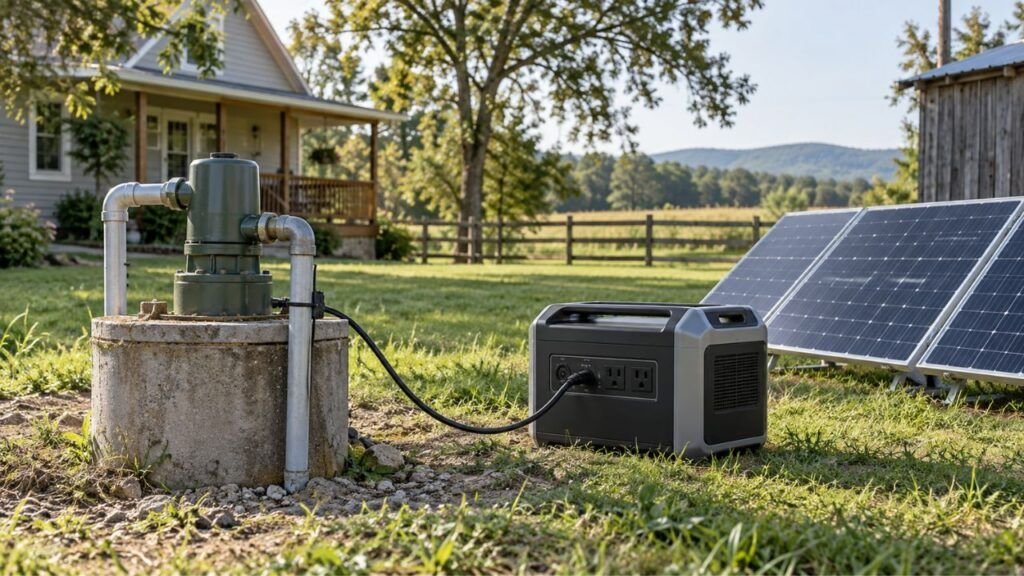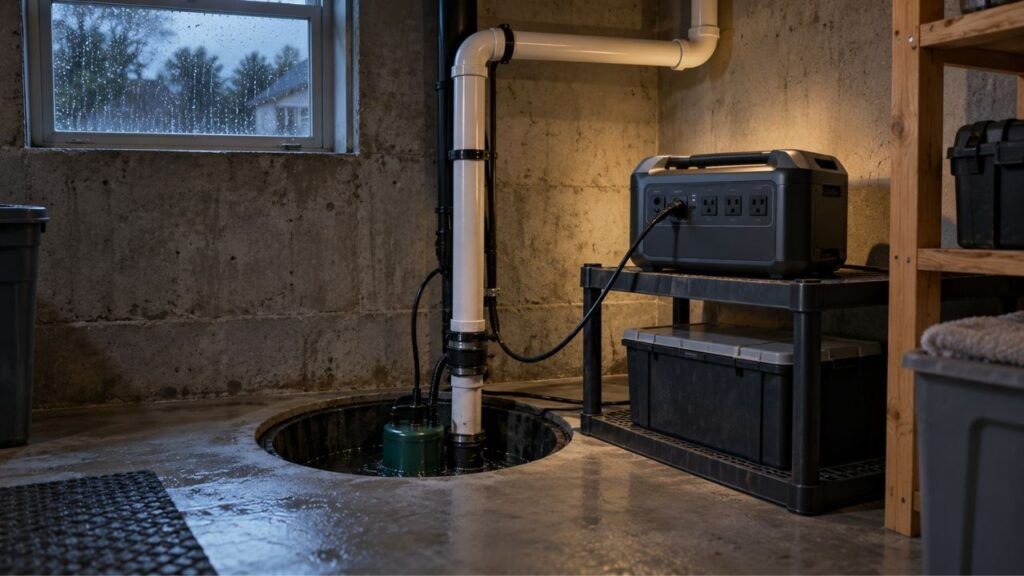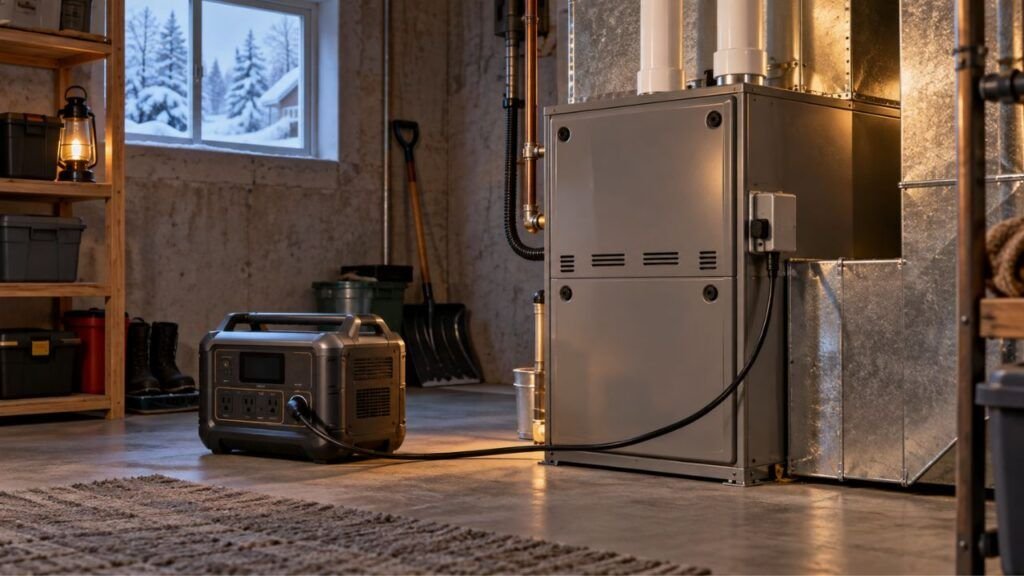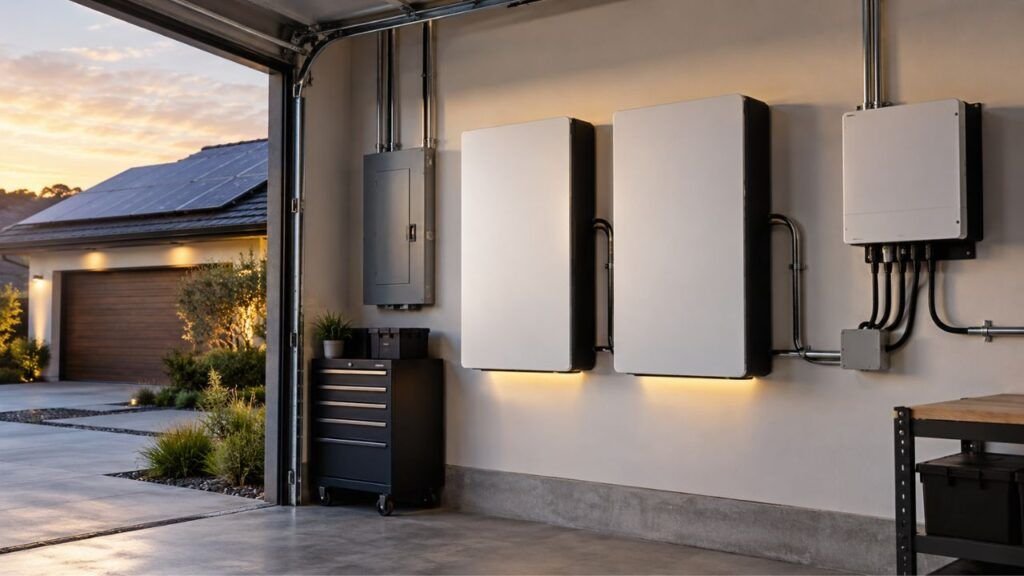

For most homeowners, backing up critical loads is the more practical choice because it lowers battery demand, extends outage runtime, and keeps essential appliances running. Whole-house backup makes more sense when you want near-normal home operation and have enough battery capacity, inverter output, and budget to support larger loads.
The right choice depends on what you need during an outage. I’ll help you compare both options using battery size, runtime, appliance demand, solar charging, and real household priorities.
Key Takeaways
- Critical-load backup powers selected essential appliances and circuits.
- Whole-house backup keeps most or all household circuits available.
- Critical loads usually provide longer runtime from the same battery.
- Whole-house backup normally needs more battery and inverter capacity.
- Battery kWh affects runtime, while kW affects simultaneous power.
- Central AC, pumps, heaters, dryers, and EV chargers greatly increase demand.
- Whole-house backup does not mean every appliance can run simultaneously.
- Smart load management can provide a useful middle-ground option.
- Your essential loads and outage duration should determine system size.
Should You Back Up the Whole House or Just Critical Loads?
If your main goal is keeping food cold, lights on, internet working, and essential equipment running, I would usually prioritize critical loads. You can get more useful outage time without purchasing enough battery capacity to support every appliance in your home.
Whole-house backup makes more sense when losing certain larger appliances creates a serious problem. Central air conditioning, a well pump, heating equipment, or other important 240V loads may push you toward a larger system.
There is also a middle option worth considering.
You can keep much of the house connected while automatically disabling certain heavy loads during an outage. This approach is often called managed whole-home backup or load-managed backup.
Instead of asking, “Can I back up everything?” start here:
What absolutely needs to keep working when the grid goes down?
That question usually leads to a better system design.
Whole-House Backup vs. Critical-Load Backup at a Glance
The biggest difference is not simply how many breakers stay powered. Each approach changes battery demand, inverter requirements, expected runtime, and how carefully you must manage household energy.
| Factor | Critical-Load Backup | Managed Whole-Home Backup | Full Whole-House Backup |
| Circuits available | Selected essential circuits | Most or all circuits | Most or all circuits |
| Battery requirement | Lower | Medium to high | Highest |
| Inverter requirement | Lower | Higher | Highest |
| Runtime with same battery | Usually longest | Moderate | Usually shortest |
| Large 240V appliances | Usually excluded | Controlled as needed | Potentially supported |
| Load management | Simple | Important | Often still necessary |
| Installation complexity | Moderate | Moderate to high | Higher |
| Cost | Usually lowest | Middle | Usually highest |
| Convenience | Basic | High | Highest |
| Best for | Essential resilience | Comfort with control | Maximum convenience |
For many households, managed whole-home backup offers a practical compromise. You keep flexibility without allowing every large appliance to drain the battery.
What Critical-Load Backup Actually Means
Critical-load backup, sometimes called essential-load or partial-home backup, supplies only selected circuits when utility power fails.
A refrigerator, freezer, internet router, several lights, security equipment, and important outlets might remain powered. An electric dryer, oven, pool pump, or EV charger might stay disconnected.
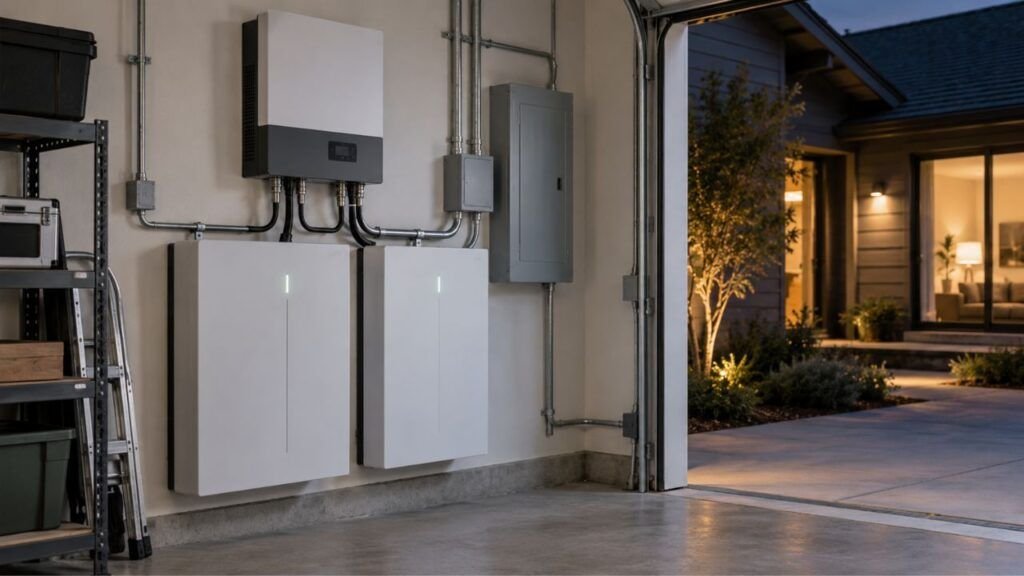
Traditional installations often move these selected circuits into an essential-load or backup subpanel.
When grid power returns, normal household operation resumes.
Critical-load backup should not be viewed as an inferior system. It is intentionally designed to focus stored energy where you need it most.
That can make your backup power much more predictable during longer outages.
What Whole-House Backup Really Means
Whole-house backup generally means most or all home circuits remain available when the grid fails.
That sounds simple, but there is an important limitation.
Whole-house backup does not mean unlimited power.
Your inverter can only deliver a certain amount of electricity at once. Your batteries also contain a limited amount of stored energy.
Imagine your system keeps these appliances available:
- Central air conditioner
- Electric range
- Clothes dryer
- Water heater
- Refrigerator
- Lighting
- Microwave
- Well pump
- EV charger
Having those circuits connected does not mean you should run everything simultaneously.
Large appliances can exceed inverter output or drain storage surprisingly fast. A properly designed system may automatically disable certain loads when the home is running from batteries.
Think of whole-house backup as greater access, not unlimited electricity.
Which Loads Should Be Considered Critical During an Outage?
Your critical loads should reflect your household, climate, health needs, and property. There is no universal list that works for every American home.
| Household Load | Typical Priority | Critical Backup? | Main Concern |
| Refrigerator | Very high | Usually yes | Compressor startup |
| Freezer | Very high | Usually yes | Compressor startup |
| Medical equipment | Very high | Yes | Reliability and runtime |
| Wi-Fi router | High | Usually yes | Continuous operation |
| Essential lighting | High | Yes | Usually low consumption |
| Security system | High | Usually yes | Continuous operation |
| Furnace blower | Climate dependent | Often | Motor startup |
| Sump pump | Location dependent | Often | Startup surge |
| Well pump | High for rural homes | Often | 240V and surge demand |
| Microwave | Medium | Sometimes | High short-term demand |
| Window AC | Climate dependent | Sometimes | Continuous energy use |
| Central AC | Conditional | Sometimes | High running and surge demand |
| Electric water heater | Lower | Usually excluded | High sustained demand |
| Electric oven/range | Lower | Usually excluded | High power demand |
| Clothes dryer | Lower | Usually excluded | High sustained demand |
| Pool pump | Lower | Usually excluded | Motor demand |
| Level 2 EV charger | Low during outage | Usually excluded | Very high continuous demand |
Something that is nonessential for one household may be critical for another.
A well pump is a good example. A city homeowner may never think about one, while a rural homeowner may lose running water without it.
Four Numbers Determine Whether Your Backup Plan Will Work
Before choosing whole-house or critical-load backup, understand four basic numbers. They tell you more than simply knowing the advertised battery capacity.
1. Battery Capacity in kWh
Battery capacity is normally measured in kilowatt-hours, or kWh.
This tells you approximately how much energy the battery stores.
A larger kWh number generally means more runtime if everything else remains equal.
However, advertised battery capacity does not automatically equal usable household energy. Reserve settings, system losses, temperature, standby consumption, and equipment limits can reduce what reaches your appliances.
Think of battery kWh as the size of your energy tank.
2. Inverter and Battery Output in kW
Kilowatts measure power rather than stored energy.
Your inverter determines how much electricity can be delivered at one moment. Battery discharge limits can also restrict maximum output.
This distinction is extremely important.
kWh tells you how long. kW tells you how much at once.
You might have plenty of stored energy but still overload the system by starting several large appliances together.
That is why battery size alone cannot determine backup performance.
3. Appliance Starting Surge
Some appliances briefly require more power when starting.
Motor-driven equipment is especially important here.
Examples include:
- Central air conditioners
- Refrigerators
- Freezers
- Well pumps
- Sump pumps
- Furnace blowers
- Air handlers
- Workshop equipment
A pump that runs comfortably after starting may still create a large startup demand.
You therefore need both running-power and startup requirements when sizing backup equipment.
Certain appliances may benefit from approved soft-start equipment, but compatibility should always be checked before relying on that solution.
4. Desired Outage Duration
Decide what kind of outage you actually want to prepare for.
A battery designed for four-hour outages is very different from one expected to support your home for two days.
Ask yourself whether you want coverage for:
- Brief utility interruptions
- Evening outages
- Overnight outages
- 24-hour blackouts
- Multiday storm outages
The longer the outage, the more valuable load prioritization becomes.
How Much Longer Can Critical Loads Make the Same Battery Last?
Reducing average power consumption can dramatically extend runtime. The example below assumes you have about 10 kWh of usable energy available to household loads and no solar recharge during the outage.
| Average Backup Load | Approximate Runtime |
| 500 watts | 20 hours |
| 1,000 watts | 10 hours |
| 2,000 watts | 5 hours |
| 4,000 watts | 2.5 hours |
| 5,000 watts | 2 hours |
The basic planning formula is:
Runtime = usable battery energy ÷ average backup load
This is why load selection matters so much.
A refrigerator, router, lights, and a few small devices may consume relatively little average power. Add electric heating, cooking, air conditioning, or water heating, and the same battery can disappear much faster.
Real-world runtime will vary because appliances cycle on and off. Solar input, system losses, temperature, and battery settings also matter.
Use runtime calculations as planning estimates rather than guarantees.
Why Central Air Conditioning Often Decides the Answer
Central air conditioning is one of the biggest reasons homeowners move from simple critical-load backup toward larger systems.
The challenge is not only how much electricity the AC consumes while running.
The compressor may also create a substantial starting surge.
If you live in Florida, Texas, Arizona, or another hot climate, cooling may feel essential during an extended summer outage. In that situation, simply excluding central AC may not be realistic.
You still have several options.
You might back up one HVAC system instead of several. You could automatically disable other large loads while the AC runs. Some homes may use a smaller room air conditioner for emergency cooling.
Another option is increasing battery and inverter capacity.
The best approach depends on your HVAC equipment and household needs. Never assume a battery can start your central AC because its advertised wattage looks high enough.
Startup capability needs to be verified separately.
Don’t Forget 240V Loads in a U.S. Home
Many American homes have major appliances operating on 240V power. These loads deserve special attention when planning battery backup.
Common examples include:
- Central air conditioning
- Heat pumps
- Electric water heaters
- Well pumps
- Electric ranges
- Electric clothes dryers
- Pool equipment
- Workshop tools
- Level 2 EV chargers
Having 240V appliances does not automatically mean you need full whole-house backup.
It does mean your backup system must support the correct voltage and enough output for any 240V equipment you expect to use.
A refrigerator and several lights are very different from a well pump and central air conditioner.
That difference should influence your system design from the beginning.
When Critical-Load Backup Makes More Sense
Critical-load backup works especially well when your priority is resilience rather than maintaining completely normal household routines.
It may be the better choice when:
- You mainly want refrigeration, lighting, internet, and essential outlets.
- Longer battery runtime is more important than convenience.
- Your backup budget is limited.
- Your outages sometimes last many hours.
- You can temporarily avoid laundry and electric cooking.
- EV charging can wait until utility power returns.
- Your major heating appliances use natural gas or propane.
- You only plan to install a modest amount of battery storage.
- You want your backup consumption to remain predictable.
- You are comfortable deciding critical circuits before installation.
Think of critical-load backup as an energy conservation strategy built into the electrical system.
Instead of depending on everyone to remember which appliances not to use, many unnecessary circuits simply remain unavailable.
When Whole-House Backup Makes More Sense
Whole-house backup becomes more attractive when keeping the home operating normally matters more than maximizing every hour of battery runtime.
Consider it when:
- You want most household circuits available during outages.
- Your budget supports larger battery capacity.
- You need central air conditioning during blackouts.
- Your home depends heavily on electric appliances.
- A well pump or major 240V equipment must remain usable.
- You want minimal changes to normal household routines.
- Multiple batteries are already planned.
- Your solar array can help replace daily energy use.
- Local outages happen frequently.
- Automatic load management can control unnecessary appliances.
- Future expansion is important to you.
Whole-house backup can feel much more seamless.
Just remember that convenience has an energy cost. Running heavy appliances will reduce your available outage time.
The Middle Ground: Whole-Home Backup With Smart Load Management
You do not always have to choose between a tiny essential-load panel and unrestricted whole-house operation.
Modern backup designs can offer another approach.
Most or all household circuits may remain connected, while selected high-demand loads are controlled during an outage.
For example, the system might temporarily disable:
- EV charging
- Pool equipment
- Electric water heating
- Clothes drying
- Secondary air conditioning
- Other nonessential high-power circuits
Your refrigerator, lighting, internet, water system, security equipment, and primary HVAC could receive priority.
This approach gives you greater flexibility without pretending your battery has unlimited capacity.
It also helps protect the inverter from excessive simultaneous demand.
For many homeowners, this is worth discussing with the installer before automatically choosing a traditional critical-load panel.
Does Solar Change Whether You Should Choose Whole-House or Critical Loads?
Solar panels can significantly improve outage endurance when the backup system is designed to use them during grid failures. However, solar production does not remove the need for careful load planning.
Solar Can Extend an Outage, but It Does Not Create Unlimited Power
Your panels may produce electricity during daylight hours and recharge the batteries.
That can dramatically increase backup duration.
However, solar production varies throughout the day. Cloud cover, shading, roof orientation, season, and weather all change output.
Your home still needs stored battery energy overnight.
Critical Loads Are Easier to Replenish Each Day
Imagine your essential loads consume 6 kWh during a day.
Your solar array may have a realistic chance of replacing that energy during decent weather.
Now imagine you use 30 kWh because you are operating central AC, electric water heating, cooking, and other large appliances.
Daily energy recovery becomes much harder.
This is another reason critical-load backup can perform especially well during multiday outages.
Weather and Season Still Matter
A solar-plus-battery system performs differently during a sunny summer outage than several cloudy winter days.
You should therefore size your system around realistic conditions instead of the best solar day of the year.
Also remember that ordinary grid-tied solar panels do not automatically power your house when the utility fails.
The system must be specifically configured for backup operation.
Battery Reserve Matters Before the Outage Even Starts
A large battery is only useful during an outage if energy remains available.
Imagine you own a 15 kWh battery, but it is almost empty when the grid fails.
You do not suddenly receive 15 kWh of backup energy.
This can happen when the battery is normally used aggressively for daily energy savings.
Many backup-capable systems allow homeowners to maintain a reserve state of charge. That keeps part of the battery available for emergencies.
A larger reserve improves outage preparedness.
The tradeoff is that less battery capacity remains available for everyday energy shifting.
If outages are common where you live, keeping a meaningful emergency reserve may be worth that tradeoff.
Whole-House vs. Critical Loads: Three Realistic Home Scenarios
The easiest way to understand the decision is through real household situations. These examples show why the same backup system does not fit every home.
Scenario 1: Gas-Heated Suburban Home With Occasional Outages
Suppose your home uses natural gas for heating and cooking.
During an outage, you mainly need:
- Refrigerator
- Furnace blower
- Wi-Fi
- Lights
- Television
- Phone charging
- Several outlets
A critical-load system could work extremely well here.
You avoid spending battery energy on a dryer, large electric appliances, or other unnecessary circuits.
The result is often longer and more predictable backup runtime.
Scenario 2: Hot-Climate All-Electric Home
Now imagine a home where nearly everything runs on electricity.
You may depend on:
- Central AC
- Electric water heating
- Electric cooking
- Refrigeration
- Lighting
- Multiple household appliances
During a hot summer outage, central AC may be considered essential.
A small critical-load system becomes more restrictive.
Managed whole-home backup or a larger whole-house system may provide a better experience, especially if load controls prevent several large appliances from operating simultaneously.
Scenario 3: Rural Home With a Well Pump and Longer Outages
A rural homeowner may have completely different priorities.
The important loads might include:
- Well pump
- Refrigerator
- Chest freezer
- Lights
- Internet
- Security equipment
- Furnace blower
The homeowner may not care about using a clothes dryer during an outage.
Critical-load backup can still make sense.
However, the system must have enough inverter and surge capability to start the well pump reliably.
This is why looking only at daily kWh consumption can lead to poor sizing decisions.
Can You Start With Critical Loads and Upgrade Later?
In many cases, yes, but you should plan for expansion before installation.
Some battery systems allow additional battery modules later. Certain installations can also be modified to support more circuits.
However, changing from critical-load to whole-house backup may involve more than adding another battery.
You might need:
- Additional inverter capacity
- Different transfer equipment
- Load-control hardware
- Electrical panel modifications
- Additional battery modules
- Wiring changes
- Service upgrades
Equipment compatibility also matters.
If future whole-home backup is part of your long-term plan, tell the installer before choosing the original equipment.
Designing for expansion now can reduce expensive changes later.
What Could Make Whole-House Backup Impractical?
Whole-house backup sounds appealing, but some homes require extremely large systems to support normal operation.
Potential challenges include:
- Multiple central air conditioners
- Electric resistance heating
- Electric tankless water heaters
- Large well or irrigation pumps
- Multiple heavy 240V appliances
- High normal household energy consumption
- Frequent EV charging
- Limited battery installation space
- Limited electrical service capacity
- Panel or service configuration
- Equipment compatibility
- Local installation requirements
- Limited solar production
- Very long expected outages
- Budget limitations
This does not necessarily mean whole-home backup is impossible.
It may simply mean unrestricted whole-house operation is not the smartest use of your available battery capacity.
Load management can often make the project more practical.
How to Decide: A Simple 5-Step Backup Load Audit
You do not need to guess which backup type fits your home. Work through these five steps before discussing battery size with an installer.
Step 1: List Everything That Must Stay On
Start with necessity rather than convenience.
Write down the appliances you genuinely need during an outage.
Your list might include:
- Refrigerator
- Freezer
- Medical equipment
- Internet
- Lights
- Sump pump
- Well pump
- Furnace blower
- Security equipment
Then create a second list for things you would simply prefer having.
That separation can save a surprising amount of battery capacity.
Step 2: Identify Your Large 240V and Motor Loads
Now find the equipment most likely to create high power demand.
Check:
- Central AC
- Heat pumps
- Well pumps
- Electric water heaters
- Electric ranges
- Clothes dryers
- EV chargers
- Pool pumps
These appliances can determine inverter requirements even if they operate briefly.
Step 3: Add Your Simultaneous Power Demand
Next, estimate which appliances might operate at the same time.
You do not simply add every device in the house.
Think realistically.
Could the refrigerator compressor start while the well pump is running? Could the AC start while someone uses the microwave?
Your inverter must handle realistic simultaneous demand and required startup surges.
Step 4: Estimate Daily Energy Use During an Outage
Now move from kW to kWh.
Estimate how much electricity your selected loads would consume over 24 hours.
This is more useful than simply looking at your normal electric bill.
You will probably use energy differently during an outage.
You may avoid laundry, reduce AC use, cook differently, or disable unnecessary appliances.
Step 5: Match It to Your Desired Outage Duration
Finally, decide how long the backup should last.
Multiply your expected daily outage consumption by the number of days you want to cover.
Then consider:
- Available usable battery capacity
- Expected solar production
- Battery reserve
- System losses
- Weather conditions
- Your ability to conserve energy
This gives you a much more realistic starting point.
Questions to Ask an Installer Before Choosing Either Setup
A good installer should be able to explain exactly what happens when utility power disappears. Do not settle for a vague statement that the system “backs up the house.”
Ask questions such as:
- Which circuits will actually work during an outage?
- Is the system partial-home, managed whole-home, or full whole-home?
- What is the continuous backup output?
- What surge output can the system provide?
- How much usable battery capacity will I have?
- Can the system reliably start my central AC?
- Can it operate my well pump?
- Which appliances will be automatically disconnected?
- Will my solar panels continue producing during an outage?
- Can solar recharge the batteries while off-grid?
- What happens when the battery reaches its minimum charge?
- How much emergency reserve will be maintained?
- Can I add more batteries later?
- Can additional circuits be backed up later?
- Does the system provide the 120/240V power my home requires?
- What runtime should I expect from my actual essential loads?
The last question is especially important.
Ask for an estimate based on your appliances, not simply the battery’s advertised capacity.
Common Mistakes When Choosing Backup Coverage
A few planning mistakes can make an otherwise good battery system disappointing during an outage.
Avoid these common problems:
- Confusing battery kWh with inverter kW
- Assuming whole-house backup means unlimited electricity
- Ignoring compressor and pump startup surge
- Sizing everything from your monthly utility bill
- Backing up an EV charger unnecessarily
- Including electric resistance heating without checking runtime
- Forgetting a sump pump or well pump
- Assuming solar automatically works during grid outages
- Ignoring battery reserve settings
- Buying more storage before reducing unnecessary loads
- Expecting normal household habits during multiday outages
- Choosing equipment without considering future expansion
- Assuming every battery can support every 240V appliance
A thoughtful load audit usually solves these problems before installation.
Final Verdict
For most homeowners who want dependable outage protection without building an oversized system, critical-load backup offers the better balance of runtime, reliability, and cost.
It concentrates battery energy on the things that actually matter. Refrigeration, communication, lighting, water systems, heating controls, medical equipment, and selected outlets can remain available much longer when unnecessary loads are removed.
Whole-house backup is still worth considering when your needs justify it.
If central AC, well pumps, electric heating, or near-normal household operation are important, a larger whole-home system may provide the comfort you want.
For many homes, however, the smartest choice sits between those extremes.
A managed whole-home backup system can keep most circuits available while automatically limiting EV charging, water heating, dryers, pool equipment, and other heavy loads during an outage.
Whatever approach you choose, start with your loads instead of the battery.
Determine what must stay on, how much power those appliances require, how much energy they use each day, and how long you want backup power to last.
That gives you a system designed around your actual home rather than an advertised battery number.
Related FAQs
Here are short answers to several common questions homeowners have when comparing critical-load and whole-house battery backup.
Is Critical-Load Backup the Same as Partial-Home Backup?
Usually, yes. Both terms generally describe a backup system that powers selected essential circuits instead of keeping every household circuit available during a utility outage.
Does Whole-House Backup Power Everything at the Same Time?
Not necessarily. Whole-house backup may keep most circuits available, but inverter output and battery limits still apply. Several high-demand appliances running together can overload the system or reduce runtime quickly.
How Many kWh Do I Need for Critical-Load Backup?
It depends on your essential appliances and desired runtime. Calculate the expected daily energy consumption of your refrigerator, lights, internet, pumps, medical equipment, and other important loads before choosing battery capacity.
How Many kWh Do I Need for Whole-House Backup?
There is no single number for every house. An all-electric home with central AC may require much more storage than a gas-heated home because large appliances can consume substantial energy during an outage.
Can One Home Battery Back Up an Entire House?
Sometimes, but circuit availability does not guarantee long runtime or enough output for every appliance. Whether one battery works depends on its usable capacity, power output, your household loads, and how carefully you manage them.
Can Critical-Load Backup Run Central Air Conditioning?
It can if the system is specifically designed for the AC’s running and startup requirements. Central air conditioning usually requires significantly more inverter output and battery energy than basic essential loads.
Can a Battery Backup Run a 240V Well Pump?
Yes, compatible backup systems can operate 240V well pumps. However, you must verify voltage support, running power, and motor startup surge before including the pump in your backup plan.
Does Whole-House Backup Need a Critical-Loads Panel?
Not always. Some modern whole-home systems connect differently and use automatic load controls instead of a separate essential-load panel. The required configuration depends on your equipment and electrical system.
Can Solar Panels Recharge My Battery During a Power Outage?
Yes, if your solar and battery system is specifically designed for off-grid operation during outages. Ordinary grid-tied solar systems may shut down when utility power fails.
Can I Add More Batteries Later for Whole-House Backup?
Many systems allow battery expansion, but not every installation is equally flexible. Additional batteries may also require inverter, wiring, transfer equipment, or electrical panel changes.
Should an EV Charger Be Backed Up During an Outage?
Usually, EV charging is a low priority during an outage because it can consume large amounts of stored energy. Many homeowners disable or limit EV charging to preserve battery power for household essentials.
What Appliances Should Go on a Critical-Loads Panel?
Common choices include refrigerators, freezers, essential lighting, internet equipment, security systems, medical devices, sump pumps, well pumps, furnace blowers, and selected outlets needed during an outage.

Austin Parker writes practical generator how-to guides, troubleshooting advice, and buying guides for solar, portable, and fuel-powered generators. His focus is helping readers solve common power problems, understand their options, and choose dependable equipment for real-world use.