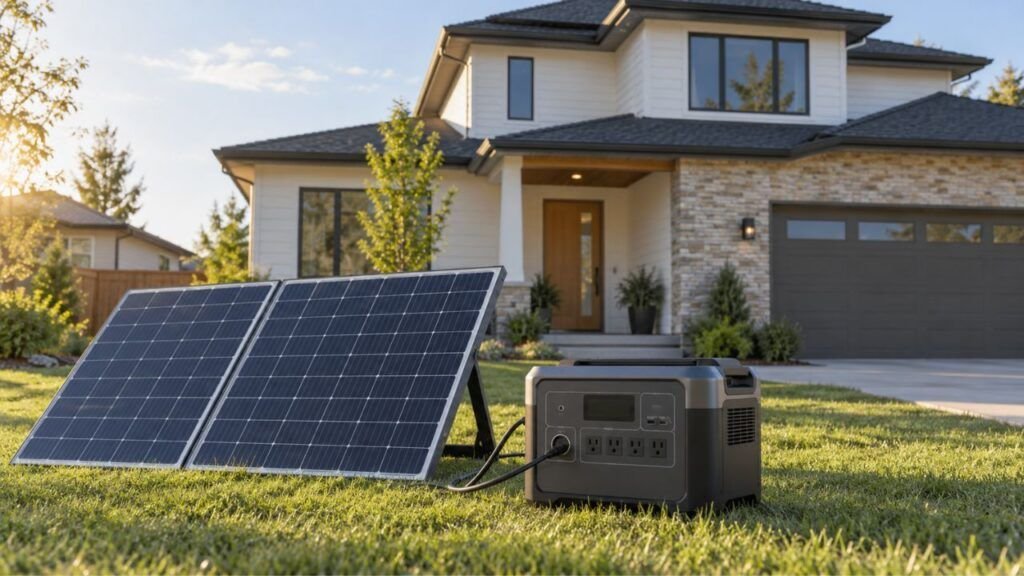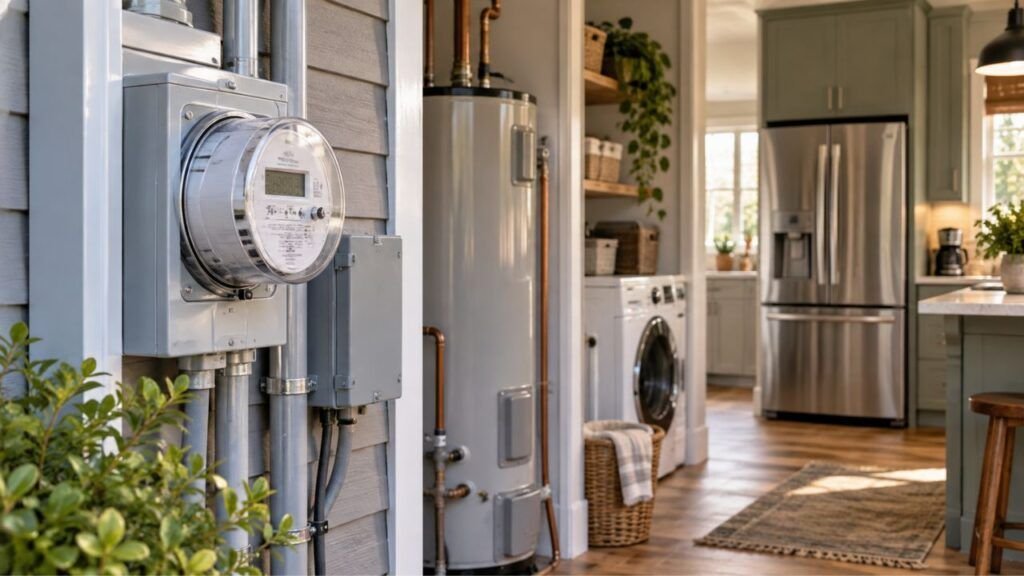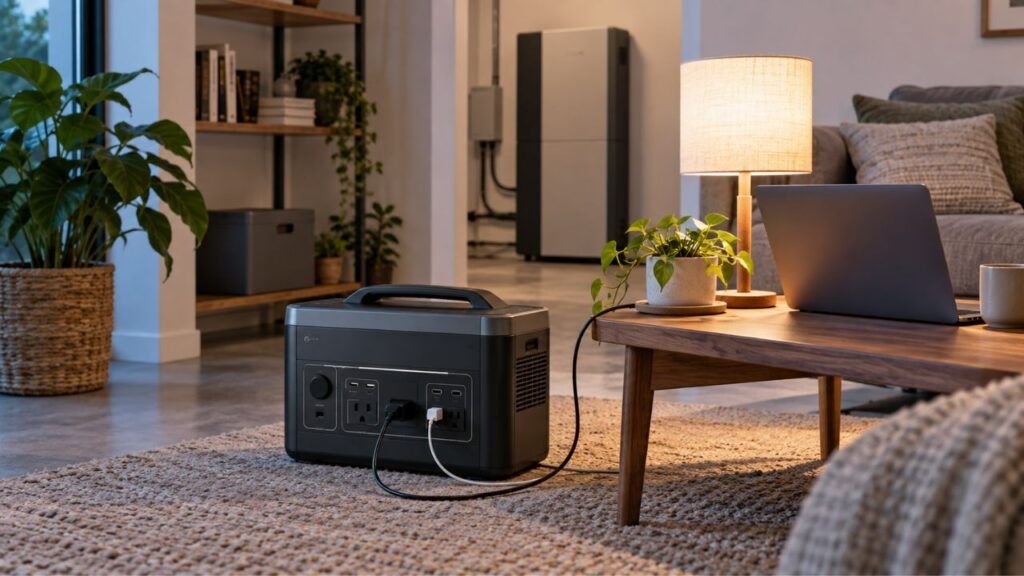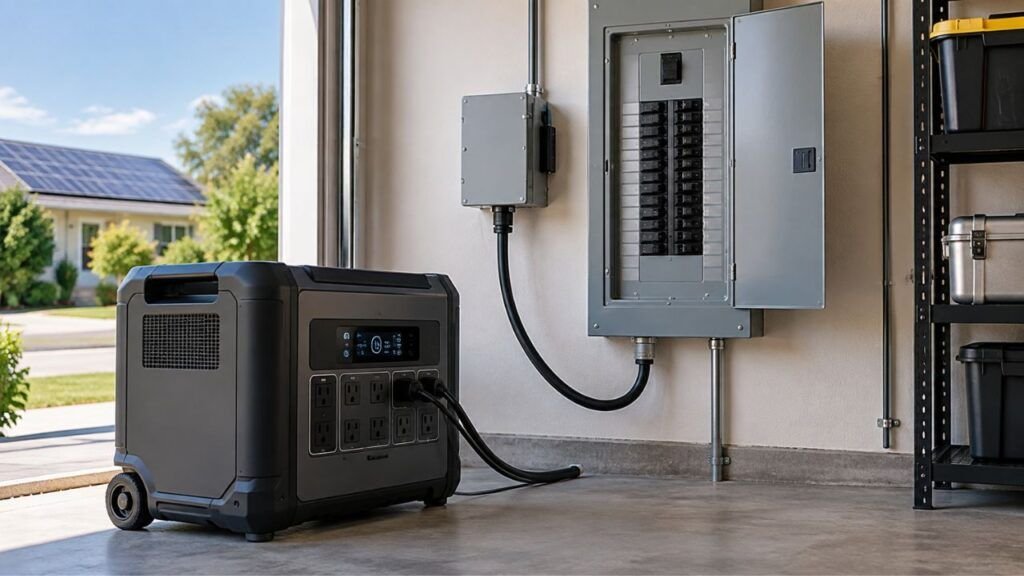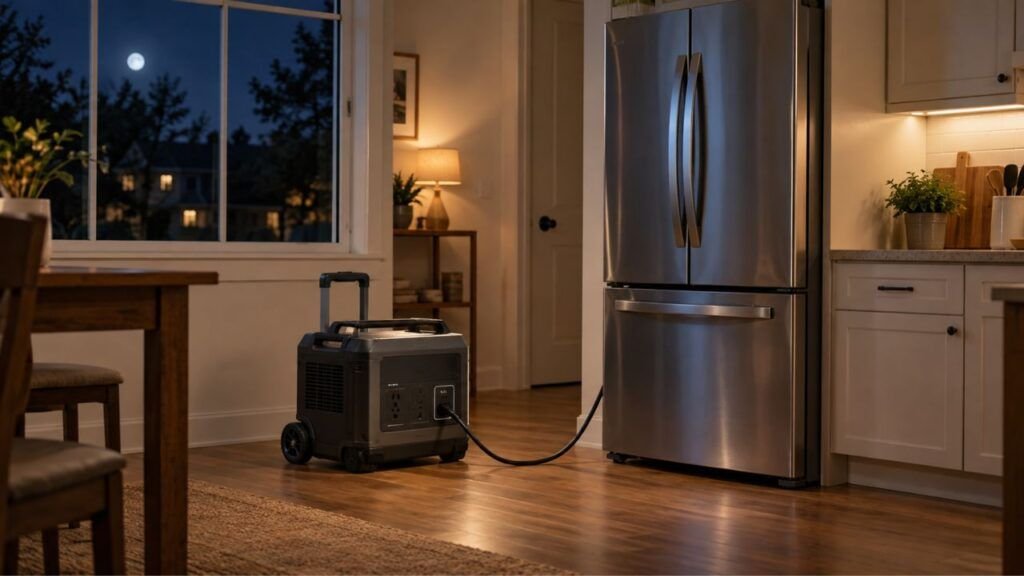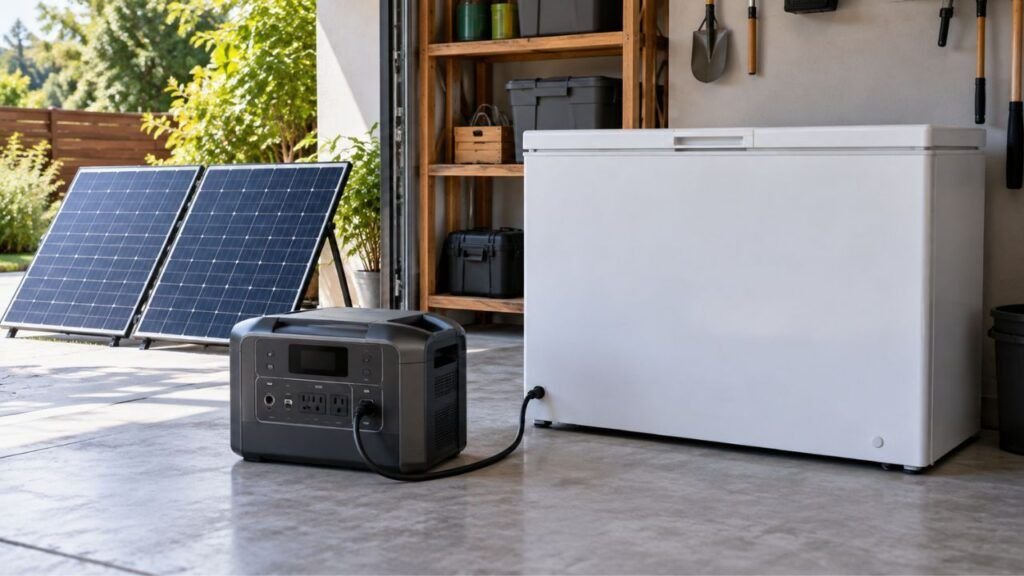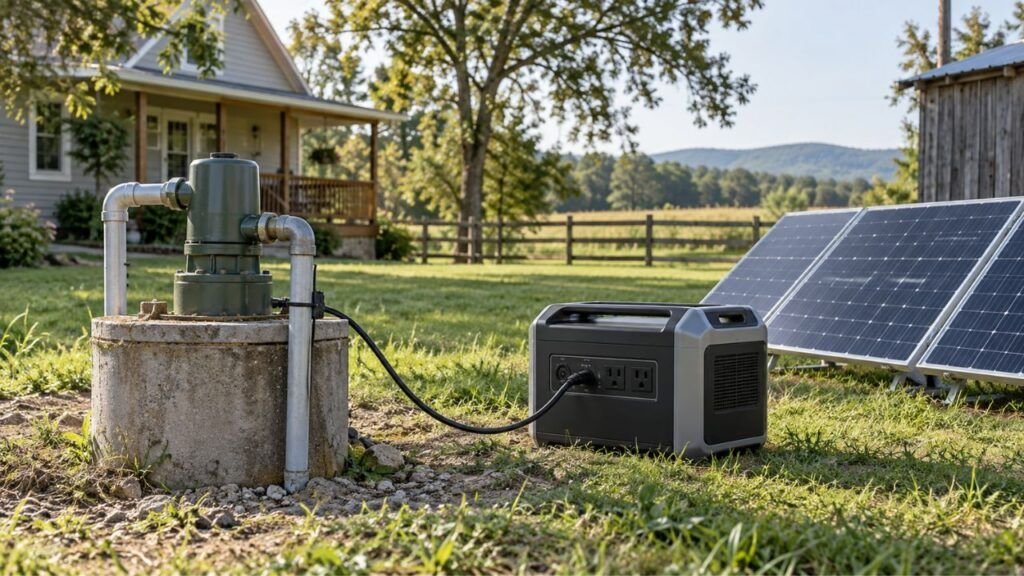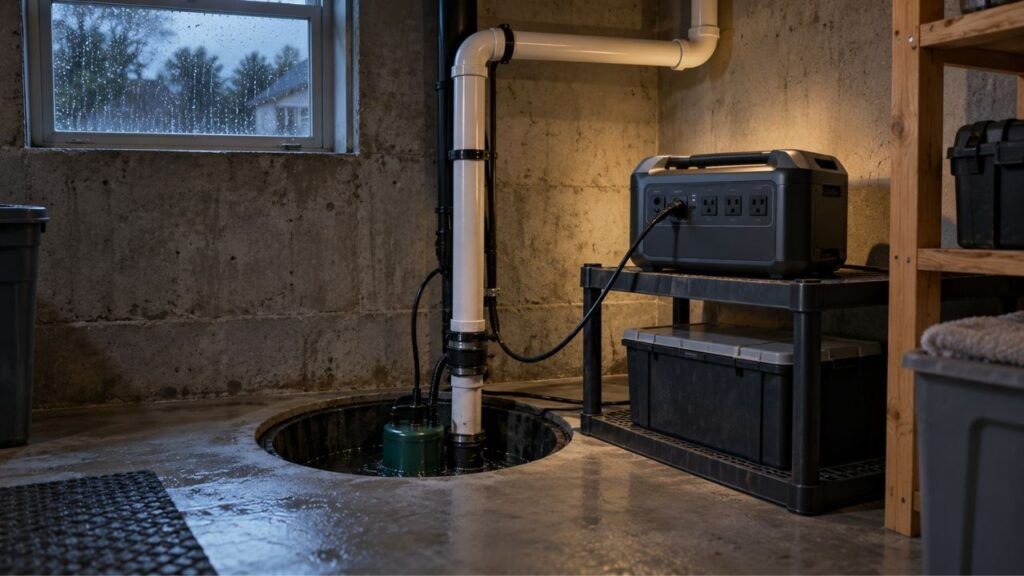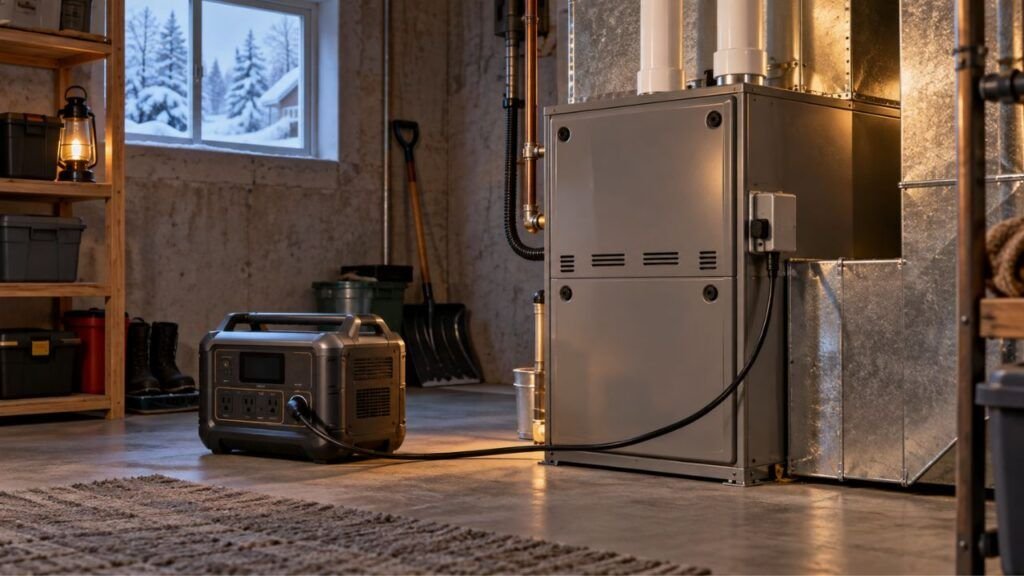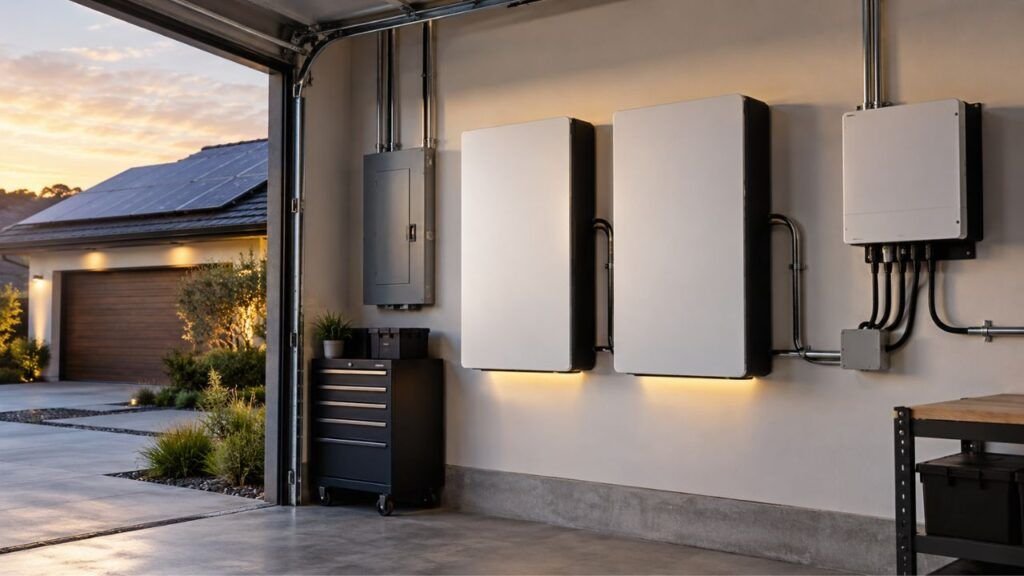
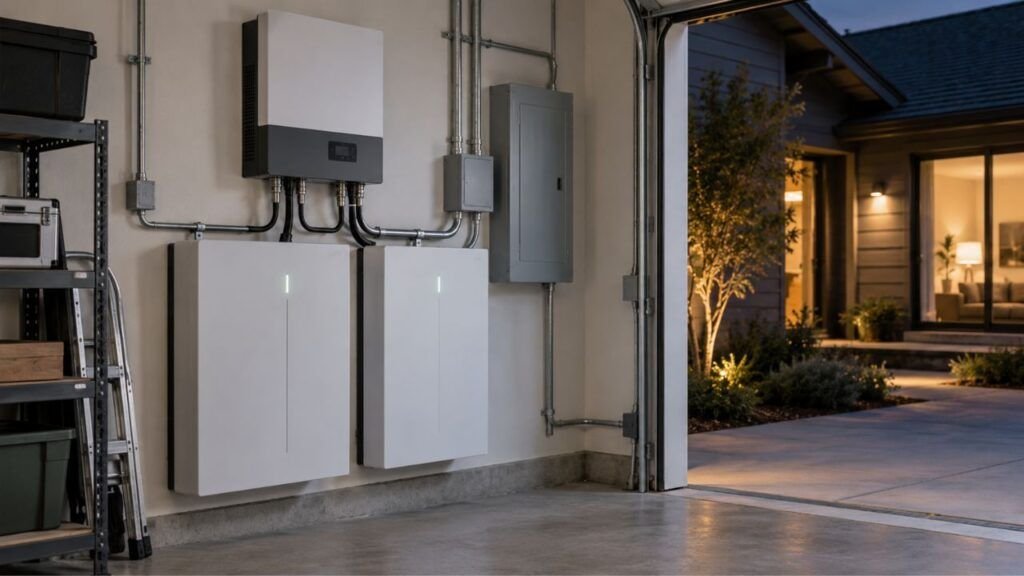
For many homes, 10 to 20 kWh of battery capacity is enough to keep essential loads running through an overnight or roughly one-day outage. Smaller 5 to 10 kWh systems may handle lighter essentials, while 20 to 40 kWh or more may be needed for longer outages, air conditioning, pumps, or broader whole-home backup.
The right capacity depends on what you want to power and for how long. I’ll show you how to estimate your needs, understand usable battery capacity, account for efficiency losses and heavy appliances, and decide when extra storage is actually worth paying for.
Key Takeaways
- Around 5 to 10 kWh can work for lighter essential loads and shorter outages.
- 10 to 20 kWh is a practical starting range for many household backup plans.
- 20 to 40 kWh or more may be needed for HVAC, pumps, or extended outages.
- Battery capacity in kWh determines how much energy is stored.
- Battery and inverter power in kW determine what can run at once.
- Advertised battery capacity is not always fully available to household loads.
- Inverter losses and battery reserve settings reduce real-world backup energy.
- Solar recharging can reduce the storage needed for multi-day outages.
- Your actual appliance use matters more than your home’s square footage.
How Much Battery Capacity Is Usually Enough for a Power Outage?
There is no single battery size that works for every home. However, these broad ranges can help you understand where your backup plan may fall.
| Backup Goal | Approximate Battery Capacity | What It May Cover | Typical Situation |
| Basic emergency backup | 2–5 kWh | Lights, Wi-Fi, phones, small electronics | Short outage |
| Essential household backup | 5–10 kWh | Refrigerator, lights, internet, charging | Several hours to overnight |
| Comfortable essential backup | 10–20 kWh | Essentials plus moderate appliance use | Overnight to around one day |
| Extended partial-home backup | 20–30 kWh | Essentials, pumps, more circuits, limited cooling | Longer outages |
| Broad whole-home backup | 30–40+ kWh | Many household circuits and heavier loads | High-use or extended backup |
These numbers are planning ranges rather than guaranteed runtimes.
A 10 kWh battery could last most of a day in one home. The same battery might last only a few hours somewhere else.
The difference usually comes down to the loads connected to it.
A refrigerator, Wi-Fi router, and LED lights require relatively little energy. Central air conditioning, electric heating, water heaters, pumps, dryers, and electric ranges can consume stored energy much faster.
Battery Capacity and Battery Power Are Not the Same Thing
Before calculating your battery size, you need to separate two important specifications. Moreover, battery capacity tells you how much energy is stored, while power output determines how much equipment the system can operate at once.
Battery Capacity in kWh Determines How Long Power Lasts
Battery capacity is normally measured in kilowatt-hours, or kWh.
Think of kWh as the amount of electricity stored inside the battery.
Suppose you have 10 kWh of usable energy available to the loads and your backup loads average 500 watts.
Convert 500 watts to 0.5 kW.
Then calculate:
10 kWh ÷ 0.5 kW = 20 hours
That gives you about 20 hours of theoretical runtime when the 10 kWh figure already represents usable delivered energy.
If your average load rises to 2 kW:
10 kWh ÷ 2 kW = 5 hours
You have the same amount of usable energy, but very different outage performance.
If the 10 kWh figure is the battery’s rated capacity instead, actual runtime may be shorter after reserve settings and conversion losses are considered.
Battery Output in kW Determines What You Can Run
Battery output is measured in kilowatts, or kW.
This tells you how much electricity the battery and inverter can deliver at a particular moment.
You might have enough stored energy to operate an appliance for several hours, but the system still needs enough output power to start and run it.
For example, several large appliances operating together could require more power than the inverter can provide.
Capacity and output therefore need to be sized together.
Surge Power Matters for Motors and Compressors
Some appliances briefly draw much more electricity when starting than while running normally.
Common examples include:
- Refrigerators
- Freezers
- Sump pumps
- Well pumps
- Furnace blowers
- Central air conditioners
- Window air conditioners
- Garage door openers
This temporary demand is called starting or surge power.
If pumps or compressors are part of your backup plan, check both their running watts and starting requirements.
Start by Deciding What Must Stay Powered
Battery sizing becomes much easier when you decide what truly needs electricity during an outage. I recommend separating essential loads from convenience loads before looking at battery capacities.
Essential Loads
Essential loads commonly include:
- Refrigerator
- Freezer
- Wi-Fi router and modem
- Essential lighting
- Phone charging
- Security equipment
- Medical devices
- Gas furnace blower
- Sump pump
- Well pump
- Selected outlets
Your list may look different depending on your home.
Someone relying on a well pump has different priorities than someone living in a city apartment.
Comfort Loads
You may also want some equipment that makes an outage easier to tolerate.
These could include:
- Television
- Desktop or laptop computers
- Fans
- Microwave
- Coffee maker
- Small kitchen appliances
- Additional lights
- Window air conditioner
- Mini-split air conditioner
Adding these loads is perfectly reasonable.
You simply need to account for the additional energy.
Loads That Can Make Battery Requirements Jump Quickly
A few appliances can dramatically increase the amount of storage you need.
Pay close attention to:
- Central air conditioning
- Electric resistance heating
- Heat pumps
- Electric water heaters
- Clothes dryers
- Electric ranges
- Large well pumps
- Pool pumps
- Hot tubs
- Level 2 EV charging
This explains why you may see one homeowner using 10 kWh successfully while another needs 30 or 40 kWh.
Their backup goals are probably very different.
How to Calculate the Battery Capacity You Need
You do not need complicated engineering software to make a useful estimate. Start by calculating how much electricity your priority appliances will use during the outage, then adjust that number for the battery’s usable fraction and inverter losses.
Step 1: Find Each Appliance’s Energy Use
Use this formula:
Energy Used (Wh) = Watts × Hours Used
Then convert watt-hours to kilowatt-hours:
kWh = Wh ÷ 1,000
For example, a 100-watt device running for five hours uses:
100 × 5 = 500 Wh
That equals:
500 ÷ 1,000 = 0.5 kWh
Do this for every appliance you expect to use.
One important detail is actual runtime.
A refrigerator may stay plugged in for 24 hours, but its compressor does not normally run at full power for all 24 hours.
The same applies to furnaces, pumps, and air conditioners.
Use actual energy consumption whenever possible.
You can check:
- Appliance labels
- Manufacturer specifications
- EnergyGuide information
- Smart home energy monitors
- Plug-in electricity meters
- Previous electricity-use data
Real measurements are better than generic online wattage estimates.
Step 2: Add the Energy Used by All Backup Loads
Once you know the expected use of each appliance, add everything together.
Here is a simple example:
| Load | Example Usage | Runtime | Estimated Energy |
| Refrigerator | Cycling estimate | 24 hours | 2.0 kWh |
| Wi-Fi and modem | 25 W | 24 hours | 0.6 kWh |
| LED lighting | 100 W | 6 hours | 0.6 kWh |
| TV | 120 W | 4 hours | 0.48 kWh |
| Laptop and phones | 120 W | 5 hours | 0.6 kWh |
| Miscellaneous essentials | Varies | Varies | 0.7 kWh |
| Total | 4.98 kWh |
The household in this example needs roughly 5 kWh delivered to its appliances.
But that does not mean a 5 kWh rated battery is necessarily enough.
You still need to account for how much of the battery is usable and how much energy is lost during conversion.
Step 3: Adjust for Usable Capacity and Inverter Efficiency
A battery’s advertised capacity and the amount of AC energy available to your appliances are not always identical.
Several factors can reduce what reaches your household:
- Battery operating limits
- Backup reserve settings
- Inverter conversion losses
- System standby consumption
- Temperature
- Battery age
- Manufacturer protection settings
A more complete sizing formula is:
Required Battery Capacity (kWh) = Energy Needed by Loads ÷ (Usable Capacity Fraction × Inverter Efficiency)
Suppose your loads need 5 kWh.
Assume:
- Usable capacity fraction: 90%, or 0.90
- Inverter efficiency: 95%, or 0.95
Then:
5 ÷ (0.90 × 0.95) = 5.85 kWh
You would therefore need about 5.85 kWh of rated battery capacity before adding any extra planning margin.
This is more accurate than simply dividing your load requirement by the battery’s usable percentage.
Always use the manufacturer’s actual specifications when available rather than assuming every system operates at 90% usable capacity or 95% efficiency.
Step 4: Add a Practical Backup Margin
I would avoid sizing your system to the exact mathematical minimum.
Your real outage probably will not match your spreadsheet perfectly.
You may open the refrigerator more frequently. The weather could be hotter. Your sump pump could run longer. The outage itself could last several extra hours.
If you want a 15% planning margin in the previous example, you could calculate:
5 × 1.15 ÷ (0.90 × 0.95) = 6.73 kWh
That means roughly 6.7 kWh of rated capacity would provide the calculated load energy plus a 15% planning margin under those assumptions.
Around 10% to 20% of additional planning headroom can be useful when your load estimates are uncertain.
However, do not automatically add huge amounts of capacity either.
The goal is enough storage for your needs, not the largest battery you can afford.
Usable Energy Needed by Outage Length
Runtime becomes much easier to understand when you compare your average load with the expected outage duration. The table below shows how much energy the appliances themselves require before battery reserve and conversion losses are added.
| Average Backup Load | 4 Hours | 8 Hours | 12 Hours | 24 Hours | 48 Hours |
| 250 W | 1 kWh | 2 kWh | 3 kWh | 6 kWh | 12 kWh |
| 500 W | 2 kWh | 4 kWh | 6 kWh | 12 kWh | 24 kWh |
| 1,000 W | 4 kWh | 8 kWh | 12 kWh | 24 kWh | 48 kWh |
| 2,000 W | 8 kWh | 16 kWh | 24 kWh | 48 kWh | 96 kWh |
These figures show energy required by the loads, not necessarily the rated battery capacity you should buy.
For example, a 500-watt average load operating for 24 hours requires:
0.5 kW × 24 hours = 12 kWh
If your battery provides 90% usable capacity and the inverter is 95% efficient:
12 ÷ (0.90 × 0.95) = 14.04 kWh
So you would need about 14 kWh of rated capacity under those assumptions, before adding any extra backup margin.
Notice how quickly the requirement grows when average demand increases.
Cutting a 1,000-watt average load to 500 watts effectively doubles your runtime from the same usable energy.
That is why load management can be just as valuable as purchasing more storage.
Is 5 kWh Enough for an Outage?
A 5 kWh battery can be enough when your backup plan is fairly modest.
You may be able to keep a refrigerator, internet connection, several lights, phone chargers, and a few small electronics running through a shorter outage.
It can also work well in apartments, condos, tiny homes, or highly efficient houses.
The limitation becomes obvious once you add pumps, electric cooking, heating, or air conditioning.
For an overnight family backup, 5 kWh may feel restrictive unless your loads are carefully managed.
Remember that a battery advertised as 5 kWh may deliver less than 5 kWh to AC household loads after system limits and conversion losses.
Is 10 kWh Enough for an Outage?
A 10 kWh battery is a useful starting point for many households focused on essential loads.
With careful energy use, it may support refrigeration, internet, lights, charging, electronics, and selected outlets through an overnight outage.
It may even cover close to a day when average power demand stays low.
However, adding central air conditioning can change the answer quickly.
The same applies to electric heaters, large pumps, and electric water heating.
So rather than asking whether 10 kWh is universally enough, ask whether your calculated outage energy fits within the system’s actual usable output.
Is 20 kWh Enough for an Outage?
A 20 kWh system gives you considerably more flexibility.
You may be able to keep essential loads running longer while also using televisions, computers, kitchen appliances, pumps, or limited climate control.
For many households, this capacity can provide a more comfortable one-day backup plan.
It may also support essential loads into a second day when electricity use stays low.
However, 20 kWh still is not unlimited energy.
A central air conditioner drawing several kilowatts can consume a substantial portion of that capacity within hours.
All-electric homes need especially careful planning.
When Do You Need 30 to 40 kWh or More?
Larger battery banks become more reasonable when your outage lifestyle looks similar to your normal lifestyle.
You may need 30 to 40 kWh or more if you plan to support:
- Central air conditioning for long periods
- Heat pumps in extreme weather
- Electric resistance heating
- Large well pumps
- Multiple refrigerators or freezers
- Electric water heating
- Larger homes
- Multiple days without recharging
- Extensive whole-home backup
- High daytime appliance use
At this level, inverter output and electrical configuration become especially important.
Simply adding battery modules does not automatically mean every circuit can run simultaneously.
Essential-Load Backup vs Whole-Home Backup
One of the biggest decisions is whether you really want to power the entire house. Essential-load backup and whole-home backup can require very different battery capacities.
| Factor | Essential-Load Backup | Whole-Home Backup |
| Circuits powered | Selected priority circuits | Most or all supported circuits |
| Battery capacity needed | Lower | Higher |
| Inverter output needed | Lower | Higher |
| HVAC support | Usually limited | More likely |
| Runtime from same battery | Longer | Shorter |
| Load management | Easier | Often important |
| System complexity | Lower | Higher |
Essential-load backup is often the practical choice when your priority is staying safe and connected.
You might power the refrigerator, lights, Wi-Fi, medical equipment, furnace blower, and several outlets.
Whole-home backup is different.
It gives you access to many more circuits, but that does not necessarily mean you should run everything at once.
Even large systems benefit from sensible load management during an extended outage.
How Much Does Air Conditioning Change the Battery Size?
HVAC can change your battery requirements more than almost any other household load. The type of air conditioner matters, along with its efficiency and how many hours it actually runs.
Window AC or Mini-Split
A smaller window air conditioner or efficient mini-split can sometimes fit comfortably into a moderate battery backup plan.
However, running it continuously still consumes significant energy.
An efficient unit used only during the hottest parts of the day requires much less battery than one operating all night.
You should check the actual wattage and expected runtime before including cooling in your estimate.
Central Air Conditioning
Central air conditioning changes the calculation dramatically.
Depending on the system, it may draw several kilowatts while operating.
Imagine your central AC draws 3 kW while running.
Operating it for four hours uses:
3 kW × 4 hours = 12 kWh
That means the AC alone requires 12 kWh of energy at the load.
A 10 kWh rated battery therefore cannot provide those full 12 kWh by itself.
The difference becomes even larger after usable-capacity limits and inverter losses are considered.
You also need sufficient inverter output to handle compressor startup.
Electric Heat Can Be Even More Demanding
Do not treat every type of heating as the same load.
A gas furnace may only require backup electricity for its blower, ignition, and controls.
A heat pump needs considerably more electricity.
Electric resistance heaters can consume even more energy during prolonged operation.
If heating is essential during winter outages, calculate it separately instead of relying on generic home-backup estimates.
What About Sump Pumps and Well Pumps?
Sump pumps and well pumps deserve special attention because they combine energy use with high startup demand.
A pump may not run continuously throughout the day.
That can make its total energy consumption manageable.
However, the motor may require a large surge every time it starts.
Check:
- Running wattage
- Starting wattage
- Pump voltage
- Typical cycles per hour
- Expected operating time
- Inverter surge capability
For a well pump, make sure the backup system supports the required voltage.
Some household battery systems may need specific equipment or configurations for larger 240-volt loads.
Can You Estimate Battery Size From Your Electricity Bill?
Your electricity bill can provide a useful starting point when you do not want to measure every appliance individually. However, you should not assume your normal daily electricity consumption equals your outage requirement.
Quick Utility-Bill Method
Find the total electricity use shown in kWh.
Then calculate:
Average Daily Electricity Use = Monthly kWh ÷ 30
Suppose your household uses 900 kWh during a month.
Your approximate daily consumption would be:
900 ÷ 30 = 30 kWh per day
That does not necessarily mean you need a 30 kWh battery.
During an outage, you might turn off:
- Clothes dryer
- Dishwasher
- EV charger
- Pool equipment
- Electric oven
- Unnecessary lighting
- Guest-room HVAC
- Other nonessential circuits
If your outage-mode energy use falls to one-third of normal consumption, your loads may consume around 10 kWh per day.
You would then calculate the rated battery capacity from that 10 kWh requirement after accounting for usable fraction, inverter efficiency, and your desired reserve.
Why the Appliance Method Is More Accurate
Your electricity bill includes everything you normally use.
Backup planning should include only what you intend to keep running.
The appliance method also accounts for specific equipment that could matter during an emergency.
For example, your average monthly usage may not reveal how important your sump pump becomes during a severe storm.
Use your electricity bill for a quick estimate, then refine the result using your actual backup loads.
Rated Capacity vs Usable Capacity: Which Number Should You Size From?
Battery manufacturers can describe capacity in different ways, so always check exactly what a specification represents. Runtime calculations should focus on the energy you can actually use.
Nominal or Rated Capacity
Nominal capacity is the battery’s stated energy-storage capacity.
For example, a system may be marketed as having 10 kWh of storage.
That does not automatically mean all 10 kWh reaches your appliances.
Usable Capacity
Usable capacity is the portion of stored energy available within the system’s normal operating limits.
Modern lithium batteries often allow a large percentage of their rated capacity to be used.
Still, inverter losses and system operation can reduce the amount reaching your household.
Use the manufacturer’s usable-energy figure whenever it is available.
If a manufacturer already specifies usable AC energy, do not subtract the same losses again.
Backup Reserve
Many battery systems allow you to reserve part of the charge for emergencies.
For example, a homeowner may normally keep a 20% backup reserve.
The battery’s state of charge when the outage begins therefore affects your available runtime.
A large battery sitting at 40% charge may provide less immediate backup energy than a smaller battery sitting near full charge.
When planning emergency runtime, make sure you understand whether the manufacturer’s usable-capacity figure already includes operating limits and whether your personal reserve setting reduces the energy available during an outage.
Does Battery Chemistry Change How Much Capacity You Need?
Battery chemistry can affect how much of the advertised capacity you can practically use.
It can also affect:
- Depth of discharge
- Efficiency
- Temperature performance
- Cycle life
- Charging characteristics
- Long-term capacity retention
Modern lithium systems, especially lithium iron phosphate or LiFePO4 batteries, are widely used for home energy storage.
They can usually provide relatively deep usable capacity while supporting frequent cycling.
However, battery chemistry alone does not determine whether a system is right for your home.
The complete system still needs suitable capacity, inverter output, safety controls, and installation.
How Solar Panels Change the Battery Capacity You Need
Solar can completely change your strategy for longer outages. Instead of relying only on stored energy, your system may be able to produce new electricity every day.
Battery Backup Without Solar
Without solar or another charging source, your battery acts like a tank.
Once the stored energy is used, the backup ends until you can recharge it.
If your loads consume 8 kWh per day and you want three full days without recharging:
8 kWh × 3 = 24 kWh
That means your appliances require 24 kWh over the three days.
The rated battery capacity would need to be higher if usable-capacity limits and conversion losses reduce what reaches the loads.
Battery Backup With Solar Recharging
A properly configured solar-plus-battery system can generate electricity during daylight hours while the grid is unavailable.
That energy can potentially:
- Power household loads
- Recharge the battery
- Prepare the battery for nighttime
- Extend backup through multiple days
This can significantly reduce the amount of stored energy required for long outages.
For example, you might consume 8 kWh overnight and replace much of that energy from solar the following day.
Why Solar Does Not Guarantee Unlimited Backup
Solar makes extended backup easier, but it does not remove every limitation.
Performance still depends on:
- Solar array size
- Cloud cover
- Storm conditions
- Snow accumulation
- Shading
- Season
- Day length
- Battery charging limits
- Daytime household consumption
- Battery state of charge
- Backup-system design
Another important detail is system configuration.
Standard grid-tied solar panels do not automatically keep powering your home when the utility grid fails.
Your system needs compatible backup equipment that can safely isolate your home from the grid.
How to Plan for a 48- or 72-Hour Outage
Planning for several days requires a slightly different mindset. Instead of only asking how large the battery is, you need to think about how electricity flows throughout each day.
Without Solar Recharging
The basic load-energy calculation is:
Daily Backup Energy × Number of Outage Days
Suppose your essential loads consume 6 kWh each day.
For two days:
6 × 2 = 12 kWh
For three days:
6 × 3 = 18 kWh
Those numbers represent the energy required by the loads.
If you assume 90% usable capacity and 95% inverter efficiency, three days at 6 kWh per day would require:
18 ÷ (0.90 × 0.95) = 21.05 kWh
So the example would require roughly 21 kWh of rated battery capacity before adding any extra planning margin.
This is why extended outages can make larger battery banks expensive quickly.
With Solar Recharging
Solar allows you to think in terms of daily energy balance.
During daylight hours, the panels may need to produce enough electricity to:
- Run your daytime loads.
- Replace energy consumed overnight.
- Restore some emergency reserve before evening.
If your household consumes 10 kWh each day during the outage but the solar system replaces only 5 kWh, the battery still loses roughly 5 kWh of stored energy each day.
Eventually, it will run empty.
This is why multi-day backup planning should include poor-weather expectations rather than perfect sunny conditions.
Load Shedding Becomes More Important Than Simply Adding Batteries
For longer outages, reducing unnecessary electricity use can make a dramatic difference.
You can extend runtime by:
- Delaying laundry
- Avoiding EV charging
- Limiting electric cooking
- Turning off unnecessary lights
- Raising the AC thermostat
- Heating or cooling fewer rooms
- Using heavy appliances during strong solar production
- Turning off unused circuits
- Reducing entertainment-device use
A household consuming 6 kWh per day can stay powered much longer than one using 18 kWh.
Sometimes smarter energy use saves more money than installing another battery.
Three Realistic Home Outage Examples
Generic capacity ranges are helpful, but examples make the numbers easier to understand. These scenarios show how backup requirements can change depending on household priorities.
Scenario 1: Basic Essentials for an 8-Hour Outage
Suppose your backup loads average around 350 watts after accounting for cycling equipment.
For eight hours:
0.35 kW × 8 = 2.8 kWh
Now assume:
- 90% usable capacity
- 95% inverter efficiency
Required rated capacity becomes:
2.8 ÷ (0.90 × 0.95) = 3.27 kWh
If you then add a 15% planning margin:
2.8 × 1.15 ÷ (0.90 × 0.95) = 3.77 kWh
A battery around 4 kWh or larger would therefore be a reasonable starting point under those assumptions.
This is why smaller batteries can work well for short emergency outages.
Scenario 2: Family Essentials for a 24-Hour Outage
Now imagine a family wants to run:
- Refrigerator
- Freezer
- Wi-Fi
- Security system
- Lights
- Television
- Laptops
- Phone charging
- Furnace blower
- Occasional microwave use
Suppose those loads consume 9 kWh over 24 hours.
Using the same assumptions:
9 ÷ (0.90 × 0.95) = 10.53 kWh
Add a 15% planning margin:
9 × 1.15 ÷ (0.90 × 0.95) = 12.11 kWh
A system around 12 to 15 kWh would therefore be a reasonable planning range for this example.
A household wanting more flexibility could move closer to 15 or 20 kWh.
Scenario 3: Home With Central AC During a 24-Hour Outage
Now add central air conditioning.
Suppose the AC draws around 3 kW while running and operates for six hours.
The AC alone consumes:
3 kW × 6 hours = 18 kWh
Add another 7 kWh for household essentials:
18 + 7 = 25 kWh
Using 90% usable capacity and 95% inverter efficiency:
25 ÷ (0.90 × 0.95) = 29.24 kWh
Add a 15% planning margin:
25 × 1.15 ÷ (0.90 × 0.95) = 33.63 kWh
So this example could justify roughly 34 kWh or more of rated battery capacity.
The inverter must also provide enough continuous and surge power for the air conditioner.
This one example explains why whole-home backup estimates can vary so widely.
How Much Extra Battery Capacity Should You Add?
A little extra capacity can make your backup plan more reliable, but there is no need to oversize blindly.
Around 10% to 20% of additional planning headroom can be reasonable when your calculations depend on estimated appliance use.
That extra capacity can help cover:
- Longer-than-expected outages
- Extra appliance use
- Battery aging
- Temperature effects
- Unexpected guests
- Increased pump operation
- System standby consumption
Be careful not to count the same loss twice.
For example, if a manufacturer already gives you an AC usable-energy specification, you may not need to separately apply both a usable-capacity reduction and inverter efficiency.
Build your margin around the specifications actually provided for the system.
Common Battery-Sizing Mistakes During Outage Planning
A good battery system starts with good assumptions. Avoiding these mistakes can save you from buying too little capacity or spending unnecessarily on too much.
- Choosing battery size based only on house square footage.
- Assuming advertised capacity equals usable household energy.
- Confusing kW with kWh.
- Treating appliance running watts as continuous 24-hour consumption.
- Ignoring compressor and motor startup surges.
- Forgetting how much energy air conditioning consumes.
- Assuming every solar system works during a blackout.
- Expecting perfect solar production during severe weather.
- Sizing from normal electricity use instead of emergency use.
- Forgetting the battery may not be fully charged when the outage starts.
- Ignoring inverter power limitations.
- Backing up circuits that do not need emergency power.
- Adding more batteries without checking system compatibility.
- Applying the same efficiency or reserve loss twice.
- Forgetting future loads such as pumps or additional refrigeration.
When More Battery Capacity Is Worth It
Larger batteries cost more, but there are situations where additional storage can provide meaningful peace of mind.
More capacity can be worthwhile if you have:
- Frequent multi-hour outages
- Regular multi-day outages
- Medical equipment requiring continuous electricity
- A sump pump protecting the home
- A private well
- Extreme summer temperatures
- Severe winter conditions
- An all-electric home
- Limited access to alternative heating
- Multiple refrigerators or freezers
- Important home-office equipment
- Plans to expand your backup loads later
Reliability matters more when electricity is tied directly to safety or property protection.
When a Smaller Battery Can Make More Sense
You do not automatically need the biggest battery system available.
A smaller system may be perfectly practical when outages are usually short.
It can also make sense if you only need refrigeration, lights, communications, and charging.
Homes with dependable daytime solar production may also need less storage than homes relying entirely on stored electricity.
Expandable battery systems provide another option.
You can start with enough capacity for your immediate priorities and add compatible modules later if your needs grow.
The smartest system is not necessarily the largest one.
It is the one sized around the way you actually plan to live during an outage.
U.S. Safety and Installation Considerations
Home battery systems involve substantial electrical energy and must be installed correctly. Capacity matters, but safety, equipment compatibility, and local requirements matter just as much.
Before installation, check:
- Applicable National Electrical Code requirements
- UL 9540 system certification where applicable
- Local fire-code requirements
- Local building permits
- Approved battery locations
- Required clearances
- Transfer and isolation equipment
- Inverter compatibility
- Electrical service configuration
- Local utility requirements
- Inspection requirements
Rules can differ among states, cities, and local authorities.
Avoid assuming installation requirements from another homeowner’s project automatically apply to yours.
A qualified installer can help confirm the battery, inverter, transfer equipment, wiring, and location all work together safely.
Final Words
For many households, 10 to 20 kWh is a practical starting range for essential backup through an overnight or roughly one-day outage.
Smaller systems around 5 to 10 kWh can work when your emergency loads are light. Larger 20 to 40 kWh systems become more useful when you add HVAC, pumps, more household circuits, or longer outage protection.
The important part is not chasing one universal battery-size recommendation.
Start with what you actually need to keep running. Calculate how much energy those loads consume. Decide how long you want them powered. Then account for usable capacity, inverter efficiency, output power, surge requirements, and possible solar recharging.
The core sizing formula is:
Required Battery Capacity = Load Energy ÷ (Usable Capacity Fraction × Inverter Efficiency)
Then add reasonable planning headroom if your outage duration or appliance use is uncertain.
That approach gives you a battery system designed around your home instead of somebody else’s estimate.
Related FAQs
How Many kWh of Battery Do I Need for a 24-Hour Outage?
Many homes may need around 10 to 20 kWh of rated battery capacity for 24 hours of essential backup, although low-use households may need less. Homes running HVAC, pumps, electric heating, or numerous appliances can require considerably more.
Is 10 kWh Enough to Run a House During an Outage?
A 10 kWh battery can be enough for essential household loads such as refrigeration, lights, Wi-Fi, charging, and selected outlets. Actual runtime depends on usable capacity, inverter efficiency, reserve settings, and the amount of electricity your loads consume.
How Long Will a 5 kWh Battery Last During a Power Outage?
If 5 kWh represents usable energy available to the loads, it would theoretically last about 10 hours at a steady 500-watt average demand. A 5 kWh rated battery will normally provide somewhat less runtime after system limits and conversion losses are considered.
How Long Will a 10 kWh Battery Last During a Power Outage?
If 10 kWh is fully usable energy available to the loads, it would theoretically provide about 20 hours at a 500-watt average demand. A battery rated at 10 kWh will usually deliver less than that after reserve settings and system losses are considered.
How Long Will a 20 kWh Battery Last During a Power Outage?
A 20 kWh battery can support moderate essential loads for a day or longer in some homes. Actual runtime depends on usable capacity, efficiency, average demand, and whether heavy loads such as air conditioning or electric heating are operating.
How Much Battery Do I Need to Run a Refrigerator for 24 Hours?
Many refrigerators use roughly 1 to 2 kWh of electricity per day, although actual consumption varies by model, age, temperature, and usage. Check your refrigerator’s measured daily energy consumption and then account for battery usability and conversion losses.
Can a 10 kWh Battery Run an Air Conditioner?
A 10 kWh battery can run some air conditioners if the inverter provides enough continuous and startup power. Runtime depends heavily on the AC’s actual energy consumption, cycling, efficiency, weather, and other household loads.
How Much Battery Is Needed for a 3-Day Power Outage?
First calculate how much energy your essential loads use each day and multiply it by three. Then divide that total by the battery’s usable-capacity fraction and inverter efficiency, and add any planning margin you want for uncertainty.
Do I Need More Battery Capacity If I Do Not Have Solar Panels?
Usually, yes, especially for longer outages. Without solar or another charging source, every kilowatt-hour you use reduces the stored energy available until the battery can be recharged.
Can Solar Panels Recharge My Battery During a Power Outage?
Yes, if your solar and battery system is designed for backup operation. A properly configured system can use daytime solar production to power household loads and recharge the battery while the utility grid remains unavailable.
Is One Home Battery Enough for Backup Power?
One battery may be enough for essential loads or shorter outages, depending on its usable capacity and output. Whole-home backup, central HVAC, or multi-day protection often requires multiple battery modules or a larger storage system.
Should I Size a Battery From My Electricity Bill?
Your electricity bill is useful for estimating average daily consumption, but appliance-by-appliance calculations are usually better for outage planning. You probably will not operate every normal household load while the grid is down.

Austin Parker writes practical generator how-to guides, troubleshooting advice, and buying guides for solar, portable, and fuel-powered generators. His focus is helping readers solve common power problems, understand their options, and choose dependable equipment for real-world use.